DJI Osmo Pocket 4P vs Insta360 Luna Ultra: Which Pocket Camera Is Better?
DJI Osmo Pocket 4P vs Insta360 Luna Ultra: compare 8K, 4K slow motion, image quality, stabilization, tracking, battery, storage, and creator features to find the better pocket camera.

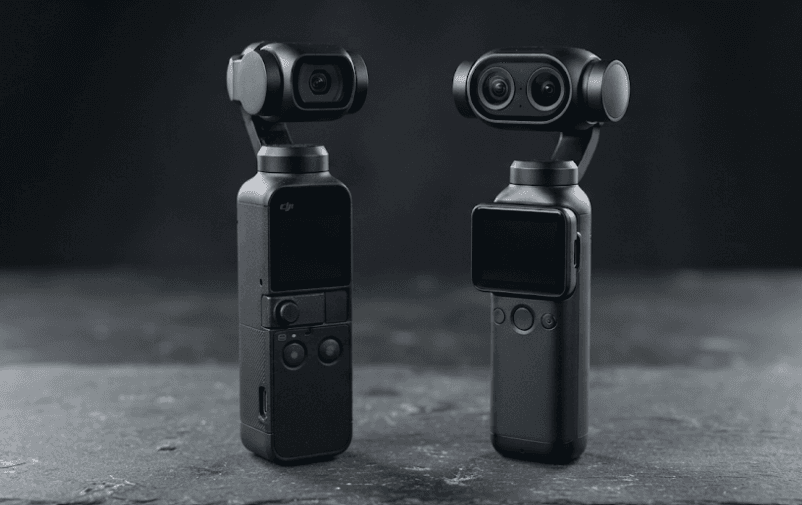
TL;DR The DJI Osmo Pocket 4P and Insta360 Luna Ultra are two of the most capable pocket-sized gimbal cameras available for creators who want strong stabilization, dual-camera flexibility, and better image quality than a typical action camera. The DJI Osmo Pocket 4P is the better all-round choice for most creators because it combines a 1-inch wide camera, a 60mm telephoto camera, 4K/240fps slow motion, ActiveTrack, strong dynamic-range performance with D-Log 2, and a relatively compact 230g body. The Insta360 Luna Ultra takes the lead if 8K recording, a detachable touchscreen remote, 10-bit I-Log, 2TB microSD support, and a more flexible creator-focused shooting setup matter more to you. For everyday vlogging, travel, social media, and dependable handheld shooting, the Pocket 4P is the easier recommendation. For creators who specifically want 8K and remote framing, Luna Ultra deserves serious consideration.
DJI Osmo Pocket 4P vs Insta360 Luna Ultra: Key Differences
At first glance, the DJI Osmo Pocket 4P and Insta360 Luna Ultra look remarkably similar in concept. Both use a three-axis mechanical gimbal instead of relying only on electronic stabilization, and both combine a wide-angle camera with a dedicated telephoto camera. This makes them different from traditional action cameras, where digital cropping is often used to simulate longer focal lengths. The Pocket 4P uses a 20mm-equivalent wide camera and a 60mm-equivalent medium-tele camera, while the Luna Ultra uses the same 20mm and 60mm focal-length concept. That makes both particularly useful for travel videos, talking-head shots, portraits, and cinematic B-roll.
The biggest difference appears when you look at video resolution and imaging hardware. The Luna Ultra can record 8K video at up to 30fps, while the Pocket 4P tops out at 4K but can reach 240fps on its wide-angle camera for slow motion. DJI also gives the Pocket 4P a 1-inch wide sensor with LOFIC technology and up to 17 stops of dynamic range in D-Log 2. Its telephoto camera uses a 1/1.28-inch sensor. Luna Ultra uses a 1-inch main sensor and a 1/1.3-inch telephoto sensor, with 10-bit I-Log available for its professional workflow.
The physical design is also slightly different. The Pocket 4P weighs about 230g, while the Luna Ultra weighs about 233g in Cosmic Black and 235g in Stellar White. Both have 2-inch touchscreens, but Luna Ultra's screen can be detached and used remotely. This is particularly useful when the camera is placed away from the creator. DJI instead offers its own remote-control approach through accessories such as FrameTap, giving the Pocket 4P a different approach to remote shooting.
| Feature | DJI Osmo Pocket 4P | Insta360 Luna Ultra |
|---|---|---|
| Main sensor | 1-inch CMOS | 1-inch CMOS |
| Telephoto sensor | 1/1.28-inch CMOS | 1/1.3-inch CMOS |
| Wide focal length | 20mm equivalent | 20mm equivalent |
| Telephoto focal length | 60mm equivalent | 60mm equivalent |
| Maximum video | 4K/240fps | 8K/30fps |
| Professional log | D-Log 2 | 10-bit I-Log |
| Gimbal | 3-axis mechanical | 3-axis mechanical |
| Screen | 2-inch touchscreen | 2-inch detachable OLED touchscreen |
| Weight | 230g | 233-235g |
| Maximum microSD | 1TB | 2TB |
| Waterproofing | No | No |
Design And Portability
The Pocket 4P is built around the familiar vertical pocket-gimbal format that made the Osmo Pocket series popular. At approximately 230g, it remains relatively easy to carry throughout a day of travel, and the integrated gimbal means you do not need a separate stabilizer for basic cinematic movement. The 2-inch touchscreen is bright enough for outdoor use, and the physical controls make it possible to adjust the camera without constantly reaching for a smartphone.
Luna Ultra follows a similar concept but is slightly heavier and longer. Its 2-inch OLED touchscreen is one of its most distinctive features because the display can be detached from the camera and used as a remote. Insta360 says the detachable remote can transmit a preview from up to 20 meters in open, interference-free environments. That opens up creative possibilities for solo creators who want to position the camera away from themselves while still monitoring the shot.
For ordinary handheld filming, the size difference between the two is not dramatic. Both are substantially more portable than a traditional mirrorless camera with a gimbal setup. However, creators should remember that neither model is waterproof, splashproof, or dustproof. That matters for travel and outdoor use because these cameras should not be treated like rugged waterproof action cameras without an appropriate protective setup.
Camera And Image Quality
The Pocket 4P's strongest technical advantage is its wide-angle camera. DJI uses a new 1-inch CMOS sensor with LOFIC technology, and DJI rates the camera at up to 17 stops of dynamic range when shooting in D-Log 2. This can be particularly useful when the scene contains strong highlights and shadows, such as a person standing near a bright window or shooting outdoors under harsh sunlight. However, the 17-stop claim applies specifically to the wide-angle camera and D-Log 2 mode, not to every shooting mode or both lenses.
The Luna Ultra takes a different approach. Its main camera also uses a 1-inch sensor but pairs it with a Leica Summicron lens and supports 8K recording. It also offers 10-bit I-Log and Dolby Vision, giving creators a strong post-production workflow. The dedicated 60mm telephoto camera uses a 1/1.3-inch sensor and an f/2.0 aperture. This makes the Luna Ultra especially interesting for creators who want high-resolution footage and a longer perspective without depending entirely on digital cropping.
In practical use, the difference is less straightforward than simply saying one camera has better image quality. At normal 4K output, both can produce highly detailed and stabilized footage. DJI's advantage is its D-Log 2 and wide-camera dynamic-range capability, while Insta360's advantage is the additional resolution provided by 8K and its professional 10-bit workflow. If your final videos are primarily going to YouTube, Instagram, or other platforms that you export at 4K or below, the Luna Ultra's 8K capability is useful mainly when you want additional cropping flexibility.
Video Recording And Slow Motion
If slow motion is a major part of your content, the Pocket 4P has a clear advantage on paper. Its wide-angle camera can record up to 4K at 240fps, while the 60mm telephoto camera can reach up to 4K/200fps. That allows creators to slow down sports movements, walking shots, splashes, transitions, and other fast action while retaining a high-resolution output. It is one of the Pocket 4P's most meaningful advantages over Luna Ultra.
The Luna Ultra instead focuses on resolution and flexible recording modes. It can record 8K at 24, 25, or 30fps and 4K at up to 120fps. It also offers modes such as PureVideo, Slow Motion, Timelapse, TimeShift, and Barrel Roll. For most everyday footage, 4K/60fps or 4K/30fps will be more relevant than 8K, but the additional 8K resolution can be useful for reframing footage during editing.
There is also an important distinction for creators who shoot professionally. DJI's 10-bit D-Log 2 provides up to 17 stops of dynamic range, but D-Log 2 is limited to 1x zoom. Luna Ultra's 10-bit I-Log workflow is attractive for creators who want a consistent grading-oriented profile. Therefore, the choice is not simply about the highest frame rate or resolution. DJI is the stronger option for high-frame-rate slow motion, while Insta360 offers greater resolution and a broader high-resolution recording approach.
Stabilization, Tracking And Vlogging
Both cameras use three-axis mechanical gimbals, which is one of the biggest reasons they can produce smooth footage while walking. Instead of depending entirely on digital stabilization, the physical gimbal actively controls the camera's movement. For travel creators, vloggers, and people filming handheld B-roll, both systems provide a significant advantage over a conventional smartphone or fixed-lens action camera.
DJI has a particularly strong advantage in subject tracking. The Pocket 4P uses ActiveTrack, including subject-locking and registered-subject focusing options. DJI specifies different effective tracking distances depending on the zoom level, with longer distances available at higher magnifications. In real-world testing, recent comparisons have also found the Pocket 4P's tracking particularly reliable when subjects briefly move behind obstacles.
Luna Ultra uses Insta360's Deep Track system and also performs well for people-focused content. Its detachable screen adds another advantage for solo creators because you can separate the monitor from the camera and frame yourself from a distance. This makes Luna Ultra particularly appealing for creators who frequently set up shots without another person behind the camera. If your priority is dependable tracking while moving, DJI has the edge. If remote composition is more important, Luna Ultra is more flexible.
Battery, Storage And Connectivity
Storage is one area where Luna Ultra has a clear specification advantage. The camera includes approximately 47GB of internal storage and supports microSD cards up to 2TB. That gives creators considerable flexibility when recording large 8K files. The Pocket 4P also includes internal storage and supports microSD cards, but DJI specifies support for cards up to 1TB. For creators shooting large amounts of high-resolution footage, the difference can become meaningful.
Battery figures need to be interpreted carefully because manufacturers measure endurance under controlled conditions. Insta360 rates Luna Ultra for up to 240 minutes under a specific laboratory test using 1080p/24fps with the screen and Wi-Fi off. Its 1550mAh battery can reach about 80% charge in approximately 23 minutes under the stated charging conditions. Real-world recording time will be lower when using demanding resolutions, high frame rates, active stabilization, wireless connectivity, or brighter screen settings.
The Pocket 4P also uses a built-in battery and supports fast charging. DJI lists a 1545mAh battery and states that it can reach 80% charge in around 18 minutes and 100% in approximately 32 minutes when tested with the specified charger. The exact runtime varies according to shooting conditions, so neither camera should be judged solely by its laboratory endurance figure. For long shooting days, carrying a power bank or spare charging solution remains sensible with either camera.
Which Camera Is Better For Different Creators?
For travel vloggers and everyday creators, the Pocket 4P is the more balanced choice. Its compact design, strong stabilization, reliable tracking, 4K/240fps slow motion, 1-inch main sensor, and D-Log 2 profile give it a broad range of capabilities without requiring you to shoot everything in 8K. It is especially appealing if your finished videos will usually be exported at 4K, 1080p, or social-media resolutions.
Luna Ultra becomes more compelling for creators who actively use 8K. If you crop footage heavily, create high-resolution masters, want additional framing flexibility, or prefer a detachable monitoring screen, its feature set is difficult to ignore. The 60mm telephoto camera, Leica co-engineered optics, 10-bit I-Log, and detachable OLED touchscreen make it feel more focused on creators who want additional control over their shooting workflow.
For beginners, the choice comes down to how much of the advanced hardware they will actually use. Buying Luna Ultra solely because it says 8K may not make sense if most videos are ultimately delivered in 1080p or 4K. Similarly, buying the Pocket 4P for its 4K/240fps capability is unnecessary if you rarely shoot slow motion. The better camera is the one whose strengths match your actual workflow rather than the one with the larger specification sheet.
| Creator Type | Better Choice | Why |
|---|---|---|
| Travel Vlogging | Pocket 4P | Compact, stable and versatile |
| Slow Motion | Pocket 4P | Up to 4K/240fps |
| 8K Production | Luna Ultra | 8K/30fps recording |
| Solo Creators | Luna Ultra | Detachable remote screen |
| Subject Tracking | Pocket 4P | Strong ActiveTrack system |
| Professional Grading | Depends | D-Log 2 vs 10-bit I-Log |
| Long-Term Storage Flexibility | Luna Ultra | Supports up to 2TB microSD |
| Everyday Social Content | Pocket 4P | 4K workflow is more practical |
Final Recommendation And Decision Framework
The DJI Osmo Pocket 4P is the better overall recommendation for most buyers. It offers an excellent combination of portability, stabilization, tracking, image quality, telephoto flexibility, and high-frame-rate recording. Its 1-inch main sensor and D-Log 2 profile also give creators more headroom when working with difficult lighting. Most importantly, its strengths remain useful even if you never record in 8K.
The Insta360 Luna Ultra is the better specialist choice. Its 8K recording, detachable 2-inch OLED touchscreen, 10-bit I-Log, Leica co-engineered optics, and 2TB microSD support make it particularly attractive to creators who want maximum resolution and a more flexible remote-shooting experience. It is also a strong option for solo filmmakers who regularly place the camera away from themselves.
Ultimately, the DJI Osmo Pocket 4P wins on overall balance, while the Insta360 Luna Ultra wins on resolution and creative flexibility. Choose the Pocket 4P if you want a dependable everyday pocket camera for travel, vlogging, social content, and cinematic B-roll. Choose Luna Ultra if 8K, remote monitoring, and a more production-oriented workflow are central to the way you shoot. For most buyers, however, the Pocket 4P is the more sensible all-round investment.
Frequently Asked Questions
Q. Is the DJI Osmo Pocket 4P better than the Insta360 Luna Ultra?
For most everyday creators, yes. The Pocket 4P offers a strong balance of image quality, stabilization, tracking, slow motion, and portability, while Luna Ultra is better suited to creators who specifically need 8K and a detachable remote screen.
Q. Does the Insta360 Luna Ultra record in 8K?
Yes. Luna Ultra can record 8K video at 24, 25, and 30fps, along with 4K recording at frame rates up to 120fps.
Q. Does the DJI Osmo Pocket 4P record 8K?
No. The Pocket 4P's maximum video resolution is 4K, but its wide-angle camera can record 4K slow motion at up to 240fps.
Q. Which camera has better slow motion?
The DJI Osmo Pocket 4P has the advantage because its wide-angle camera supports up to 4K/240fps, while Luna Ultra supports up to 4K/120fps.
Q. Do both cameras have a 1-inch sensor?
Yes. Both have a 1-inch main camera sensor. Their secondary cameras use smaller telephoto sensors, with DJI using 1/1.28-inch and Insta360 using 1/1.3-inch.
Q. Which camera is better for vlogging?
The Pocket 4P is the better all-round choice for conventional vlogging because of its stabilization, tracking, compact design, and versatile dual-camera setup. Luna Ultra is especially useful for solo creators who want its detachable screen.
Q. Is the Insta360 Luna Ultra waterproof?
No. Luna Ultra is not waterproof or splashproof, so it should not be treated like a waterproof action camera.
Q. Is the DJI Osmo Pocket 4P waterproof?
No. The Pocket 4P is also not a waterproof action camera and should be protected from water during outdoor use.
Q. Which camera is better for professional color grading?
Both support professional-oriented log profiles. Pocket 4P offers 10-bit D-Log 2 on its wide camera, while Luna Ultra offers 10-bit I-Log. The better choice depends on the creator's preferred workflow and the lens being used.
Q. Which camera should I buy for travel videos?
The Pocket 4P is the better choice for most travelers because it provides a strong combination of portability, stabilization, tracking, telephoto shooting, and high-frame-rate recording without requiring an 8K workflow.
Ready to upgrade your tech?
Browse our collection of quality refurbished products at unbeatable prices.