
HP ZBook Firefly G9 vs Dell Precision In 2026: Best Mobile Workstation?
A complete comparison of HP ZBook Firefly G9 and Dell Precision laptops covering performance, portability, thermals, upgrades, and workstation value for professionals in 2026.

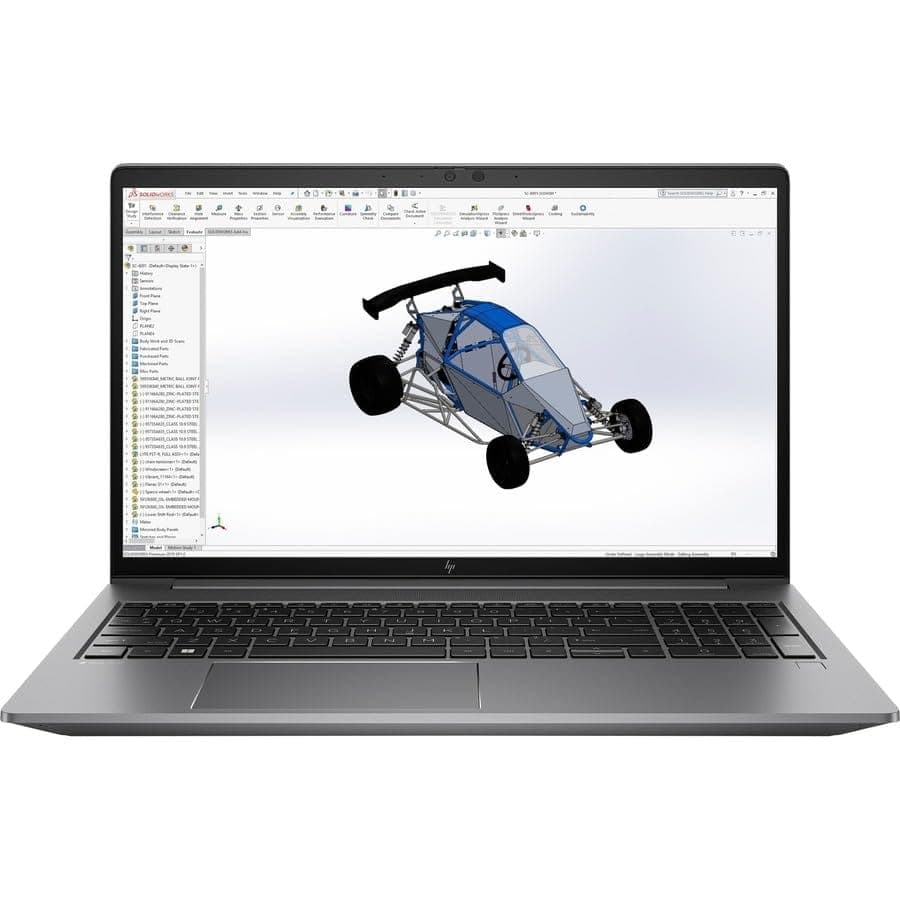
TL;DR Choosing between the HP ZBook Firefly G9 and Dell Precision mobile workstations in 2026 largely depends on whether a user prioritizes mobility efficiency or maximum enterprise configurability. The Firefly G9 focuses on lightweight workstation productivity with strong battery optimization, modern hybrid Intel processors, and consistent thermals suited for consulting, analytics, CAD drafting, and corporate workflows. Dell Precision models, particularly thin Precision 34-series systems, emphasize modular enterprise deployment and slightly broader configuration flexibility.
For Indian professionals purchasing refurbished workstations, both platforms offer excellent long-term reliability, but the Firefly G9 typically delivers better battery-to-performance balance, quieter thermals, and improved portability for hybrid work environments. Precision systems may appeal more to users requiring heavier GPU configurations or tighter Dell enterprise ecosystem integration. In real-world professional usage rather than benchmark testing, differences are evolutionary rather than dramatic, making workflow type the most important decision factor.
HP ZBook vs Dell Precision- Quick Decision Guide (2026)
In 2026, thin mobile workstations have evolved toward efficiency rather than raw performance escalation. Both HP’s ZBook Firefly lineup and Dell’s Precision 34xx-series target professionals needing ISV-certified performance inside highly portable systems. While specifications often appear similar on paper, tuning philosophy differs significantly between manufacturers.
HP positions the Firefly G9 as a mobility-first workstation. The chassis prioritizes sustained productivity workloads such as Excel modeling, CAD drafting, programming environments, and enterprise multitasking. Power management algorithms aggressively balance CPU boost behavior and thermal limits, ensuring predictable performance during long working sessions rather than short benchmark spikes. This approach benefits consultants, analysts, architects reviewing models, and MBA professionals working across locations.
Dell Precision thin workstations traditionally emphasize enterprise fleet deployment. Precision systems integrate deeply with corporate IT infrastructure, offering extensive BIOS management tools and standardized service workflows across organizations. Performance characteristics remain strong, though thermal behavior can sometimes prioritize peak output before stabilization compared to HP’s steadier tuning.
Indian buyers increasingly compare refurbished workstation availability through platforms like Refurbo where price efficiency significantly shifts decision-making toward enterprise-grade refurbished machines instead of new consumer laptops.
Quick Decision Table (2026)
For most independent professionals, HP’s tuning often feels more balanced in daily usage.
Design Philosophy: Enterprise Engineering vs Corporate Mobility Approach
The design difference between HP ZBook Firefly G9 and Dell Precision systems reflects two distinct enterprise philosophies developed over decades of workstation evolution. HP’s modern ZBook Firefly G9 Workstation Laptop follows what can be described as enterprise mobility engineering, where professional reliability is merged with ultrabook-like portability without abandoning workstation certification standards.
HP redesigned the Firefly generation around hybrid working environments that became dominant after global workplace shifts. Reduced chassis thickness, magnesium-aluminum construction, and weight optimization allow professionals to carry certified workstation hardware daily without experiencing fatigue. This design direction strongly supports consultants, engineers, auditors, and remote professionals operating across offices and client sites.
Dell Precision systems, in contrast, maintain a more conservative corporate mobility approach. Precision laptops historically prioritize structural rigidity, service accessibility, and standardized enterprise deployment consistency. While modern Precision models are thinner than earlier generations, Dell still favors internal modularity and predictable enterprise lifecycle management over aggressive portability refinement.
Another notable distinction appears in ergonomics. HP focuses heavily on keyboard comfort, palm-rest thermals, and acoustic refinement during sustained workloads. Dell often emphasizes durability metrics and long-term service replacement efficiency. Neither philosophy is objectively superior; instead, they serve different organizational priorities.
In practical 2026 workflows, users who personally carry their workstation daily often prefer Firefly’s lighter engineering, while IT-managed enterprise fleets may lean toward Precision platforms for administrative uniformity. The choice therefore becomes less about specifications and more about how the workstation integrates into real professional routines.
Build Quality and Chassis Durability Comparison
Mobile workstations are fundamentally different from consumer laptops because they are engineered for long enterprise life cycles rather than short upgrade periods. The HP ZBook Firefly G9 follows HP’s professional ZBook durability framework, incorporating magnesium-aluminum alloy construction designed to balance rigidity with portability. Despite weighing close to ultrabook territory, the chassis maintains strong torsional resistance, minimal keyboard flex, and reinforced hinge assemblies tested under enterprise reliability standards.
HP subjects ZBook systems to MIL-STD durability validation involving vibration resistance, temperature variation tolerance, and pressure endurance. While such certifications should not be interpreted as rugged-device protection, they indicate suitability for daily transportation between offices, campuses, and field environments common among consultants and engineers in India. The Firefly G9’s thinner structure does not compromise professional durability but instead reflects improved material engineering compared to older workstation generations.
Dell Precision thin workstations traditionally emphasize structural solidity slightly more than weight optimization. Precision chassis designs often feel denser and marginally heavier, which contributes to perceived robustness. Dell’s enterprise focus prioritizes long-term service handling, meaning internal layouts are often optimized for repeated maintenance cycles within corporate IT environments.
From a practical standpoint, both platforms easily survive multi-year professional deployment. However, users who travel frequently may appreciate HP’s lighter engineering, whereas organizations prioritizing centralized device servicing may value Dell’s maintenance-friendly structural design. In real-world usage, both machines outperform consumer laptops significantly in durability consistency.
Thermal Performance and Sustained Load Stability
Thermal behavior defines real workstation usability far more than benchmark scores. Thin professional laptops must maintain stable performance across extended workloads such as CAD drafting, analytics modeling, compilation tasks, or multi-application enterprise workflows. The Firefly G9 uses a dual-fan cooling architecture combined with optimized heat pipe routing intended to sustain moderate workstation loads rather than chase aggressive short-duration turbo frequencies.
Under prolonged CPU-intensive operations, Intel 12th Gen hybrid processors stabilize at sustainable power envelopes instead of sharply throttling. This approach produces consistent responsiveness during long Excel simulations, AutoCAD sessions, or programming workloads. Professionals often perceive this as smoother performance because clock speeds fluctuate less dramatically over time.
Dell Precision thin systems may initially allow slightly higher boost behavior depending on configuration. However, sustained thermal equilibrium typically aligns closely with HP’s output once chassis temperature limits normalize. The difference therefore lies in tuning philosophy: HP favors predictable sustained clocks, while Dell sometimes prioritizes short peak bursts before stabilization.
GPU thermals in both systems remain constrained by thin chassis limitations. Entry-level workstation GPUs such as NVIDIA T500 operate efficiently for viewport acceleration and visualization tasks but reduce clocks during prolonged rendering sessions. Importantly, neither platform targets heavy RTX-class rendering workloads.
Acoustic output remains professional across both devices. Fan noise increases under sustained load but avoids gaming-laptop intensity levels, making both suitable for office and meeting environments where noise control matters.
Display Quality and Color Accuracy for Professional Users
Professional users increasingly depend on display accuracy rather than raw brightness alone. The Firefly G9 Workstation Laptop offers multiple panel configurations including standard IPS panels and optional high-gamut displays designed for productivity and light creative workflows. Anti-glare coatings reduce reflections under Indian office lighting conditions, improving long-session usability.
HP typically tunes ZBook displays toward balanced color neutrality instead of oversaturated consumer-style visuals. Many configurations approach full sRGB coverage, enabling accurate presentation work, UI design validation, documentation review, and moderate content editing. While not equivalent to dedicated DreamColor creator panels found in larger ZBook Studio systems, Firefly displays remain reliable for professional visualization tasks.
Dell Precision displays follow a similar enterprise philosophy but often vary more depending on configuration tier selected by organizations. Higher-end Precision panels may offer comparable brightness and gamut coverage, though base configurations sometimes prioritize energy efficiency over visual vibrancy.
An important advantage for both platforms is panel consistency across production units, which matters for enterprises deploying multiple identical systems. Professionals collaborating across teams benefit from predictable color reproduction when reviewing CAD drawings, presentations, or visual assets.
In practical workflows, both machines deliver strong professional-grade viewing experiences. However, HP’s balance between brightness, calibration stability, and power efficiency often results in improved everyday usability during extended working hours, particularly for mobile professionals relying heavily on built-in displays.
Battery Life and Real-World Mobility Performance
Battery performance has become one of the most decisive factors in thin workstation adoption, especially for Indian professionals working across offices, client sites, airports, and hybrid environments. The HP ZBook Firefly G9 is engineered with mobility as a primary objective rather than treating battery endurance as a secondary feature. Its power optimization combines Intel hybrid architecture, enterprise BIOS tuning, and aggressive idle-state efficiency management.
During practical office workflows involving Excel modeling, browser-based ERP platforms, documentation, and continuous video meetings, the Firefly G9 typically sustains 6–8 hours of real productivity usage on a healthy battery. Unlike gaming-oriented laptops, workstation firmware prioritizes predictable discharge behavior instead of fluctuating performance modes. This consistency becomes extremely valuable for consultants or analysts who cannot depend on constant charging availability.
Dell Precision thin workstations deliver broadly comparable endurance but often operate at slightly higher baseline power draw depending on display and GPU configuration. Precision systems configured with brighter panels or higher GPU limits may observe marginally reduced unplugged runtime under identical workloads.
USB-C Power Delivery support on both platforms significantly improves mobility. Professionals can charge through compatible docks, monitors, or universal chargers, eliminating dependency on proprietary adapters. This flexibility matters greatly in shared office ecosystems.
Overall mobility experience favors HP slightly due to balanced performance-per-watt tuning. For users prioritizing portable workstation reliability, the Firefly G9 demonstrates stronger optimization between sustained performance and usable battery life across long working days.
Upgradeability, Serviceability, and Long-Term Maintenance
Enterprise workstation value is strongly tied to lifecycle longevity rather than initial specifications. The Firefly G9 continues HP’s modular professional design philosophy, allowing meaningful hardware servicing even within a thin chassis category. Memory and storage remain user-accessible, enabling upgrades aligned with evolving workloads.
Typically, Firefly G9 configurations support expandable DDR5 RAM and NVMe SSD upgrades. This ensures professionals purchasing refurbished systems can extend usable lifespan through incremental upgrades instead of full device replacement. For Indian buyers investing in refurbished hardware, this upgrade flexibility dramatically improves long-term cost efficiency.
Dell Precision systems traditionally maintain an advantage in standardized enterprise servicing environments. Dell’s internal layouts are often optimized for IT departments managing large fleets, with clearly accessible components and extensive documentation support. Corporate deployment teams frequently favor this predictability.
However, in independent professional ownership scenarios, HP’s ZBook ecosystem performs equally well. Spare parts availability, compatible SSD upgrades, and battery replacements remain accessible through authorized service channels and refurbishing networks. Maintenance complexity stays manageable without specialized tooling.
A major long-term benefit of workstation-class devices over consumer laptops is repair feasibility beyond warranty periods. Hinges, cooling systems, storage drives, and batteries can typically be replaced without motherboard-level intervention.
In 2026, both platforms remain strong investments, but refurbished Firefly G9 units offer particularly attractive lifecycle economics because upgrade paths allow performance scaling over several additional years.
Driver Stability, ISV Certifications, and Software Compatibility
Workstations distinguish themselves primarily through software reliability, not raw hardware power. The Firefly G9 is certified under Independent Software Vendor (ISV) validation programs, ensuring compatibility with professional applications such as AutoCAD, SolidWorks, Revit, Siemens NX, and major enterprise analytics platforms.
ISV certification means GPU drivers, firmware behavior, and system stability are validated specifically for professional workloads rather than gaming optimization. This reduces crashes, graphical anomalies, and computation inconsistencies during production workflows. Engineers and architects benefit significantly from this stability when handling large project files.
HP provides enterprise-grade driver management through optimized workstation driver stacks updated for long-term stability instead of frequent experimental releases. This conservative update model minimizes workflow interruptions — a critical requirement in corporate environments where downtime directly affects productivity.
Dell Precision systems similarly maintain excellent ISV ecosystems and historically strong relationships with enterprise software vendors. Both brands therefore operate at comparable reliability levels in certified applications.
Where HP gains practical advantage is simplified driver deployment through centralized management tools used widely in enterprise fleets. Professionals managing their own devices often find ZBook driver updates easier to maintain without complex configuration dependencies.
In real-world usage, differences between the two ecosystems are minimal; both platforms deliver professional-grade software consistency far beyond consumer laptops. Choosing between them typically depends more on organizational preference than technical limitation.
Port Selection, Connectivity, and Docking Ecosystem
Modern mobile workstations must function as both portable devices and full desktop replacements. The HP ZBook Firefly G9 reflects this hybrid philosophy through a connectivity layout designed specifically for enterprise workflows rather than consumer minimalism.
The Firefly G9 typically includes dual Thunderbolt 4 USB-C ports, USB-A ports, HDMI output, headphone combo jack, and optional Smart Card reader depending on configuration. Thunderbolt connectivity allows single-cable docking solutions capable of powering multiple external displays, Ethernet networking, peripherals, and charging simultaneously. For professionals working between office desks and remote environments, this dramatically reduces setup friction.
Dell Precision thin workstations follow a similar enterprise connectivity strategy, often matching Thunderbolt support and docking compatibility through Dell WD-series docks. However, HP’s ZBook docking ecosystem integrates particularly well with corporate hot-desk environments where users frequently transition between shared workspaces.
Wireless connectivity also plays an increasingly important role in 2026 workflows. Both systems support Wi-Fi 6E and modern Bluetooth standards, ensuring stable performance during cloud collaboration, remote desktop access, and video conferencing. Network stability directly impacts productivity for analysts, consultants, and developers working on cloud-hosted tools.
A key advantage of workstation-class connectivity over ultrabooks lies in reliability under sustained peripheral load. External monitors, storage arrays, and docking stations operate consistently without bandwidth throttling. In practical enterprise deployment scenarios, both ZBook and Precision platforms deliver excellent connectivity maturity, though HP maintains slightly cleaner port distribution for mobile professionals.
Price Comparison in India: New vs Refurbished Workstation Value
Pricing remains one of the most decisive purchase factors for Indian buyers evaluating professional laptops in 2026. Thin mobile workstations command premium pricing when purchased new, making refurbished enterprise units significantly more attractive from a value perspective.
New-generation Firefly G9 configurations often enter premium pricing tiers due to enterprise certification, professional GPU options, and build quality standards. Dell Precision systems follow similar pricing structures, positioning both brands well above consumer laptop categories.
However, refurbished enterprise workstations fundamentally change this equation. Businesses typically rotate devices after lease cycles despite remaining hardware capability. As a result, refurbished ZBook systems deliver workstation reliability at substantially reduced cost while maintaining professional performance.
India Workstation Price Comparison (2026)
For professionals, startups, MBA students, architects, and consultants, refurbished workstation purchases often provide the highest performance-per-rupee ratio available in the Indian laptop market today.
Final Recommendation And Decision Framework: Which Workstation Should You Buy in 2026?
Choosing between the Firefly G9 and Dell Precision ultimately depends less on brand loyalty and more on workflow characteristics. Both platforms represent mature enterprise engineering designed for sustained productivity rather than benchmark-focused performance bursts. The Firefly G9 distinguishes itself through superior mobility balance, quieter thermals, and optimized power efficiency, making it especially suitable for professionals who frequently move between locations.
If your workload revolves around CAD drafting, analytics modeling, consulting deliverables, programming environments, or corporate multitasking, the Firefly G9 provides an exceptionally balanced experience. Its lightweight chassis combined with workstation certification enables dependable daily performance without sacrificing portability. For users prioritizing mobility + reliability, HP’s tuning philosophy aligns extremely well with modern hybrid work patterns.
Dell Precision systems may appeal more to organizations deeply integrated into Dell enterprise infrastructure or users requiring slightly heavier GPU configurations within similar chassis categories. However, performance differences remain incremental rather than transformational.
The most practical decision framework in 2026 is simple. Professionals needing predictable performance, efficient thermals, and long-term serviceability should strongly consider refurbished Firefly G9 configurations. Investing in certified refurbished workstation hardware delivers enterprise-grade computing at sustainable cost while extending device lifecycle value.
For most Indian professionals evaluating workstation purchases today, the Firefly G9 emerges as one of the smartest long-term productivity investments available.
Frequently Asked Questions (FAQs)
Q. Is the HP ZBook Firefly G9 better than Dell Precision for mobility?
A. Yes. It generally offers lighter weight, quieter thermals, and better battery efficiency for travel heavy professional workflows.
Q. Can Firefly G9 handle AutoCAD and SolidWorks?
A. Yes. Configurations with NVIDIA T500 graphics and ISV certified drivers perform reliably for professional CAD workloads.
Q. Which is better for MBA or analytics professionals?
A. Firefly G9 is often preferred due to portability, strong CPU multitasking performance, and consistent battery life.
Q. Are refurbished ZBook workstations reliable?
A. Yes. Enterprise laptops are engineered for long lifecycle deployment, making certified refurbished units highly dependable.
Q. Is GPU rendering ideal on Firefly G9?
A. It is suitable for light rendering workloads, while heavy rendering tasks require RTX class workstation systems.
Q. Does Dell Precision run cooler?
A. Thermal performance is similar overall, though cooling behavior varies depending on configuration and workload type.
Q. Can RAM be upgraded later?
A. Yes. Most enterprise configurations allow memory and storage upgrades, extending long term usability.
Q. Is Thunderbolt docking supported?
A. Yes. Both platforms support professional docking solutions for multiple monitors and peripherals.
Q. How long can Firefly G9 last professionally?
A. With proper maintenance and upgrades, it can remain productive for four to six years.
Q. Should Indian buyers choose refurbished over new?
A. For most professionals, refurbished workstation systems provide significantly better value without major performance compromise.
Ready to upgrade your tech?
Browse our collection of quality refurbished products at unbeatable prices.






