
HP ZBook Firefly G9 For Creators In 2026: Editing, Design, And Colour Workflows
HP ZBook Firefly G9 delivers reliable editing performance, colour accuracy, DDR5 speed, and workstation stability for creators in 2026.

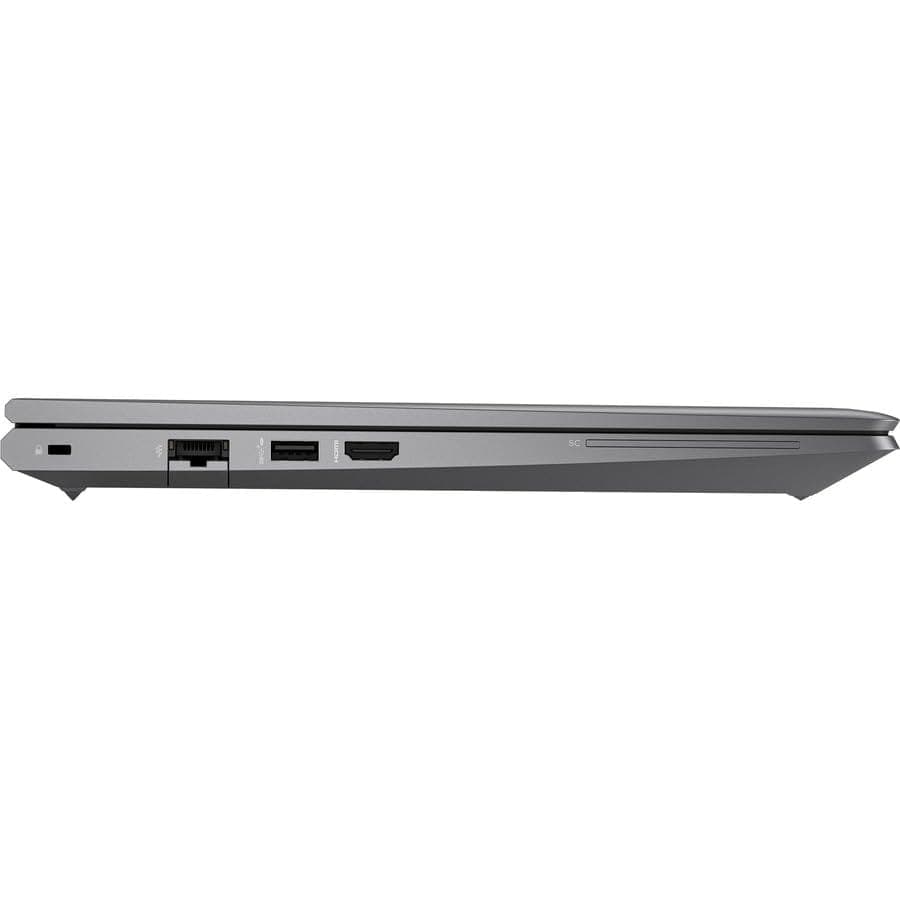
TL;DR The HP ZBook Firefly G9 positions itself in 2026 as a creator-focused thin workstation designed for photographers, UI designers, video editors, and digital professionals who require color stability and certified hardware rather than gaming-class performance. Equipped with Intel 12th Gen hybrid processors, DDR5 memory, optional NVIDIA T500 professional graphics, and calibrated IPS display options, the system supports modern editing workflows including Adobe Premiere Pro, Photoshop, Lightroom, and design suites efficiently. While not intended for cinema-grade rendering pipelines, the Firefly G9 excels in mobile creative productivity, especially for professionals working across offices, studios, and remote environments. For Indian buyers choosing refurbished workstation hardware, it offers a strong balance between portability, display accuracy, and sustained performance reliability.
Overview of HP ZBook Firefly G9 for Creators in 2026
Creative workflows in 2026 increasingly demand devices capable of balancing portability with professional visual accuracy. Content creators today often move between studio environments, remote workspaces, and client locations, making heavy desktop-replacement workstations less practical. The HP ZBook Firefly G9 Workstation Laptop addresses this shift by delivering enterprise-grade reliability within a lightweight 14-inch chassis designed specifically for sustained productivity rather than short benchmark bursts.
Unlike consumer creator laptops that prioritize GPU power alone, the Firefly G9 focuses on workflow consistency. Certified drivers, thermally stable performance behavior, and calibrated displays ensure predictable output during editing sessions. This consistency becomes crucial when handling professional deliverables such as brand visuals, marketing creatives, architectural presentations, or photography exports where color mismatch can directly affect final results.
For Indian creators evaluating refurbished professional systems, availability through curated enterprise platforms such as Refurbo, makes workstation-grade hardware financially accessible. Refurbished HP ZBook Firefly G9 units often retain enterprise display calibration quality and structural durability, offering significantly better long-term creative reliability compared to similarly priced consumer laptops.
In practical creator environments, the Firefly G9 functions less as a rendering powerhouse and more as a dependable mobile editing workstation capable of handling photography workflows, UI design, moderate video editing, and creative multitasking without thermal instability.
HP ZBook Firefly G9 Specs Overview for Creative Workflows
The HP ZBook firefly G9 Specs reveal why this model remains relevant for creative professionals even in 2026. The laptop is powered by Intel 12th Generation Alder Lake processors such as Core i5-1245U or Core i7-1265U, combining performance and efficiency cores. This hybrid architecture significantly improves multitasking performance when creators simultaneously run editing software, browser assets, preview windows, and background exports.
Memory configurations typically range from 16 GB to 64 GB DDR5 RAM, offering higher bandwidth compared to previous DDR4 platforms. For creative applications like Adobe Photoshop or Premiere Pro, faster memory improves timeline responsiveness and reduces lag during large file manipulation. Storage relies on PCIe Gen4 NVMe SSDs, enabling rapid project loading, faster media caching, and smoother playback during editing workflows involving large RAW images or high-resolution footage.
Graphics performance varies by configuration. Integrated Intel Iris Xe graphics handle photo editing, UI design, and lightweight motion graphics efficiently, while optional NVIDIA T500 professional GPU configurations provide CUDA acceleration useful for timeline rendering, effects preview, and GPU-assisted encoding tasks. Although not designed for heavy cinematic rendering, the GPU remains well suited for creator mobility workflows.
The workstation certification ecosystem further enhances stability. Professional drivers optimized for creative software reduce crashes during long editing sessions, an advantage frequently highlighted in HP ZBook firefly G9 Review discussions. Combined with accurate IPS panels and efficient power management, these specifications position the Firefly G9 as a balanced creative workstation rather than a gaming-derived creator machine.
Resolution Options and Impact on Design Productivity (FHD vs WUXGA vs UHD)
Display resolution directly influences workflow efficiency for creators working with layered timelines, multi-panel interfaces, and precision design environments. The HP ZBook Firefly G9 offers multiple display configurations including Full HD (1920×1080), WUXGA (1920×1200, 16:10 aspect ratio), and higher-quality low-power professional panels depending on enterprise configuration.
The transition from traditional FHD 16:9 panels to WUXGA 16:10 displays significantly improves vertical workspace availability. Applications such as Adobe Photoshop, Illustrator, Premiere Pro, and Figma benefit from additional vertical pixels because timelines, toolbars, and asset panels consume large portions of screen space. Designers working on long editing sessions experience reduced scrolling and better interface visibility, directly improving workflow speed.
Higher-resolution panels also enhance preview accuracy when handling photography or marketing visuals. While UHD panels provide sharper image inspection and better scaling for 4K media review, they increase power consumption and may slightly reduce battery endurance during mobile work sessions. For most creators, WUXGA panels provide the optimal balance between clarity, efficiency, and battery stability.
Display Resolution Workflow Comparison
In real-world creator usage, WUXGA configurations are widely considered the most practical professional choice for portable editing systems in 2026.
Calibration Capabilities and Factory-Optimized Profiles
Color reliability remains one of the strongest advantages of workstation-class laptops over consumer creator machines. The Firefly G9 integrates factory-calibrated IPS display options designed to maintain predictable color reproduction across professional workflows. HP’s enterprise calibration approach ensures panels are tuned before deployment, minimizing deviation between on-screen visuals and exported content.
Professional creators working in branding, photography, or digital publishing rely heavily on consistent sRGB coverage and stable gamma performance. Many Firefly G9 configurations achieve near-full sRGB coverage, enabling accurate editing for web publishing, advertising assets, and social media deliverables. Unlike gaming displays that prioritize refresh rates, workstation panels emphasize uniform brightness distribution and tonal consistency across the screen.
Another practical advantage is calibration retention over time. Enterprise-grade panels typically age more predictably, allowing creators to recalibrate using tools such as X-Rite or Datacolor devices without drastic color drift. This becomes especially important for freelancers delivering client-approved visuals where color mismatch can lead to revision cycles.
In creative studios across India, refurbished workstation displays often outperform similarly priced consumer laptops because panel quality remains intact even after corporate usage cycles. As highlighted in multiple HP ZBook firefly G9 Review evaluations, display consistency remains one of the primary reasons designers continue choosing ZBook systems for professional editing environments.
For creators focused on digital publishing, marketing design, or photography workflows, calibrated IPS panels provide dependable visual output essential for professional work delivery.
GPU Performance for Video Editing and 3D Design
Creative performance within the Firefly G9 depends significantly on GPU configuration. While thin workstations cannot match RTX-class rendering machines, the optional NVIDIA T500 professional GPU offers meaningful acceleration for modern editing software.
Video editing applications such as Adobe Premiere Pro increasingly utilize GPU acceleration for playback rendering, transitions, encoding, and effects processing. The T500 enables smoother timeline scrubbing compared to integrated graphics, especially when editing multi-layer Full HD or moderate 4K footage. Export times also improve due to CUDA-based hardware acceleration.
For motion graphics and light 3D workflows using Blender, After Effects, or Fusion 360 visualization, GPU assistance improves viewport responsiveness rather than raw rendering output. Complex ray-traced rendering remains limited by thermal and power constraints inherent to thin workstation designs, but preview interaction remains fluid for moderate project sizes.
Integrated Intel Iris Xe graphics remain capable for photography, UI design, vector illustration, and lightweight editing workloads. Many creators focused on Lightroom, Canva-based design, or marketing content production may not require discrete graphics at all. However, professionals managing animation previews or layered video timelines benefit substantially from T500 configurations.
In 2026 creator ecosystems increasingly combine local editing with cloud rendering pipelines. Within this hybrid workflow model, the Firefly G9 functions effectively as a mobile creation and editing station while heavier rendering workloads shift to external or cloud infrastructure.
CPU and RAM Considerations for Heavy Editing Software
Modern creative software in 2026 depends increasingly on hybrid CPU architectures and high-memory bandwidth rather than GPU power alone. The HP ZBook Firefly G9 benefits from Intel 12th Gen Alder Lake processors that combine Performance cores and Efficient cores, allowing simultaneous handling of background rendering, live previews, and multitasking workflows.
Applications such as Adobe Premiere Pro, After Effects, DaVinci Resolve, and Photoshop distribute workloads across multiple threads. During real editing sessions, creators often run browsers, asset libraries, music tools, plugins, and communication platforms alongside editing software. Hybrid CPUs improve responsiveness by allocating foreground editing operations to Performance cores while background exports or syncing tasks run on Efficient cores.
RAM capacity plays an equally critical role. While 16 GB RAM remains usable for photo editing and lightweight video production, professional creators increasingly require 32 GB configurations to avoid memory swapping during multi-layer timelines or RAW image batch processing. Large PSD files, 4K timelines, or complex Illustrator projects quickly exceed 16 GB usage thresholds.
DDR5 memory available in enterprise configurations improves bandwidth efficiency, reducing lag during large asset loading or preview generation. Memory scalability also extends usable lifespan, making refurbished workstation systems viable long-term creator investments.
Recommended RAM Configurations for Creators
In practical workflows, CPU efficiency combined with adequate RAM matters more than peak benchmark scores for creators working daily production tasks.
Photo Editing and Color Grading Workflows (Lightroom, Capture One)
Photography workflows prioritize display accuracy, storage responsiveness, and sustained CPU performance rather than extreme graphics capability. The Firefly G9 performs particularly well in applications such as Adobe Lightroom Classic and Capture One due to its workstation-grade tuning and stable thermal behavior.
RAW image processing relies heavily on CPU burst performance during import, preview generation, and export operations. High-resolution DSLR and mirrorless camera files ranging between 25 MP and 60 MP process efficiently on Firefly G9 configurations equipped with modern Intel processors. Batch exports remain consistent without sudden slowdowns commonly observed in consumer ultrabooks.
Color grading workflows benefit from IPS panels offering strong sRGB reproduction and uniform brightness distribution. Photographers editing wedding albums, commercial shoots, or marketing imagery gain predictable color output suitable for digital delivery. While the system is not designed for cinema-grade HDR mastering, it remains highly capable for web, advertising, and print-preparation workflows.
Another major advantage for Indian freelancers and studio professionals lies in mobility. Photographers frequently review and edit content on-site after shoots, during travel, or client meetings. Lightweight workstation portability combined with professional display calibration enables reliable preview delivery without external monitors.
HP ZBook firefly G9 Review discussions frequently highlight consistent Lightroom responsiveness compared to consumer creator laptops within similar price brackets. For photographers managing high-volume edits rather than cinematic rendering pipelines, the Firefly G9 aligns extremely well with real-world production workflows in 2026.
Storage Speed and Workflow Efficiency: SSDs and NVMe Drives
Creative productivity is heavily influenced by storage performance, especially when working with large media libraries. The Firefly G9 supports PCIe NVMe SSD storage, dramatically improving workflow efficiency compared to SATA-based systems still common in older laptops.
NVMe drives reduce project loading times, media caching delays, and export bottlenecks. Video editors working with large footage folders experience faster timeline indexing, while designers opening layered Photoshop or Illustrator files benefit from near-instant asset access. Scratch disk performance also improves significantly, preventing lag during complex editing operations.
Modern editing workflows increasingly rely on multi-drive organization. Many creators maintain operating system files on a primary NVMe drive while storing active projects on secondary SSD storage or external Thunderbolt drives. The Firefly G9’s enterprise connectivity enables fast external storage expansion, supporting scalable creator environments.
High-speed storage becomes particularly important during collaborative workflows where assets sync continuously via cloud services. Faster SSD read/write performance minimizes interruptions caused by background synchronization or version control systems.
Storage Impact on Creative Workflow
In real-world usage, upgrading storage often produces greater workflow improvement than upgrading CPU or GPU alone, making refurbished workstation upgrades highly cost-effective for creators.
Portability vs Performance: Workstation Mobility for Creators
One of the defining advantages of the HP ZBook Firefly G9 is its ability to balance professional workstation reliability with true daily portability. Traditionally, creator workstations required bulky 15-inch or 17-inch chassis to sustain performance, making travel editing inconvenient. The Firefly G9 changes that equation by delivering certified workstation hardware inside a lightweight 14-inch form factor suitable for hybrid work environments in 2026.
For creators working across studios, coworking spaces, cafés, or client offices, mobility directly affects productivity. Video editors reviewing footage on location, photographers selecting images immediately after shoots, and designers presenting concepts during meetings benefit from a system that can move effortlessly without sacrificing professional stability. At roughly 1.4 kg depending on configuration, the Firefly G9 remains significantly easier to carry than traditional workstation laptops like older ZBook 15-series models.
Performance trade-offs naturally exist due to thermal limits of thinner chassis designs. Sustained GPU rendering or long export sessions perform slower compared to thicker RTX workstation systems. However, modern creator workflows increasingly distribute workloads between local editing and cloud rendering platforms, reducing dependence on maximum local GPU power.
Mobility vs Performance Comparison
For most Indian freelance creators, consultants, and agency professionals, mobility efficiency often improves real productivity more than raw benchmark performance.
Who Should Buy Based on Creative Workflow Needs
The Firefly G9 is best suited for creators whose workflows emphasize editing precision, mobility, and multitasking reliability rather than heavy cinematic rendering. Graphic designers working in Adobe Illustrator, Photoshop, Figma, or branding environments benefit from consistent CPU responsiveness and color-stable displays that remain dependable across long working sessions.
Photographers handling RAW processing, wedding editing, commercial shoots, or social media production represent another ideal audience. The system comfortably manages Lightroom catalogs, batch exports, and preview rendering without excessive heat or throttling. For many Indian freelance photographers, especially those working remotely or traveling between cities, portability combined with workstation certification becomes a significant operational advantage.
Video creators producing YouTube content, corporate videos, educational media, or marketing reels also find the Firefly G9 practical when configured with adequate RAM and NVMe storage. Timeline editing, proxy workflows, and moderate 4K exports perform reliably. However, filmmakers engaged in heavy cinematic workflows involving multi-cam RAW footage or complex visual effects may require RTX-class workstation GPUs.
Students pursuing design, animation fundamentals, architecture visualization learning, or media production courses also gain long-term value from refurbished enterprise systems due to upgrade flexibility and durability.
Creators choosing Refurbished HP ZBook Firefly G9 units often prioritize stability, professional drivers, and predictable performance over gaming-oriented creator laptops that may deliver higher peak scores but inconsistent sustained output.
Final Recommendation And Decision Framework
The HP ZBook Firefly G9 Workstation Laptop should be evaluated through workflow practicality rather than specification marketing. In 2026, creative production increasingly depends on balanced systems capable of editing, multitasking, collaboration, and mobility rather than purely local rendering horsepower. The Firefly G9 succeeds by delivering enterprise reliability, professional GPU options, and efficient hybrid CPU performance within a portable chassis.
For creators primarily focused on photography, graphic design, digital illustration, UI/UX work, marketing media production, and moderate video editing, the system provides an excellent balance between performance and usability. Its workstation certification ensures software stability, while efficient thermals allow predictable long editing sessions without disruptive throttling behavior common in consumer laptops.
Refurbished workstation availability further strengthens its value proposition in India. Instead of investing heavily in new creator machines that depreciate quickly, professionals can access business-grade engineering at significantly optimized pricing through platforms such as Refurbo. This approach aligns particularly well with freelancers, startups, and independent creators scaling their workflows gradually.
The key decision framework remains simple. If your creative workload depends on editing efficiency, portability, and consistent reliability, the Firefly G9 represents a highly rational workstation choice. If your workflow revolves around full-time GPU rendering or cinematic production pipelines, stepping up to larger RTX-equipped workstations becomes the better long-term investment.
Frequently Asked Questions (FAQs)
Q. Is HP ZBook Firefly G9 good for video editing in 2026?
A. Yes, it handles Full HD and moderate 4K video editing smoothly, especially when configured with Core i7 processor, 32 GB RAM, and NVMe SSD.
Q. Can HP ZBook Firefly G9 run Adobe Premiere Pro and Photoshop efficiently?
A. Yes, certified workstation drivers, hybrid Intel CPUs, and fast storage ensure smooth performance in Adobe Premiere Pro, Photoshop, and Lightroom.
Q. Is NVIDIA T500 GPU necessary for creative workflows?
A. It is recommended for video editing, motion graphics previews, and GPU-accelerated tasks, though integrated graphics are sufficient for basic design work.
Q. Is HP ZBook Firefly G9 suitable for photographers and RAW editing?
A. Yes, calibrated IPS displays, fast NVMe storage, and stable CPU performance make it highly suitable for Lightroom and Capture One workflows.
Q. How much RAM is recommended for creators using Firefly G9?
A. 32 GB RAM is recommended for long-term usability, especially for video editing, multitasking, and large creative projects.
Q. Does HP ZBook Firefly G9 support external colour-accurate monitors?
A. Yes, Thunderbolt and USB-C connectivity allow connection to professional calibrated external displays.
Q. Is refurbished HP ZBook Firefly G9 reliable for creative professionals?
A. Yes, enterprise workstation hardware is built for durability, and refurbished units remain reliable when sourced from trusted sellers.
Q. Is HP ZBook Firefly G9 good for animation and Blender workloads?
A. It supports light animation, modelling, and preview rendering, but heavy rendering workflows require RTX-class workstation GPUs.
Q. Is Firefly G9 portable enough for travelling creators?
A. Yes, its lightweight workstation design makes it ideal for freelance creators, photographers, and professionals working across locations.
Q. Is HP ZBook Firefly G9 better than consumer creator laptops?
A. Yes, workstation platforms offer better stability, display accuracy, and long-term reliability compared to many consumer creator laptops.
Ready to upgrade your tech?
Browse our collection of quality refurbished products at unbeatable prices.






