
HP ZBook Firefly G11 vs Dell Precision Mobile Workstations In 2026: Best Mobile Workstation?
A detailed comparison of HP ZBook Firefly G11 and Dell Precision thin workstations covering thermals, display quality, upgrades, pricing, and professional workflow performance in 2026.

TL;DR Choosing between the HP ZBook Firefly G11 and Dell Precision mobile workstation models in 2026 depends less on raw specifications and more on workflow stability, portability priorities, and long-term ownership value. The Firefly G11 focuses on ultra-mobile enterprise productivity powered by Intel Core Ultra architecture, efficient thermals, and professional display calibration, making it highly suitable for consultants, analysts, engineers, and hybrid professionals. Dell Precision systems, particularly thin Precision 3-series models, emphasize corporate deployment flexibility and slightly broader GPU configuration availability depending on region. For Indian buyers, especially those considering refurbished workstation investments, pricing differences become decisive. Enterprise-grade reliability combined with lower refurbished pricing often allows higher specifications within the same budget. Buyers prioritizing mobility, battery efficiency, and consistent sustained performance typically lean toward the Firefly G11, while users needing marginally stronger GPU configurations may evaluate Precision alternatives. In real professional workflows rather than synthetic benchmarks, both platforms compete closely, but optimization philosophy differs significantly.
HP ZBook vs Dell Precision: Quick Decision Guide (2026)
In 2026, mobile workstations have evolved into two distinct categories: ultra-portable enterprise workstations and performance-focused portable desktops. The HP ZBook Firefly G11 Workstation Laptop clearly belongs to the first category, prioritizing mobility with certified professional performance, whereas Dell Precision thin models balance portability with slightly more aggressive hardware scaling depending on configuration.
HP’s Firefly lineup emphasizes sustained CPU efficiency through Intel Core Ultra processors integrating performance cores, efficiency cores, and dedicated AI acceleration engines. This architecture improves multitasking responsiveness during analytics workloads, documentation-heavy environments, and CAD viewing sessions. Dell Precision systems often provide comparable processors but may allow slightly higher short-duration power limits, benefiting burst workloads rather than extended professional sessions.
Another important distinction lies in enterprise deployment philosophy. HP tunes ZBook systems for thermal consistency and predictable performance, ensuring minimal throttling during long Excel simulations, compiling workflows, or engineering reviews. Dell Precision machines frequently target IT-managed environments where configuration flexibility matters more than mobility optimization.
Quick Comparison Table (2026)
For professionals seeking daily reliability over benchmark peaks, Firefly G11 typically offers a more balanced experience.
Design Philosophy: Enterprise Engineering vs Corporate Mobility Approach
The design philosophy difference between HP ZBook and Dell Precision becomes immediately noticeable in daily professional use. HP approaches the Firefly G11 as a mobility-first workstation, engineered for professionals who frequently move between offices, campuses, airports, and client environments. The chassis design prioritizes reduced thickness, efficient internal layout, and balanced weight distribution without sacrificing enterprise durability standards.
Dell Precision models, by contrast, historically follow a corporate deployment philosophy. Their design language focuses on structural rigidity and modular consistency across enterprise fleets. This benefits organizations managing thousands of devices but can slightly increase overall system weight or thickness compared to HP’s mobility-driven engineering.
HP integrates magnesium-aluminum hybrid chassis construction in the Firefly G11 to maintain strength while improving portability. This results in a workstation that feels closer to a premium ultrabook while still maintaining ISV-certified reliability. Precision systems often retain a more traditional workstation aesthetic prioritizing service accessibility and standardized corporate maintenance procedures.
From a usability perspective, HP’s approach benefits professionals working long hours away from desks. Reduced carry fatigue, thinner profiles, and optimized hinge resistance improve real-world handling during travel and meetings. Dell Precision systems, meanwhile, appeal strongly to fixed-office enterprise users prioritizing uniform deployment rather than frequent mobility.
Ultimately, the distinction reflects two valid philosophies: engineering mobility versus enterprise uniformity. Understanding which environment dominates your workflow becomes the key decision factor.
Build Quality and Chassis Durability Comparison
When investing in a professional system in 2026, build durability is just as important as specifications. The HP ZBook Firefly G11 is constructed using a magnesium-aluminum alloy chassis designed to meet MIL-STD-810H durability testing standards. This certification includes resistance to vibration, shock, temperature variations, and controlled humidity exposure. While such ratings are not extreme field guarantees, they demonstrate enterprise-grade structural validation beyond consumer ultrabook standards.
Dell Precision thin models, particularly the 3-series mobile workstations, also meet MIL-STD durability benchmarks. Dell traditionally emphasizes structural rigidity and keyboard deck reinforcement, making their Precision systems feel slightly denser. However, this sometimes comes at the cost of marginally increased weight. The Firefly G11, by contrast, balances lightweight engineering with rigidity, which benefits consultants and hybrid professionals who travel frequently.
Keyboard deck flex, hinge resistance, and palm-rest stability are critical in long corporate usage cycles. HP’s hinge system maintains controlled resistance, preventing screen wobble during typing on uneven surfaces. Precision models typically feature firm hinge mechanisms as well, though some configurations feel slightly heavier during one-hand opening. For professionals prioritizing portability without compromising enterprise strength, Firefly G11 offers an effective middle ground between premium ultrabook comfort and workstation resilience.
Thermal Performance and Sustained Load Stability
Thermal management defines the true performance behavior of any thin mobile workstation. The Firefly G11 utilizes Intel Core Ultra processors with hybrid architecture, combining performance cores and efficiency cores alongside integrated AI acceleration. This structure allows improved power distribution under sustained loads such as spreadsheet simulations, CAD viewing, and multi-tab analytics workflows. HP tunes thermal limits conservatively to maintain stable sustained performance rather than short burst benchmark peaks.
Dell Precision thin workstations often allow slightly higher short-duration boost limits depending on configuration. While this can produce marginally higher benchmark scores, it may also lead to earlier thermal saturation in prolonged tasks. In real-world corporate workflows, extended processing stability typically matters more than peak clock speeds. Firefly G11’s cooling solution is optimized for quieter operation under moderate workloads, making it better suited for meetings, classrooms, and shared offices.
Under continuous professional tasks such as compiling code, exporting presentations, or running data queries, both systems maintain acceptable thermals. However, Firefly G11’s balanced power envelope generally results in lower sustained fan noise. For Indian professionals working in compact office spaces or remote home environments, reduced acoustic output contributes to better long-term usability. In practice, neither device replaces thicker performance workstations, but within ultra-mobile categories, Firefly G11 delivers consistent thermal reliability.
Display Quality and Color Accuracy for Professional Users
Display quality increasingly influences professional buying decisions, especially for analysts, designers, and consultants presenting client work. Firefly G11 typically offers 14-inch 16:10 WUXGA IPS panels with optional higher brightness configurations. The 16:10 aspect ratio provides additional vertical workspace compared to traditional 16:9 displays, improving productivity in spreadsheet modeling, document editing, and coding environments.
Color accuracy on the Firefly G11 is tuned for professional neutrality rather than entertainment vibrancy. IPS technology ensures stable viewing angles and consistent color reproduction, particularly important during collaborative review sessions. Some configurations may include enhanced color gamut panels depending on regional availability. Dell Precision thin models offer comparable IPS options, but HP’s calibration approach often prioritizes color consistency across brightness levels, reducing tonal shifts during extended use.
Brightness typically ranges between 300 to 400 nits on standard configurations, sufficient for indoor office usage and most corporate environments. Dell Precision panels deliver similar luminance, though specific configurations vary widely. In prolonged professional sessions, anti-glare coatings on both systems help reduce reflection and eye fatigue.
Overall, the Firefly G11 stands out not because of extreme display specifications, but due to balanced calibration, aspect ratio efficiency, and eye-comfort optimization, which matter significantly more than marketing contrast numbers in professional workflows.
Battery Life and Real-World Mobility Performance
In the ultra-mobile workstation category, battery efficiency plays a decisive role, especially for hybrid professionals and consultants frequently working away from fixed desks. The HP ZBook Firefly G11 is powered by Intel Core Ultra processors built on efficiency-focused hybrid architecture, integrating performance cores, efficiency cores, and a dedicated NPU. This architecture allows better background task handling without constant high power draw, resulting in improved real-world mobility compared to older workstation generations.
In practical corporate workloads such as Excel modeling, browser-based dashboards, video meetings, and document preparation, Firefly G11 commonly delivers a full working half-day on balanced settings depending on battery configuration. HP also integrates panel self-refresh and low-power display technologies in select configurations to further extend runtime. Dell Precision thin models offer comparable battery capacities, but real-world endurance varies depending on GPU configuration and thermal tuning. Systems configured with higher discrete GPU limits may experience faster drain under sustained graphics workloads.
Charging flexibility also matters in India’s hybrid work environment. Firefly G11 supports Thunderbolt-based charging alongside traditional adapters, allowing professionals to use compatible USB-C docks and travel chargers. Dell Precision models provide similar charging compatibility. However, HP’s slightly lighter chassis combined with efficient power tuning often results in a stronger mobility-to-performance balance, making Firefly G11 particularly attractive for consultants, MBA professionals, and enterprise managers working across multiple locations.
Upgradeability, Serviceability, and Long-Term Maintenance
Enterprise workstations are expected to offer longer service cycles than consumer ultrabooks. Firefly G11 maintains professional-grade internal accessibility while still adhering to a thin design philosophy. Depending on configuration, RAM may be partially soldered with one accessible slot, while SSD storage remains user-replaceable via standard NVMe interfaces. This allows future storage upgrades, extending lifecycle value without replacing the entire system.
Dell Precision thin models traditionally emphasize serviceability, sometimes offering easier internal access depending on specific chassis design. Corporate IT departments often favor Dell for standardized maintenance documentation and fleet uniformity. However, HP’s enterprise support ecosystem remains equally mature, offering detailed service manuals and certified replacement parts. In practical ownership terms, both brands provide reliable long-term maintenance frameworks.
From a cost-efficiency perspective, upgrade flexibility significantly impacts total cost of ownership. Refurbished configurations of Refurbished HP ZBookf Firefly G11 often allow buyers to select higher RAM or SSD capacity at lower overall investment compared to purchasing new mid-tier ultrabooks. This flexibility becomes particularly important for professionals whose workloads scale over time, such as data analysts moving into heavier modeling or developers handling larger repositories.
Ultimately, both Firefly G11 and Dell Precision thin systems provide enterprise-grade service support. However, Firefly’s lighter internal layout does not compromise essential upgrade pathways, maintaining balance between portability and lifecycle longevity.
Driver Stability, ISV Certifications, and Software Compatibility
One of the most critical distinctions between consumer laptops and professional workstations lies in ISV certification and driver validation. Firefly G11 benefits from HP’s long-standing ZBook ecosystem, which includes certification for leading professional software platforms such as AutoCAD, SolidWorks, and other enterprise-grade applications. ISV certification ensures that hardware drivers are validated for stability rather than just peak performance.
Dell Precision systems also maintain strong ISV certification portfolios. Both brands collaborate with software vendors to test GPU drivers, firmware, and BIOS configurations for compatibility. However, HP’s ZBook driver packages are often optimized around predictable sustained behavior, reducing unexpected crashes during rendering previews or large spreadsheet calculations.
In corporate environments, software compatibility extends beyond CAD. Stability during Microsoft Office workloads, browser-heavy dashboards, remote collaboration platforms, and virtual machine environments matters equally. Firefly G11’s BIOS-level security integration, firmware updates, and enterprise management tools contribute to smoother long-term deployment.
For Indian professionals working independently rather than within IT-managed environments, driver reliability reduces downtime and troubleshooting expenses. Whether running engineering simulations, compiling code, or handling financial modeling, predictable system behavior ensures work continuity. In real professional workflows, this stability advantage frequently outweighs small differences in benchmark scores between competing workstation brands.
Port Selection, Connectivity, and Docking Ecosystem
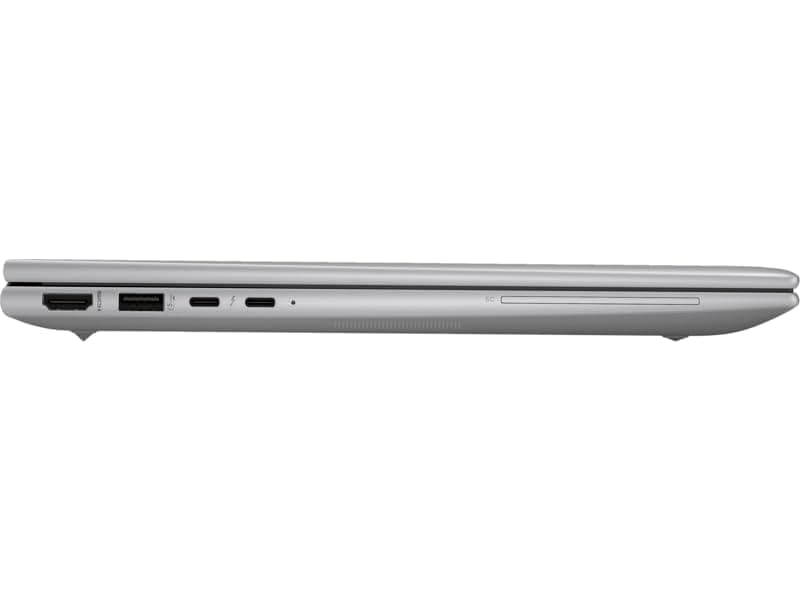
Modern mobile workstations must function as full desktop replacements when docked, and port selection becomes a critical differentiator. The HP ZBook Firefly G11 includes Thunderbolt 4 ports (on Intel configurations), USB-A ports, HDMI output, and a headphone/microphone combo jack. Select enterprise configurations may also include optional Smart Card readers depending on region. Thunderbolt 4 support enables high-speed data transfer, external GPU compatibility (where supported), and multi-display docking through a single cable.
Dell Precision thin workstations offer a comparable enterprise port layout, typically including Thunderbolt 4, USB-A, HDMI, and optional RJ-45 via mini adapters depending on chassis thickness. Dell’s docking ecosystem is mature, particularly within IT-managed environments that deploy WD-series docks at scale. HP, however, provides strong integration with Thunderbolt-based HP docks that deliver power, Ethernet, and dual or triple display support via one cable connection.
For hybrid professionals in India who frequently move between office desks and home setups, docking simplicity directly affects daily productivity. Firefly G11’s ability to transition instantly from portable workstation to multi-monitor desktop environment reinforces its mobility-first engineering philosophy. Connectivity reliability under sustained workloads is equally important; HP’s BIOS-level updates and enterprise firmware optimization contribute to stable dock performance during long working sessions.
In 2026, port adequacy is no longer about quantity alone but about ecosystem integration. Both HP and Dell deliver enterprise-ready connectivity, but Firefly G11 aligns particularly well with professionals who need lightweight travel combined with seamless docking performance at fixed desks.
Price Comparison in India: New vs Refurbished Workstation Value
Pricing in India remains one of the most decisive factors when selecting a mobile workstation. New configurations of HP ZBook Firefly G11 Price in India typically vary significantly depending on CPU tier, RAM capacity, SSD configuration, and GPU inclusion. Premium Intel Core Ultra configurations with higher memory capacities may reach upper enterprise price brackets. Dell Precision thin models are similarly positioned within professional pricing tiers, often matching or slightly exceeding HP depending on customization.
However, value perception changes considerably in the refurbished market. Platforms offering Refurbished HP ZBook Firefly G11 units allow professionals to access enterprise-grade hardware at substantially lower cost compared to new mid-tier ultrabooks. Because workstation-class components are engineered for longer lifecycle deployment, refurbished units often maintain strong usability even after corporate rotation cycles.
Below is a simplified value comparison reflecting typical market positioning in 2026:
For independent professionals, startups, and MBA students entering consulting or analytics roles, refurbished workstation investments often provide superior performance-per-rupee value without sacrificing enterprise reliability.
HP Firefly G11 and Dell Precision Decision Framework
When comparing Firefly G11 and Dell Precision thin workstations in 2026, the decision should be guided by workflow intensity, mobility frequency, and budget allocation rather than raw specification comparisons alone. Firefly G11 excels in delivering balanced sustained performance within a lightweight chassis. Its emphasis on mobility, efficient thermal tuning, and enterprise display calibration makes it particularly attractive for consultants, analysts, and hybrid professionals who travel frequently.
Dell Precision thin systems remain excellent choices for IT-managed enterprise environments requiring standardized deployment across large teams. Their slightly more configurable ecosystem may appeal to corporate procurement departments. However, for individual professionals making independent purchasing decisions, Firefly G11 often provides a better balance between portability and workstation-grade reliability.
The final decision framework can be summarized simply. If your priority is lighter weight, strong battery efficiency, stable thermals, and competitive refurbished pricing, Firefly G11 stands out. If your organization prioritizes uniform corporate integration with existing Dell infrastructure, Precision models remain strong contenders. In real-world professional workflows rather than benchmark comparisons, both are capable, but Firefly G11 consistently delivers a more mobility-optimized workstation experience in 2026.
Frequently Asked Questions (FAQs)
Q. Is HP ZBook Firefly G11 better than Dell Precision thin models?
A. It depends on workflow priorities. Firefly G11 excels in mobility, battery efficiency, and sustained performance, while Dell Precision may offer slightly broader enterprise configuration flexibility.
Q. Does Firefly G11 support Intel Core Ultra processors?
A. Yes. It is built around Intel Core Ultra architecture, providing hybrid performance cores, efficiency cores, and integrated AI acceleration.
Q. Which workstation is lighter?
A. Firefly G11 is generally lighter, as it is engineered specifically for ultra mobile professional usage.
Q. Are both laptops ISV certified?
A. Yes. Both HP ZBook and Dell Precision families maintain ISV certifications for major professional software platforms.
Q. Is Firefly G11 good for Excel and analytics workloads?
A. Yes. It performs very well in sustained spreadsheet modeling, dashboard analysis, and multitasking business environments.
Q. Does Dell Precision offer better GPU options?
A. Certain Precision configurations may provide stronger discrete GPU flexibility depending on the specific model selected.
Q. Is refurbished Firefly G11 worth buying in India?
A. Yes. Refurbished enterprise units often deliver excellent value, long lifecycle reliability, and strong cost efficiency compared to new consumer laptops.
Q. Which is better for frequent travel?
A. Firefly G11 is better suited for travel heavy professionals due to its lighter chassis and optimized battery performance.
Q. Can both support multiple monitors?
A. Yes. Both platforms support multi display setups through Thunderbolt based docking solutions.
Q. Which workstation offers better long term value?
A. For independent professionals, refurbished Firefly G11 configurations typically offer the strongest cost to performance ratio in 2026.
Ready to upgrade your tech?
Browse our collection of quality refurbished products at unbeatable prices.






