
HP ZBook Firefly 14 vs Dell Precision In 2026: Best Mobile Workstation?
Explore common questions comparing HP ZBook Firefly 14 and Dell Precision mobile workstations, including performance, portability, upgrades, and professional use cases in 2026.

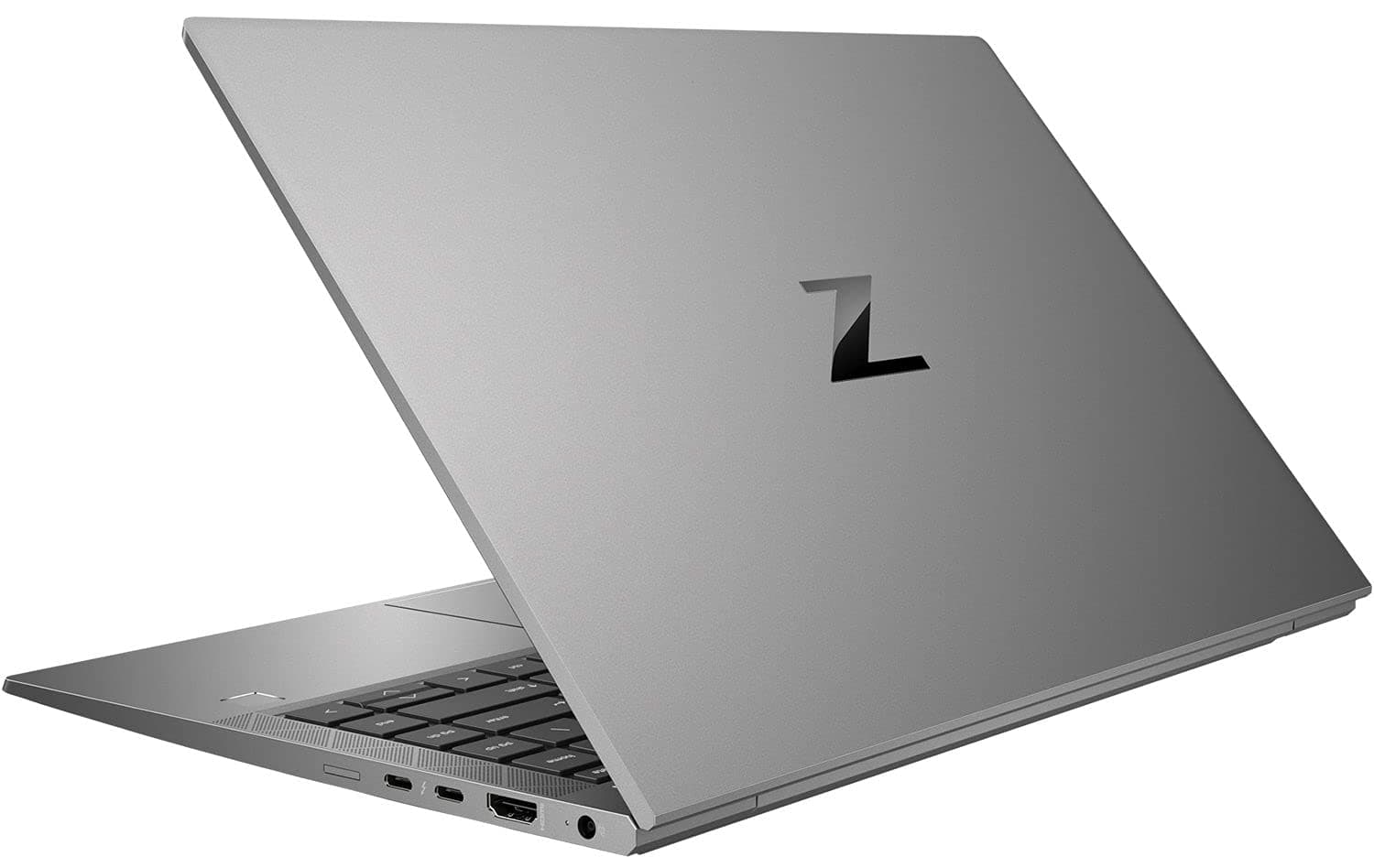
TL;DR Choosing between the HP ZBook Firefly 14 and Dell Precision mobile workstations in 2026 ultimately depends on whether users prioritize mobility-first engineering or enterprise performance flexibility. The Firefly 14 focuses on lightweight portability, long working comfort, and balanced workstation reliability, while Dell Precision systems traditionally emphasize modular performance scaling and slightly higher sustained GPU configurations. For consultants, analysts, MBA professionals, architects handling drafting workloads, and hybrid workers, the Firefly 14 delivers excellent real-world usability with strong battery efficiency and thermal predictability. Dell Precision models appeal more to users needing heavier GPU workloads or upgrade-heavy deployment environments. For Indian buyers, especially in the refurbished segment available. The Firefly 14 frequently provides better price-to-professional-performance value while maintaining ISV-certified workstation stability.
HP ZBook vs Dell Precision- Quick Decision Guide (2026)
In 2026, the comparison between HP ZBook and Dell Precision series represents one of the most common enterprise workstation decisions globally. Both product families target professional environments rather than consumer markets, meaning priorities revolve around driver stability, thermal reliability, and predictable long-duration performance rather than benchmark spikes.
The HP ZBook Firefly14 Review consistently highlights HP’s design strategy focused on ultra-mobile professionals who require workstation certification without carrying heavy chassis systems. The Firefly 14 integrates efficient Intel or AMD professional platforms optimized for sustained office workloads, analytics modeling, CAD viewing, and multitasking-heavy environments. Dell Precision alternatives, particularly the Precision 34xx or 35xx mobile class, often allow marginally higher GPU configurations but typically at the cost of additional weight and slightly reduced battery efficiency.
For Indian professionals evaluating workstation investments, refurbished pricing significantly shifts this decision. Enterprise refresh cycles release large volumes of ZBook and Precision units into the secondary market, making refurbished workstation laptops extremely attractive compared to consumer ultrabooks priced similarly but lacking enterprise durability.
Quick Decision Comparison (2026)
Professionals prioritizing portability usually lean toward Firefly, while GPU-focused users may prefer Precision configurations.
Design Philosophy: Enterprise Engineering vs Corporate Mobility Approach
HP and Dell approach workstation design from noticeably different engineering philosophies. The HP ZBook Firefly 14 Workstation Laptop represents HP’s transition toward modern mobile enterprise computing, where professionals increasingly work across offices, homes, airports, and client locations. HP engineers the Firefly series around thin magnesium-aluminum chassis construction, prioritizing portability without abandoning workstation-grade validation standards.
Dell Precision systems traditionally follow a modular enterprise philosophy derived from corporate IT deployment requirements. Precision laptops often maintain slightly thicker builds to accommodate broader configuration flexibility and thermal headroom. This approach benefits organizations running standardized engineering workloads requiring predictable upgrade paths across multiple deployment cycles.
In daily professional usage, these philosophical differences become immediately noticeable. The Firefly 14 feels closer to a premium ultrabook but retains workstation DNA through ISV certification and enterprise firmware optimization. Precision systems, by contrast, feel more like compact desktop replacements intended for structured office environments rather than constant mobility.
The distinction matters significantly in 2026 work culture. Consultants, finance professionals, startup founders, and hybrid employees increasingly prioritize carry comfort, battery endurance, and silent operation during meetings. Here, the Firefly 14 aligns strongly with evolving professional workflows. Precision models remain excellent choices for engineering departments operating within fixed infrastructure setups where mobility is secondary to hardware scalability.
Build Quality and Chassis Durability Comparison
Both HP and Dell design their mobile workstations to survive enterprise deployment cycles that typically last four to five years, which immediately separates them from consumer laptops. The HP ZBook Firefly 14 follows HP’s professional ZBook engineering standards using a magnesium-aluminum alloy chassis that balances rigidity with reduced weight. The laptop undergoes MIL-STD durability validation, meaning resistance against vibration, pressure variation, temperature fluctuation, and minor drops encountered during frequent travel.
Dell Precision systems also meet enterprise durability requirements but generally adopt a slightly thicker structural frame. Dell prioritizes internal reinforcement around keyboard decks and hinge assemblies, making Precision models feel marginally denser and more industrial. This benefits organizations deploying systems in engineering offices or technical labs where machines remain docked most of the time rather than constantly transported.
In practical Indian usage conditions involving commuting, shared workspaces, and travel between client offices, chassis weight becomes an important usability factor. The Firefly 14 typically remains close to ultrabook territory while maintaining workstation reliability. Keyboard flex remains minimal, hinge resistance stays consistent even after prolonged use, and palm-rest temperatures remain comfortable during extended working hours.
Precision laptops may offer slightly stronger torsional rigidity, but the trade-off appears in portability fatigue during daily carrying. Over long ownership cycles, both platforms demonstrate strong durability; however, the Firefly 14 achieves a more balanced outcome between mobility, professional build integrity, and long-term usability, making it particularly attractive for consultants and corporate professionals.
Thermal Performance and Sustained Load Stability
Thermal behavior represents one of the most critical differences between consumer laptops and professional workstations. The HP ZBook Firefly 14 Review frequently emphasizes that HP tunes the cooling system for predictable sustained performance, not short benchmark bursts. Dual-fan cooling combined with workstation power management allows CPU frequencies to stabilize rather than oscillate aggressively under continuous workloads.
During extended Excel simulations, CAD drafting sessions, or analytics processing, the Firefly 14 maintains consistent performance without sudden throttling events commonly seen in thin consumer ultrabooks. Intel U-series and AMD Ryzen Pro processors used in Firefly configurations operate within controlled thermal envelopes, ensuring reliability during long corporate workloads.
Dell Precision thin workstations sometimes allow slightly higher short-duration turbo limits depending on configuration. However, this can result in higher fan noise and faster thermal saturation under sustained load. In comparison, HP’s approach favors quieter long-session stability, which becomes important during meetings, classrooms, or shared office environments.
Under GPU-assisted workloads such as viewport rendering or visualization tasks, both systems perform similarly when equipped with entry workstation GPUs like NVIDIA T-series graphics. Neither platform targets heavy RTX-class rendering workloads, but both maintain professional-grade stability.
In real-world enterprise usage, Firefly’s thermal tuning supports consistent productivity, reduced acoustic distraction, and improved component longevity, reinforcing its positioning as a mobility-focused workstation rather than a compact performance monster.
Display Quality and Color Accuracy for Professional Users
Display quality increasingly determines workstation usability in 2026 as professionals spend entire workdays interacting with visual data. The Firefly 14 integrates IPS-based panels designed for clarity, reduced reflection, and professional viewing stability rather than entertainment-oriented contrast tuning.
Most HP ZBook Firefly 14 configurations offer Full HD or WUXGA panels delivering strong brightness uniformity and wide viewing angles. Higher-tier options include enhanced color-calibrated panels approaching professional sRGB coverage suitable for UI design, documentation preparation, presentations, and light creative workflows. Anti-glare coatings significantly improve usability under office lighting conditions common across Indian workplaces.
Dell Precision laptops provide comparable IPS panels, and in some configurations may offer slightly higher brightness ceilings. However, HP’s factory calibration consistency often results in more predictable color output across multiple units, an important factor for enterprise deployment where teams collaborate using identical hardware.
For professionals working in finance dashboards, architecture drafting, digital documentation, or marketing presentations, the Firefly 14 display offers excellent balance between sharpness and eye comfort. Long working sessions benefit from reduced glare and stable brightness behavior that minimizes fatigue.
While neither system replaces dedicated DreamColor or studio-grade displays used by high-end creators, both provide dependable visual accuracy for professional productivity. The Firefly 14 particularly excels in delivering comfortable long-duration viewing, which directly impacts real-world efficiency rather than synthetic display specifications.
Battery Life and Real-World Mobility Performance
Battery endurance has become one of the most decisive factors separating modern mobile workstations from traditional desk-bound engineering laptops. The HP ZBook Firefly 14 is specifically engineered around mobility-first workstation usage, making battery optimization a central design priority rather than an afterthought.
In real-world Indian professional environments involving browser-heavy workflows, Excel modeling, ERP dashboards, documentation, and continuous Wi-Fi connectivity, the Firefly 14 typically delivers between six to eight hours of practical productivity on a healthy battery. This performance depends heavily on configuration, display brightness, and processor choice, but overall efficiency remains superior to older-generation workstation systems. AMD Ryzen Pro variants especially demonstrate strong idle efficiency and reduced background drain.
Dell Precision thin workstations provide comparable endurance; however, configurations with higher sustained power limits or discrete GPUs may reduce unplugged runtime during continuous workloads. Precision models often prioritize performance consistency slightly over battery conservation, which becomes noticeable during travel-heavy workdays.
USB-C Power Delivery charging further strengthens Firefly mobility advantages. Professionals can charge using compatible Type-C adapters or docking solutions, reducing dependency on proprietary chargers. This flexibility proves useful during airport work sessions, shared offices, or remote consulting scenarios.
For consultants, MBA students, analysts, and professionals frequently moving between meetings, the Firefly 14 delivers a strong balance of battery efficiency, thermal stability, and portable workstation reliability, aligning closely with modern hybrid work requirements in 2026.
Upgradeability, Serviceability, and Long-Term Maintenance
Enterprise workstations differ fundamentally from consumer ultrabooks in their lifecycle expectations. Organizations typically deploy systems for four to five years, making upgradeability and maintenance accessibility extremely important. The HP ZBook Firefly14 Workstation Laptop follows HP’s enterprise service philosophy by allowing internal component access without excessive disassembly complexity.
Memory and storage upgrades remain relatively straightforward compared to sealed consumer laptops. Depending on configuration, users can expand RAM capacity and replace NVMe SSDs, enabling performance scaling over time. This flexibility significantly extends usable lifespan, particularly for professionals whose workload complexity increases gradually.
Dell Precision systems traditionally maintain strong serviceability as well, often providing excellent documentation and standardized internal layouts. Precision models may offer marginally easier internal labeling for IT-managed environments, but in practical terms both brands remain far superior to consumer laptops where components are soldered permanently.
From an Indian ownership perspective, long-term maintenance availability becomes equally important. Replacement SSDs, RAM modules, batteries, and adapters remain widely available through enterprise service channels and refurbished marketplaces. The Refurbished HP ZBook Firefly 14 ecosystem benefits from strong spare-part circulation due to large global enterprise deployment volumes.
Over extended ownership cycles, upgrade-friendly architecture reduces total cost of ownership dramatically. Instead of replacing the entire system, users can upgrade storage or memory, preserving investment value while maintaining professional performance standards.
Driver Stability, ISV Certifications, and Software Compatibility
Professional workstation reliability depends heavily on software certification rather than raw hardware specifications. HP ZBook and Dell Precision systems distinguish themselves through ISV (Independent Software Vendor) certifications, ensuring optimized compatibility with professional applications such as AutoCAD, SolidWorks, Adobe suites, and engineering simulation platforms.
HP collaborates directly with enterprise software vendors to validate driver behavior under real production workloads. Certified GPU drivers reduce graphical crashes, viewport instability, and rendering inconsistencies commonly experienced on gaming laptops using consumer drivers. The HP ZBook Firefly 14 Specs typically include professional GPU or enterprise-tuned integrated graphics environments optimized for productivity applications rather than gaming optimization.
Dell Precision machines also maintain strong ISV certification ecosystems, particularly in engineering-heavy deployments. However, HP’s workstation software stack integrates tightly with HP Performance Advisor tools, which automatically recommend driver updates and performance tuning adjustments based on installed applications.
For corporate IT teams and independent professionals alike, driver predictability becomes critical during deadlines. Stable drivers reduce downtime, minimize compatibility troubleshooting, and ensure smoother collaboration across teams using standardized workstation environments.
In practical 2026 workflows involving CAD drafting, analytics modeling, financial simulations, and enterprise software stacks, both platforms provide excellent compatibility. The Firefly 14 stands out by combining certification stability with lighter mobility, delivering enterprise reliability without workstation bulk, making it especially suitable for professionals who need dependable software performance while remaining highly portable.
Port Selection, Connectivity, and Docking Ecosystem
Modern professionals increasingly operate across multiple environments including home offices, corporate workplaces, co-working hubs, and client locations. The HP ZBook Firefly 14 addresses this reality through a connectivity layout designed for enterprise docking workflows rather than minimal consumer ultrabook design.
The Firefly 14 typically includes Thunderbolt 4 or USB4 ports (depending on Intel or AMD configuration), USB-A connectivity, HDMI output, headphone combo jack, and enterprise docking compatibility. Thunderbolt connectivity enables simultaneous charging, high-speed data transfer, and multi-monitor output through a single cable. Professionals working with dual external monitors or docking stations benefit significantly from this streamlined workspace transition.
Dell Precision mobile workstations follow a similar enterprise-first philosophy and often include comparable Thunderbolt-enabled connectivity ecosystems. However, HP’s docking ecosystem integrates efficiently with HP Thunderbolt docks widely deployed across corporate offices. This reduces compatibility friction for enterprise users transitioning between office desks and remote setups.
Networking reliability also plays a major role in workstation usability. Both systems offer Wi-Fi 6 or Wi-Fi 6E support along with Bluetooth enterprise modules optimized for stable conferencing performance. Ethernet connectivity through docking remains critical for IT-managed corporate environments requiring consistent network throughput.
For consultants, analysts, architects, and hybrid workers, the Firefly 14 delivers plug-and-work flexibility, enabling seamless switching between mobile and desk-bound productivity environments without adapter dependency.
Price Comparison in India: New vs Refurbished Workstation Value
Workstation purchasing decisions in India increasingly depend on long-term value rather than headline specifications. Enterprise laptops depreciate rapidly despite remaining technically capable for professional workloads. This is where refurbished workstation markets create significant advantages for buyers evaluating HP ZBook Firefly 14 Price in India.
New-generation thin workstations often cross premium pricing thresholds primarily due to corporate procurement positioning. However, professionally refurbished enterprise systems provide nearly identical real-world productivity performance at substantially reduced investment levels.
India Workstation Price Comparison (2026)
Refurbished HP ZBook Firefly 14 systems typically originate from enterprise lease cycles, meaning structural durability remains intact while cost drops significantly. For Indian professionals, startups, and students entering analytics or consulting domains, refurbished workstations often represent the highest performance-per-rupee investment.
Dell Precision refurbished systems also offer strong value, but HP ZBook availability in India tends to be broader due to higher enterprise deployment volumes.
Which Workstation Should You Buy in 2026?
Choosing between HP ZBook Firefly 14 and Dell Precision mobile workstations ultimately depends on identifying workflow priorities rather than comparing specifications in isolation. Both platforms belong to enterprise workstation ecosystems designed for reliability, longevity, and certified professional software environments.
If your workflow emphasizes mobility, battery efficiency, consulting work, analytics, financial modeling, documentation, or moderate CAD workloads, the Firefly 14 emerges as a highly balanced solution. Its lighter chassis, efficient thermal behavior, and dependable enterprise drivers make it particularly suitable for professionals frequently transitioning between offices and remote environments.
Dell Precision systems become stronger candidates when workloads lean toward heavier GPU utilization or sustained engineering simulations requiring marginally higher thermal headroom. Organizations operating centralized IT environments may also favor Precision deployments due to existing enterprise infrastructure alignment.
For most Indian buyers evaluating long-term ownership cost, refurbished enterprise workstations provide the smartest purchasing strategy. Instead of investing in expensive new hardware with diminishing returns, refurbished ZBook systems deliver proven workstation stability at significantly lower financial risk.
The practical decision framework therefore becomes straightforward. Professionals prioritizing portable reliability and value efficiency should select the Firefly 14, especially through certified refurbished channels. Users requiring maximum GPU scalability should consider larger workstation classes rather than thin mobile designs altogether.
Frequently Asked Questions
Q. Is the HP ZBook Firefly 14 better than Dell Precision for travel?
A. Yes. The lighter chassis, efficient thermals, and longer battery life make the Firefly 14 better suited for mobility focused professionals.
Q. Can the Firefly 14 handle AutoCAD and business workloads?
A. Yes. It performs reliably for 2D CAD work, analytics tasks, and everyday enterprise productivity applications.
Q. Is a refurbished workstation safe to buy in India?
A. Yes. Certified refurbished enterprise laptops are built for long lifecycle usage and remain reliable when purchased from trusted sellers.
Q. Does the Firefly 14 support dual monitors?
A. Yes. Thunderbolt or USB C docking allows connection to multiple external displays for professional workflows.
Q. Is GPU rendering suitable on the Firefly 14?
A. Light rendering workloads are supported, but heavy rendering tasks are better handled by RTX class workstations.
Q. How long does a refurbished ZBook typically last?
A. With proper maintenance and occasional upgrades, a refurbished ZBook can last an additional three to five years.
Q. Are drivers stable for professional software?
A. Yes. ISV certified drivers ensure strong compatibility and stability with professional applications.
Q. Can RAM and SSD be upgraded later?
A. Most configurations allow memory and storage upgrades, extending the usable lifespan of the laptop.
Q. Is Dell Precision more powerful overall?
A. Performance depends on the specific configuration rather than the brand alone, though some Precision models allow higher GPU options.
Q. Who should prioritize the Firefly 14?
A. Consultants, MBA students, analysts, and professionals who prioritize portability and reliable daily performance benefit the most.
Ready to upgrade your tech?
Browse our collection of quality refurbished products at unbeatable prices.






