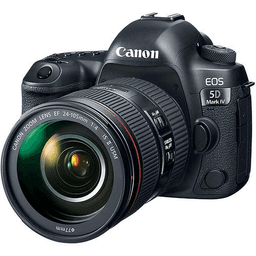
Which Old Canon DSLR Holds Its Value Best When Buying Used?
The Canon EOS 5D Mark IV remains one of the strongest older Canon DSLRs in the used market. Here is how it compares with the 6D Mark II, 90D, 80D, and 5D Mark III.

TL;DR The Canon EOS 5D Mark IV is one of the strongest older Canon DSLRs to consider if value retention matters when buying used. Its 30.4MP full-frame sensor, professional body, strong autofocus system, 4K video capability, and compatibility with Canon's extensive EF lens ecosystem keep it relevant even years after launch. Current Indian buyback and refurbished listings also show that it commands substantially more money than older models such as the EOS 5D Mark III and EOS 80D. However, used-camera value depends heavily on shutter count, physical condition, included accessories, and whether a lens is included. If you want a cheaper full-frame option, the EOS 6D Mark II is worth considering, while the EOS 90D remains relevant for buyers who prefer an APS-C DSLR with fast continuous shooting and strong resolution.
Why Some Old Canon DSLRs Hold Value Better?
Used camera prices do not fall at the same rate for every DSLR. A camera that was positioned as a professional or enthusiast model can remain desirable for years because its core hardware is still useful. Sensor performance, autofocus, body construction, controls, lens compatibility, and reliability all influence how much buyers are willing to pay for an older camera. This is particularly important with Canon DSLRs because the EF lens ecosystem is large, giving existing Canon users a reason to continue looking for compatible DSLR bodies rather than replacing their entire kit.
The Canon EOS 5D Mark IV is a good example of this effect. It uses a 30.4MP full-frame CMOS sensor and was designed as a professional all-round DSLR rather than an entry-level camera. It also offers 61-point autofocus, Dual Pixel CMOS AF for live view, and 4K video recording. Those features mean the camera still covers a wide range of photography needs, including weddings, portraits, events, landscapes, and commercial work. Its continued presence in the used market is therefore not simply about nostalgia for DSLRs.
Age still matters, though. A used DSLR is a mechanical product, and the condition of the individual unit can have a major effect on its price. Shutter count, sensor condition, ports, battery health, card slots, buttons, dials, and the lens mount all need to be considered. A heavily used professional camera can be less attractive than a newer enthusiast model in excellent condition, even when the older camera originally cost much more.
What Actually Determines Used DSLR Value?
The most important factors are the original market position, sensor format, feature set, physical condition, demand, and compatibility with existing lenses. Full-frame models generally attract a different group of buyers from APS-C cameras, while professional bodies can retain interest from working photographers who need durable controls and familiar handling.
Lens compatibility can also influence the decision. Canon's EF mount gives older DSLR users access to a large selection of lenses, including affordable primes and professional zooms. That installed lens base can make a used Canon DSLR easier to sell than an unusual camera system that requires buyers to replace their existing lenses.
The table below shows how several older Canon DSLRs currently compare in the Indian used market. The buyback figures are current "up to" values from Cashify and should not be treated as guaranteed selling prices. Actual offers vary according to condition, configuration, and inspection.
| Canon DSLR | Sensor | Resolution | Current Buyback Signal |
|---|---|---|---|
| EOS 5D Mark IV | Full-frame | 30.4MP | Up to ₹49,100 |
| EOS 6D Mark II | Full-frame | 26.2MP | Up to ₹39,400 |
| EOS 80D | APS-C | 24.2MP | Up to ₹31,300 |
| EOS 7D Mark II | APS-C | 20.2MP | Up to ₹27,800 |
| EOS 5D Mark III | Full-frame | 22.3MP | Up to ₹27,300 |
| EOS 200D Mark II | APS-C | 24.1MP | Up to ₹24,400 |
Current buyback figures from Cashify, accessed in September 2026. Actual resale prices can differ.
Canon EOS 5D Mark IV And Its Used-Market Appeal
The EOS 5D Mark IV is the model that stands out when you look at both its original positioning and current used-market demand. It was Canon's professional full-frame DSLR and combines a 30.4MP sensor with a 61-point autofocus system, DIGIC 6+ processing, a maximum continuous shooting speed of about 7 frames per second, and 4K video recording. It also supports Canon's EF lens system, which gives used buyers considerable flexibility when building a kit around an existing lens collection.
The current Indian resale signal supports its continued demand. Cashify lists a potential buyback value of up to ₹49,100 for the EOS 5D Mark IV, while a current Cashify refurbished listing has a body-only unit at ₹62,999 in Fair condition. These figures should not be confused with one another because one is a buyback ceiling and the other is a retail refurbished asking price. Even so, they show that the 5D Mark IV remains a relatively valuable used DSLR rather than a model that has simply collapsed in price.
International used-market listings tell a similar story. MPB currently lists multiple used EOS 5D Mark IV bodies across different condition grades, demonstrating that there is still an active second-hand market for the model. The existence of a professional used market matters because it gives owners more potential buyers than a camera that is mainly purchased by casual beginners.
Why The 5D Mark IV Still Makes Sense Used
The biggest advantage is that its specifications are still useful rather than merely acceptable. A 30.4MP full-frame sensor provides enough resolution for substantial cropping and large prints, while the autofocus system and robust body make the camera suitable for demanding photography. It also has the handling and physical controls expected from a professional DSLR, which can be important for photographers who prefer an optical viewfinder and direct access to camera settings.
Another reason is the EF lens ecosystem. Someone moving into a 5D Mark IV may already own EF lenses, while someone selling the camera can appeal to buyers who have accumulated Canon DSLR glass. That ecosystem does not make the camera immune to depreciation, but it can support continued demand.
There is one important limitation: the 5D Mark IV is not a modern mirrorless camera. It is heavier, older in autofocus technology when compared with current mirrorless systems, and does not offer the latest subject-detection features found on newer Canon EOS R models. For someone specifically looking for modern autofocus and compactness, an older DSLR may not be the right direction. For someone who already owns EF lenses and wants a capable full-frame body at a used price, the equation is different.
How The 6D Mark II, 90D, And 80D Compare
The EOS 6D Mark II is another older Canon DSLR that remains relevant in the used market. It has a 26.2MP full-frame sensor, DIGIC 7 processing, a 45-point all-cross-type optical-viewfinder autofocus system, and Dual Pixel CMOS AF for live view. Canon positioned it as a more accessible full-frame DSLR, and its relatively compact body made it attractive to travel, portrait, and enthusiast photographers.
Its current Indian resale signal is meaningful. Cashify lists the EOS 6D Mark II at up to ₹39,400 for buyback, while a refurbished 24-105mm kit is currently listed at ₹69,499. The difference illustrates why you should never compare a buyback figure directly with a refurbished selling price. The refurbished price includes the seller's margin, inspection, warranty, and the included lens, while a buyback quote is the amount offered to acquire the used device.
The EOS 90D takes a different approach. It uses a 32.5MP APS-C sensor and can shoot at up to 10 frames per second, with a 45-point all-cross-type optical-viewfinder autofocus system. Canon specifically positioned it for wildlife and sports photography, where the APS-C sensor's crop factor can be useful with telephoto lenses. It can therefore remain attractive to a specific group of buyers even though it is not a full-frame camera.
Older APS-C Models Still Have A Market
The EOS 80D is older than the 90D but remains relevant for photographers who want a capable APS-C DSLR without paying for a professional body. Cashify currently lists a potential buyback value of up to ₹31,300. Its 24.2MP APS-C sensor, 45-point all-cross-type autofocus system, and Dual Pixel CMOS AF still provide a useful photography platform.
The 7D Mark II occupies a different niche. It was designed around speed and autofocus for action photography and can still interest wildlife and sports photographers who prefer an optical viewfinder. Cashify currently lists a potential buyback value of up to ₹27,800. Its value is therefore tied more closely to its specific action-photography capabilities than to being a general-purpose modern camera.
These cameras demonstrate why resale value should not be judged only by age. A camera with a specific use case can continue to attract buyers. However, the current buyback figures show a clear difference between these models and the 5D Mark IV, particularly when you consider the 5D Mark IV's professional full-frame positioning.
| Model | Sensor Type | Resolution | Shooting Speed | Current Buyback Signal |
|---|---|---|---|---|
| EOS 5D Mark IV | Full-frame | 30.4MP | Approx. 7 fps | Up to ₹49,100 |
| EOS 6D Mark II | Full-frame | 26.2MP | Approx. 6.5 fps | Up to ₹39,400 |
| EOS 90D | APS-C | 32.5MP | Up to 10 fps | Check current offer |
| EOS 80D | APS-C | 24.2MP | Up to 7 fps | Up to ₹31,300 |
| EOS 7D Mark II | APS-C | 20.2MP | Up to 10 fps | Up to ₹27,800 |
| EOS 5D Mark III | Full-frame | 22.3MP | Up to 6 fps | Up to ₹27,300 |
What To Check Before Buying A Used Canon DSLR
The camera's condition should come before its reputation. Start with the shutter count, but do not treat it as the only indicator of condition. A low shutter count can be attractive, but a camera that has been stored badly, exposed to moisture, or physically damaged can still have problems. Check the body for dents around the mount, hot shoe, tripod socket, and battery compartment. Test every dial and button and make sure the LCD, optical viewfinder, and card slots work correctly.
The sensor and autofocus system also deserve careful attention. Take test photographs at different apertures and inspect them for unusual spots, lines, or other abnormalities. Dust on a DSLR sensor is not automatically a serious problem because sensor cleaning is possible, but scratches or damage are a different matter. Test autofocus with more than one lens if possible and check whether the camera consistently focuses where expected.
The battery and accessories can also change the value of a used camera. An original charger, genuine battery, body cap, strap, and packaging can make a listing more complete, although missing packaging should not automatically rule out an otherwise healthy camera. If a lens is included, inspect the front and rear elements, zoom and focus rings, autofocus, and image stabilization where applicable. A camera body and lens should be evaluated separately because a good camera can be paired with a poor lens, or vice versa.
Used DSLR Inspection Checklist
| Area | What To Check |
|---|---|
| Shutter | Verify count and test operation |
| Sensor | Check test images for unusual marks |
| Autofocus | Test with multiple focus points |
| Lens mount | Look for damage or excessive wear |
| LCD | Check brightness, pixels, and touch function where applicable |
| Card slots | Test with a working memory card |
| Battery | Check charging and battery health |
| Ports | Test USB, HDMI, microphone, and other relevant ports |
| Body | Look for dents, cracks, corrosion, or heavy wear |
| Accessories | Check charger, battery, caps, strap, and included lens |
Does A Higher Used Price Mean Better Value Retention?
Not necessarily. A camera can have a high used price because it was expensive originally, while another model may have lost a smaller percentage of its original price. These are two different measurements. If you want to know which Canon DSLR has actually retained the highest percentage of its original value, you need consistent original retail pricing, current used selling prices, condition, configuration, and region-specific data.
That is why current buyback figures are best used as a market signal rather than as a definitive depreciation calculation. For example, Cashify currently shows up to ₹49,100 for the EOS 5D Mark IV, up to ₹39,400 for the EOS 6D Mark II, and up to ₹27,300 for the EOS 5D Mark III. Those figures establish a current hierarchy in that particular buyback system, but they do not prove an exact percentage of value retained.
The practical question for a used buyer is therefore slightly different. You want a camera whose current price reflects useful hardware, whose condition can be verified, whose lenses remain available, and whose resale market is active enough that you are not stuck with the body later. On those practical measures, the EOS 5D Mark IV has several advantages over much older Canon DSLR bodies.
Common Mistakes When Buying An Old Canon DSLR
One common mistake is buying the oldest full-frame camera simply because it has a full-frame sensor. Full frame can provide useful benefits, but sensor size does not automatically make every older camera a better purchase. A newer APS-C DSLR such as the EOS 90D can offer higher resolution and faster continuous shooting, which may be more useful for wildlife or sports photography.
Another mistake is ignoring shutter count and physical condition because the seller describes the camera as "barely used." Always inspect the camera yourself or use a seller that provides a clear grading system and some form of warranty or return protection. Current refurbished listings from Cashify, for example, provide condition grades and a six-month warranty on listed refurbished cameras, which is different from buying directly from an individual seller.
The final mistake is paying too much for a body because the model has a professional reputation. A 5D Mark IV can still be a strong used camera, but its price needs to make sense against newer mirrorless alternatives. The best used purchase is not necessarily the most expensive older DSLR. It is the one where the camera's remaining capability, condition, lens compatibility, and purchase price line up with your actual photography needs.
Frequently Asked Questions
Q. Which old Canon DSLR holds its value best when buying used?
The Canon EOS 5D Mark IV is one of the strongest older Canon DSLR models for value retention based on its current used-market presence and Indian buyback signal. Cashify currently lists up to ₹49,100 for the model, while a refurbished body-only example is listed at ₹62,999. These are market signals rather than a guaranteed resale value.
Q. Is the Canon EOS 5D Mark IV still worth buying used?
Yes, it can still make sense if you want a full-frame DSLR, already own Canon EF lenses, or prefer an optical viewfinder and professional DSLR controls. Its 30.4MP sensor, 61-point autofocus system, and 4K video capability remain useful. However, newer mirrorless cameras offer more modern autofocus and lighter designs.
Q. Does the Canon EOS 6D Mark II hold its value well?
The EOS 6D Mark II remains relevant as an older full-frame DSLR. Cashify currently lists a potential buyback value of up to ₹39,400. Its 26.2MP full-frame sensor, Dual Pixel CMOS AF in live view, and relatively compact body make it a practical used option for portraits, travel, and general photography.
Q. Is the Canon EOS 90D better than the 5D Mark IV for resale?
They appeal to different buyers. The EOS 90D is an APS-C DSLR with a 32.5MP sensor and up to 10 fps continuous shooting, making it particularly relevant for wildlife and sports photography. The 5D Mark IV is a professional full-frame model with a different feature set and buyer base.
Q. What affects the resale value of a Canon DSLR?
Condition, shutter count, sensor condition, model age, original market position, lens compatibility, included accessories, and current buyer demand all affect resale value. A camera with a clean body and sensor, working controls, and a reasonable shutter count can be worth substantially more than a heavily worn example of the same model.
Q. Is shutter count important when buying a used Canon DSLR?
Yes, shutter count is an important part of assessing a used DSLR because the mechanical shutter is a wear component. However, it should not be considered in isolation. Physical condition, autofocus performance, sensor condition, ports, battery health, and maintenance history should also be checked before purchase.
Q. Does buying a Canon DSLR with a lens improve its resale value?
A useful, compatible lens can increase the total value of a camera kit, but the lens and body should be valued separately. A popular Canon EF lens in good condition can remain useful independently of the camera body, while an old or damaged lens may add little value to the package.
Q. Is the Canon EOS 5D Mark III still a good used camera?
The 5D Mark III can still produce high-quality photographs and remains an older full-frame option. However, it is substantially older than the 5D Mark IV. Cashify currently lists up to ₹27,300 for the 5D Mark III, compared with up to ₹49,100 for the 5D Mark IV, showing the difference in current buyback positioning.
Q. Should I buy an old Canon DSLR or a newer mirrorless camera?
It depends on your existing equipment and priorities. An older DSLR can make sense if you already own EF lenses, prefer an optical viewfinder, or want professional DSLR handling at a used price. A newer mirrorless camera can offer advantages in autofocus, portability, video features, and newer lens systems.
Q. What should I check before buying a used Canon DSLR?
Check the shutter count, sensor, autofocus, LCD, viewfinder, card slots, battery, charger, ports, buttons, dials, lens mount, and overall body condition. Take test photographs at different apertures and shutter speeds. If buying online, check the seller's return policy, warranty, condition grade, and whether the listed price includes a lens or body only.
Final Recommendation
If the main question is which older Canon DSLR is the safest model to consider when value retention matters, the Canon EOS 5D Mark IV has the strongest case among the models covered here. Its professional positioning, 30.4MP full-frame sensor, autofocus system, 4K video capability, EF lens compatibility, and continued presence in the used and refurbished market give it several factors that support ongoing demand. Current Indian buyback data also places it above the 6D Mark II, 5D Mark III, 80D, and 7D Mark II in absolute buyback value.
That does not mean every 5D Mark IV is automatically a good deal. A heavily used body at an inflated price can be a worse purchase than a cleaner 6D Mark II or 90D. Condition, shutter count, included lens, accessories, warranty, and the actual asking price should all be checked before you buy.
For buyers who want full-frame photography at a lower used price, the EOS 6D Mark II remains an interesting option. For wildlife and sports photographers who want an APS-C DSLR with high resolution and fast shooting, the EOS 90D deserves attention. If you want an older professional full-frame body and also care about retaining a meaningful portion of its used-market value, however, the EOS 5D Mark IV is the model to investigate first.