
Steam Deck vs ASUS ROG Ally: Which Handheld Gaming Device Makes More Sense?
The Steam Deck offers better battery life, value, and handheld gaming simplicity, while the ASUS ROG Ally delivers stronger gaming performance, Windows flexibility, and smoother high-refresh-rate gameplay for demanding PC gamers.

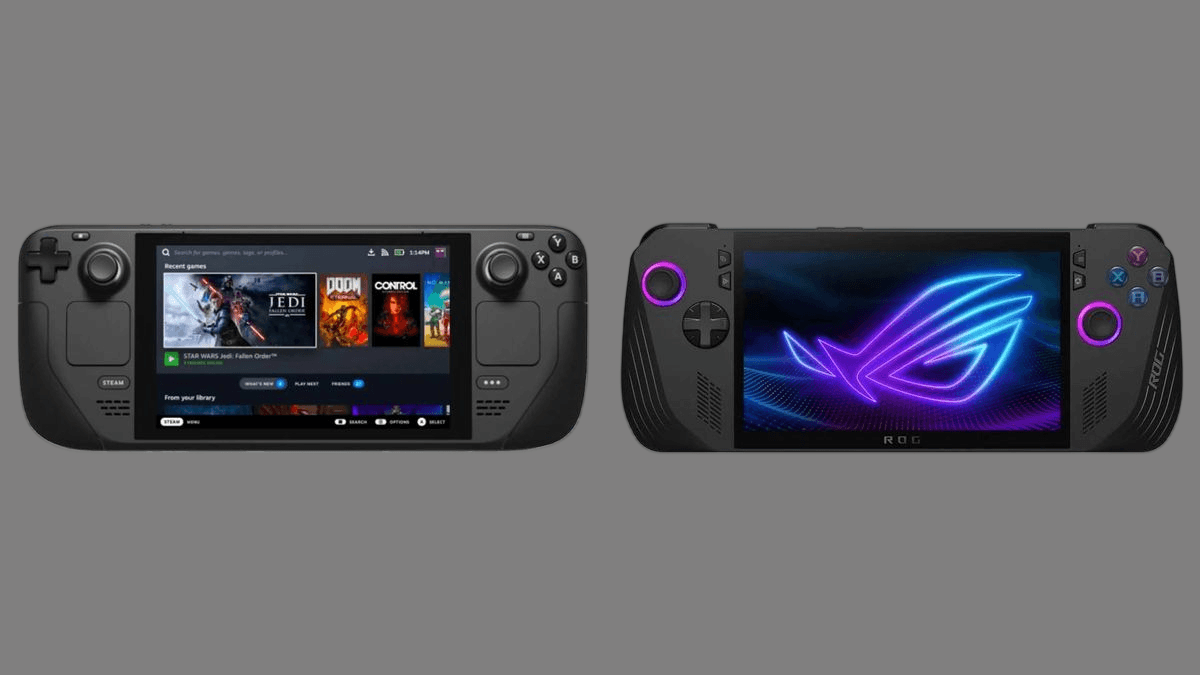
TL;DR The Steam Deck vs ASUS ROG Ally comparison comes down to one simple decision, whether you prioritize longer battery life, streamlined handheld gaming, and stronger overall value, or higher gaming performance, Windows flexibility, and better compatibility with multiple launchers. The ASUS ROG Ally delivers better raw gaming performance with its Ryzen Z1 Extreme processor, sharper 120Hz display, and native Windows 11 support, while the Steam Deck OLED remains the more balanced handheld because of its battery efficiency, cleaner SteamOS experience, quieter operation, and lower pricing. For most gamers looking for a practical long-term handheld gaming device, the Steam Deck remains the stronger overall value, while the ASUS ROG Ally is better suited for users prioritizing premium gaming performance and Windows ecosystem flexibility.
Why Handheld Gaming PCs Have Become So Popular
Handheld gaming PCs became significantly more popular because modern gamers increasingly want flexibility beyond traditional desktop and console setups. Players now expect access to large game libraries while traveling, commuting, relaxing on the couch, or moving between rooms without sacrificing PC-quality gaming experiences. Devices such as the Steam Deck and ASUS ROG Ally directly address this growing demand.
Another important factor is the improvement in low-power gaming hardware because modern AMD APUs can now deliver surprisingly strong gaming performance inside compact handheld devices. Older handheld systems often struggled with demanding PC games, but current-generation chips allow handhelds to run modern AAA titles at playable settings. This dramatically changes the handheld gaming experience.
The rise of digital game libraries also contributed heavily because many PC gamers already own hundreds of titles across Steam, Epic Games, Xbox Game Pass, and Battle.net. Portable gaming PCs therefore allow users to access existing libraries instead of purchasing separate console versions. This improves overall value significantly.
Steam Deck vs ASUS ROG Ally Specifications
| Specification | Steam Deck OLED | ASUS ROG Ally |
|---|---|---|
| Processor | Custom AMD Zen 2 APU | AMD Ryzen Z1 Extreme |
| GPU Architecture | RDNA 2 | RDNA 3 |
| Display Size | 7-inch OLED | 7-inch IPS |
| Resolution | 1280 × 800 | 1920 × 1080 |
| Refresh Rate | 90Hz OLED | 120Hz |
| Operating System | SteamOS 3.0 | Windows 11 |
| Battery | 50Wh | 40Wh |
| Storage Expansion | microSD | microSD |
| Weight | Heavier | Lighter |
| Main Strength | Battery and simplicity | Performance and compatibility |
The specifications immediately show the philosophical difference between these devices because the Steam Deck focuses heavily on balance, efficiency, and streamlined gaming experience, while the ASUS ROG Ally prioritizes raw gaming performance and broader Windows compatibility. Neither approach is universally better because the ideal choice depends heavily on gaming habits and usage priorities.
Another important factor is operating system design because SteamOS and Windows 11 create completely different user experiences during daily gaming. SteamOS feels much more console-like and focused, while Windows behaves more like a compact gaming laptop squeezed into handheld form. This dramatically affects usability.
Design and Build Quality
Both devices follow very different approaches to handheld ergonomics because Valve designed the Steam Deck around comfort and long gaming sessions, while ASUS designed the ROG Ally to feel lighter, sharper, and more performance-focused. The Steam Deck feels larger and heavier in the hands, but the grip design distributes weight more comfortably during prolonged usage.
The ASUS ROG Ally immediately feels more compact and modern because the device is noticeably lighter than the Steam Deck. This improves portability and reduces fatigue during shorter gaming sessions. However, the smaller chassis also creates slightly less natural hand positioning during extended gameplay compared to the Deck.
Another important factor is button and control layout because Valve invested heavily in controller ergonomics and additional trackpads for mouse-style navigation. The Steam Deck especially benefits strategy games, launcher navigation, and desktop interaction because the touchpads improve precision significantly. This makes the device feel more versatile during non-controller workflows.
Why Ergonomics Matter in Handheld Gaming
Handheld gaming devices are used differently from desktops and consoles because users physically support the device weight for extended periods. Comfort therefore matters much more during real-world usage than specification sheets alone. A powerful handheld quickly becomes frustrating if the ergonomics feel uncomfortable after one hour.
The Steam Deck especially performs strongly here because the grips feel fuller and more natural during long sessions involving RPGs, indie games, or extended story-driven experiences. Valve clearly prioritized comfort over slimness during development. This significantly improves long-term usability.
Another important factor is thermal comfort because handhelds generate noticeable heat during gaming. Better grip spacing and ergonomic design help reduce discomfort during demanding gameplay. The Steam Deck generally feels more stable during longer sessions, while the Ally feels more portable and modern.
Gaming Performance Comparison
The ASUS ROG Ally clearly delivers better gaming performance because the Ryzen Z1 Extreme processor provides substantially more graphical power than the custom AMD APU used inside the Steam Deck. Modern AAA titles such as Cyberpunk 2077, Starfield, Baldur’s Gate 3, and Forza Horizon 5 generally run at higher frame rates and better settings on the Ally. This creates a much more premium gaming experience.
The 120Hz Full HD display also improves responsiveness because motion clarity and animation smoothness feel significantly better during fast-paced games. Competitive multiplayer titles especially benefit from higher refresh rates and improved frame pacing. The Ally therefore feels closer to a compact gaming PC than a console-style handheld.
The Steam Deck, however, still performs surprisingly well because Valve optimized SteamOS heavily around the hardware. Indie games, older AAA titles, emulation, and moderately demanding games still run comfortably during handheld play. The Deck therefore remains highly enjoyable despite weaker specifications.
Why the ASUS ROG Ally Feels Closer to a Gaming PC
The ASUS ROG Ally behaves much more like a traditional Windows gaming PC because it runs full Windows 11 with unrestricted launcher compatibility, desktop functionality, and software flexibility. Users can install Xbox Game Pass, Steam, Epic Games, Battle.net, EA App, and various modding tools without major limitations. This dramatically improves compatibility.
The Windows environment especially benefits users with fragmented game libraries because they can move between multiple launchers without complicated workarounds. The Ally therefore feels more open and flexible compared to SteamOS. This becomes highly valuable for multi-platform PC gamers.
Another important factor is graphical flexibility because Windows gaming allows broader tweaking options for drivers, mods, overlays, and third-party tools. Advanced users therefore gain more customization freedom. The Ally feels more like a portable gaming laptop than a dedicated console.
Why the Steam Deck Still Feels Better for Simpler Gaming
The Steam Deck succeeds because Valve intentionally simplified the handheld gaming experience around SteamOS and console-style usability. Instead of forcing users into a full desktop environment constantly, the Deck boots directly into a gaming-focused interface optimized for controllers and quick access. This dramatically reduces friction.
Users therefore spend less time dealing with Windows updates, launcher management, and desktop troubleshooting compared to the ROG Ally. For players who mainly use Steam already, the Deck feels cleaner and calmer during daily usage. This improves long-term comfort significantly.
Another important factor is predictability because Valve optimizes game compatibility directly through Steam Deck verification systems. Users therefore receive clearer expectations regarding performance and controls. The streamlined experience remains one of the biggest reasons many gamers still prefer the Deck despite weaker hardware.
Display Quality and Visual Experience
The ASUS ROG Ally immediately impresses because the 7-inch Full HD 120Hz display looks sharper and more responsive during gameplay. Fast-moving games especially benefit from smoother animation handling and better visual clarity. Competitive multiplayer games therefore feel more polished on the Ally.
The Steam Deck OLED, however, introduces much stronger contrast and deeper blacks because OLED technology dramatically improves image richness during darker scenes. Story-driven games, indie titles, and cinematic experiences often look more immersive on the Steam Deck OLED despite lower resolution. This creates a different type of visual advantage.
Another important factor is display philosophy because the Ally prioritizes sharpness and refresh rate, while the Steam Deck OLED focuses more heavily on immersion and battery efficiency. Neither approach is universally superior because gaming preferences differ heavily between users. Display quality therefore becomes highly subjective here.
Battery Life Comparison
Battery life remains one of the biggest reasons the Steam Deck continues winning overall value discussions because the device lasts significantly longer during most gaming sessions. The Steam Deck OLED commonly delivers around 4 to 5 hours during lighter gaming workloads and moderate play sessions. This dramatically improves portability.
The ASUS ROG Ally, by comparison, struggles much more during demanding AAA gaming because the Ryzen Z1 Extreme processor and 120Hz display consume significantly more power. Intensive games often reduce battery life closer to 1 to 2 hours. This heavily affects portability during travel.
Another important factor is real-world usability because longer battery life changes how confidently users carry the handheld outside home environments. Flights, commutes, classrooms, hotels, and travel scenarios become much easier with the Steam Deck. Battery efficiency therefore remains one of Valve’s biggest advantages.
Why Battery Life Matters More Than Most Gamers Expect
Many gamers initially prioritize frame rates and benchmark performance while ignoring battery behavior, but portable gaming devices are fundamentally different from plugged-in desktops. Handheld gaming becomes frustrating quickly if users constantly search for charging outlets during travel or long sessions. Endurance therefore matters heavily during real-world usage.
The Steam Deck especially benefits because Valve optimized the hardware aggressively around balanced efficiency instead of maximum performance. This creates more consistent portable usability. Long indie gaming sessions therefore feel far more practical on the Deck.
Another important factor is thermal efficiency because lower power consumption generally improves heat behavior and fan noise during prolonged usage. The Steam Deck therefore often feels quieter and calmer compared to the Ally during lighter gaming sessions. This improves comfort substantially.
SteamOS vs Windows 11
The operating system difference is arguably more important than raw performance because SteamOS and Windows 11 create completely different handheld gaming experiences. SteamOS behaves much more like a console operating system optimized specifically for controllers and gaming-focused workflows. This improves simplicity dramatically.
Windows 11 on the Ally improves flexibility substantially because users can install virtually any launcher, application, or compatibility tool without major restrictions. However, this flexibility also introduces additional complexity involving updates, driver management, desktop scaling, and launcher behavior. The Ally therefore requires more maintenance.
Another important factor is ease of use because the Steam Deck generally feels faster to jump into games without dealing with desktop distractions. Casual users especially benefit from this cleaner gaming-first philosophy. Simplicity remains one of Valve’s strongest long-term advantages.
Game Launcher and Compatibility Support
The ASUS ROG Ally performs much better for launcher compatibility because Windows 11 natively supports Xbox Game Pass, Epic Games Store, Battle.net, EA App, Ubisoft Connect, and multiple third-party launchers without requiring additional setup. This significantly improves convenience for gamers with fragmented PC libraries.
The Steam Deck can technically support many of these services through Linux workarounds, Proton compatibility layers, and desktop mode configurations, but the process remains more complicated compared to native Windows support. Advanced users may feel comfortable handling these steps, but casual users often prefer simpler solutions.
Another important factor is Game Pass support because the Ally handles Xbox cloud gaming and Game Pass installations far more naturally than the Steam Deck. Users heavily invested in Microsoft’s gaming ecosystem therefore gain a major advantage with the Ally. Compatibility flexibility strongly favors ASUS here.
Storage Expansion and Practicality
Both handhelds support microSD expansion, which remains extremely important because modern PC games consume massive storage space. AAA titles regularly exceed 80GB to 120GB, which quickly fills internal SSD storage. Expandable storage therefore becomes practically necessary during long-term ownership.
The Steam Deck especially benefits from strong microSD optimization because Valve designed the system expecting users to expand storage regularly. Game installations and transfers remain relatively straightforward during daily usage. This improves convenience significantly.
Another important factor is repairability because the Steam Deck remains more repair-friendly compared to many modern gaming devices. Valve actively supported repair documentation and component accessibility much more openly than typical consumer electronics companies. This improves long-term ownership value.
Steam Deck vs ASUS ROG Ally Pricing and Value
Pricing remains one of the biggest reasons the Steam Deck continues dominating value discussions because the OLED model generally costs substantially less than the ASUS ROG Ally while still delivering highly enjoyable gaming experience. The difference becomes especially important for casual gamers prioritizing practicality over maximum performance.
The ASUS ROG Ally justifies higher pricing through stronger gaming performance, Windows flexibility, sharper display quality, and broader launcher compatibility. Users prioritizing AAA gaming performance and Game Pass integration may therefore find the premium worthwhile. Value depends entirely on gaming priorities.
Another important factor is usage philosophy because the Steam Deck feels designed for balanced portable gaming, while the Ally feels designed for enthusiasts wanting maximum handheld gaming performance regardless of battery compromise. The better purchase depends heavily on how users actually play games daily.
Why the Steam Deck Still Delivers Better Overall Value for Most Gamers
The most important takeaway is simple, the Steam Deck continues to remain the stronger overall handheld gaming value because it balances battery life, gaming comfort, SteamOS simplicity, OLED immersion, portability, quieter operation, and affordability into a much more practical long-term gaming device. While the ASUS ROG Ally clearly delivers superior raw gaming performance and broader Windows compatibility, the Steam Deck often feels easier and more comfortable to actually live with during daily gaming sessions. This significantly improves long-term usability.
Another important factor is gaming philosophy because Valve intentionally optimized the Steam Deck around streamlined handheld gaming instead of desktop-style management. Users therefore spend less time dealing with updates, launchers, compatibility tweaking, and Windows maintenance. Combined with significantly better battery endurance and lower pricing, the Steam Deck remains easier to recommend for most mainstream gamers.
At the same time, the ASUS ROG Ally remains the better option for performance-focused enthusiasts who prioritize modern AAA gaming, Xbox Game Pass, higher frame rates, and broader launcher compatibility. The Ryzen Z1 Extreme processor, 120Hz display, and Windows 11 flexibility create a much more powerful gaming experience overall. However, for most users seeking the best balance between portability, battery life, pricing, simplicity, and enjoyable handheld gaming experience, the Steam Deck still remains the smarter all-round handheld gaming purchase today.
Frequently Asked Questions
Q. Which is better overall, Steam Deck or ASUS ROG Ally?
The better device depends heavily on gaming priorities because the ASUS ROG Ally offers better gaming performance and Windows flexibility, while the Steam Deck provides stronger battery life, better value, quieter operation, and a more streamlined handheld gaming experience. Most casual and mainstream users generally benefit more from the Steam Deck overall.
Q. Is the ASUS ROG Ally more powerful than the Steam Deck?
Yes, the ASUS ROG Ally is significantly more powerful because the Ryzen Z1 Extreme processor handles demanding AAA games at higher settings and frame rates compared to the Steam Deck. The 120Hz Full HD display also improves gaming smoothness considerably. Performance-focused gamers generally benefit more from the Ally.
Q. Does the Steam Deck have better battery life?
Yes, the Steam Deck OLED delivers noticeably better battery life during most gaming sessions compared to the ASUS ROG Ally. Lighter games and indie titles especially last much longer on the Deck. This significantly improves portability and travel usability.
Q. Can the ASUS ROG Ally run Xbox Game Pass properly?
Yes, the ASUS ROG Ally runs full Windows 11, which allows native Xbox Game Pass support without complicated setup procedures. Users can install Game Pass titles directly just like a normal gaming PC. This remains one of the Ally’s biggest strengths.
Q. Is the Steam Deck OLED worth buying?
Yes, the Steam Deck OLED remains one of the best handheld gaming devices available because it combines OLED display quality, excellent battery efficiency, comfortable ergonomics, SteamOS simplicity, and strong overall value into a highly balanced gaming experience. It remains especially strong for Steam-focused gamers.
Q. Which handheld is better for travel?
The Steam Deck is generally better for travel because it delivers much stronger battery endurance and a more efficient gaming experience during longer portable sessions. Users traveling frequently benefit heavily from the additional battery life. The Ally often requires charging much more frequently during demanding gameplay.






