
Sony A7R VI vs A7R V: is the upgrade worth it
The Sony A7R VI brings a 66.8MP stacked sensor, 30fps shooting, 8K 30p, 4K 120p, and improved stabilization. Here is how it compares with the A7R V and whether upgrading makes sense.

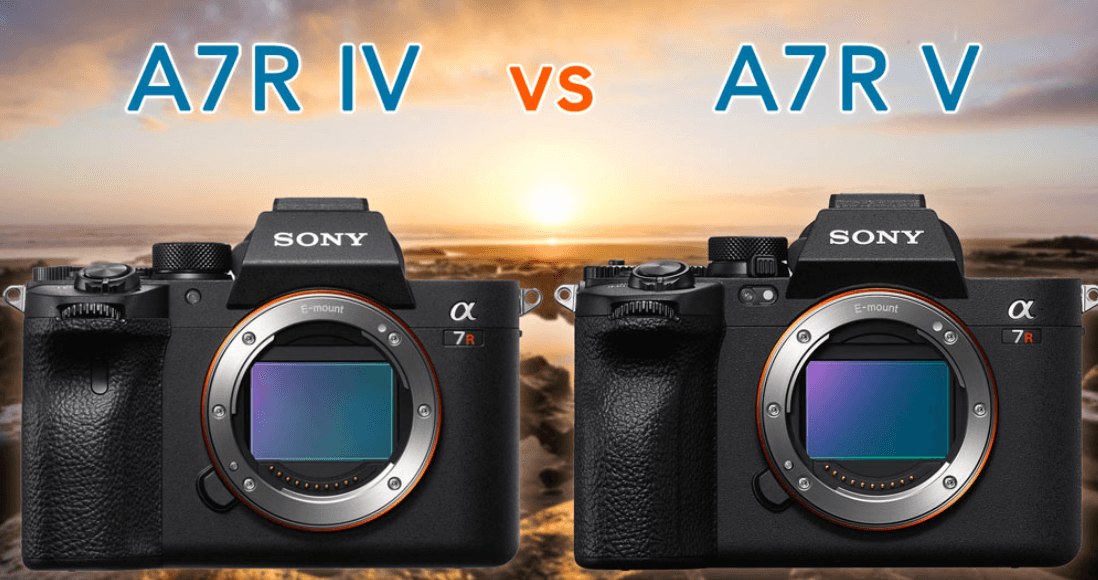
TL;DR: The Sony A7R VI is a substantial upgrade over the A7R V, but it is not a necessary replacement for every photographer. The newer model keeps the A7R line's high-resolution focus while adding a 66.8MP fully stacked sensor, up to 30fps electronic shooting, 8K video at up to 30p, 4K video at up to 120p, Pre-Capture, and up to 8.5 stops of center image stabilization under Sony's stated testing conditions. The A7R V remains a very capable 61MP full-frame camera with 8K 24/25p, 4K 60p, advanced subject recognition, and up to 8 stops of stabilization. For wildlife, sports, action, and hybrid creators, the A7R VI's improvements can justify the upgrade. For landscape, studio, portrait, and general high-resolution photography, the A7R V still offers enough resolution and capability that upgrading may not deliver a proportional improvement for the money.
Sony A7R VI vs A7R V: What Has Changed?
The Sony A7R VI is not simply a higher-resolution version of the A7R V. Sony has changed the character of the camera by moving from the A7R V's 61MP back-illuminated Exmor R CMOS sensor to a 66.8MP fully stacked Exmor RS CMOS sensor. The new camera also uses the BIONZ XR2 processor with an integrated AI processing unit, whereas the A7R V uses the BIONZ XR processor alongside a dedicated AI processing unit. This matters because the A7R series has traditionally been associated with very high resolution and deliberate shooting, while the A7R VI pushes much harder into high-speed photography. Sony rates the A7R VI for up to 30fps continuous shooting with its electronic shutter, compared with up to 10fps on the A7R V.
The difference becomes more meaningful when you photograph subjects that do not wait for you. Wildlife, birds, sports, motorsports, children, and fast-moving events can all benefit from a camera that captures more frames during a short window of action. The A7R VI also adds Pre-Capture, allowing the camera to retain images from immediately before the shutter is fully pressed. That can be useful when a bird takes flight or an athlete suddenly changes direction. The A7R V is still capable of tracking demanding subjects, but its slower maximum burst rate makes it more oriented toward photographers who prioritize resolution over sustained action capture.
The A7R VI also makes a meaningful jump in video capability. The A7R V can record 8K at 24/25p and 4K at up to 60p, including 10-bit recording options. The A7R VI takes that further with 8K recording at up to 29.97p and 4K recording at up to 119.88p, including 10-bit 4:2:2 options. That gives hybrid shooters considerably more flexibility for slow-motion footage and higher-frame-rate 4K production. The new model therefore represents a broader performance upgrade rather than a small specification refresh.
Key Specifications At A Glance
| Specification | Sony A7R VI | Sony A7R V |
|---|---|---|
| Sensor | 66.8MP stacked full-frame | 61MP full-frame BSI |
| Processor | BIONZ XR2 | BIONZ XR |
| Maximum Burst | Up to 30fps electronic | Up to 10fps |
| 8K Video | Up to 30p | Up to 24/25p |
| 4K Video | Up to 120p | Up to 60p |
| Image Stabilization | Up to 8.5 stops center | Up to 8 stops |
| AI Subject Recognition | Yes | Yes |
| Pre-Capture | Yes | No |
| Card Slots | 2, SD/CFexpress Type A | 2, SD/CFexpress Type A |
| Effective Resolution | Approx. 66.8MP | Approx. 61MP |
Sony's official specifications confirm the major differences in resolution, burst speed, video recording, stabilization, and Pre-Capture.
Image Quality And Resolution
For photographers who primarily shoot landscapes, architecture, studio work, products, or portraits, the A7R VI's resolution increase needs to be viewed realistically. The A7R V already produces approximately 61MP images, while the A7R VI moves to approximately 66.8MP. That is a genuine increase, but it is not the sort of jump that will suddenly make every photograph look dramatically sharper. Both cameras are high-resolution full-frame bodies, and lens quality, focus accuracy, lighting, technique, and post-processing can have a larger effect on the final image than the difference between 61MP and 66.8MP.
Where the A7R VI becomes more interesting is the combination of resolution and speed. The stacked sensor is designed to read data faster, allowing Sony to offer 30fps electronic shooting while retaining the high-resolution character of the A7R line. That combination is particularly useful when you want to crop heavily after shooting but also need to capture a fleeting moment. A wildlife photographer, for example, can use the resolution for cropping into a distant subject while benefiting from the much faster burst rate when the animal moves unexpectedly. The A7R V can still deliver enormous files for cropping, but it is less aggressive when speed is the priority.
The A7R V should therefore not be dismissed simply because it is the older camera. Its 61MP sensor remains highly capable for photographers who value detail and dynamic range and do not regularly shoot fast action. In a studio or landscape workflow, where the subject is relatively controlled, the additional frames per second of the A7R VI may not change the result at all. If your current A7R V already produces files that meet your print, commercial, or editorial requirements, the resolution increase alone is unlikely to be a strong reason to upgrade.
Resolution And Shooting Speed Comparison
| Feature | A7R VI | A7R V |
| Effective Resolution | Approx. 66.8MP | Approx. 61MP |
| Electronic Burst | Up to 30fps | Up to 10fps |
| Mechanical Burst | Up to 10fps | Up to 10fps |
| Pre-Capture | Yes | No |
| Best Advantage | Resolution plus speed | High-resolution stills |
Autofocus And Action Photography
Autofocus is another area where the A7R VI's hardware changes are more important than the resolution increase. Both cameras use Sony's subject-recognition approach and can identify subjects including humans, animals, birds, insects, cars, trains, and airplanes. The A7R V already brought a major autofocus improvement over earlier A7R generations, so owners should not expect the A7R VI to make the A7R V suddenly unusable. Instead, the newer camera combines advanced recognition with a much faster sensor and processing pipeline.
The practical advantage appears when autofocus, subject movement, and burst shooting all have to work together. A camera can identify a bird correctly, but if the shooting rate is relatively slow, you may still miss the exact wing position or moment you wanted. The A7R VI's ability to shoot at up to 30fps electronically gives photographers many more opportunities during a fast sequence. Sony also lists Pre-Capture as one of the camera's features, which can help when the decisive moment is difficult to predict.
For portrait photographers, wedding photographers, and landscape shooters, however, this advantage is less decisive. You may appreciate the newer autofocus system, but the A7R V already has advanced subject recognition and a high-resolution sensor. If your subjects are generally stationary or moving predictably, the A7R V remains a strong professional tool. The A7R VI becomes much easier to justify when your work depends on timing rather than simply image quality.
Who Benefits Most From The Faster System?
| User Type | A7R VI Advantage |
| Wildlife | Excellent |
| Bird Photography | Excellent |
| Sports | Excellent |
| Weddings | Useful |
| Portraits | Moderate |
| Landscapes | Limited |
| Studio | Limited |
| Product Photography | Limited |
Video Features And Hybrid Shooting
Video is one of the clearest areas where the A7R VI improves on the A7R V. The A7R V can record 8K at 24/25p and 4K at up to 60p, with 10-bit recording available in supported formats. The A7R VI expands the options to 8K at up to 29.97p and 4K at up to 119.88p, again with 10-bit recording options. That makes the newer model considerably more flexible for creators who regularly switch between still photography and video production.
The 4K 120p option is particularly relevant for creators who want slow-motion footage without dropping to Full HD. It can be useful for sports content, weddings, travel videos, product demonstrations, and social media production. The A7R VI also supports 8K 10-bit recording, although 8K footage comes with large storage requirements and demanding editing workloads. In practical terms, most creators will probably use 4K more frequently than 8K, but the additional headroom is valuable when the workflow requires it.
The A7R V remains a capable hybrid camera, so the decision depends on how much video you actually shoot. If you occasionally record short clips for social media or behind-the-scenes content, the A7R V's 4K 60p capability may be more than enough. If you are building a serious hybrid workflow and want 4K 120p and faster high-resolution shooting in the same body, the A7R VI is much easier to justify.
Stabilization, Handling And Everyday Use
Image stabilization is another area where Sony has improved the newer camera, although the difference is not enormous on paper. Sony rates the A7R V for up to 8 stops of image stabilization, while the A7R VI is rated for up to 8.5 stops at the center and 7 stops at the periphery under Sony's stated CIPA 2024 test conditions with a specified lens. This is important because stabilization ratings are measured under particular conditions and should not be treated as a guarantee that every lens and shooting situation will deliver exactly the same result.
The A7R VI also uses two card slots that support SD and CFexpress Type A cards, giving professional photographers a familiar dual-card workflow. That is useful for backup recording and managing large files, particularly because the camera's high-resolution images and high-bitrate video can consume storage quickly. The A7R V also supports dual-card recording with SD and CFexpress Type A compatibility, so existing owners do not need to replace their entire storage workflow simply because they stay with the older camera.
For everyday photography, the A7R V therefore remains a comfortable choice if you already own it. The A7R VI's biggest improvements are concentrated around speed, video, sensor readout, and newer processing rather than a complete redesign of what the camera does. That distinction is important because an A7R V owner should not upgrade simply because the newer camera has arrived. The upgrade makes more sense when a specific limitation in your current workflow is being solved.
Price And Upgrade Value In India
Price is where the A7R VI becomes a more difficult recommendation for existing A7R V owners. Sony India lists the A7R VI at an MRP of ₹4,70,990, including taxes. By comparison, Sony's India retail partner currently lists the A7R V at ₹3,14,990, although actual street prices can change with offers, stock, and retailer promotions. That creates a substantial gap between the two models, so the question is not simply whether the A7R VI is better. It clearly is the newer and more capable camera. The real question is whether its additional capabilities are worth paying the difference.
For a new buyer, the A7R VI makes more sense if the budget allows it and the photographer expects to keep the camera for several years. It combines the A7R line's high resolution with a much faster shooting system and significantly stronger video specifications. The A7R V, however, can become a compelling value proposition when available at a significantly lower price, especially for photographers who primarily shoot landscapes, portraits, architecture, products, or studio work.
Existing A7R V owners should approach the upgrade differently. Selling a working A7R V and paying the difference only to gain a few extra megapixels does not make much financial sense. The calculation changes if you repeatedly miss action because of the slower burst rate, need 4K 120p, want Pre-Capture, or need the newer sensor and processing architecture for a demanding professional workflow. In those cases, the A7R VI solves actual problems rather than simply offering newer specifications.
Price And Value Snapshot
| Camera | Current Listed India Price | Best For |
| Sony A7R VI | ₹4,70,990 MRP | Professionals needing speed and resolution |
| Sony A7R V | ₹3,14,990 listed by Sony's retail partner | High-resolution photography at lower cost |
Prices can change, so buyers should check the current Sony India price and retailer offers before purchasing.
Frequently Asked Questions
Q. Is the Sony A7R VI much better than the A7R V?
Yes, but the improvement depends on how you shoot. The A7R VI offers a 66.8MP stacked sensor, up to 30fps electronic shooting, Pre-Capture, 8K up to 30p, and 4K up to 120p. The A7R V remains highly capable for high-resolution photography and supports 8K 24/25p and 4K up to 60p.
Q. Is the A7R VI worth upgrading from the A7R V?
It is worth considering if you shoot wildlife, birds, sports, or demanding hybrid content. For landscape, studio, portrait, and general photography, the A7R V remains capable enough that the upgrade may not provide enough practical benefit to justify the cost.
Q. Does the A7R VI have a higher resolution sensor than the A7R V?
Yes. The A7R VI has approximately 66.8MP effective resolution, while the A7R V has approximately 61MP. The difference is real but relatively modest compared with the much larger improvement in shooting speed.
Q. Which camera is better for wildlife photography, A7R VI or A7R V?
The A7R VI is the stronger choice for wildlife because its stacked sensor supports up to 30fps electronic shooting and it includes Pre-Capture. Those features can make it easier to capture brief moments such as birds taking flight or animals changing direction.
Q. Does the Sony A7R VI record 8K video?
Yes. The A7R VI can record 8K at up to 29.97p, including 10-bit recording options. The A7R V can record 8K at up to 24/25p.
Q. Can the A7R VI record 4K 120fps video?
Yes. Sony's specifications list 4K recording at up to 119.88p, including 10-bit 4:2:2 options in supported recording modes. This is a significant video upgrade over the A7R V's maximum 4K 60p recording.
Q. Does the A7R VI have better image stabilization than the A7R V?
Sony rates the A7R VI at up to 8.5 stops at the center and 7 stops at the periphery under its CIPA 2024 test conditions, while the A7R V is rated for up to 8 stops. The difference is useful, but it should not be the main reason to upgrade by itself.
Q. Is the A7R V still worth buying in 2026?
Yes. If you primarily shoot landscapes, portraits, studio work, architecture, or other relatively controlled subjects, its 61MP sensor, advanced autofocus, 8K recording, and strong stabilization remain highly competitive. Its lower current listed price also makes the value proposition stronger.
Q. Which camera is better for video, the A7R VI or A7R V?
The A7R VI is better for creators who need higher frame rates. It supports 4K up to 120p and 8K up to approximately 30p, while the A7R V supports 4K up to 60p and 8K at 24/25p.
Q. Should a landscape photographer upgrade to the A7R VI?
Usually not unless there is a specific workflow reason. The A7R V already provides approximately 61MP of full-frame resolution, which is more than enough for large prints and detailed landscape work. The A7R VI's speed and video improvements are less important when the subject is generally static.
Final Recommendation
The Sony A7R VI is the better camera, but that does not automatically make it the better upgrade for every A7R V owner. Its 66.8MP stacked sensor, 30fps electronic shooting, Pre-Capture, 4K 120p video, 8K up to 30p, and improved stabilization make it a much more capable high-resolution hybrid camera. For wildlife, bird photography, sports, action, and creators who regularly combine high-resolution stills with serious video, the upgrade is substantial enough to make sense.
For photographers who already own the A7R V and mainly shoot landscapes, portraits, architecture, products, or studio work, keeping the A7R V is the more sensible decision. Its 61MP sensor is still extremely high resolution, and its 8K and 4K capabilities remain useful for many professional workflows. The money saved by staying with the A7R V could instead go toward a better lens, additional lighting, faster storage, or other equipment that may produce a more noticeable improvement in the final images.
The final verdict is simple: buy the A7R VI if speed, action photography, Pre-Capture, or advanced video are important parts of your work. If you already own the A7R V and those features are not limitations, there is no urgent reason to upgrade. For new buyers with the budget and a demanding hybrid workflow, the A7R VI is the stronger long-term choice. For value-focused high-resolution photography, the A7R V remains the smarter buy in 2026.






