
Sony A7 III vs A7 IV: Is the Upgrade Worth It for Hybrid Shooters?
The Sony A7 IV improves on the A7 III with higher resolution, stronger autofocus, 10-bit video, and 4K 60p. But is the upgrade worth the extra cost for hybrid shooters?

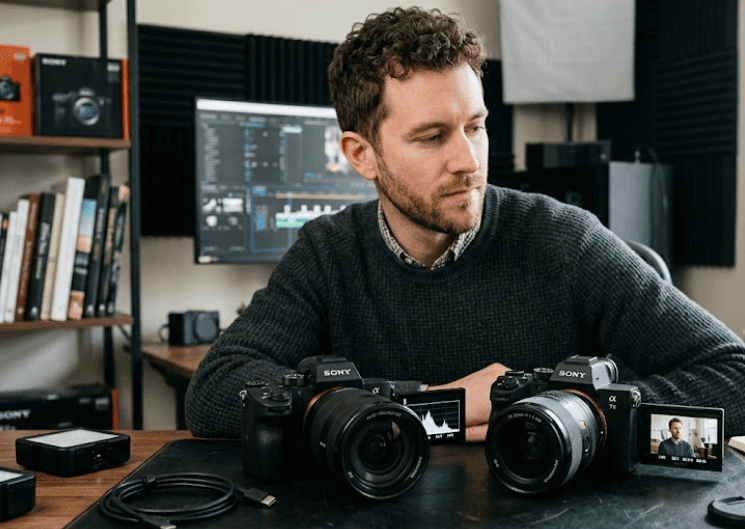
TL;DR The Sony A7 IV is the more capable hybrid camera, but the Sony A7 III is still a strong option if photography is your priority and you can find it at a significantly lower price. The A7 IV moves from the A7 III's 24.2MP sensor to a 33MP full-frame sensor, adds a more advanced 759-point phase-detection autofocus system, a fully articulating screen, 10-bit 4:2:2 internal video, and 4K 60p recording. The A7 III remains competitive for portraits, travel, events, and everyday photography, while the A7 IV makes more sense for creators who regularly switch between stills and video and want more flexibility in post-production.
Sony A7 III vs A7 IV: What Changed?
The Sony A7 III and A7 IV belong to the same full-frame mirrorless family, but they target slightly different generations of hybrid shooting. The A7 III launched with a 24.2MP full-frame Exmor R CMOS sensor and became popular because it offered a strong combination of image quality, autofocus, battery life, and video features without reaching Sony's higher-end pricing. The A7 IV keeps the same basic full-frame concept but raises the resolution to 33MP and uses Sony's newer BIONZ XR processor. That extra resolution gives photographers more room to crop images while retaining useful detail, which can be valuable for wildlife, events, travel, and commercial work where you may not always be able to frame perfectly in camera. Sony also upgraded the autofocus hardware considerably, with the A7 IV using 759 phase-detection points compared with 693 on the A7 III.
The bigger story, however, is video. The A7 III can record 4K internally, but its internal recording is limited to 8-bit and its 4K frame-rate options top out at 30p. The A7 IV adds 10-bit 4:2:2 internal recording and 4K 60p, giving hybrid shooters substantially more flexibility when they want to color-grade footage or create slow-motion sequences from 60p material. Sony also added video-focused features such as S-Cinetone, Active Mode stabilization, and AF Assist, making the A7 IV much more clearly positioned as a camera for creators who regularly shoot both photographs and video.
The physical shooting experience also changes in meaningful ways. The A7 IV has a fully articulating vari-angle screen, which is much more convenient for talking-head videos, low-angle shots, vertical content, and self-recording. The A7 III uses a tilting screen that works well for conventional photography but is less flexible when the camera needs to face the shooter. The A7 IV therefore feels less like a straightforward resolution upgrade and more like a broader hybrid-camera update. If your workflow has shifted toward video since buying the A7 III, the newer camera addresses several limitations that you may have started noticing.
Image Quality And Sensor Performance
The most obvious still-photography difference is resolution. The A7 III uses a 24.2MP effective full-frame sensor, while the A7 IV uses a 33MP full-frame sensor. The increase is not dramatic enough to make the A7 III suddenly look outdated, but it gives the A7 IV a meaningful advantage when you crop heavily or need larger files for commercial use. A 33MP image also provides more flexibility when you need to reframe a photograph after shooting. For photographers who regularly deliver images for both web and print, that additional resolution can be useful without moving into the much larger file sizes associated with Sony's high-resolution A7R models.
The A7 III remains very capable for everyday photography because 24.2MP is already enough resolution for portraits, weddings, travel, events, product photography, and social media. In many real-world situations, the lens, lighting, exposure, and photographer will have a greater effect on the final image than the difference between 24.2MP and 33MP. This is especially true if you mostly share images online or deliver standard-sized photographs rather than making large prints. For an A7 III owner who is happy with the current image quality, the extra resolution alone is not a strong enough reason to upgrade.
The A7 IV makes more sense when cropping flexibility is part of your normal workflow. Wildlife and event photographers can benefit when the subject does not fill the frame, while commercial photographers may appreciate having more pixels available for retouching and alternative crops. The A7 IV does not replace the A7 III's fundamental image quality advantage, because both are full-frame cameras with strong low-light capabilities, but it gives you a larger margin for cropping and reframing. That makes the newer camera more versatile for demanding hybrid workflows.
Sensor Comparison
| Feature | Sony A7 III | Sony A7 IV |
|---|---|---|
| Sensor | Full-frame Exmor R CMOS | Full-frame Exmor R CMOS |
| Effective Resolution | 24.2MP | 33MP |
| Processor | BIONZ X | BIONZ XR |
| RAW | 14-bit | 14-bit |
| Best Advantage | Proven image quality | Higher resolution and processing |
Autofocus And Subject Tracking
Autofocus is one of the areas where the A7 IV provides a clearer generational improvement. The A7 III uses a Fast Hybrid AF system with 693 phase-detection points and 425 contrast-detection points. It also supports Eye AF and tracking features that remain useful for portraits, events, and moving subjects. For many photographers, the A7 III's autofocus is still more than adequate, particularly when shooting people in predictable situations or using a well-controlled shooting environment.
The A7 IV increases phase-detection coverage to 759 points and adds Sony's newer Real-time Tracking system with improved subject-recognition capabilities. It can recognize and track people, animals, and birds, and its autofocus system also works in video. That matters more when subjects move unpredictably, such as during weddings, sports, wildlife photography, family shoots, or handheld video. The difference is not simply about having more focus points. The newer processing and tracking system are designed to make the camera better at maintaining focus as subjects move across the frame.
For a hybrid shooter, this improvement can be more valuable than the increase in megapixels. A photographer who mostly shoots static portraits may not notice a dramatic difference every time they use the cameras. Someone filming a moving subject, however, is more likely to appreciate the A7 IV's tracking and subject-recognition improvements. This is one of the strongest reasons to choose the A7 IV if your shooting style has become more demanding.
Autofocus Comparison
| Feature | Sony A7 III | Sony A7 IV |
|---|---|---|
| Phase-Detection Points | 693 | 759 |
| Contrast-Detection Points | 425 | 425 |
| Eye AF | Yes | Yes |
| Real-Time Tracking | Older generation | Advanced |
| Animal/Bird Tracking | More limited | Improved |
| Video AF | Yes | More advanced |
Video Features And Hybrid Shooting
Video is arguably the biggest reason to choose the A7 IV over the A7 III. The A7 III can record 4K internally at up to 30p, but its internal video recording is 8-bit. That is perfectly usable for casual video, travel footage, interviews, and content that does not require aggressive color grading. It can also record Full HD at higher frame rates, including 120p, making the A7 III considerably more capable than its age might suggest.
The A7 IV takes a substantial step forward by supporting internal 4K 60p recording and 10-bit 4:2:2 recording. The combination matters because 10-bit footage provides more tonal information for color grading, while 4:2:2 recording gives editors more color information to work with. Sony's official specifications confirm that the camera can record 4K 60p internally in 10-bit 4:2:2, depending on the selected recording format.
There is one important point buyers should understand before calling the A7 IV a perfect video upgrade. Its 4K 60p recording uses an APS-C or Super 35-style crop rather than the full-width field of view used for lower frame-rate full-frame 4K recording. That means a lens looks tighter when you switch to 60p. For creators who already plan their lenses around this limitation, it is manageable. For someone who wants uncropped full-frame 4K 60p, the A7 IV does not completely eliminate the compromise. Still, its 10-bit recording, improved autofocus, articulating screen, and video controls make it a much stronger hybrid tool.
Video Comparison
| Feature | Sony A7 III | Sony A7 IV |
|---|---|---|
| Maximum 4K Frame Rate | 30p | 60p |
| Internal Color Depth | 8-bit | 10-bit |
| Internal 4:2:2 | No | Yes |
| S-Cinetone | No | Yes |
| Articulating Screen | No | Yes |
| Active Mode | No | Yes |
| Video AF | Good | More advanced |
Design, Screen And Handling
The A7 IV is physically larger than the A7 III, but the changes are aimed at improving usability rather than simply making the camera bigger. Its vari-angle LCD is particularly useful for video creators because it can face forward and be positioned at different angles. This is a major improvement for vloggers, interview creators, vertical-video shooters, and photographers who work from unusual angles. The A7 III's tilting display remains useful for conventional still photography, but it does not offer the same freedom.
The A7 IV also benefits from a more modern control layout and a redesigned grip. These changes may not appear significant on a specification sheet, but they can matter during long shooting sessions. Hybrid shooters frequently move between photo and video settings, adjust exposure, change focus behavior, and monitor audio. A camera that makes these controls easier to reach can reduce friction during a real shoot. The A7 IV's dedicated still, movie, and S&Q mode dial is another example of Sony making the camera more clearly oriented toward mixed photo and video work.
The A7 III, meanwhile, has an advantage that should not be ignored: familiarity and value. If you already own one, your lenses, batteries, accessories, and shooting habits can continue to work without requiring a complete change in your workflow. Its body remains weather-resistant in design, and its dual card slots make it suitable for professional situations where backup recording is important. The A7 IV also has dual card slots, but its newer design and controls are more appealing if you are building a hybrid workflow from scratch.
Battery Life, Storage And Connectivity
Battery performance is one area where neither camera should be treated as a simple specification comparison. Both use Sony's NP-FZ100 battery platform, which is a major advantage for photographers already invested in Sony's modern full-frame system. Battery life varies depending on how you use the camera, particularly when recording video, using the LCD, transferring files, or relying heavily on autofocus. For long shoots, carrying spare batteries remains sensible regardless of which body you choose.
Storage is more interesting because the A7 IV introduces support for newer recording requirements while retaining dual-card functionality. The A7 III uses dual SD-card slots, with one slot supporting UHS-II speeds. The A7 IV also provides two card slots, with its first slot supporting CFexpress Type A as well as SD cards. That gives the newer camera more headroom for demanding recording formats, particularly when you are working with high-bitrate video.
Connectivity also matters more for today's hybrid creators. The A7 IV was designed with a more modern content-creation workflow in mind, including USB connectivity and features intended to support streaming and remote workflows. The A7 III can still handle file transfers and external recording setups, but the A7 IV is better suited to creators who regularly move between traditional camera shooting and online content production. If your camera is increasingly becoming a production tool rather than simply a stills camera, this difference becomes more relevant.
Sony A7 III vs A7 IV: Price And Value
The value calculation depends heavily on whether you are buying your first camera or upgrading from an existing A7 III. The A7 III is an older model, so its biggest advantage is that it can often be found at a lower price than the A7 IV. For a photographer who mainly shoots stills, the money saved on the body can instead go toward a better lens, which may have a larger effect on the final images than moving from 24.2MP to 33MP.
The A7 IV is easier to justify when you need several upgrades at once. Higher resolution, improved autofocus, 10-bit internal video, 4K 60p, a vari-angle screen, and newer processing collectively make it a more capable camera. Buying all of those improvements separately is not possible with the A7 III, so the A7 IV's value comes from the complete package rather than one headline feature.
For existing A7 III owners, the decision should therefore be based on workflow rather than age. If you mostly shoot portraits, landscapes, travel, or events and the A7 III still produces the images you need, upgrading may not dramatically change your photography. If you are increasingly shooting video, working with moving subjects, cropping heavily, or delivering professionally graded footage, the A7 IV's improvements become much easier to justify.
Which Camera Offers Better Value?
| User Type | Better Choice | Reason |
|---|---|---|
| Budget stills photographer | A7 III | Strong full-frame image quality |
| Existing A7 III owner | A7 III | Upgrade is unnecessary for basic stills |
| Hybrid photo/video creator | A7 IV | Better internal video features |
| Wedding photographer | A7 IV | Improved tracking and cropping flexibility |
| Vlogger/content creator | A7 IV | Vari-angle screen and 10-bit video |
| Wildlife photographer | A7 IV | Higher resolution and improved tracking |
| Beginner entering Sony full frame | Depends on price | A7 III saves money, A7 IV lasts longer |
Is The A7 IV Worth Upgrading From The A7 III?
The A7 IV is worth upgrading to when your current A7 III is holding back your workflow rather than simply because the newer model exists. For hybrid shooters, the difference is substantial. The move to 10-bit 4:2:2 internal recording and 4K 60p changes what you can do with video, while the improved autofocus and 33MP sensor add useful flexibility to still photography. Sony also gives the A7 IV a more creator-focused interface, making it better suited to people who move between photographs, video, and online content.
For photographers who rarely shoot video, the decision is less obvious. The A7 III already offers 24.2MP full-frame images, 14-bit RAW, 693 phase-detection points, Eye AF, 4K recording, and a mature full-frame system. Those features are still enough for a wide range of professional and enthusiast photography. If your main limitation is image quality, upgrading to the A7 IV will give you more resolution, but the difference may not justify replacing a camera that is already working well.
The A7 IV therefore makes the most sense as a hybrid upgrade rather than a universal upgrade. If you are buying your first Sony full-frame camera and can comfortably afford the A7 IV, it is the more future-ready choice because of its stronger video capabilities and newer autofocus system. If you already own an A7 III and mainly shoot stills, keeping the A7 III and investing in better glass may be the smarter decision.
Frequently Asked Questions
Q. Is the Sony A7 IV better than the A7 III?
Yes. The A7 IV is the more advanced camera, particularly for hybrid shooting. It has a 33MP sensor, newer BIONZ XR processing, 759 phase-detection AF points, 10-bit 4:2:2 internal video, and 4K 60p. The A7 III remains highly capable for still photography.
Q. Is the Sony A7 III still worth buying?
Yes, if you find it at a substantially lower price and primarily shoot still photographs. Its 24.2MP full-frame sensor, 14-bit RAW capability, strong autofocus, dual card slots, and 4K video remain useful for portraits, travel, events, and general photography.
Q. Does the A7 IV have better autofocus than the A7 III?
Yes. The A7 IV uses 759 phase-detection points and a newer Real-time Tracking system, while the A7 III uses 693 phase-detection points. The A7 IV is particularly more capable when tracking moving subjects and during video recording.
Q. Does the A7 IV shoot 4K 60p?
Yes. The A7 IV supports 4K recording at up to 60p. Its 4K 60p mode uses a crop, so the field of view becomes tighter compared with full-frame 4K recording at lower frame rates.
Q. Is the A7 IV better for video than the A7 III?
Yes. The A7 IV supports internal 10-bit 4:2:2 recording, 4K 60p, S-Cinetone, Active Mode, and other video-focused features. The A7 III is limited to 8-bit internal recording and 4K up to 30p.
Q. Does the A7 IV have more megapixels than the A7 III?
Yes. The A7 IV has a 33MP full-frame sensor, while the A7 III has a 24.2MP effective-resolution full-frame sensor. The higher resolution gives the A7 IV more room for cropping and reframing.
Q. Is the A7 IV worth upgrading to for photography alone?
It can be, especially if you frequently crop images, photograph unpredictable subjects, or want the newer autofocus system. However, if your A7 III already meets your still-photography needs, the improvement is less dramatic than it is for hybrid shooters.
Q. Which camera is better for wedding photography?
The A7 IV is the stronger choice because its higher resolution and improved autofocus give photographers more flexibility when working with moving subjects and unpredictable moments. The A7 III remains capable, particularly when budget is important.
Q. Which camera is better for content creators?
The A7 IV is the better fit because its vari-angle screen, 10-bit 4:2:2 recording, 4K 60p, improved autofocus, and video-oriented features make it more suitable for modern content production.
Q. Should I upgrade from the A7 III to the A7 IV?
Upgrade if you need better video, 4K 60p, 10-bit recording, improved autofocus, or additional cropping flexibility. If you primarily shoot stills and your A7 III is performing well, keeping it and investing in lenses may offer better value.
Final Recommendation
The Sony A7 IV is the better camera for hybrid shooters because Sony improved almost every area that matters when still photography and video are equally important. The 33MP sensor provides more cropping flexibility, the 759-point autofocus system offers more advanced tracking, and the addition of internal 10-bit 4:2:2 recording and 4K 60p makes the camera substantially more useful for serious video work. The vari-angle screen and newer processing also make it better suited to creators who need one camera for photography, video, and content production.
However, the A7 III should not be dismissed simply because it is older. Its 24.2MP full-frame sensor, 14-bit RAW capability, strong autofocus, and 4K recording are still enough for many photographers. If you mainly shoot portraits, travel, landscapes, events, or everyday photography, a well-priced A7 III can leave more of your budget available for lenses, which can have a major impact on your results.
The final verdict is simple: choose the A7 IV if you are a serious hybrid shooter, especially if video is becoming a major part of your work. Choose the A7 III if photography is your priority and you can get the older body at a significantly lower price. For an existing A7 III owner, the upgrade is worth it when you specifically need the A7 IV's video capabilities, improved autofocus, or higher resolution. Otherwise, there is no need to upgrade simply for the sake of owning the newer camera.
Ready to upgrade your tech?
Browse our collection of quality refurbished products at unbeatable prices.






