
Smartphone Features Comparison Guide: Display, Processor, Camera, Battery & More Explained
Essential Smartphone Features Explained Display The display is the part of the phone that users interact with every moment, which is why understanding its quality is important for daily comfort. Many people search for reliable mobile phone features comparison to understand how display size, resolution and brightness affect real world use. High resolution panels such as Full HD offer crisp clarity while larger screens improve readability and media enjoyment. Brightness levels determine outdoor

Essential Smartphone Features Explained

Display
The display is the part of the phone that users interact with every moment, which is why understanding its quality is important for daily comfort. Many people search for reliable mobile phone features comparison to understand how display size, resolution and brightness affect real world use. High resolution panels such as Full HD offer crisp clarity while larger screens improve readability and media enjoyment. Brightness levels determine outdoor visibility which is essential for users who often travel or work outside. Colour accuracy also matters because it influences how photos, videos and apps appear. IPS panels provide natural tones while AMOLED offers deeper blacks and richer contrast. Those exploring detailed smartphone specifications explained will notice that modern displays also include higher refresh rates which make scrolling much smoother. Selecting a display that suits personal habits ensures better comfort and an enjoyable visual experience throughout the day.
Processor
The processor is the core element that defines speed, responsiveness and reliability of the device. People evaluating new phones often look for the right balance between performance and efficiency by carrying out a phone features to look for study. A strong processor ensures apps open quickly, multitasking feels smooth and heavy tasks such as editing or gaming run without delays. Premium processors offer superior single core and multi core performance which directly improves animations and app switching. Mid range chipsets provide excellent everyday usability while staying affordable. Entry level processors handle basic activities such as social media, messaging and calling comfortably. Users focused on best smartphone features 2025 will find that newer processors use smaller fabrication processes which reduce heat and improve battery life. Picking a processor that matches usage patterns helps deliver a stable and fast experience over the long term.
RAM
RAM determines how many apps and processes a smartphone can handle at the same time without slowing down. Buyers researching detailed smartphone specifications explained often note that more RAM improves multitasking because the device can keep apps open in the background. For basic use such as calls, browsing and social media, moderate RAM is sufficient. Heavy users who switch between apps frequently or play games benefit from larger RAM capacity. Adequate RAM also reduces refresh delays when reopening apps which saves time and improves convenience. Users comparing devices through a mobile phone features comparison often match RAM with the processor to ensure balanced performance. A device with strong processing power but insufficient RAM may still lag during heavy usage. Choosing the right amount of RAM keeps the device smooth and consistent over long periods.
Storage
Storage capacity influences how many apps, photos, videos and files a user can keep on their device without facing space issues. Many buyers examining phone features to look for consider storage important because modern apps and media take up increasing amounts of space. Devices with expandable storage allow users to add a memory card while fixed storage models require careful planning. The type of storage also matters because faster storage technologies reduce app installation time and improve loading speeds. Users who download large files or record high quality videos benefit from higher capacity. Those comparing phones through a mobile phone features comparison often prioritise storage because insufficient space affects the overall experience. Selecting a device with adequate storage ensures smooth functioning across updates, media use and long term daily tasks.
Camera
The camera is one of the most influential factors for users choosing a new smartphone. People carrying out smartphone specifications explained research notice that camera quality depends on sensor size, aperture, software processing and image stabilisation. Megapixels alone do not define results because image clarity also relies on light capture and colour accuracy. Multiple camera setups offer versatility through wide angle, macro and portrait lenses. Low light capabilities have improved significantly due to advanced night modes that enhance detail in dark environments. Users focusing on best smartphone features 2025 will find that computational photography plays a major role in delivering sharp and vibrant images. Video quality also matters because stabilisation and frame rate determine smoothness. Understanding how these elements combine helps buyers select a camera that fits their creative needs.
Battery
Battery performance affects how long the device lasts during daily activities and how often users need to recharge. People studying phone features to look for often prioritise battery capacity because larger batteries support extended use for streaming, browsing and gaming. Efficient processors and optimised software can significantly improve battery life even with moderate capacity. Fast charging technology has become an essential part of modern devices allowing users to refill their battery quickly during short breaks. Those comparing phones through mobile phone features comparison often find that battery endurance varies depending on display type, refresh rate and background processes. A strong battery ensures uninterrupted use throughout the day which is particularly important for students, travellers and professionals. Considering battery performance as a complete system rather than a single number helps buyers choose a device that stays reliable across different conditions.
Display Technology Comparison: AMOLED vs LCD vs IPS
Technology Differences
Modern smartphone screens have evolved rapidly and understanding how they differ helps users make informed choices. Many people search for reliable AMOLED vs LCD display information because the technology behind a panel affects brightness, colour accuracy, contrast and overall battery use. AMOLED panels use self lit pixels which means each pixel can switch on or off independently. This allows deeper blacks and more vibrant colours. In contrast, LCD panels rely on a backlight that illuminates the entire screen which results in less contrast. IPS panels are a refined version of LCD and offer wider viewing angles along with better colour consistency. Users looking for Display types comparison often find that AMOLED leads in vibrancy while IPS excels in colour stability. Understanding these base level differences is important for anyone considering a new device.
Pros and Cons
Each display technology offers specific benefits and drawbacks which influence day to day use. AMOLED is known for deep blacks and high contrast which create a premium viewing experience. These strengths come from the way pixels emit light individually which also helps conserve battery during dark mode. Some users however notice screen burn in or colour shifting over long durations. Those comparing screens for IPS LCD often appreciate the natural tones and stable viewing angles. IPS performs better in direct sunlight because it can reach higher brightness than many AMOLED panels. Standard LCD sits somewhere in the middle offering decent quality but less richness. People carrying out a Smartphone display comparison often find IPS good for long reading sessions and AMOLED better for entertainment. The decision depends on how the device is normally used and which qualities matter most during everyday tasks.
Best for Use Cases
Choosing the right display begins with understanding personal usage patterns. Users who enjoy movies, social content and high quality images often prefer AMOLED because of its vivid colours and intense contrast. Gamers also enjoy AMOLED because the rapid pixel response offers smoother animations. IPS works well for readers and professionals who need consistent colours throughout the day. IPS performs impressively outdoors which benefits those who commute frequently. Standard LCD meets the needs of basic users who want balanced performance without focusing too much on premium features. Many buyers search for Best smartphone features 2025 and discover that display technology strongly affects the overall experience. Selecting a panel based on lifestyle ensures long term satisfaction and better comfort during extended use.
Those researching Phone features to look for should remember that resolution, refresh rate and brightness levels interact with display type to shape the final visual quality. A high resolution AMOLED screen delivers exceptional sharpness while a high brightness IPS screen excels in daylight. Picking the correct combination helps users enjoy better clarity whether they browse the web, watch videos or play games. As smartphone prices vary widely across market segments users need to evaluate screen technology carefully to maximise value from their purchase. Even budget devices now offer impressive display options which makes it more important to compare the underlying features.
Buyers performing Mobile phone features comparison will notice that manufacturers highlight display type prominently in their marketing material. This is because the screen is the part of the phone users interact with continuously. A good display not only enhances entertainment but also affects productivity and comfort. Eye strain reduces significantly when the screen produces stable colours and adequate brightness. IPS panels are preferred for reading because they avoid over saturation while AMOLED enhances the cinematic feeling during video watching. With each generation improvements in efficiency and clarity continue to evolve the smartphone experience. Understanding how AMOLED, LCD and IPS technologies differ empowers users to pick the best option for their needs.
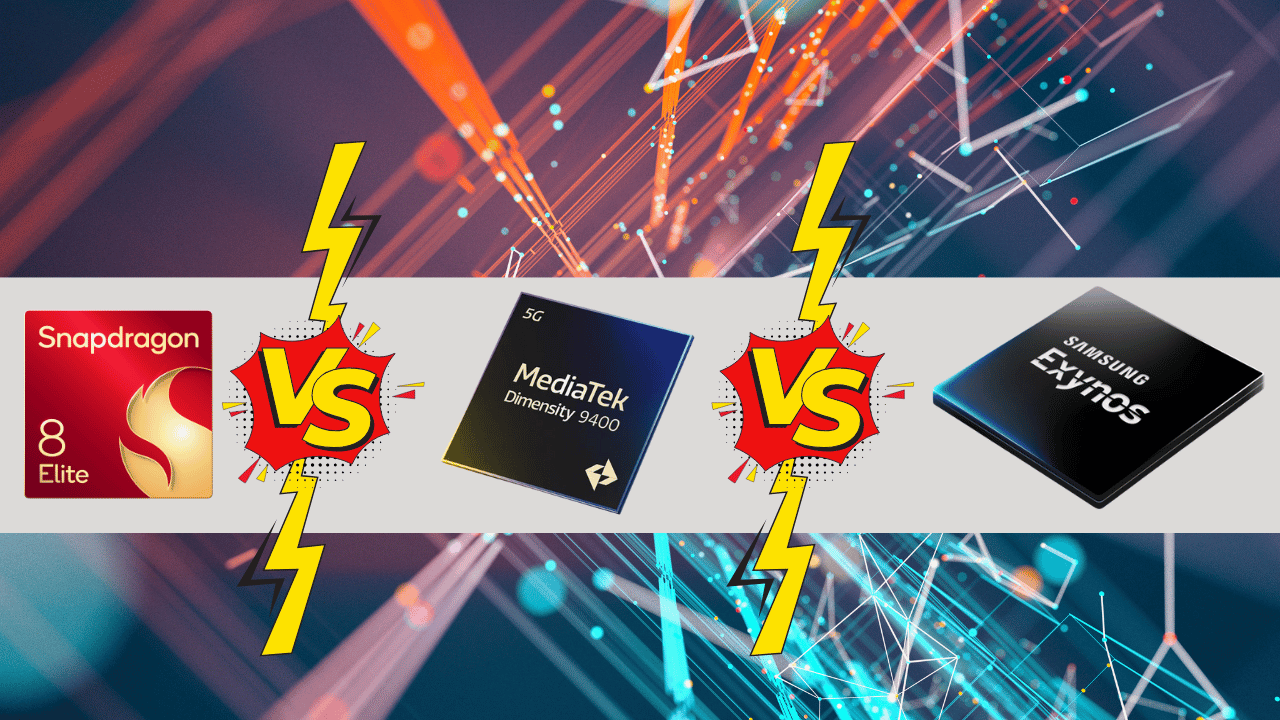
Processor Comparison: Snapdragon vs MediaTek vs Exynos
Snapdragon
Snapdragon processors remain one of the strongest choices for users who prioritise performance, stability and long term reliability. Many buyers researching Snapdragon vs MediaTek find that Snapdragon excels in single core strength which directly improves app loading, user interface smoothness and multitasking. The graphics performance powered by the Adreno GPU offers stable frame rates which makes Snapdragon a preferred option for gamers. This consistency is further supported by efficient thermal management which keeps temperatures under control even during long gaming sessions. Snapdragon chipsets also deliver dependable power efficiency due to advanced fabrication processes that reduce unnecessary battery usage. People focusing on detailed Processor comparison phones often consider Snapdragon the safest balance between performance and heat control, especially for premium and upper mid range smartphones.
MediaTek
MediaTek has become one of the most competitive processor brands in the market and its rise is clearly visible in both budget and mid range smartphones. Users searching for Phone features to look for increasingly discover that MediaTek now provides excellent multi core performance capable of handling heavy apps and everyday tasks effortlessly. The brand has improved its GPU capabilities which offer smoother gaming than earlier generations. MediaTek chips often run cooler due to efficient architecture that handles background tasks without draining excessive battery. This makes them ideal for users who need reliable performance without paying premium prices. Many who carry out Mobile phone features comparison acknowledge that MediaTek powered phones deliver superior value, especially in the budget category where performance per rupee matters. With each new generation the company narrows the gap with premium processors while maintaining attractive affordability.
Exynos
Exynos processors are developed with a balanced approach that focuses on stability and dependable day to day performance. Those exploring Smartphone specifications explained note that Exynos offers smooth multitasking and consistent output across common activities like browsing, calling and media consumption. While the gaming performance varies between generations Exynos chipsets have improved in heat optimisation which helps maintain comfortable device temperatures during moderate use. Samsung integrates Exynos into several of its models allowing software level optimisation that enhances overall efficiency. Some variants achieve competitive battery life due to refined power management which benefits users who spend long hours on productivity tasks. Many buyers performing Smartphone display comparison also evaluate processor capability because Exynos offers integrated graphics suited for streaming, reading and general usage. Although not always targeted towards heavy gamers Exynos remains a reliable option for users who prefer consistency over peak performance.
Price Tiers and Value
The choice between Snapdragon, MediaTek and Exynos often depends on budget and the type of performance the user expects. Those comparing Best smartphone features 2025 find that Snapdragon regularly appears in flagship and upper mid range phones due to its premium performance. MediaTek dominates the budget category by offering exceptional value at lower prices which appeals to students and casual users. Exynos spans multiple price segments depending on the model and the generation. Budget users benefit from MediaTek’s strong multi core efficiency while power users appreciate the advanced GPU support provided by Snapdragon. Exynos fits comfortably in the middle offering stable performance for everyday tasks without requiring a premium price tag. Evaluating these processors based on price and performance helps buyers pick the right device for their long term needs.
Making the Right Smartphone Choice in 2026
Choosing a smartphone in 2026 is no longer about chasing the biggest numbers on a spec sheet. The real buying decision comes from understanding how display, processor, RAM, storage, camera, battery, and software optimisation work together as a complete system. A phone with a brilliant AMOLED panel but weak battery tuning may still disappoint, while a balanced IPS display phone with an efficient chipset can often deliver a smoother long-term experience. That is why evaluating features in isolation rarely gives the full picture.
For most buyers, the smartest approach is to match the phone’s strengths to daily behaviour. If media consumption, gaming, and photography are your priorities, display technology and processor efficiency should sit at the top of your checklist. If you mostly use social media, calls, productivity apps, and browsing, balanced RAM, storage speed, and battery optimisation matter far more than flagship-level graphics performance. The best smartphone is not necessarily the most expensive one, but the one whose internals align with your real usage habits.
Display and chipset choices also now play a bigger role in long-term satisfaction. AMOLED remains excellent for entertainment and contrast-rich visuals, IPS is still highly dependable for colour stability and daylight visibility, and modern LCD panels continue to serve budget buyers well. Similarly, Snapdragon, MediaTek, and Exynos each deliver strong value depending on the price tier and workload. Understanding these differences helps buyers avoid overspending while still getting reliable performance for years.
Ultimately, the best phone buying decision comes from balancing comfort, speed, endurance, and visual quality rather than chasing marketing buzzwords. When you understand how each core feature affects real-world usage, you can confidently choose a device that remains enjoyable, fast, and dependable well beyond 2026.
Frequently Asked Questions
Q. Which smartphone feature matters the most in daily use?
The most important feature depends on your usage, but for most users the processor, RAM, and battery combination has the biggest impact on daily smoothness, multitasking, and long-term reliability.
Q. Is AMOLED always better than IPS or LCD?
Not always. AMOLED is better for deep blacks, contrast, and entertainment, while IPS often provides more natural colours, better sunlight readability, and less eye fatigue for reading.
Q. How much RAM is ideal for smartphones in 2026?
For smooth long-term use, 8 GB RAM is the practical minimum, while 12 GB is better for gaming, heavy multitasking, and future-proofing.
Q. Which processor is better: Snapdragon, MediaTek, or Exynos?
Snapdragon is usually best for gaming and balanced efficiency, MediaTek offers excellent value in budget and mid-range devices, and Exynos works well for stable daily performance in many Samsung phones.
Q. Does storage type matter beyond capacity?
Yes. Faster storage standards improve app loading, file transfers, installation speed, and overall responsiveness. So both storage speed and storage size matter.
Q. Is 128 GB enough in 2026?
For basic users, yes. But if you record videos, download games, or keep lots of apps and media, 256 GB is the safer long-term choice.
Q. What display refresh rate should I look for?
A 120 Hz refresh rate is ideal for smooth scrolling, gaming, and better UI responsiveness, though 90 Hz is also excellent in mid-range phones.
Q. How important is battery capacity compared to software optimisation?
Both matter equally. A large battery alone does not guarantee endurance. Efficient chipsets, adaptive refresh rates, and software optimisation often improve battery life more than raw mAh numbers.
Q. Which display is best for outdoor use?
IPS and high-brightness AMOLED panels are both excellent, but brightness levels matter more than display type alone for outdoor visibility.
Q. How should I compare phones before buying?
Always compare processor, RAM, storage speed, display type, brightness, camera consistency, battery optimisation, and software support together, rather than focusing on just megapixels or chipset branding.
Ready to upgrade your tech?
Browse our collection of quality refurbished products at unbeatable prices.






