Sleep Earbuds Explained: Do They Actually Improve Sleep?
Sleep earbuds may help some people sleep by masking disruptive noise or playing relaxing sounds. Learn how they work, their benefits and risks, and whether they are worth buying.

TL;DR Sleep earbuds are designed to make bedtime audio more comfortable and less intrusive than regular wireless earbuds, but they do not automatically improve sleep simply because they are made for sleeping. Their potential benefit comes from functions such as playing calming sounds, masking snoring or traffic, and creating a consistent bedtime routine. Research suggests that listening to music may improve subjective sleep quality for some adults, although evidence for measurable changes in sleep duration, sleep efficiency, or other objective sleep outcomes is less certain. The biggest factors to consider are comfort, volume, battery life, fit, and whether you actually have a noise or relaxation problem that audio can address.
What Are Sleep Earbuds?
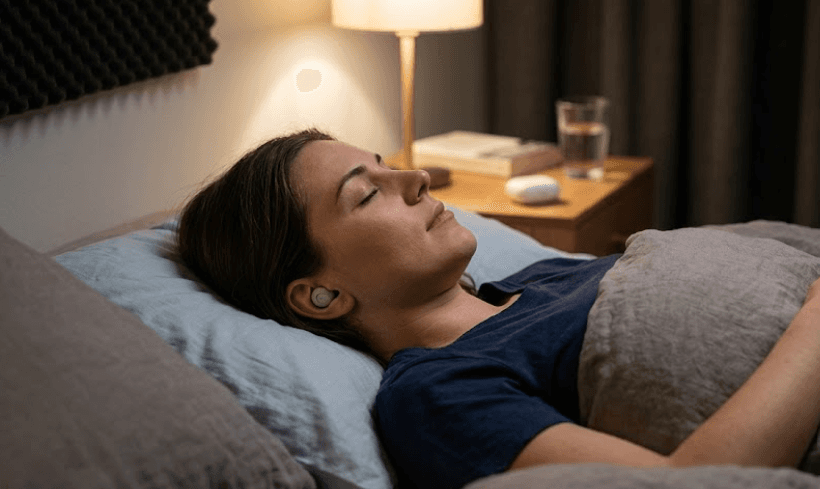
Sleep earbuds are small wireless earbuds designed specifically for wearing while lying down or sleeping. Unlike conventional earbuds, they generally focus more on comfort, a low-profile design, and overnight usability than on powerful bass, microphone quality, or maximum listening volume. Some models are designed to play relaxing sounds, while others focus on masking environmental noise. The idea is simple: if outside sounds, a partner's snoring, traffic, or an active mind makes it harder for you to settle down, a small audio device may help create a more consistent sound environment at bedtime. However, that does not mean the earbuds themselves have a medically established sleep-improving effect. Their usefulness depends largely on the problem they are trying to solve.
The concept became more visible through products such as Bose Sleepbuds, which were specifically developed around sleep rather than general music listening. Bose described its original Sleepbuds as noise-masking devices rather than conventional active noise-cancelling headphones, with preloaded sounds intended to cover or replace disruptive noises. Bose eventually discontinued the Sleepbuds line, and its support documentation states that the Sleepbuds were discontinued in 2023 and that the accompanying Sleep app stopped being available for new downloads in July 2025. The category has nevertheless continued through other products, showing that the underlying idea remains relevant to consumers who want dedicated bedtime audio.
The important point is that sleep earbuds should not be confused with a treatment for insomnia or another sleep disorder. They are consumer audio devices that may support a better sleep environment for some people. Research on music and sleep provides some evidence for this broader concept. A Cochrane review found that listening to music may improve subjective sleep quality in adults with symptoms of insomnia, while evidence for objective measures such as total sleep time and sleep efficiency was less conclusive. That means a sleep earbud can be useful, but the realistic expectation is that it may make falling asleep or staying comfortable easier rather than guaranteeing better sleep.
How Sleep Earbuds Work?
Most sleep-focused earbuds rely on one of two basic approaches. The first is sound masking, where continuous audio helps make irregular noises such as traffic, conversations, snoring, or sudden sounds less noticeable. The second is relaxation audio, where users listen to music, ambient sounds, white noise, or other calming content as part of a bedtime routine. These approaches can be useful because unpredictable noises can draw attention when you are trying to fall asleep, while familiar and consistent audio may make the environment feel less distracting.
Do Sleep Earbuds Actually Improve Sleep?
The answer depends on what you mean by "improve sleep." If you mean that sleep earbuds can help you feel more relaxed or fall asleep more easily, there is some supporting evidence for the audio component. Research reviewed by Cochrane found moderate-certainty evidence that listening to music can improve subjective sleep quality in adults with insomnia symptoms. The review also found that music may slightly improve sleep-onset latency, total sleep time, and sleep efficiency based on some subjective measures, although objective measurements did not consistently show the same benefits. This distinction matters because feeling that you slept better is not necessarily the same as demonstrating that your sleep architecture or total sleep time improved.
Another systematic review of music interventions for adults with primary insomnia also reported benefits for sleep quality and some measures of sleep onset, although the researchers noted differences between interventions and the need for further evidence. In practical terms, this suggests that calming audio can be a useful part of a bedtime routine for some people. It does not establish that a particular pair of sleep earbuds will improve sleep more than a speaker, conventional headphones, or simply listening to relaxing music before bed. The technology is mainly a delivery method for the audio rather than the proven active ingredient itself.
Noise masking can also make sense for people whose sleep is disrupted by their surroundings. A person living near a busy road, sharing a room with someone who snores, or dealing with intermittent household noise may find a steady background sound less distracting than unpredictable sounds. This is one reason dedicated sleep earbuds are different from ordinary earbuds marketed primarily for music and calls. Their value lies in making bedtime audio more practical and comfortable. However, if your bedroom is already quiet and you fall asleep easily, wearing earbuds may add complexity without providing a meaningful benefit.
What The Research Really Says
The strongest evidence is currently around audio and subjective sleep quality, not around sleep earbuds as a distinct medical intervention. Studies have investigated music rather than specific earbud hardware, so it would be inaccurate to say that research has proven sleep earbuds improve sleep. The available evidence instead supports a narrower conclusion: relaxing music or audio may help some people perceive better sleep and may help with falling asleep, while objective sleep outcomes remain less certain.
| Question | What The Evidence Suggests |
|---|---|
| Can relaxing audio help sleep? | It may improve subjective sleep quality for some people |
| Do sleep earbuds themselves improve sleep? | There is not enough evidence to make that claim |
| Can music help people fall asleep? | Some research suggests a possible benefit |
| Does audio increase total sleep time? | Evidence is limited and inconsistent |
| Can earbuds mask disruptive sounds? | Yes, depending on the design and audio used |
| Are sleep earbuds a treatment for insomnia? | No, they should not be treated as medical therapy |
Benefits Of Using Sleep Earbuds
The biggest advantage of sleep earbuds is their ability to provide consistent audio without requiring a phone speaker or a larger pair of headphones. If you share a bedroom, a speaker can disturb your partner even when the volume seems low. A small in-ear device keeps the sound closer to the listener and can make bedtime audio more personal. This can be particularly useful for people who rely on white noise, gentle music, or ambient sounds to create a predictable sleep environment. The benefit is therefore less about the earbuds being technologically sophisticated and more about making the desired sound easier to use every night.
Comfort is another potential advantage when the earbuds are genuinely designed for sleeping. Conventional wireless earbuds can protrude from the ear and press against a pillow, which may become uncomfortable when you sleep on your side. Sleep-focused models generally try to reduce the physical profile so that the device interferes less with the pillow and ear. That difference can be meaningful because an earbud that feels comfortable for an hour while sitting upright may not remain comfortable for seven or eight hours in bed. Fit therefore matters just as much as sound quality when evaluating this category.
Sleep earbuds can also help establish a consistent bedtime routine. Playing the same relaxing sounds at roughly the same time each night can become a cue that it is time to wind down. This does not mean the earbuds are directly changing your sleep biology, but a predictable routine can support better sleep habits. Research on music interventions provides some evidence that listening to music can improve subjective sleep quality, which makes audio a reasonable component of a bedtime routine for some adults. The important part is to choose audio that helps you relax rather than content that keeps your attention active.
When They Can Be Useful
Sleep earbuds make the most sense when you have a specific reason to use them. If traffic, a partner's snoring, neighbors, or other unpredictable sounds regularly distract you, sound masking may make your environment feel more consistent. They can also make sense if you already know that calm music or ambient sounds help you relax before bed. In both cases, the earbuds are solving a clearly defined problem rather than being purchased simply because they are marketed as a sleep product.
Drawbacks And Safety Considerations
The first drawback is that something inside your ear may become uncomfortable during a long night, especially if the fit is not right. Pressure, irritation, or the sensation of having an earbud in place can itself become distracting. Earbuds can also trap moisture and reduce ventilation in the ear canal, which may be undesirable for some users. This is why comfort should not be judged from a short product demonstration alone. If a device causes discomfort while you are awake, wearing it for an entire night is unlikely to make the experience better.
Volume is another important consideration. Sleeping with audio playing directly into the ear for several hours is different from listening to music briefly during the day. Keeping the volume low is the sensible approach, particularly because you may not be consciously monitoring the level once you fall asleep. A sleep earbud should be used to create a gentle background rather than to overpower every sound in the environment. If you need very loud audio to mask your surroundings, the underlying problem may be better addressed by improving the bedroom environment or considering other noise-control options.
There is also a practical issue with situational awareness. Depending on the design and audio level, earbuds can make it harder to hear alarms, household sounds, or other important noises. That does not mean everyone should avoid them, but it is worth considering your sleeping environment before using them overnight. People with recurring ear pain, irritation, discharge, hearing concerns, or other ear-related symptoms should not assume that continued earbud use is harmless. A product marketed for sleep is still an in-ear electronic device, so comfort and sensible use matter more than marketing claims.
Sleep Earbuds Vs Regular Earbuds
Regular wireless earbuds are primarily designed around music, calls, commuting, and general entertainment. Sleep earbuds take a different approach by prioritizing a smaller physical profile and bedtime use. That can make dedicated models more comfortable for lying down, but it does not automatically make them better at improving sleep. If you already own comfortable earbuds and only need occasional relaxing audio before bed, buying a dedicated sleep product may not provide enough additional value.
| Feature | Sleep Earbuds | Regular Wireless Earbuds |
|---|---|---|
| Main purpose | Sleep and bedtime audio | Music, calls and entertainment |
| Design priority | Low-profile comfort | General everyday comfort |
| Overnight use | Designed around it | Depends on model |
| Audio features | Often focused on masking or relaxation | Usually broader entertainment features |
| Call features | Often limited or absent | Usually available |
| Best for | Dedicated bedtime use | Multi-purpose daily use |
How To Choose Sleep Earbuds
Comfort should be your first consideration because the product has to remain tolerable while you are lying down. Look for a low-profile design and ear tips that fit securely without creating excessive pressure. If you are a side sleeper, the physical shape becomes even more important because the earbud will come into contact with your pillow. Battery life is also worth checking because a device designed for sleep should ideally cover your normal sleeping period without requiring you to wake up and recharge it.
The second factor is the type of audio experience you actually need. Some people want relaxing music, while others are more interested in white noise or sounds that mask environmental disturbances. A product with sophisticated audio features is not automatically better if its sound library does not suit your routine. It is also worth checking whether the device requires a smartphone connection throughout the night or can operate independently. A simpler setup can be preferable when the goal is to reduce stimulation before sleep rather than introduce another screen-based activity.
Finally, consider whether you need earbuds at all. If your main problem is outside noise, improving the room itself with better curtains, a fan, a white-noise machine, or other environmental changes may be more practical. If your problem is difficulty winding down, listening to relaxing music before bed may provide similar benefits without requiring you to wear a device all night. The research supports the potential value of music for subjective sleep quality, but it does not establish that dedicated sleep earbuds are necessary to achieve that benefit.
Are Sleep Earbuds Worth Buying?
Sleep earbuds are worth considering when they solve a specific problem that you experience regularly. Someone who sleeps beside a snoring partner or lives in a noisy environment may get more value from sound masking than someone who already has a quiet bedroom. Similarly, people who find calming music useful at bedtime may appreciate a device that delivers that audio privately and comfortably. In these situations, the product has a clear purpose, and its value comes from making an existing sleep routine easier.
They are less compelling when the main attraction is the promise of dramatically better sleep. Current research does not justify saying that sleep earbuds directly improve sleep quality for everyone. The better-supported conclusion is that music and relaxing audio may improve subjective sleep quality for some adults, while objective sleep benefits remain less certain. This makes sleep earbuds a lifestyle accessory rather than a proven sleep treatment.
For most buyers, the decision should therefore come down to comfort, noise conditions, audio preferences, and how often the device will actually be used. A well-designed sleep earbud can be useful if it makes your bedtime environment calmer without becoming a new source of discomfort. If it causes pressure, requires high volume, or makes you more aware of technology when you should be winding down, it may defeat its own purpose.
Frequently Asked Questions
Q. Do sleep earbuds actually improve sleep?
Sleep earbuds do not have a proven sleep-improving effect simply because they are earbuds. Research suggests that listening to music may improve subjective sleep quality for some adults, but evidence for objective changes in sleep is less certain.
Q. What are sleep earbuds used for?
Sleep earbuds are mainly used to play relaxing audio or mask disruptive environmental sounds while you are in bed. They are designed to be smaller and more comfortable for lying down than many conventional earbuds.
Q. Can sleep earbuds help with snoring?
They may help mask the sound of snoring when they play suitable background audio, but they do not stop or treat snoring. If snoring is severe or associated with breathing pauses, sleep earbuds should not be considered a solution to the underlying problem.
Q. Is it safe to sleep with earbuds every night?
There is no universal rule that overnight earbud use is safe for everyone. Comfort, volume, fit, moisture, and individual ear sensitivity all matter. If earbuds cause pain, irritation, or other ear symptoms, continued use should be reconsidered.
Q. Can I use regular wireless earbuds for sleeping?
You can, but regular earbuds may not be designed for prolonged use while lying down. Their larger shape can create pressure against the ear and pillow, particularly for side sleepers. Sleep-specific models generally place greater emphasis on low-profile comfort.
Q. Are sleep earbuds better than white noise machines?
Neither is universally better. Sleep earbuds provide private audio directly to the listener, while a white noise machine can create background sound without putting anything inside the ear. Your bedroom, sleeping position, and whether you share the room should guide the choice.
Q. Can music help people fall asleep faster?
Research suggests that listening to music may slightly improve sleep-onset latency in some studies, although the evidence is not strong enough to guarantee the same result for everyone.
Q. Should I listen to music all night with sleep earbuds?
Not necessarily. Some people may prefer audio only while falling asleep, while others may find continuous low-volume background sound useful. Keeping the volume low and choosing audio that does not demand your attention is a sensible approach.
Q. Are sleep earbuds useful for light sleepers?
They may be useful for light sleepers when unpredictable environmental sounds are the main source of disturbance. Their usefulness depends on whether masking those sounds actually makes the person's sleep environment more comfortable.
Q. Are Bose Sleepbuds still available?
Bose discontinued its Sleepbuds line in 2023, and Bose ended availability of the Sleep app for new downloads in July 2025. Other companies have continued developing sleep-focused earbuds, so the category itself has not disappeared.
Final Recommendation
Sleep earbuds can be a worthwhile purchase, but they should be viewed as a sleep-environment accessory rather than a guaranteed sleep-improvement device. The strongest reason to buy them is if you regularly deal with distracting noise or already find relaxing audio helpful at bedtime. Research supports the possibility that music can improve subjective sleep quality, but it does not prove that wearing specialized earbuds will produce better objective sleep for everyone.
If you decide to buy a pair, prioritize a low-profile and comfortable fit, low listening volume, adequate overnight battery life, and audio that helps you relax rather than keeps you engaged. If your bedroom is already quiet and you sleep comfortably without audio, there is little reason to buy sleep earbuds simply because they are marketed as a sleep product. The best sleep setup is ultimately the one that reduces distractions without introducing new ones.
Ready to upgrade your tech?
Browse our collection of quality refurbished products at unbeatable prices.