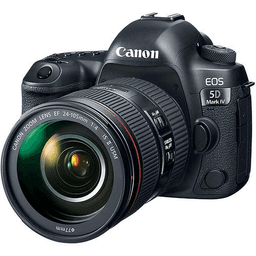
Should You Buy a Used Canon 6D Mark II in 2026? What to Check First
The Canon 6D Mark II remains a capable full-frame DSLR in 2026, but age, condition, shutter count, video limitations, and used pricing matter. Here is what to check before buying one.

TL;DR The Canon EOS 6D Mark II can still be a useful used full-frame camera in 2026, particularly for photographers who want Canon's EF lens ecosystem, a 26.2MP full-frame sensor, an optical viewfinder, a vari-angle touchscreen, and reliable still-photo autofocus without paying new-camera prices. However, it is important to remember that this is a 2017 DSLR, not a modern mirrorless body. Canon lists the model as discontinued, and its official support page indicates that free repairs for the product were discontinued in 2022. When buying used, the condition of the individual camera matters more than the model name. Check the shutter count, sensor, mirror and shutter operation, autofocus, LCD, battery, ports, card slot, hot shoe, weather seals, and overall body condition. Also check the asking price against current used listings because prices can vary substantially depending on condition, included accessories, and whether a lens is bundled.
What Makes The Canon 6D Mark II Relevant In 2026?
The Canon EOS 6D Mark II was introduced in 2017 as a full-frame DSLR aimed at enthusiasts and photographers moving into full-frame photography. It uses a 26.2MP full-frame CMOS sensor and Canon's DIGIC 7 processor, with a standard ISO range of 100 to 40,000. It also includes Dual Pixel CMOS AF for Live View shooting and a 45-point all-cross-type autofocus system when using the optical viewfinder. Those specifications are still useful for photography in 2026 because resolution alone has not suddenly become obsolete. A well-maintained full-frame camera can continue producing high-quality photographs years after launch, particularly when paired with a good lens and used in situations where its limitations are understood.
The 6D Mark II is also different from many modern mirrorless cameras in the way it handles photography. You get an optical viewfinder, a physical mirror mechanism, and the familiar DSLR shooting experience. Its rear display is a 3-inch vari-angle touchscreen, which is useful for low-angle, high-angle, and Live View photography. Canon also built in GPS, Wi-Fi, and NFC connectivity, giving the camera features that were useful for photographers who wanted to transfer images or record location information without relying entirely on accessories. The camera can shoot continuously at up to 6.5 frames per second under specified conditions, which is respectable for general action and event photography even though newer cameras can shoot substantially faster.
The important point in 2026 is that you are buying the 6D Mark II for what it does well, not because it competes directly with the latest mirrorless bodies. Its full-frame sensor, EF lens compatibility, optical viewfinder, touchscreen, and established still-photography workflow can make sense for portraits, weddings, family photography, travel, and general photography. At the same time, the camera's age means you need to pay closer attention to condition and long-term support. Canon's India support page currently identifies the EOS 6D Mark II and states that free repairs for the product were discontinued as of July 31, 2022.
Key Specifications To Know
| Feature | Canon EOS 6D Mark II |
|---|---|
| Sensor | 26.2MP full-frame CMOS |
| Processor | DIGIC 7 |
| Viewfinder AF | 45-point all-cross-type AF |
| Live View AF | Dual Pixel CMOS AF |
| Continuous Shooting | Up to 6.5 fps |
| Standard ISO | 100 to 40,000 |
| Rear Screen | 3-inch vari-angle touchscreen |
| Video | Full HD, up to 60p |
| Connectivity | Wi-Fi, NFC, Bluetooth, GPS |
| Lens Mount | Canon EF |
Canon's official specifications confirm the core hardware, while independent reviews have highlighted both the improved autofocus and the camera's limitations compared with newer-generation bodies.
What You Still Get From A 6D Mark II
The biggest reason to consider a used 6D Mark II is the full-frame sensor. A 26.2MP full-frame camera can produce detailed images with the right lens and exposure, and the larger sensor gives photographers access to the characteristics associated with full-frame shooting, including greater control over depth of field when the same framing and aperture are used. For portrait photographers, this can be particularly useful because an appropriate EF lens can create a strong separation between the subject and background. The camera also has a broad native ISO range, although high ISO performance should not be judged purely from the specification sheet.
Autofocus is another reason the 6D Mark II remains relevant. Through the optical viewfinder, it has 45 all-cross-type AF points, while Dual Pixel CMOS AF assists autofocus during Live View. Canon introduced Dual Pixel CMOS AF as a significant part of the camera's Live View and video focusing system. Independent testing also found the autofocus system to be an improvement over the original 6D, although the viewfinder AF points are relatively concentrated rather than spread across a modern mirrorless-style frame.
The vari-angle touchscreen is another feature that can be surprisingly useful when buying an older DSLR. You can tilt the display for low-angle photography, overhead shots, or more comfortable Live View operation. Wi-Fi, NFC, and GPS also give the 6D Mark II some practical connectivity features that are still useful for photographers who want to move images to a smartphone or record location information. These features do not make the camera modern, but they can make an older camera more convenient to use than its age might suggest.
Where The 6D Mark II Starts To Show Its Age
The most obvious limitation for many buyers is video. The 6D Mark II does not offer 4K internal video recording, which immediately makes it less suitable for buyers who want a modern hybrid camera for serious video production. If your priority is still photography, this may not matter much. If you expect to shoot a lot of 4K video for YouTube, commercial work, or social media production, however, this limitation should be considered before buying. Independent reviews also identified the lack of 4K as one of the camera's notable limitations.
Dynamic range is another point worth considering. DPReview's testing found that the 6D Mark II's low-ISO dynamic range was weaker than some competing cameras, which means photographers who routinely recover heavily underexposed shadows or work with high-contrast scenes may have less flexibility than with newer sensors. This does not mean the camera produces poor images. It means exposure technique becomes more important, especially for landscape and other scenes where recovering large amounts of shadow detail is part of the workflow.
The other consideration is the DSLR form factor itself. The camera is larger and heavier than many current compact mirrorless bodies, and the EF DSLR lens system can also create a substantial kit when paired with full-frame zooms. For photographers who already own Canon EF lenses, this can be an advantage. For someone starting from zero in 2026, the decision requires more thought because buying into an older DSLR system means committing to a discontinued body and a mature lens ecosystem rather than Canon's newer RF mirrorless system.
What To Check Before Buying A Used Canon 6D Mark II
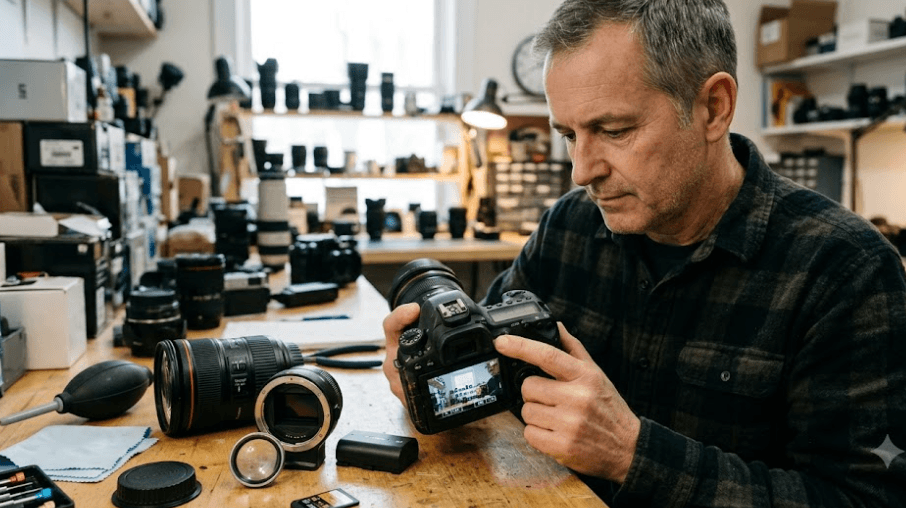
The first thing to inspect is the physical body. Look closely at the corners, grip, tripod mount, battery compartment, card-slot door, hot shoe, lens mount, and LCD hinge. Minor scratches are usually cosmetic, but dents around the lens mount or signs of impact deserve much more attention because a camera can appear clean while still having suffered internal damage. Check that the vari-angle screen moves smoothly and that the touchscreen responds consistently. Also inspect the viewfinder for excessive dust, damage, or abnormalities. A used camera should be judged as a working piece of equipment, not simply by how clean it looks in photographs.
The shutter count is another important data point, but it should not be treated as a pass-or-fail number by itself. A lower shutter count can indicate lighter use, while a higher count can indicate extensive professional or event use, but shutter count does not tell you how carefully the camera was treated. Ask the seller for a reliable shutter-count reading and compare it with the camera's overall condition. A body with a higher count but documented maintenance and excellent condition can be more attractive than a supposedly low-count body with evidence of heavy physical abuse. Also make sure the seller is not simply providing an unverified number.
The most important inspection is functional. Test the camera with a known-good EF lens and memory card. Take photographs at different shutter speeds and apertures, check autofocus using both the optical viewfinder and Live View, test the touchscreen, inspect the LCD for dead pixels or abnormal lines, and verify that the card slot writes images reliably. Check the built-in flash, hot shoe, USB and HDMI connections if you need them, Wi-Fi functions if relevant, and battery charging. Take several test photographs rather than relying on one shutter click. A used camera should demonstrate consistent operation across multiple functions before money changes hands.
Used Camera Inspection Checklist
| Area | What To Check |
|---|---|
| Body | Dents, cracks, excessive wear and impact marks |
| Shutter | Shutter count and consistent operation |
| Sensor | Dust, scratches and image abnormalities |
| Autofocus | Viewfinder AF and Live View AF |
| LCD | Touch response, hinge and display defects |
| Lens Mount | Damage, looseness or excessive wear |
| Card Slot | Reliable image writing and reading |
| Battery | Condition, charging and abnormal drain |
| Ports | USB, HDMI and other required connections |
| Hot Shoe | Flash/accessory communication |
| Connectivity | Wi-Fi, NFC and GPS if required |
| Accessories | Genuine charger, battery, caps and straps |
Is The Used Price Right In 2026?
Used pricing is one of the areas where you should avoid relying on a single number. Current Indian listings show substantial variation depending on body condition, included lenses, batteries, accessories, and seller. Recent OLX listings for the 6D Mark II show asking prices ranging from roughly ₹42,590 to ₹80,000 and beyond, while a specialist used-camera listing has advertised a professionally inspected body at a significantly different price. These are asking or listed prices, not guaranteed transaction values, so they should be used as reference points rather than a fixed market rate.
A sensible way to evaluate the asking price is to separate the body from the lens and accessories. A camera bundled with a Canon EF lens, extra genuine battery, charger, memory card, or original accessories cannot be compared directly with a body-only listing. You should also consider the condition and service history. If a seller is asking substantially more than other comparable bodies, there should be a clear reason, such as excellent condition, low usage, a desirable lens, documented service, or additional accessories.
The biggest mistake is buying based on the original retail positioning of the 6D Mark II. The fact that it was a premium full-frame DSLR when launched does not automatically make every used example valuable in 2026. Technology, competing cameras, condition, and availability all affect what the camera is worth today. The used market should therefore be treated as a condition-based market, where the individual camera matters more than the original launch price.
Price Evaluation
| Used Camera Condition | What To Look For |
|---|---|
| Heavy wear | Only consider with a significant price advantage |
| Normal used condition | Check shutter, sensor and all functions carefully |
| Very good condition | Compare price against other clean bodies |
| Excellent condition | Verify that premium pricing is justified |
| Body with lens | Separate the value of the lens before comparing |
| Professional/serviced unit | Ask for service or inspection documentation |
Who Should Buy A Used Canon 6D Mark II?
The 6D Mark II can make sense for a photographer who primarily wants still images and already has access to Canon EF lenses. Portrait photographers, wedding photographers, hobbyists, students, and people upgrading from an older crop-sensor Canon can still find useful performance here. The 26.2MP full-frame sensor, 45-point optical-viewfinder autofocus, Dual Pixel CMOS AF, vari-angle touchscreen, and 6.5 fps continuous shooting provide a capable still-photography package.
It can also make sense for buyers who specifically prefer a DSLR. Some photographers prefer an optical viewfinder, traditional controls, and the physical shooting experience of a DSLR. If you already own several EF lenses, staying with the 6D Mark II can also reduce the need to replace your entire lens collection immediately. In that situation, the used body can be a practical continuation of an existing system rather than an entirely new investment.
However, buyers should think twice if they need modern video features, advanced subject recognition, extremely fast burst shooting, compact travel equipment, or the newest autofocus systems. A person buying their first interchangeable-lens camera in 2026 should also compare the used 6D Mark II against available mirrorless options before committing. The question is not simply whether the 6D Mark II can still take good photographs. It clearly can. The question is whether its particular strengths match the way you intend to use it.
Common Mistakes When Buying A Used 6D Mark II
One common mistake is checking only the shutter count. Shutter count is useful, but it cannot tell you whether the camera has been dropped, exposed to moisture, stored poorly, or heavily used in difficult conditions. Another mistake is testing the camera only in a shop or at home without actually taking photographs at different settings. Autofocus, card writing, sensor condition, LCD operation, and battery performance all deserve separate checks.
Another mistake is assuming that every 6D Mark II has identical value. Two bodies of the same model can have very different market values depending on condition and included equipment. A clean body with a genuine battery and charger is not equivalent to a heavily worn body with a third-party battery and no original accessories. Similarly, a body bundled with a useful EF lens needs to be evaluated as a kit rather than compared with a body-only listing.
Finally, do not overlook the camera's age and support situation. Canon's India support page states that free repairs for the EOS 6D Mark II were discontinued in 2022. That does not mean every repair is impossible, but it does mean buyers should not assume the same support position as a current camera. Before purchasing an older DSLR, it is sensible to identify a reliable camera service provider and confirm that the parts or repairs you might need are still available.
Quick Buying Rules
| Do | Avoid |
|---|---|
| Test the actual camera | Buying from photos alone |
| Check shutter count | Treating shutter count as the only factor |
| Test autofocus | Assuming AF works because the camera powers on |
| Inspect the sensor | Ignoring dust or image abnormalities |
| Check battery health | Accepting an unreliable battery |
| Compare several used prices | Paying based on original launch price |
| Test with your intended lens | Assuming every EF lens combination is fine |
| Check repair options | Ignoring the age of the camera |
Frequently Asked Questions
Q. Is the Canon 6D Mark II still worth buying in 2026?
Yes, it can still be worth considering for still photography if you find a well-maintained body at an appropriate used price. Its 26.2MP full-frame sensor, 45-point optical-viewfinder AF system, Dual Pixel CMOS AF, vari-angle touchscreen, and 6.5 fps continuous shooting remain useful. However, it is a discontinued 2017 DSLR, so buyers should weigh its age, support situation, and video limitations before purchasing.
Q. Is the Canon 6D Mark II good for photography?
The 6D Mark II remains capable for portraits, events, travel, family photography, and general still photography. Its full-frame sensor and Canon EF lens compatibility give photographers plenty of flexibility, while the 45-point all-cross-type AF system and Dual Pixel CMOS AF provide two different focusing approaches.
Q. Does the Canon 6D Mark II shoot 4K video?
No. The 6D Mark II does not offer internal 4K video recording. It is therefore more appropriate for buyers whose priority is still photography rather than modern 4K-focused video production. The lack of 4K was also identified as one of the camera's limitations in contemporary reviews.
Q. What is the shutter speed of the Canon 6D Mark II?
The camera offers a maximum mechanical shutter speed of 1/4000 second. It can also shoot continuously at up to 6.5 frames per second under Canon's specified conditions. These specifications are still adequate for general photography, although newer cameras offer substantially faster shooting and shutter options.
Q. How many megapixels does the Canon 6D Mark II have?
The Canon EOS 6D Mark II has a 26.2MP full-frame CMOS sensor. That resolution remains sufficient for high-quality photographs and provides reasonable flexibility for cropping and printing when the image is properly exposed and focused.
Q. Is the Canon 6D Mark II good for portraits?
Yes. The full-frame sensor works well with Canon EF portrait lenses, and the camera can produce the shallow depth-of-field look many portrait photographers want when paired with an appropriate lens. Its 26.2MP resolution also provides enough detail for typical portrait editing and printing workflows.
Q. Does the Canon 6D Mark II have Dual Pixel autofocus?
Yes. The 6D Mark II includes Dual Pixel CMOS AF for Live View shooting. It also has a separate 45-point all-cross-type autofocus system when using the optical viewfinder. This distinction is important when testing a used camera because both focusing systems should be checked before purchase.
Q. What should I check first when buying a used Canon 6D Mark II?
Start with the camera's physical condition, shutter count, sensor, autofocus, LCD, battery, card slot, lens mount, ports, and hot shoe. Then take actual photographs using different shutter speeds, apertures, and autofocus modes. Testing the camera yourself is more useful than relying only on a seller's description.
Q. Can I use Canon EF lenses on the 6D Mark II?
Yes. The EOS 6D Mark II uses Canon's EF lens mount, making it compatible with Canon EF lenses designed for its full-frame DSLR system. EF-S lenses designed specifically for Canon APS-C DSLRs are not the appropriate lens type for the 6D Mark II. Checking the lens mount before buying a used lens is therefore important.
Q. Is the Canon 6D Mark II good for video in 2026?
It can handle basic video work, but it is not an ideal choice for someone specifically looking for modern video features. Its lack of internal 4K recording is a major limitation compared with newer cameras. For buyers focused mainly on photography, that limitation may be less important.
Final Recommendation
A used Canon 6D Mark II can still make sense in 2026, but the purchase should be based on the condition and price of the individual camera rather than its original reputation. The 26.2MP full-frame sensor, 45-point all-cross-type autofocus system, Dual Pixel CMOS AF, vari-angle touchscreen, optical viewfinder, and EF lens compatibility give it a solid still-photography foundation.
The biggest reasons to be cautious are its age, discontinued status, lack of internal 4K recording, and the limitations identified in independent testing, including weaker low-ISO dynamic range compared with some competing cameras of its era. Canon's India support information also confirms that free repairs for the model were discontinued in 2022, making the condition of a used unit particularly important.
If you find a 6D Mark II with a clean sensor, healthy battery, reliable autofocus, functioning LCD and ports, reasonable shutter count, and no signs of impact or moisture damage, it can still be a practical full-frame DSLR for photography. But do not buy it simply because it is a cheap way into full frame. Compare the actual used price, inspect the camera carefully, consider the cost of EF lenses, and make sure its DSLR design and video capabilities match your needs before making the purchase.