
Prime vs Zoom Lenses: Which Should You Buy First?
Prime lenses offer wide apertures, compact designs, and strong image quality, while zoom lenses provide flexibility across focal lengths. Learn which lens should come first based on your photography style, budget, and shooting needs

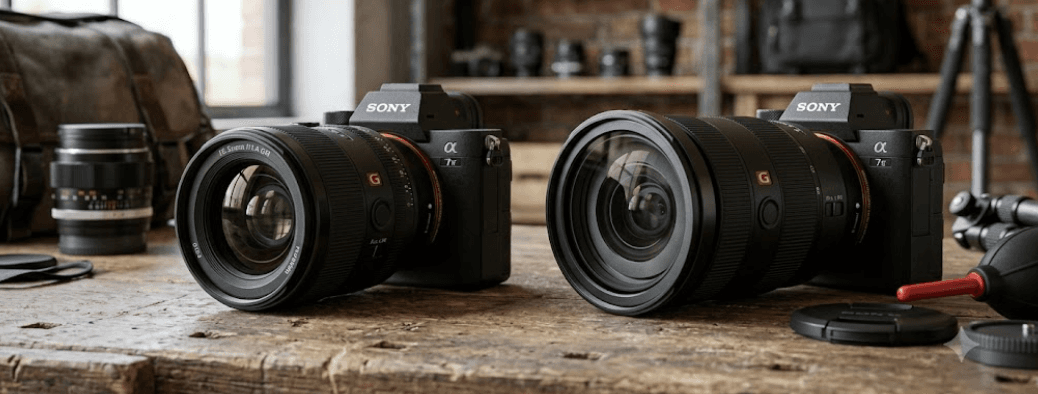
TL;DR: Prime and zoom lenses solve different photography problems, so there is no universal winner when choosing your first lens. A prime lens has a fixed focal length and often offers a wider maximum aperture, which can make it a strong choice for portraits, low-light photography, street shooting, and learning composition. A zoom lens covers a range of focal lengths and is usually the more flexible option for travel, events, landscapes, wildlife, and situations where changing lenses is inconvenient. For a beginner who wants versatility from one lens, a standard zoom is usually the safer first purchase. If you already know that you enjoy portraits, street photography, or low-light shooting, a fast prime can be the more rewarding choice.
Understanding Prime And Zoom Lenses
The simplest difference between a prime and zoom lens is focal length. A prime lens has one fixed focal length, such as 35mm, 50mm, or 85mm, so you change your composition by moving yourself closer to or farther from the subject. A zoom lens covers a range, such as 24-70mm or 70-200mm, allowing you to change the framing without physically changing your position. Focal length also affects the angle of view, which is why choosing between these lens types changes more than just convenience. It changes how you approach a scene and how much of it you can include in the frame.
Prime lenses are often associated with larger maximum apertures and compact designs. Many common primes are available around f/1.8, f/1.4, or even wider, although this varies considerably by lens and mount. A wider aperture can allow more light to reach the sensor and can make it easier to create a shallow depth of field when the shooting conditions and subject distance are suitable. Prime lenses also tend to be smaller and lighter than comparable zooms, although premium primes can be large and heavy. This combination makes a fast prime particularly appealing to photographers who value low-light capability, subject separation, and portability.
Zoom lenses take the opposite approach by prioritizing flexibility. A standard zoom can cover several useful focal lengths in one lens, while a telephoto zoom can let you move between moderate and long focal lengths without swapping glass. That flexibility can be particularly useful when your subject distance changes quickly, such as during travel, events, sports, or wildlife photography. Modern zoom lenses can also deliver excellent optical quality, so it is no longer accurate to treat zooms as automatically inferior to primes. Lens design, price, aperture, stabilization, autofocus, and the specific model all influence real-world performance.
| Feature | Prime Lens | Zoom Lens |
|---|---|---|
| Focal Length | Fixed | Variable |
| Framing | Requires movement | Adjusted by zooming |
| Maximum Aperture | Often wider | Varies by model |
| Portability | Often compact | Can be larger |
| Flexibility | Lower | Higher |
| Best For | Portraits, street, low light | Travel, events, wildlife, everyday use |
Advantages Of Buying A Prime Lens First
One of the biggest reasons to buy a prime first is the aperture. A fast prime can offer a wider maximum aperture than a similarly priced general-purpose zoom, giving photographers more flexibility when shooting in lower light and more control over depth of field. This can be useful for portraits where you want the subject to stand out from the background, or for evening street photography where you want to avoid unnecessarily high ISO settings. However, aperture is only one part of exposure, and a wide aperture does not automatically guarantee better photographs. Your shutter speed, ISO, focus, subject distance, and lighting still matter.
A prime can also encourage you to think more carefully about composition. Because you cannot simply turn the zoom ring to change framing, you have to consider where you stand, how much space you want around the subject, and how the background interacts with the frame. Sony specifically notes that working with a prime requires photographers to approach or move away from the subject, which can help beginners develop a stronger understanding of distance and composition. That restriction can initially feel inconvenient, but it can also become part of the learning process.
Portability is another reason a prime can make sense as a first purchase. A compact 35mm or 50mm prime can create a relatively small everyday setup, making it easier to carry a camera for street photography, casual outings, or travel. Many primes also provide strong optical performance for their size, although performance varies by lens. If your goal is to make photography a regular habit rather than leaving the camera at home because the setup is bulky, a small prime can have a practical advantage that does not show up in a specification sheet.
When A Prime Makes More Sense?
A prime is particularly appealing if you already know what you enjoy photographing. A 35mm prime can work well for environmental portraits, street photography, and everyday scenes, while a 50mm prime offers a more focused perspective that many photographers use for portraits and general photography. An 85mm prime is more specialized toward portraits on full-frame cameras. These focal lengths are not rules, and sensor size changes the effective field of view, but they provide useful starting points when choosing your first fixed lens.
Advantages Of Buying A Zoom Lens First
The strongest argument for buying a zoom first is versatility. A single zoom can cover several focal lengths, which means you can photograph a wide scene, frame a person more tightly, or adjust your composition without changing lenses. This becomes especially valuable when you are still discovering your preferred style. Instead of buying several primes immediately, a standard zoom can let you experiment with different focal lengths and see which perspectives you naturally use most. Sony also recommends standard zooms as a way to learn the basics across a useful focal-length range.
A zoom is also easier in situations where you cannot move freely. Imagine photographing a school event, wedding, stage performance, or crowded tourist attraction. You may not be able to walk forward every time you want a tighter frame, and you may not have enough room to step backward for a wider composition. A zoom gives you more control over framing while you remain in roughly the same position. That flexibility can save time and reduce the need to change lenses in environments where dust, moisture, or missed moments are concerns.
Modern zooms also challenge the idea that photographers must choose between convenience and image quality. Premium zooms can offer wide apertures, strong sharpness, fast autofocus, weather resistance, and stabilization, depending on the model. For example, current 24-70mm f/2.8 designs are widely used as professional everyday lenses because they cover useful focal lengths while maintaining a constant wide aperture. At the other end, telephoto zooms such as 70-200mm designs are popular for sports, wildlife, events, and portraits because they provide reach without requiring multiple lenses.
| Shooting Situation | Better Starting Point | Why |
| Travel | Zoom | Covers changing perspectives |
| Street Photography | Prime | Compact and encourages composition |
| Portraits | Prime | Wide-aperture options are widely available |
| Weddings And Events | Zoom | Flexible framing in changing conditions |
| Wildlife | Telephoto Zoom | Adjustable framing with long reach |
| Low-Light Photography | Fast Prime | Wide apertures can be useful |
| Learning Focal Lengths | Zoom | Lets you experiment with different views |
Prime Vs Zoom: Image Quality And Aperture
The old idea that prime lenses are always sharper than zoom lenses is too broad to use as a buying rule. Nikon notes that primes are typically sharper than similarly priced zoom options, but modern premium zooms can deliver excellent optical performance. The difference depends heavily on the specific lenses being compared. A high-end zoom can outperform a cheaper prime in some situations, while a well-designed prime can provide excellent sharpness, contrast, and low-light performance. Price, optical design, coatings, autofocus, and camera sensor resolution all influence the final result.
Aperture is where the difference can become more obvious. Fast primes commonly offer apertures such as f/1.8 or f/1.4, while many affordable zooms have narrower maximum apertures, particularly toward their longer focal lengths. This can give a prime an advantage in dim conditions and when you want stronger background separation. However, a wide aperture is not always desirable. Landscape photographers often stop down for greater depth of field, while product photographers may also need more of the subject to remain sharp. The right aperture depends on the photograph rather than the lens category.
It is also important not to confuse background blur with image quality. A photograph with heavy bokeh is not automatically better than a photograph where the background remains recognizable. A zoom lens can produce attractive background separation at longer focal lengths and wide apertures, while a prime can produce a more pronounced effect depending on its aperture and shooting distance. In practice, the difference between a good prime and a good zoom is often less important than understanding how focal length, aperture, distance, and composition work together.
Prime Vs Zoom For Different Photography Styles
Your photography style should be the biggest factor in deciding which lens you buy first. If you primarily photograph people, a fast prime can be an excellent starting point because it can combine a useful portrait perspective with a wide aperture. Street photographers may also appreciate the smaller size and fixed perspective of a prime. On the other hand, travel photographers often benefit from a zoom because the shooting environment can change from a wide architectural scene to a distant subject within seconds.
For events and sports, zooms are usually more practical because subjects move and photographers often have limited freedom to reposition themselves. A 70-200mm zoom, for example, can cover several useful telephoto perspectives without requiring a lens change. Wildlife photography can demand even more reach, making telephoto zooms particularly useful when the subject distance is unpredictable. These choices are not absolute, but they explain why professional photographers often carry both primes and zooms rather than treating one category as universally superior.
For beginners, there is another useful consideration: what will make you use the camera more often? A compact prime may encourage you to carry the camera everywhere, while a versatile zoom may make you more confident because you can handle more situations with one lens. If you are unsure, look at the photography you already enjoy and choose the lens that removes the biggest limitation. The best first lens is rarely the one with the most impressive specification. It is the one that fits your subjects, budget, camera system, and willingness to carry it.
Cost And Long-Term Value
Price should be considered alongside how often you expect to use the lens. A relatively affordable prime can be an easy way to add a fast aperture to a camera system without immediately investing in an expensive professional zoom. At the same time, buying several inexpensive primes to cover different focal lengths can eventually cost more than purchasing one good zoom. The right comparison is therefore not simply the price of one prime against one zoom, but the complete setup you expect to build over time.
A zoom can also delay the need for additional lenses. A useful standard zoom may cover the focal lengths you need for months or even years while you learn what type of photography interests you most. Once you understand that you regularly shoot portraits, for example, you can add a portrait prime with more confidence. This approach can reduce unnecessary purchases because you are building your kit around actual shooting habits rather than buying lenses based on specifications alone.
The opposite strategy can also work. If you already know that you mainly photograph portraits and want a compact setup, buying a fast prime first may be the more sensible investment. The same applies to street photographers who value a small camera-and-lens combination. Lens prices vary significantly by camera mount, sensor format, brand, and aperture, so there is no single price threshold that separates a good prime from a good zoom. What matters is whether the lens provides the focal length and features your photography actually needs.
| Buyer Type | Better First Lens | Main Reason |
| Beginner Unsure Of Style | Zoom | Explore multiple focal lengths |
| Portrait Photographer | Prime | Wide-aperture options and subject separation |
| Travel Photographer | Zoom | Versatile framing |
| Street Photographer | Prime | Compact and discreet |
| Event Photographer | Zoom | Flexible composition |
| Wildlife Photographer | Telephoto Zoom | Reach and framing flexibility |
Common Mistakes When Choosing A Lens
One common mistake is buying a prime because someone said primes are automatically better. A prime can be an excellent choice, but its fixed focal length can become frustrating if you regularly photograph subjects at unpredictable distances. Another mistake is buying a zoom solely because it offers a large focal-length range. A superzoom may be convenient, but convenience should still be balanced against aperture, size, weight, autofocus, optical quality, and the type of photography you actually do.
Another mistake is ignoring sensor size. A 35mm lens does not produce the same field of view on every camera because the sensor format affects how that focal length is experienced. Full-frame, APS-C, and Micro Four Thirds systems can therefore require different focal lengths to achieve a similar framing. Before buying a lens, check compatibility with your camera mount and consider the sensor format rather than relying only on the focal-length number printed on the lens.
Finally, do not judge a lens only by sharpness or maximum aperture. Autofocus behaviour, stabilization, minimum focusing distance, weight, weather resistance, handling, and portability can have a major effect on how useful a lens becomes. A slightly less impressive lens that you carry regularly can produce far more useful photographs than an expensive lens that stays at home. The goal should be to choose a lens that removes a practical limitation rather than simply adding another impressive item to your camera bag.
Which Lens Should You Buy First?
If you are completely new to interchangeable-lens photography and do not yet know which focal lengths you prefer, a standard zoom is generally the safer first purchase. It lets you explore different compositions without immediately committing to one perspective. You can use the zoom range to discover whether you naturally shoot wider scenes, prefer tighter portraits, or enjoy longer focal lengths. That information can then guide your next lens purchase rather than leaving you to guess.
A prime is the better first purchase when you already have a clear reason for wanting one. Portrait photographers who want a fast aperture, street photographers who value a compact setup, and photographers who regularly work in lower light can all benefit from starting with a prime. The fixed focal length can also make you more deliberate about composition because you have to physically change your position to alter the framing.
There is no need to treat the choice as permanent. A camera kit can eventually include both types because they complement each other. A standard zoom can handle travel, events, and unpredictable situations, while a fast prime can provide a smaller setup and a different creative look. The smartest first purchase is therefore the lens that matches what you photograph most often, not the category that is marketed as technically superior.
Frequently Asked Questions
Q. What is the main difference between a prime and zoom lens?
A prime lens has one fixed focal length, while a zoom lens covers a range of focal lengths. A prime requires you to move closer or farther from your subject to change the framing, whereas a zoom lets you change the framing by adjusting the focal length.
Q. Are prime lenses sharper than zoom lenses?
Prime lenses are often sharper than similarly priced zoom lenses, but this is not a universal rule. Modern premium zoom lenses can deliver excellent optical quality, and the actual comparison depends on the specific lenses involved.
Q. Are prime lenses better for low-light photography?
They can be. Many prime lenses offer wider maximum apertures such as f/1.8 or f/1.4, which can allow more light to reach the sensor. However, low-light performance also depends on shutter speed, ISO, stabilization, autofocus, and the camera body.
Q. Is a zoom lens better for beginners?
A zoom can be a practical first choice for beginners because it lets you experiment with several focal lengths without buying multiple lenses. This can help you understand which perspectives you prefer before investing in additional lenses.
Q. Which lens is better for portraits, prime or zoom?
Both can work well, but primes are popular for portraits because many portrait-focused models offer wide apertures and useful focal lengths. Zooms can be more flexible when you need to change framing quickly or cannot move around freely.
Q. Which lens is better for travel photography?
A zoom is often more convenient for travel because one lens can cover multiple focal lengths. A standard zoom can handle landscapes, architecture, people, and everyday scenes without requiring frequent lens changes.
Q. Which lens is better for street photography?
A compact prime can be a strong choice for street photography because it can keep the camera setup small and encourages deliberate composition. However, a compact zoom can also be useful when you need more framing flexibility.
Q. Do zoom lenses have worse image quality?
Not necessarily. Lens quality varies by design and price. Modern professional zooms can offer excellent sharpness, autofocus, contrast, and other optical characteristics, so the specific model matters more than whether it is simply a zoom.
Q. Should I buy a 35mm or 50mm prime first?
That depends on the camera's sensor and the type of photography you enjoy. On full-frame cameras, 35mm provides a wider perspective that can suit street, travel, and environmental portraits, while 50mm offers a more focused standard view. The same focal lengths will provide different fields of view on smaller sensors.
Q. Can one zoom lens replace several prime lenses?
In terms of focal-length coverage, a zoom can replace the need to carry several primes. However, it may not match every prime's maximum aperture, size, weight, or specific optical characteristics. The best choice depends on whether flexibility or specialized performance matters more to you.
Final Recommendation
For most beginners, a good standard zoom is the safer first lens because it gives you flexibility while you learn what focal lengths and subjects you enjoy. It can cover everyday photography, travel, family events, landscapes, and many other situations without forcing you to change lenses constantly. Once you understand your shooting habits, adding a prime becomes much easier because you will know exactly what limitation you want the new lens to solve.
If portraits, street photography, or low-light shooting are already your main interests, start with a prime instead. A fast, compact prime can give you a wide aperture and a lightweight setup while encouraging you to think more carefully about composition. If your subjects are unpredictable or you photograph travel, events, sports, or wildlife, the flexibility of a zoom is usually more valuable.
Ultimately, the prime vs zoom decision is not about choosing the technically superior lens. It is about choosing the lens that matches how you actually photograph. Buy a zoom first if you want flexibility and are still exploring. Buy a prime first if you already know the perspective and shooting style you want. Once you understand that distinction, building a useful lens kit becomes much easier and far less expensive.
Fact-check note: The technical distinctions in this article were cross-checked against current guidance from Nikon, Canon, and Sony, along with current 2026 lens coverage from Digital Camera World. The article avoids treating either lens type as universally superior because performance varies by the specific lens, camera system, aperture, and use case.






