Panasonic Lumix L10 review: a fresh take on the compact hybrid
The Panasonic Lumix L10 combines a 20.4MP 4/3-type sensor, Leica 24-75mm zoom, fast autofocus, stabilization, and Real Time LUTs in a stylish fixed-lens body.

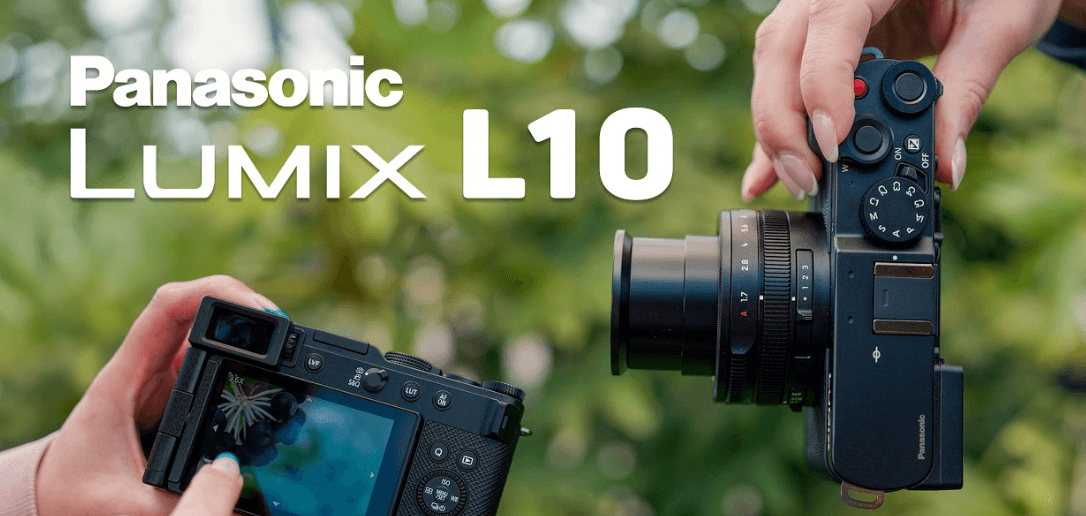
TL;DR The Panasonic Lumix L10 takes a different approach to the modern compact camera by combining a relatively large 4/3-type sensor with a built-in Leica 24-75mm-equivalent f/1.7-2.8 zoom lens, a viewfinder, a free-angle touchscreen, optical image stabilization, and Panasonic's Real Time LUT workflow. It is designed for photographers who want the convenience of a fixed lens without giving up the flexibility of a useful zoom range. The 20.4MP sensor is not the highest-resolution option in this segment, but the combination of sensor size, bright lens, autofocus, stabilization, and in-camera colour tools makes the L10 a capable everyday camera. Its biggest compromise is size. At around 508g with the battery and card, it is considerably larger than the pocket cameras that traditionally defined this category. The result is a camera that makes more sense as a compact hybrid for travel, street photography, family moments, and casual video than as a genuinely pocketable camera.
What Makes The Panasonic Lumix L10 Different?
The Panasonic Lumix L10 arrives at a time when compact cameras are becoming popular again, but it does not simply copy the formula that made cameras such as the Fujifilm X100VI successful. Instead of using a fixed wide-angle prime lens, Panasonic gives the L10 a Leica DC Vario-Summilux 24-75mm-equivalent zoom with a bright f/1.7-2.8 aperture. That immediately changes how you can use the camera. At 24mm, it works for landscapes, architecture, interiors, and everyday street scenes, while the longer 75mm end is more useful for portraits and subjects that are slightly farther away. You do not have to physically change lenses or decide which focal length to carry before leaving home, which is exactly the kind of convenience that makes a fixed-lens camera attractive.
The sensor is another important part of the L10's identity. Panasonic uses a 20.4MP 4/3-type BSI CMOS sensor with a multi-aspect design. That is considerably larger than the sensors found in many traditional compact cameras and gives the L10 a stronger foundation for image quality, particularly when combined with the bright Leica lens. Panasonic has also designed the camera around still photography rather than making video the entire focus. You still get serious video capabilities, but the overall package is clearly aimed at people who want a camera that can handle photographs first and video when required.
The L10 also tries to make the shooting experience more creative rather than forcing every image through a computer or phone afterward. Its REAL TIME LUT system lets you load custom LUTs into the camera and preview the look while shooting. Panasonic's LUMIX Lab app can also create LUTs from reference images through its Magic LUT feature. That makes the L10 particularly interesting for photographers who want finished-looking JPEGs and videos without spending a large amount of time grading every file after a day of shooting.
Key Specifications At A Glance
| Specification | Panasonic Lumix L10 |
|---|---|
| Sensor | 20.4MP 4/3-type BSI CMOS |
| Lens | Leica DC Vario-Summilux 24-75mm equivalent |
| Aperture | f/1.7-2.8 |
| Autofocus | 779-point Phase Hybrid AF |
| Stabilization | Optical image stabilization |
| Viewfinder | 2.36-million-dot OLED EVF |
| Rear Display | 1.84-million-dot free-angle monitor |
| Burst Shooting | Up to 30fps with electronic shutter |
| Video | Up to 4K/120p |
| Weight | Approx. 508g with battery and card |
Design And Handling
The L10's design is one of the reasons it stands out. Panasonic has given it a metallic finish and a textured exterior that gives the camera a more premium feel than many ordinary point-and-shoot models. There are physical controls for key shooting functions, along with an aperture ring, control ring, and customizable function controls. That matters because one of the advantages of a dedicated camera is being able to change settings without constantly opening a touchscreen menu. For photographers who enjoy a more hands-on shooting process, the L10 feels much closer to a traditional enthusiast camera than a basic compact.
The built-in 2.36-million-dot OLED electronic viewfinder is another practical advantage. A viewfinder becomes particularly useful in bright outdoor conditions, where a rear screen can be harder to see clearly. The 1.84-million-dot free-angle monitor adds another layer of flexibility because you can position it for different shooting angles and orientations. This is useful for low-angle street photography, travel shots, self-recording, or compositions where holding the camera directly in front of your face is inconvenient. The combination of EVF and articulated screen makes the L10 more versatile than many fixed-lens competitors.
However, the word compact needs some qualification. The L10 weighs around 508g with its battery and card, and reviewers have pointed out that it is substantially larger than genuinely pocketable compact cameras. That is not necessarily a problem, because the larger body gives Panasonic room for a viewfinder, grip, controls, battery, and stabilization. But buyers should understand what they are getting. The L10 is better described as a compact fixed-lens hybrid camera than a camera that disappears into a jeans pocket.
Image Quality And Leica Zoom Performance
The Leica-branded 24-75mm-equivalent lens is arguably the biggest reason to consider the L10. A 24mm starting point is wide enough for travel, architecture, interiors, and everyday scenes, while the 75mm equivalent gives you noticeably more reach for portraits and details. The f/1.7-2.8 aperture is also useful because it lets the lens gather more light than a typical compact zoom, particularly at the wider end. This gives the L10 more flexibility in evening scenes and indoor photography without requiring the user to carry another lens.
The 20.4MP sensor does not chase extremely high resolution, and that is not necessarily a weakness for this type of camera. For everyday photography, 20.4MP provides enough resolution for large prints, social media, cropping, and normal editing. The combination of the sensor and bright zoom is more important to the overall experience than simply increasing the megapixel number. Panasonic also uses its image processing and Dynamic Range Boost technology to improve tonal handling, which can help preserve more detail in challenging scenes.
The camera's multi-aspect sensor design is another interesting feature because it encourages photographers to think about composition before pressing the shutter. Instead of treating aspect ratios as something that must always be changed during editing, the L10 makes different framing options part of the shooting experience. This is a small feature, but it fits the camera's broader philosophy: the L10 is designed to make photography more enjoyable and immediate rather than simply functioning as a technical capture device.
Lens And Image Quality Highlights
| Feature | What It Means In Practice |
| 24mm equivalent | Useful for landscapes, travel, interiors, and street photography |
| 75mm equivalent | Better reach for portraits and distant subjects |
| f/1.7-2.8 | Bright aperture for low-light shooting and background separation |
| 20.4MP sensor | Enough resolution for everyday photography and editing |
| Optical stabilization | Helps reduce camera shake during handheld shooting |
| Multi-aspect sensor | Gives photographers more flexibility when composing |
Autofocus And Everyday Performance
Autofocus is one of the areas where the L10 feels considerably more modern than its retro-inspired appearance suggests. Panasonic equips it with a 779-point Phase Hybrid AF system and AI-based subject recognition. The system can recognize people, animals, vehicles, and other subjects, while eye and face detection helps when photographing people. This is important because compact cameras are often bought for spontaneous photography. When you are traveling or photographing family moments, you do not want to spend several seconds manually selecting a focus point before every shot.
The L10 is also capable of fast continuous shooting, reaching up to 30fps with its electronic shutter and around 11fps with the mechanical shutter. That gives it enough speed for moving subjects, children, pets, street scenes, and casual sports. The combination of fast autofocus and high burst speeds makes the L10 more versatile than its appearance might suggest. It is not simply a slow lifestyle camera designed around static subjects.
Optical stabilization also improves the camera's usefulness outside perfect daylight. Handheld shooting becomes easier when the light starts falling, although stabilization cannot completely replace a fast shutter speed when the subject itself is moving. This distinction is important. The stabilization helps reduce camera shake, while the bright f/1.7-2.8 lens helps keep shutter speeds and ISO levels more manageable. Together, they make the L10 better suited to evening walks, restaurants, indoor events, and travel photography than a basic compact zoom.
Video and Real-Time LUT Features
Although Panasonic positions the L10 as a photography-focused compact, it is still a capable hybrid camera for creators who occasionally need video. The camera supports 4K recording and can capture 4K at up to 120fps, giving users the option of creating slow-motion footage as well as conventional video. That makes it useful for travel creators, social media content, behind-the-scenes clips, and everyday video without turning the camera into a dedicated cinema system.
The more interesting video feature, however, may be Panasonic's Real Time LUT system. LUTs can be loaded into the camera and applied while shooting, allowing you to see the intended colour treatment through the viewfinder or monitor. Instead of recording a completely neutral image and deciding later how it should look, you can build a visual style into the capture process. For creators who want to post quickly, that can save time and make the camera feel more connected to the social-media workflow.
The LUMIX Lab app extends this idea further. Panasonic allows users to transfer LUTs and create custom looks through the app, including its Magic LUT feature, which uses AI-based colour analysis to generate a LUT from a reference image. This does not replace professional colour grading, but it is a practical feature for photographers who prefer a recognizable style straight out of the camera. It also gives the L10 something distinctive beyond its sensor and lens specifications.
Panasonic Lumix L10 Vs The Compact Camera Competition
The L10 makes the most sense when compared with other premium fixed-lens cameras rather than ordinary point-and-shoot models. The Fujifilm X100VI, for example, uses a larger APS-C sensor and a fixed 35mm-equivalent f/2 lens, while the L10 gives you a 24-75mm-equivalent zoom. That difference changes the buying decision. The Fuji is attractive if you already know that you love a 35mm perspective, while the Panasonic is more flexible if you want one camera that can cover wide-angle travel scenes and short telephoto portraits.
The L10's zoom also gives it an advantage over cameras built around a single focal length. You can frame a building at 24mm and then immediately move toward a portrait-style composition at 75mm without changing lenses. That flexibility is particularly useful when traveling, because you can carry one camera instead of building a small interchangeable-lens kit. The trade-off is that the L10 is larger than some buyers expect from a compact camera, and its 20.4MP 4/3 sensor does not offer the same sensor area as APS-C alternatives.
The better question, therefore, is not whether the L10 beats every competing compact camera. It is whether its particular combination of zoom flexibility, bright lens, autofocus, stabilization, viewfinder, articulated display, and Real Time LUT workflow matches your priorities. For someone who wants a fixed-lens travel camera that feels more versatile than a single-prime compact, that combination is genuinely compelling.
Pros And Cons Of The Panasonic Lumix L10
The strongest part of the L10 is how many useful features Panasonic has managed to combine without making the camera dependent on interchangeable lenses. The Leica zoom gives it a genuinely useful range, while the large 4/3-type sensor provides a stronger image-quality foundation than typical small-sensor compacts. The viewfinder, free-angle screen, optical stabilization, and advanced autofocus make it practical rather than merely stylish. Real Time LUTs add another reason to choose it if you like getting distinctive images directly from the camera.
The main concern is size. Calling the L10 a compact camera can create the expectation that it will be something you can comfortably keep in a pocket. It is not. At around 508g, it is closer to a small enthusiast camera that happens to have a fixed lens. The lack of a truly pocketable form factor may push some buyers toward smaller alternatives, especially if portability is the main reason they are shopping for a compact.
There is also the question of price and positioning. At its US launch price of $1,499.99, the L10 enters a competitive part of the market where buyers can also consider interchangeable-lens cameras. The L10's value therefore depends heavily on whether you appreciate the convenience of its built-in Leica zoom and the simplicity of its fixed-lens design. If you want to build a camera system over several years, an interchangeable-lens model may make more sense. If you want one capable camera that is ready to shoot immediately, the L10 becomes easier to justify.
Panasonic Lumix L10: Pros And Cons
| Pros | Cons |
| Bright Leica 24-75mm-equivalent zoom | Larger than many traditional compact cameras |
| 20.4MP 4/3-type BSI CMOS sensor | Not genuinely pocketable |
| 779-point Phase Hybrid AF | Premium launch pricing |
| Optical image stabilization | Fixed lens limits system expansion |
| OLED EVF and free-angle display | 20.4MP resolution is lower than some rivals |
| Real Time LUT and Magic LUT workflow | Better suited to enthusiasts than casual point-and-shoot users |
| Up to 30fps electronic burst shooting | Size may reduce the appeal of the compact format |
Who Should Buy The Panasonic Lumix L10?
The L10 is a strong option for photographers who want one camera for travel, street photography, family moments, and everyday shooting without carrying multiple lenses. The 24-75mm-equivalent range covers enough situations that you can leave home without constantly wondering whether you packed the correct lens. The bright aperture also gives the camera more flexibility in changing light, while optical stabilization helps when shooting handheld. For a traveller who wants better image quality and control than a phone but does not want to build a full camera kit, the L10's approach makes a lot of sense.
It is also a good fit for creators who enjoy getting a finished look directly from the camera. Real-time LUTs are more than a novelty if your workflow involves taking photos, transferring them to your phone, and publishing them quickly. The LUMIX Lab integration makes that process easier, while the free-angle display and strong autofocus make the camera practical for casual video and self-recording. You do not need to be a professional filmmaker to benefit from those features.
However, buyers who prioritize pocketability should look elsewhere. The L10's larger body is the price of getting a viewfinder, grip, physical controls, large sensor, bright zoom, and other enthusiast features into one fixed-lens camera. If your definition of a compact camera is something that can disappear into a jeans pocket, this is not the right product. If you instead mean a camera that is smaller and simpler than a full interchangeable-lens setup, the L10 fits that description much better.
Frequently Asked Questions
Q. Is the Panasonic Lumix L10 a new camera or the old DMC-L10?
The 2026 Panasonic Lumix L10 is a new fixed-lens compact camera and should not be confused with the Panasonic Lumix DMC-L10 DSLR introduced in 2007. They are completely different cameras.
Q. What sensor does the Panasonic Lumix L10 use?
The L10 uses a 20.4MP 4/3-type back-illuminated CMOS sensor with a multi-aspect design.
Q. What lens does the Panasonic Lumix L10 have?
It has a built-in Leica DC Vario-Summilux 24-75mm-equivalent zoom lens with a bright f/1.7-2.8 aperture.
Q. Does the Panasonic Lumix L10 have image stabilization?
Yes. The L10 uses optical image stabilization, which helps reduce camera shake during handheld shooting.
Q. How good is the autofocus on the Panasonic Lumix L10?
The camera uses a 779-point Phase Hybrid AF system with AI-based subject recognition, including eye and face detection as well as recognition for various subjects.
Q. Can the Panasonic Lumix L10 shoot 4K video?
Yes. The L10 supports 4K video recording and can record 4K at up to 120fps for slow-motion footage.
Q. Does the Panasonic Lumix L10 have a viewfinder?
Yes. It has a 2.36-million-dot OLED electronic viewfinder, along with a 1.84-million-dot free-angle rear monitor.
Q. What are Real Time LUTs on the Panasonic Lumix L10?
Real Time LUTs allow you to load custom LUTs into the camera and apply them while shooting, so you can preview and record footage or images with the selected color treatment.
Q. Is the Panasonic Lumix L10 pocketable?
Not really. Although it is a fixed-lens compact camera, its approximately 508g weight and relatively substantial body make it larger than genuinely pocketable compact cameras.
Q. Is the Panasonic Lumix L10 worth buying?
The L10 is worth considering if you want a versatile fixed-lens camera with a bright Leica zoom, large 4/3-type sensor, strong autofocus, optical stabilization, an EVF, and creative LUT tools. It is less convincing if your main priority is the smallest possible body or interchangeable-lens flexibility.
Final Recommendation
The Panasonic Lumix L10 is an interesting response to the compact-camera revival because it does not try to win simply by being small. Instead, Panasonic has built a fixed-lens camera around the idea of convenience without sacrificing enthusiast features. The 20.4MP 4/3-type sensor, Leica 24-75mm-equivalent f/1.7-2.8 zoom, 779-point Phase Hybrid AF, optical stabilization, EVF, free-angle screen, fast burst shooting, and Real Time LUT workflow create a package that is genuinely versatile.
The biggest thing to understand before buying is its size. The L10 is not a pocket camera in the traditional sense, and buyers expecting something as small as a conventional premium compact may be disappointed. But if you are willing to carry a larger fixed-lens camera, the additional space translates into a more comfortable grip, proper controls, a useful viewfinder, a bright zoom lens, and a larger sensor.
For photographers who want a single everyday camera for travel, street photography, portraits, family moments, and casual video, the Panasonic Lumix L10 is a compelling choice. It is especially attractive if you value zoom flexibility and straight-out-of-camera colour over having the smallest body possible. Our final recommendation is to consider the Lumix L10 if you want a versatile enthusiast compact, but skip it if pocketability or interchangeable lenses is your top priority.