ND, Polarizer and UV Filters Explained: Which Do You Actually Need?
Understand the differences between ND, polarizing, and UV filters. Learn how they control exposure, reduce reflections, protect your lens, and which filters are worth buying for your photography style.

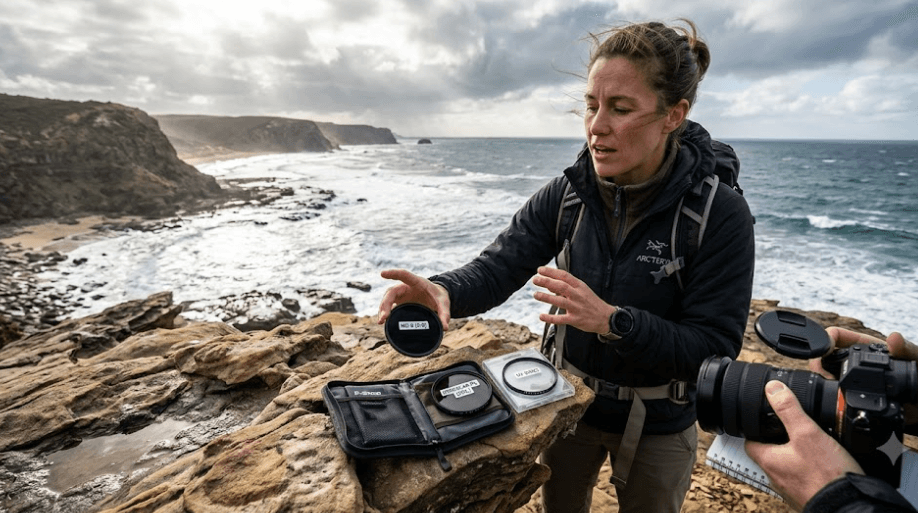
TL;DR: ND, polarizing, and UV filters serve different purposes in photography. An ND filter reduces the light entering your lens, helping you capture long exposures or shoot with a wide aperture in bright conditions. A circular polarizer reduces reflections from non-metallic surfaces and can improve the appearance of skies, foliage, and water. A UV filter primarily offers physical protection for your lens in modern digital photography. You do not need all three to take great pictures. Choose an ND filter for exposure control, a polarizer for glare reduction, and a UV or clear protection filter if your shooting conditions make extra lens protection worthwhile.
What Are Camera Lens Filters?
Camera lens filters are optical accessories that attach to the front of a compatible lens. They change the light reaching the camera sensor in specific ways, allowing photographers to manage exposure, reduce reflections, or protect the front element. Some filters produce effects that are difficult or impossible to reproduce completely through editing, making them useful tools for photographers who want greater control when taking a picture.
Although ND, polarizing, and UV filters may look similar, they are designed for different purposes. An ND filter controls the amount of light entering the lens, a polarizer selectively reduces certain reflections, and a UV filter blocks ultraviolet light while commonly serving as a protective layer. Understanding these differences helps you avoid spending money on accessories that do not address your actual photography needs.
The right filter depends on what you photograph and the conditions in which you shoot. Landscape photographers may benefit from both ND and polarizing filters, while someone who primarily takes indoor portraits might rarely need either. A UV or clear protection filter is optional for many digital photographers, particularly when they already take good care of their equipment.
1. ND Filters: Control Light And Motion
What Is An ND Filter?
A neutral density (ND) filter reduces the intensity of light entering your camera without intentionally changing the scene's colours. Think of it as sunglasses for your camera lens. By reducing incoming light, the filter gives you more flexibility when selecting your shutter speed, aperture, and other exposure settings.
ND filters are particularly useful in bright environments where your camera would otherwise receive too much light for the effect you want. For example, you might want to photograph a waterfall with a slower shutter speed to create smooth-looking water, even in daylight. Without an ND filter, the resulting image could become overexposed unless you adjusted other exposure settings.
These filters are available in fixed and variable versions. A fixed ND filter provides a predetermined amount of light reduction, while a variable ND filter allows you to adjust the reduction by rotating the filter. Variable models are convenient when lighting changes frequently, although some can produce uneven dark patterns or colour shifts at extreme settings.
When Should You Use An ND Filter?
An ND filter is especially useful for long-exposure photography. Slowing the shutter allows moving water, clouds, or traffic to create motion blur while stationary elements remain comparatively sharp. A tripod is usually necessary for this technique because camera movement during a long exposure can blur the entire scene.
ND filters are also helpful when recording video outdoors. In bright sunlight, reducing incoming light can help you maintain a chosen shutter speed and aperture instead of using an excessively fast shutter that makes motion appear less natural. Photographers can also use an ND filter to shoot with a wide aperture in bright conditions when they want a shallow depth of field.
The strength you need depends on the lighting and the desired effect. A three-stop ND filter reduces the light reaching the sensor by a factor of eight, while a six-stop filter reduces it by a factor of 64. Stronger filters allow longer exposures, but they also make focusing and composing more difficult on some cameras.
Common ND Filter Strengths
| ND Filter | Light Reduction | Common Use |
|---|---|---|
| ND8, 3-stop | 8 times less light | Moderate motion blur and bright daylight |
| ND64, 6-stop | 64 times less light | Longer exposures for waterfalls and moving water |
| ND1000, approximately 10-stop | 1,000 times less light | Very long exposures in daylight |
ND labels can vary between manufacturers, so check the stated stop reduction before purchasing.
2. Polarizing Filters: Reduce Glare And Enhance Color
What Is A Polarizing Filter?
A polarizing filter controls certain types of reflected light before it reaches the camera sensor. A circular polarizing filter, commonly called a CPL, is the usual choice for modern cameras. Rotating the filter changes the strength of its effect, allowing you to see how reflections and the appearance of the scene change through the viewfinder or on the screen.
One of its biggest advantages is reducing reflections from non-metallic surfaces, including water, glass, and glossy leaves. For example, when photographing a lake, a properly adjusted polarizer may reduce surface glare and reveal more detail beneath the water. When photographing a shop window, it can help make the interior more visible by reducing reflections on the glass.
A polarizer can also deepen the appearance of a blue sky and make foliage look richer by reducing reflected light. However, it does not automatically improve every photograph. The effect depends on the light, camera angle, and subject, and excessive polarization can make the image look unnatural.
When Should You Use A Polarizer?
A polarizer is particularly useful for landscapes, travel photography, and outdoor scenes containing water or vegetation. It can help manage distracting reflections while improving the visual separation between the sky, clouds, and landscape. For photographers who frequently shoot outdoors, a good circular polarizer is often one of the most versatile filters to carry.
The angle between your camera and the sun affects how strongly a polarizer changes the sky. The effect is generally strongest when shooting approximately 90 degrees from the direction of the sun. With very wide-angle lenses, the sky may become unevenly dark because different parts of the frame have different angles to the sun.
There are trade-offs to consider. A polarizer typically reduces the light entering the camera by around one to two stops, depending on the model. This can require a slower shutter speed, a wider aperture, or a higher ISO. It may also reduce reflections you actually want to retain, so rotate the filter while looking at the scene and choose the effect that best suits your composition.
Polarizer Vs. ND Filter
Although both filters can reduce incoming light, their primary purposes differ. An ND filter reduces light more uniformly to provide exposure control, while a polarizer selectively reduces polarized reflections. A polarizer's light reduction is a side effect of its optical function, not a substitute for a strong ND filter when you need a long exposure in bright sunlight.
For example, if you want to photograph a waterfall with smoother water while also reducing glare on wet rocks, you may benefit from both filters. However, stacking filters can increase the risk of vignetting, especially with wide-angle lenses, and may introduce additional reflections. A polarizer alone is sufficient when reflection control is the main goal.
3. UV Filters: Protection Or Image Improvement?
What Does A UV Filter Do?
A UV filter is designed to block ultraviolet light. This was more significant in some film photography situations, where ultraviolet light could contribute to a bluish haze, particularly in certain outdoor conditions. Modern digital cameras generally have UV-blocking elements in their imaging systems, so a UV filter usually offers little noticeable improvement to image quality under ordinary shooting conditions.
Today, UV filters are commonly purchased to protect the front element of a lens from dust, fingerprints, splashes, and incidental contact. Because the filter sits in front of the lens, it may be easier or less expensive to clean or replace than a damaged front element. However, it cannot guarantee protection against every impact or accident.
It is also worth distinguishing a UV filter from a clear protection filter. A clear filter is designed primarily for physical protection and does not necessarily have the same UV-blocking characteristics. Both can serve as protective accessories, but the choice should depend on the product's specifications and the conditions in which you use your camera.
When Is A UV Filter Worth Buying?
A protective filter can be useful when photographing at the beach, in dusty environments, around splashing water, or in other conditions where the front of your lens may become dirty or exposed to minor hazards. It can provide an additional surface that is easier to clean after a day outdoors. For photographers working in demanding environments, this convenience may justify the extra cost.
However, a filter is not essential for every photographer. Adding another glass surface in front of the lens can introduce unwanted reflections, ghosting, or flare, particularly when shooting toward bright light. The risk depends on the filter's optical quality, coatings, lighting conditions, and lens design. A low-quality filter can undermine image quality rather than improve it.
If you choose to use one, buy a reputable filter with suitable optical glass and effective anti-reflective coatings. Keep in mind that a protective filter is not a replacement for a lens hood, careful handling, or a padded camera bag. A lens hood can also help reduce stray light entering the lens while providing some physical protection against minor bumps.
4. Which Camera Filter Do You Actually Need?
Choose Based On Your Photography Style
The easiest way to decide is to start with the problem you want to solve. If you want to blur water, create long exposures, or maintain a particular shutter speed in bright daylight, an ND filter is the relevant tool. If reflections are distracting you or you want greater control over glare in landscapes, a circular polarizer is usually the better choice.
A UV or clear protection filter serves a different purpose. It is primarily about protecting the front of your lens, not making every photograph sharper or more colorful. If you often photograph near sand, spray, or dust, the convenience may be worthwhile. If you mostly shoot in controlled environments, careful handling and a lens hood may be sufficient.
You also do not need to buy a complete filter collection immediately. Start with one filter that supports your most common shooting conditions, learn how it changes your images, and expand your kit when you encounter a specific limitation. This approach is more cost-effective than buying several filters that rarely leave your camera bag.
Quick Comparison
| Feature | ND Filter | Polarizing Filter | UV Filter |
|---|---|---|---|
| Main purpose | Reduce light for exposure control | Reduce reflections and glare | Block UV light; often used for protection |
| Best for | Long exposures and bright-light video | Landscapes, water, glass, and foliage | Dusty, sandy, or splash-prone environments |
| Adjustable effect | Fixed or variable, depending on type | Rotates to adjust polarization | Generally no adjustable effect |
| Reduces incoming light | Yes, by a specified amount | Yes, typically around one to two stops | Usually very little visible exposure effect |
| Essential for every photographer? | No | No | No |
5. What To Check Before Buying A Filter
Filter Size And Compatibility
Before purchasing any filter, check the diameter of your lens's filter thread. It is commonly marked with a diameter symbol followed by a number, such as Ø67 mm, on the lens or its front cap. The filter diameter is not necessarily the same as the lens's focal length, so do not use the focal-length number to choose a filter.
If you own several lenses with different filter-thread sizes, you may be able to use one larger filter with suitable step-up rings. This can save money, although it may make the setup bulkier and can interfere with lens hoods or other accessories. Check compatibility before ordering, particularly for wide-angle lenses.
Optical Quality And Coatings
Filter quality matters because every additional glass surface can affect the light entering the lens. Look for reputable manufacturers, clear product specifications, and anti-reflective coatings that help reduce flare and ghosting. Better coatings can also make filters easier to clean, although performance varies between products.
For ND filters, pay attention to color neutrality and the stated light reduction. Some filters introduce a color cast, while variable ND filters can develop uneven darkening at extreme settings. For polarizers, check that the product is a circular polarizer if that is what your camera requires. For protective filters, prioritize optical quality rather than choosing solely by price.
Finally, remember that an expensive filter will not automatically improve every photograph. The most useful purchase is one that addresses a real limitation in your workflow. If you rarely shoot long exposures, for example, a strong ND filter may be less valuable to you than a polarizer for outdoor photography.
Final Recommendation And Decision Framework
For most photographers, a circular polarizing filter is a strong first purchase if they regularly shoot landscapes, water, or outdoor scenes with distracting reflections. It offers direct control over glare and can produce results that are difficult to reproduce fully in editing. If your photography involves long exposures, waterfalls, moving clouds, or video in bright sunlight, prioritize an ND filter instead.
A UV or clear protection filter is optional rather than a universal requirement for digital cameras. Consider one if your shooting environment exposes the front of your lens to dust, sand, or splashes, but choose a high-quality product to minimize optical compromises. A lens hood and careful handling remain valuable even when a protective filter is installed.
Ultimately, buy filters based on the results you want, not because every photographer is expected to own all three. Start with the filter that solves your most frequent problem, confirm that it fits your lens, and invest in better quality when the accessory becomes an important part of your photography.
Frequently Asked Questions
Q. Do I need an ND filter for everyday photography?
No. An ND filter is most useful when you need to reduce incoming light for a specific effect, such as a long exposure or a wide aperture in bright sunlight. For ordinary photos in good lighting, you can usually shoot without one.
Q. Is a polarizing filter better than an ND filter?
Neither is universally better. A polarizer helps reduce reflections and glare, while an ND filter provides greater control over exposure. Choose based on whether you want to manage reflections or reduce light.
Q. Can I use an ND filter and a polarizing filter together?
Yes. Combining them can help when photographing water because the ND filter enables a longer exposure while the polarizer reduces reflections. However, stacking filters may cause vignetting or additional reflections, particularly with wide-angle lenses.
Q. Does a UV filter improve image quality on digital cameras?
Usually, not noticeably under ordinary conditions. Modern digital cameras generally already limit ultraviolet light reaching the sensor. A UV filter is more commonly used as an additional protective layer for the lens.
Q. Can a UV filter protect my lens from scratches?
It can help protect the front element from dust, fingerprints, and some minor contact. However, it cannot guarantee protection against impacts or prevent every type of damage.
Q. Does a polarizing filter make the sky darker?
Yes, it can deepen the appearance of a blue sky when positioned at a suitable angle to the sun. The effect depends on the shooting direction, lighting conditions, and lens field of view.
Q. How many stops of ND filtration should I buy?
A three-stop filter is a useful starting point for moderate light reduction. A six-stop filter allows substantially longer exposures, while a ten-stop filter is useful for very long exposures in daylight. Your ideal strength depends on the lighting and the effect you want.
Q. Can a polarizing filter reduce glare from glass?
Yes. A circular polarizer can reduce reflections from glass when the camera angle and lighting conditions are suitable. It may help reveal objects behind a window, although it cannot eliminate every reflection.
Q. How do I know which filter size fits my camera lens?
Check the filter-thread diameter printed on the lens or its front cap. It is usually marked with the diameter symbol followed by a measurement in millimeters, such as Ø67 mm. Do not confuse this measurement with the lens's focal length.
Q. Are expensive camera filters worth buying?
They can be worthwhile if they offer better optical quality, effective coatings, reliable color reproduction, and durable construction. However, the most expensive option is not always necessary. Choose a reputable filter that suits your lens, shooting conditions, and budget.
Ready to upgrade your tech?
Browse our collection of quality refurbished products at unbeatable prices.