Megapixels vs Sensor Size: What Actually Matters When You Buy a Camera?
Megapixels affect resolution and cropping, while sensor size influences light gathering, noise, dynamic range, and depth of field. Learn which matters more when choosing a camera.

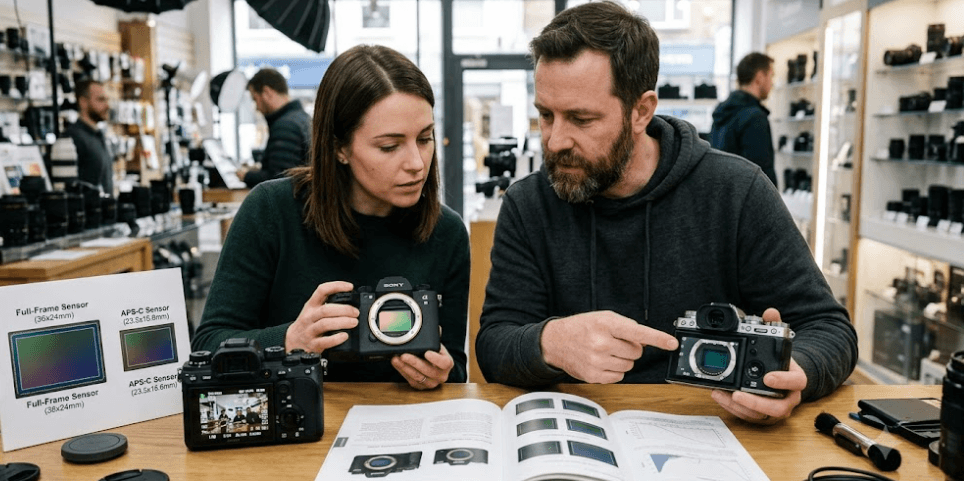
TL;DR When buying a camera, megapixels and sensor size solve different problems, so choosing between them is not as simple as picking the larger number. Megapixels determine how much image detail a camera can record and how much room you have to crop or make large prints, while a larger sensor generally gives you greater light-gathering capability, better high-ISO performance, and more control over depth of field. A 24MP full-frame camera and a 50MP APS-C camera can therefore produce very different results depending on the lens, lighting, autofocus, processing, and shooting conditions. For most buyers, sensor size should be considered alongside megapixel count rather than treated as a replacement for it.
What Megapixels Actually Tell You
Megapixels describe the number of pixels captured in an image. One megapixel represents one million pixels, so a 24MP camera records roughly 24 million pixels in a photograph. More pixels can provide more potential detail, particularly when the image is viewed at large sizes or when you need to crop heavily. This is why higher-resolution cameras can be useful for landscape, wildlife, commercial, and studio photography where photographers may need to crop into an image while retaining useful resolution.
However, megapixel count does not automatically determine how sharp or detailed a photograph will look. The lens, focus accuracy, shutter speed, camera processing, lighting, and shooting technique all affect the final image. A higher-resolution sensor cannot rescue a photograph that is badly out of focus or blurred by camera movement. In practical use, this means you should treat megapixels as a resolution specification rather than a complete measurement of image quality.
Megapixels also become more useful when you have a specific output in mind. If you regularly print large photographs or crop wildlife images substantially, additional resolution can provide more flexibility. For everyday social media, web viewing, family photographs, and moderate-size prints, however, you may not notice a dramatic difference between sensible megapixel counts. The important question is whether you actually need the additional resolution rather than whether a camera has the biggest number on its specification sheet.
When More Megapixels Help
Higher megapixel counts can be particularly useful for photographers who crop frequently. A wildlife photographer, for example, may photograph a distant bird and later crop the frame to make the subject larger. More original pixels give that crop more information to work with. Similarly, commercial photographers producing large prints can benefit from additional resolution when the lens and shooting conditions are capable of resolving it.
| Megapixel Count | Practical Advantage |
|---|---|
| 12–20MP | Everyday photography and moderate prints |
| 20–30MP | General-purpose photography and cropping |
| 30–50MP | Larger prints and heavier cropping |
| 50MP+ | High-resolution work, commercial use, detailed cropping |
Why Sensor Size Matters More Than the Megapixel Number Suggests
Sensor size refers to the physical dimensions of the camera's image sensor. Common formats include Micro Four Thirds, APS-C, full frame, and medium format, with larger formats generally providing a larger imaging area. A larger sensor can collect more total light for a given exposure, and this can contribute to better noise performance and greater flexibility in low-light photography. However, sensor size should not be treated as a guarantee of better photographs because sensor design, processing, lens quality, and exposure choices also matter.
One of the most noticeable differences between sensor formats is depth of field. Larger sensors can make it easier to achieve a shallow depth of field and separate a subject from the background when comparable framing and aperture choices are used. This is one reason full-frame cameras are popular for portrait photography. Smaller sensors can still create attractive background blur, particularly with fast lenses, but the same framing and aperture do not produce exactly the same depth-of-field characteristics across formats.
Sensor size also affects the physical design of the camera system. Larger sensors generally require lenses capable of projecting a larger image circle, and those lenses can become larger and heavier. This creates an important trade-off. A full-frame camera may offer advantages for low-light work and shallow depth of field, but an APS-C or Micro Four Thirds system can be significantly easier to carry. The best sensor size therefore depends partly on whether image quality, portability, lens size, or cost matters most to you.
Sensor Size and Low-Light Photography
Low-light performance is one of the areas where sensor size becomes especially relevant. Larger sensors generally have greater light-gathering capability, while larger individual photosites can also have advantages for noise performance. Nikon notes that pixel size is one factor affecting digital noise, while modern camera processing and sensor technology also play important roles. This means you should not assume that every large sensor will automatically outperform every smaller sensor, but sensor size remains an important part of the equation.
| Sensor Format | General Characteristics |
|---|---|
| Micro Four Thirds | Compact bodies and lenses, useful reach |
| APS-C | Balance of size, performance, and cost |
| Full Frame | Strong low-light potential and shallow depth of field |
| Medium Format | Very large sensor area and high-end image quality |
Megapixels vs Sensor Size: What Matters in Real Photography
The most useful way to compare megapixels and sensor size is to stop treating them as competing specifications. They influence different parts of the photographic process. Megapixels primarily determine how much spatial resolution an image contains, while sensor size affects the amount of light the imaging system can capture and influences characteristics such as noise, dynamic range, depth of field, and lens requirements.
Consider two hypothetical cameras. Camera A has a 24MP full-frame sensor, while Camera B has a 40MP APS-C sensor. Camera B has more pixels, so it may provide more resolution for certain crops. Camera A has a larger sensor, which can provide advantages in low-light work and depth-of-field control. Neither camera automatically wins every situation. A landscape photographer who needs heavy cropping may value the higher resolution, while a portrait photographer may prefer the larger sensor and its depth-of-field characteristics.
The lens can change the outcome even further. A camera with an excellent sensor but a mediocre lens may produce less impressive results than a camera with fewer megapixels paired with an excellent lens. Autofocus performance, stabilization, dynamic range, color processing, shutter speed, and the photographer's technique also influence the final photograph. This is why buying based solely on megapixels can be misleading.
A Better Way to Compare Cameras
Instead of asking whether megapixels or sensor size is more important, ask what you photograph. If you photograph birds at a distance, resolution and cropping flexibility can be valuable. If you frequently shoot portraits indoors, sensor size, lens aperture, autofocus, and high-ISO performance may matter more. If you travel frequently, the weight and size of the camera and lenses can become just as important as the sensor itself.
| Photography Need | Specifications to Prioritize |
|---|---|
| Wildlife | Resolution, autofocus, lens reach |
| Portraits | Sensor size, lens aperture, autofocus |
| Landscapes | Resolution, dynamic range, lens quality |
| Low light | Sensor size, lens aperture, noise performance |
| Travel | Overall system size, stabilization, battery |
| Large prints | Megapixels, lens quality, technique |
Does a Bigger Sensor Always Mean Better Image Quality?
A larger sensor generally provides important technical advantages, but saying that it automatically produces a better photograph would be too simplistic. A photograph is the result of the entire imaging system, including the lens, sensor, exposure, autofocus, stabilization, processing, and the photographer. Adobe notes that full-frame sensors can provide advantages in low-light performance, depth of field, and detail, but those advantages exist within a broader camera system.
Sensor technology has also improved considerably. A newer APS-C camera can outperform an older full-frame camera in particular situations because sensor design and image processing are not identical between generations. The same applies to megapixels. A high-resolution sensor does not automatically create more visible detail if the lens cannot resolve that detail, the subject moves during exposure, or the photograph is viewed at a small size.
There is also a practical cost to choosing a larger sensor. Larger cameras and lenses can increase both the purchase price and the weight of the system. For a photographer who spends entire days hiking, travelling, or shooting events, carrying a lighter APS-C or Micro Four Thirds setup may result in more photographs actually being taken. A technically larger sensor is not necessarily the more useful choice if it makes the camera inconvenient to carry.
Where Smaller Sensors Make Sense
Smaller sensors remain highly capable for many types of photography. They can provide smaller bodies and lenses, while the crop factor can be useful for photographers who need additional effective reach. A wildlife photographer, for example, may appreciate the framing provided by a smaller sensor when paired with an appropriate lens.
The trade-off becomes more noticeable when you want extremely shallow depth of field or strong low-light performance. A larger sensor can provide more flexibility in those areas, while smaller formats may require different lens and exposure choices to achieve similar results. This does not make one format universally superior. It simply means that different sensor sizes prioritize different combinations of portability, reach, cost, and image characteristics.
How Lens Quality Changes the Megapixel Debate
A camera sensor can only record the image projected onto it by the lens. This makes lens quality particularly important when evaluating high-megapixel cameras. If the lens does not resolve enough detail, increasing the sensor's resolution may not produce a proportional improvement in the final photograph. Focus accuracy, optical quality, shutter speed, and camera stability can also determine whether the additional pixels are actually visible.
This is particularly relevant with modern high-resolution cameras. A 45MP or 60MP camera can give photographers substantial cropping and printing flexibility, but that resolution is most useful when the entire system can take advantage of it. A sharp lens, accurate focus, suitable shutter speed, and good technique allow the camera to make better use of its available resolution.
The reverse is also true. A lower-resolution camera paired with an excellent lens can produce highly detailed photographs that look excellent on screen and in print. This is why photographers should avoid treating megapixels as a simple quality score. The number tells you how much resolution is available, but it does not tell you how effectively the camera will turn light into a useful photograph.
The Specifications That Deserve Attention
When comparing cameras, look beyond the megapixel figure and check the sensor format, lens ecosystem, autofocus system, stabilization, ISO performance, dynamic range, burst performance, and video capabilities. These specifications tell you considerably more about whether a camera suits your particular work.
What Should You Prioritize When Buying a Camera?
For most buyers, the first step should be identifying the type of photography they actually do. Someone purchasing a first interchangeable-lens camera for family photographs does not necessarily need a 60MP body. A photographer creating large commercial prints may have a much stronger reason to prioritize resolution. Similarly, a travel photographer may value a smaller sensor system because the reduction in camera and lens size makes the equipment easier to carry.
Once you know your use case, compare sensor size and megapixel count together. If two cameras have similar sensor formats, megapixels can become a more useful differentiator. If the megapixel counts are similar but sensor formats are different, the larger sensor may offer meaningful advantages in low-light performance and depth-of-field control. The comparison becomes more complicated when the cameras come from different generations or use very different sensor technologies.
Finally, consider the complete system rather than just the camera body. Lenses can represent a substantial part of the cost and weight of an interchangeable-lens camera system. A camera that looks attractive on paper may become less appealing once you price the lenses you actually need. Your decision should therefore account for the body, lenses, accessories, storage, and the way you intend to use the camera for several years.
A Practical Buying Checklist
| Priority | What to Check |
|---|---|
| Image detail | Megapixel count and lens resolution |
| Low light | Sensor size, lens aperture, ISO performance |
| Portraits | Sensor format and lens aperture |
| Wildlife | Resolution, autofocus, reach |
| Travel | Body and lens size and weight |
| Video | Resolution, frame rates, autofocus, stabilization |
| Long-term use | Lens ecosystem and upgrade options |
Common Megapixel and Sensor Size Myths
One common myth is that a camera with more megapixels must produce better photographs. More megapixels can provide more resolution and cropping flexibility, but they do not automatically improve exposure, autofocus, color, low-light performance, or lens quality. A high-resolution image can still be poorly focused or affected by motion blur. The additional pixels are useful only when the rest of the imaging system and shooting conditions allow you to take advantage of them.
Another myth is that a larger sensor automatically makes every photograph better. Larger sensors offer meaningful advantages, particularly for low-light performance and depth-of-field control, but they also increase the size and cost of the camera system. A smaller sensor can be the better practical choice for someone who values portability, affordability, or long lenses in a compact setup.
The third mistake is comparing megapixels without considering sensor size and pixel density. Two cameras can have the same megapixel count but different sensor areas, resulting in different pixel sizes and different imaging characteristics. Conversely, a higher-resolution sensor can sometimes produce a cleaner final image after downsizing, so the relationship between pixel count and noise is not as simple as looking at a photograph at 100% magnification.
Frequently Asked Questions
Q. Are more megapixels always better in a camera?
No. More megapixels provide more image resolution and can help with cropping and large prints, but image quality also depends on the lens, sensor design, autofocus, exposure, stabilization, processing, and shooting technique.
Q. Is sensor size more important than megapixels?
Neither specification is universally more important. Sensor size influences characteristics such as low-light performance and depth of field, while megapixels determine image resolution and cropping flexibility. Your photography needs should determine which matters more.
Q. Does a bigger sensor perform better in low light?
Generally, larger sensors have greater light-gathering potential and can offer advantages in low-light photography. Actual performance also depends on sensor technology, lens aperture, ISO settings, image processing, and the camera generation.
Q. Does a 50MP camera always take sharper photos than a 24MP camera?
No. A 50MP camera has more recorded pixels, but sharpness also depends on lens quality, focus accuracy, shutter speed, stabilization, and shooting conditions. More pixels do not automatically guarantee a sharper photograph.
Q. Are megapixels important for printing photos?
Yes. Higher resolution can provide more flexibility for larger prints, although the required megapixel count also depends on print size and viewing distance. Lens quality and shooting technique remain important for producing a sharp print.
Q. Does sensor size affect background blur?
Yes. Larger sensors can make it easier to achieve a shallow depth of field when comparable framing and aperture choices are used. Lens focal length, aperture, subject distance, and background distance also affect background blur.
Q. Is APS-C good enough for professional photography?
Yes. APS-C cameras can be used professionally for many types of photography. They offer a useful balance between image quality, camera size, lens size, reach, and cost. The right choice depends on the photographer's work rather than the sensor format alone.
Q. Should I buy a full-frame camera just for better image quality?
Not necessarily. Full frame can provide advantages in low-light performance and depth-of-field control, but a smaller sensor may be more practical if you prioritize portability, affordability, or a lighter lens system.
Q. Does lens quality matter more than megapixels?
Lens quality is one of the major factors that determines how effectively a camera can record detail. A high-megapixel sensor paired with a poor or unsuitable lens may not deliver the expected benefit from its additional resolution.
Q. What matters most when buying a camera?
Look at the entire system. Consider sensor size, megapixels, lens availability and quality, autofocus, stabilization, low-light performance, ergonomics, video features, camera size, and your actual photography needs rather than relying on one specification.
Final Recommendation
Megapixels and sensor size should not be viewed as competing specifications because they answer different questions. Megapixels tell you how much resolution a camera can record, which matters for cropping and large prints. Sensor size influences the camera's light-gathering characteristics, noise performance, depth-of-field control, and the size of the overall camera system. Both can matter, but neither tells the whole story.
If you regularly crop wildlife photographs or produce large prints, a higher megapixel count can be valuable. If you frequently photograph portraits, events, or low-light scenes, sensor size and lens choice may deserve greater attention. For travel, portability may outweigh the advantages of moving to a larger sensor. The best camera is therefore not necessarily the one with the largest sensor or the highest megapixel count.
When buying a camera, start with your photography style, then compare sensor size, megapixels, lenses, autofocus, stabilization, and overall system size. A balanced camera that fits your actual routine will usually be more useful than one selected purely because its specification sheet has the biggest numbers.