MacBook Pro OLED Touchscreen: India Price and Specs
Apple's first touchscreen MacBook Pro brings tandem OLED technology, M5 Pro and M5 Max chips, and premium configurations to India. Explore its pricing, specifications, key upgrades, and whether you should buy now or wait.

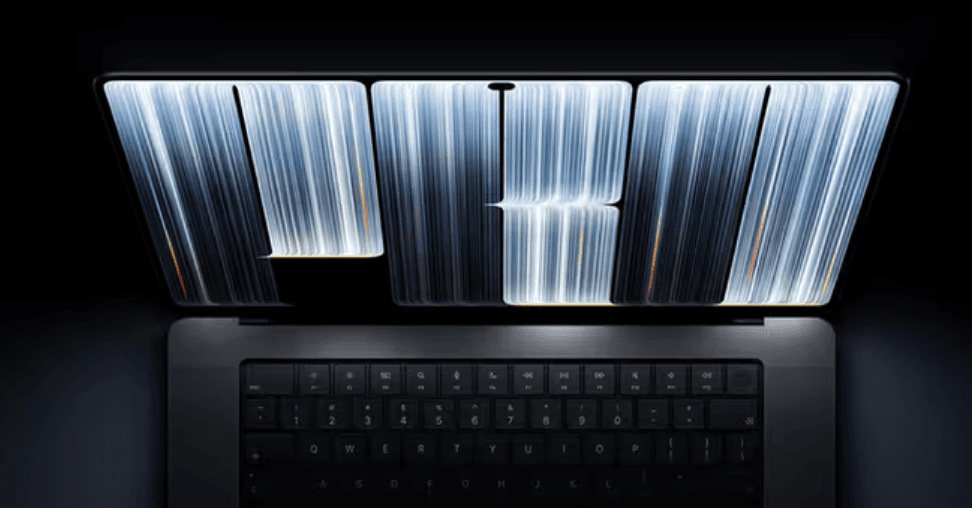
TL;DR: Apple has introduced its first touchscreen MacBook Pro with a tandem OLED display, branded PROLED XDR, in 14.2-inch and 16.3-inch sizes. The new models feature M5 Pro and M5 Max chips, up to 128GB unified memory, 16TB SSD storage, a 120Hz adaptive refresh rate, and touch gestures for interacting directly with macOS. In India, prices start at ₹3,49,900 for the 14-inch M5 Pro variant and go up to ₹5,89,900 for the 16-inch M5 Max model. With availability beginning November 9, 2026, this is a major change for Apple's professional laptop lineup. However, the premium pricing means that not everyone needs to upgrade immediately.
MacBook Pro OLED Touchscreen: What's New?
For years, Apple maintained a clear distinction between its MacBook and iPad product lines. While touchscreen interaction became standard across smartphones and tablets, MacBook users continued relying on the keyboard, trackpad, and external input devices. That changes with the latest MacBook Pro featuring the new PROLED XDR display. Announced on October 28, 2026, the laptop introduces touchscreen functionality to the MacBook Pro lineup for the first time.
The biggest upgrade is its tandem OLED panel, which combines OLED display technology with Apple's display-engine enhancements. Unlike conventional LCD-based displays, OLED pixels produce their own light, allowing individual pixels to switch off when displaying black. This helps deliver deeper blacks, stronger contrast, and more precise control over brightness. Apple also introduces its PROLED XDR branding, highlighting the display's brightness, colour accuracy, and HDR capabilities.
Touch support is another significant addition. Users can interact directly with onscreen content through gestures such as tapping, scrolling, and pinching to zoom. This could make certain creative workflows more intuitive, particularly when editing photographs, adjusting design elements, or working with 3D models. Importantly, the touchscreen complements rather than replaces the traditional keyboard and trackpad experience.
MacBook Pro OLED Price In India And Availability
Apple has positioned the OLED touchscreen MacBook Pro firmly in the premium professional laptop category. The new models are available in 14-inch and 16-inch configurations, with M5 Pro and M5 Max processors. Pricing varies depending on the display size and processor selected, making the difference between the entry configuration and the highest-end model substantial.
The 14-inch M5 Pro variant starts at ₹3,49,900, while the larger 16-inch M5 Pro model starts at ₹4,09,900. Buyers looking for the more powerful M5 Max configurations will need to spend considerably more, with prices beginning at ₹5,49,900 for the 14-inch model and ₹5,89,900 for the 16-inch version.
Pre-orders opened on October 28, 2026, and availability in India begins November 9, 2026. Buyers can check Apple's official online store and authorised retail partners for configuration options, availability, and financing offers.
Official India Pricing
| Model | Starting Price |
|---|---|
| 14-inch MacBook Pro M5 Pro | ₹3,49,900 |
| 16-inch MacBook Pro M5 Pro | ₹4,09,900 |
| 14-inch MacBook Pro M5 Max | ₹5,49,900 |
| 16-inch MacBook Pro M5 Max | ₹5,89,900 |
Prices are official starting prices in India. Custom configurations, memory, storage, and display options can increase the final purchase cost.
For eligible students and educators, Apple also lists education pricing. The 14-inch M5 Pro starts at ₹3,31,900, while the 16-inch M5 Pro starts at ₹3,85,900. The M5 Max models start at ₹5,12,900 and ₹5,52,900, respectively.
MacBook Pro OLED Touchscreen Specifications
The new MacBook Pro is more than a display refresh. Apple has combined its tandem OLED technology with powerful M5 Pro and M5 Max processors, expanded memory configurations, and updated connectivity. These changes target users who regularly work with demanding applications rather than those who simply need a laptop for everyday browsing and office tasks.
Key Specifications At A Glance
| Specification | MacBook Pro OLED |
|---|---|
| Display Sizes | 14.2-inch and 16.3-inch |
| Display Technology | Tandem OLED (PROLED XDR) |
| Resolution | 3024 × 1986 (14-inch); 3472 × 2266 (16-inch) |
| Refresh Rate | Adaptive 10Hz–120Hz |
| Touch Support | Multi-Touch gestures |
| Processors | Apple M5 Pro and M5 Max |
| Maximum RAM | Up to 128GB unified memory |
| Maximum Storage | Up to 16TB SSD |
| Peak HDR Brightness | Up to 2,000 nits |
| Contrast Ratio | 10,000,000:1 |
| Camera | 12MP Center Stage |
| Connectivity | Thunderbolt 5, HDMI, SDXC, MagSafe 3 |
| Wireless | Wi-Fi 7 and Bluetooth 6 |
| Operating System | macOS 27 |
Display And Touchscreen Experience
The 14.2-inch model features a 3024 × 1986 resolution, while the 16.3-inch version offers 3472 × 2266 pixels. Both displays support ProMotion with adaptive refresh rates ranging from 10Hz to 120Hz. This helps maintain smooth scrolling and responsive animations while adjusting the refresh rate according to what is happening onscreen.
Apple claims up to 2,000 nits of peak brightness and a 10,000,000:1 contrast ratio. The display also supports P3 and Adobe RGB colour gamuts, making it particularly relevant for photographers, designers, and video professionals who need accurate colour reproduction. A nano-texture glass option is available for users who frequently work in bright environments.
The touchscreen adds another layer of interaction. Users can tap interface elements, zoom into images, and manipulate creative content directly on the display. However, this is still a traditional laptop rather than a detachable tablet. The keyboard and trackpad remain central to the experience, and buyers should not confuse touchscreen support with a complete iPad-style convertible design.
M5 Pro And M5 Max Performance
The new OLED models are powered by Apple's M5 Pro and M5 Max chips. Both processors are designed for demanding professional workloads, including video production, software development, 3D rendering, and AI-assisted creative applications. The M5 Pro configuration offers up to an 18-core CPU and a GPU with up to 20 cores, while the M5 Max configuration offers an 18-core CPU and up to a 40-core GPU.
Memory capacity also depends on the selected configuration. M5 Pro models offer up to 64GB of unified memory, while M5 Max configurations can be equipped with up to 128GB. Storage options extend up to 4TB on M5 Pro and 16TB on M5 Max models.
This combination is particularly useful for professionals handling large project files, complex editing timelines, local AI models, and demanding multitasking sessions. However, buyers should select their processor and memory according to their actual workload rather than automatically choosing the most expensive configuration.
What Does The OLED Touchscreen Actually Change?
The introduction of touch support is a major shift in how users interact with a MacBook. Instead of depending entirely on the trackpad, users can now directly interact with certain elements on the display. For creative professionals, this could make specific tasks quicker and more natural, especially when working with images, illustrations, and visual content.
The OLED panel also brings practical improvements beyond touch functionality. Its deep blacks and high contrast can make HDR content more immersive, while its wider colour support is useful for professionals working across photography, video, and design. The 120Hz adaptive refresh rate further contributes to a smoother viewing experience.
However, touchscreen support does not automatically make every workflow faster. Long-form writing, spreadsheet work, coding, and extensive multitasking will still benefit from a physical keyboard and trackpad. Buyers should view the touchscreen as an additional input method rather than the primary reason to purchase an expensive professional laptop.
MacBook Pro OLED Vs Existing MacBook Pro: What's The Difference?
One important detail is that Apple's OLED touchscreen MacBook Pro is not the same machine as its recently introduced 14-inch M6 MacBook Pro. Apple announced the standard 14-inch M6 model on October 27, 2026, just one day before introducing the OLED touchscreen models.
The M6 MacBook Pro uses a Liquid Retina XDR display rather than the new tandem OLED panel. It does not offer touchscreen functionality, but it starts at a considerably lower price of ₹2,39,900. This makes it an interesting option for buyers who prioritise processor performance, battery life, and professional connectivity over touch interaction.
The OLED models, meanwhile, use M5 Pro and M5 Max chips and focus on delivering a more advanced display and additional input flexibility. Therefore, the decision is not simply about choosing the newest processor. It is about identifying which combination of performance, display technology, and features suits your work.
Quick Comparison
| Feature | 14-inch M6 MacBook Pro | OLED MacBook Pro |
|---|---|---|
| Display | Liquid Retina XDR | Tandem OLED PROLED XDR |
| Touchscreen | No | Yes |
| Processor | M6 | M5 Pro / M5 Max |
| Display Sizes | 14.2-inch | 14.2-inch / 16.3-inch |
| Refresh Rate | Up to 120Hz | 10Hz–120Hz adaptive |
| Maximum Memory | 32GB | 128GB |
| Maximum Storage | 4TB | 16TB |
| Starting Price | ₹2,39,900 | ₹3,49,900 |
The comparison highlights an important buying consideration: the M6 model is a more affordable entry into the current MacBook Pro range, while the OLED models offer higher-end professional configurations and touchscreen functionality. A newer chip generation does not automatically mean that every M6 configuration is more suitable for every professional workload.
Who Should Buy The MacBook Pro OLED Touchscreen?
The new MacBook Pro is aimed at people who can genuinely benefit from its display technology, processing capabilities, and expanded interaction options. Its premium pricing makes it difficult to justify for users who mainly work with documents, presentations, web browsing, and occasional photo editing.
1. Video Editors And Content Creators
Professionals working with high-resolution footage, colour grading, visual effects, and complex editing timelines may appreciate the tandem OLED panel. Its high contrast, HDR brightness, and wider colour gamut can improve the viewing experience. M5 Pro and M5 Max configurations also provide the processing power needed for demanding creative applications.
2. Graphic Designers And Photographers
Designers and photographers who regularly work with colour-sensitive projects may find the display particularly appealing. Adobe RGB support, deep contrast, and touchscreen interaction can make reviewing and adjusting visual content more intuitive. However, professional colour calibration and a suitable workflow remain important regardless of the display technology.
3. Developers And AI Professionals
Developers working with large codebases, local AI models, simulations, and demanding development environments can benefit from the higher memory configurations and processing capabilities of M5 Pro and M5 Max. The touchscreen is less important for these workflows, but the performance and connectivity upgrades may justify the investment.
4. Professionals Who Need A Large Display
The 16.3-inch version makes sense for users who regularly work with multiple windows, large timelines, design interfaces, and extensive spreadsheets. The larger workspace can reduce the need to constantly switch between applications, although it also comes with a higher starting price and greater portability trade-offs.
Final Recommendation And Buying Decision
The MacBook Pro OLED touchscreen is a significant development for Apple's laptop lineup. Its tandem OLED display, touch interaction, powerful M5 Pro and M5 Max processors, and expanded memory and storage options make it an appealing choice for professionals who need high-end performance and display quality.
However, its starting price of ₹3,49,900 places it beyond the practical budget of many students and everyday laptop users. If your work involves professional video editing, advanced design, photography, 3D modelling, or demanding AI applications, the OLED models deserve serious consideration. The 14-inch version offers a more portable option, while the 16-inch model provides a larger workspace for intensive projects.
For everyone else, the standard M6 MacBook Pro or a more affordable MacBook configuration may offer better overall value. The touchscreen is an exciting addition, but it should not be treated as a must-have feature. Ultimately, the best MacBook is not necessarily the most expensive one; it is the one that delivers the performance and features your everyday work actually requires.
Frequently Asked Questions
Q. What is the starting price of the MacBook Pro OLED touchscreen in India?
The 14-inch MacBook Pro with M5 Pro starts at ₹3,49,900 in India. The 16-inch M5 Max configuration starts at ₹5,89,900.
Q. When will the MacBook Pro OLED be available in India?
Apple announced the models on October 28, 2026. Availability in India begins November 9, 2026.
Q. Does the new MacBook Pro OLED support touchscreen functionality?
Yes. It is Apple's first MacBook Pro with Multi-Touch support, allowing users to tap, scroll, zoom, and interact directly with onscreen content.
Q. What is the display size of the MacBook Pro OLED?
The new MacBook Pro is available with 14.2-inch and 16.3-inch tandem OLED displays under Apple's PROLED XDR branding.
Q. Which processors power the OLED MacBook Pro?
The OLED models are available with Apple's M5 Pro and M5 Max chips, depending on the selected configuration.
Q. How much RAM does the MacBook Pro OLED support?
M5 Pro configurations support up to 64GB of unified memory, while M5 Max configurations support up to 128GB.
Q. Does the MacBook Pro OLED have a 120Hz display?
Yes. Both display sizes support ProMotion with adaptive refresh rates ranging from 10Hz to 120Hz.
Q. Is the MacBook Pro OLED better than the M6 MacBook Pro?
It depends on your requirements. The OLED models offer touchscreen support, tandem OLED displays, and higher-end M5 Pro and M5 Max configurations. The M6 model is more affordable and uses a non-touch Liquid Retina XDR display.
Q. Is the MacBook Pro OLED suitable for students?
It can be useful for students working in professional creative fields, software development, or AI research. However, its high price makes it unnecessary for most students who primarily need a laptop for everyday academic work.
Q. Should I upgrade from an older MacBook Pro to the OLED model?
If you use an older Intel-based MacBook or an early Apple silicon model and regularly perform
Ready to upgrade your tech?
Browse our collection of quality refurbished products at unbeatable prices.