iPhone Battery Life Compared: iPhone 13, 14, 15 Plus, 16 ,17 and 18 Pro
Compare the battery life of the iPhone 13, 14, 15 Plus, 16, 17, and 18 Pro. Explore official playback ratings, independent battery tests, everyday performance, and find the right iPhone for your needs.

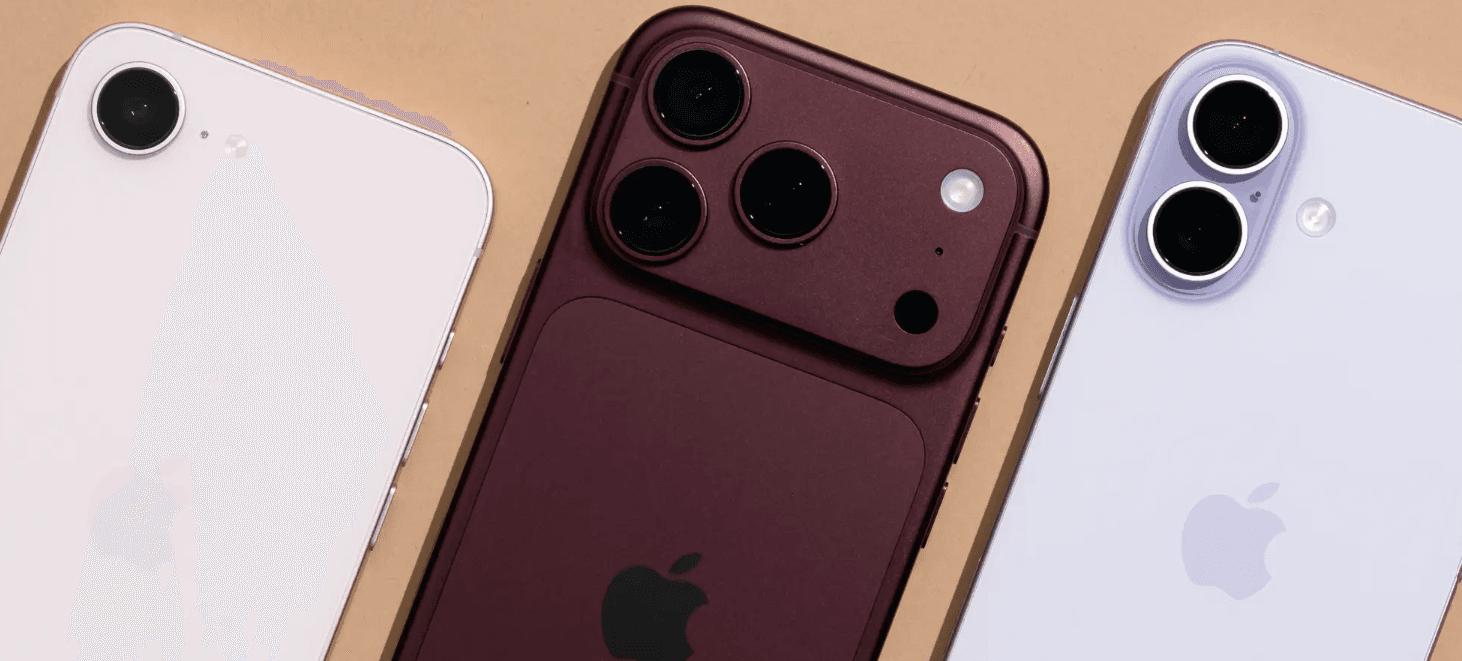
TL;DR: Choosing an iPhone based on battery life alone is not as simple as picking the newest model. The iPhone 13 offers basic everyday endurance, while the iPhone 14 brings a modest improvement. The iPhone 15 Plus stands out with its larger battery and up to 26 hours of official video playback. The iPhone 16 improves efficiency, and the iPhone 17 takes things further with up to 30 hours of video playback. The iPhone 18 Pro raises the benchmark with up to 34 hours of video playback in Apple's India specifications. However, actual battery life depends on screen brightness, network usage, gaming, streaming, and battery health. If long-lasting battery performance is your priority, the 15 Plus, 17, and 18 Pro deserve particular attention.
Why Does iPhone Battery Life Matter?
Battery life affects almost everything you do on a smartphone. From checking emails and attending video calls to streaming movies, navigating unfamiliar routes, and taking photographs, a phone needs enough power to keep up with your daily routine. Nobody wants to carry a charging cable everywhere or constantly search for a power outlet halfway through the day.
Apple has gradually improved battery efficiency through newer processors, software optimisations, and hardware changes. However, a newer iPhone does not always outperform an older model in every battery-related situation. Larger phones, for instance, generally have more room for bigger batteries, which can give them an advantage over their smaller counterparts.
This is why comparing the iPhone 13, 14, 15 Plus, 16, 17, and 18 Pro is useful. These models belong to different generations and product categories, so their battery performance needs to be understood in context. We will look at Apple's official playback ratings, practical differences, and independent testing rather than treating advertised numbers as guaranteed daily screen time.
iPhone Battery Life Compared: At A Glance
Before looking at individual models, here is a quick comparison of their official battery specifications. Apple measures video playback and streamed video playback separately, so both figures are worth considering.
| iPhone Model | Video Playback | Streamed Video |
|---|---|---|
| iPhone 13 | Up to 19 hours | Up to 15 hours |
| iPhone 14 | Up to 20 hours | Up to 16 hours |
| iPhone 15 Plus | Up to 26 hours | Up to 20 hours |
| iPhone 16 | Up to 22 hours | Up to 18 hours |
| iPhone 17 | Up to 30 hours | Up to 27 hours |
| iPhone 18 Pro | Up to 34 hours | Up to 31 hours |
Figures represent Apple's advertised maximum playback estimates, using the India specifications where available. They are not direct measurements of everyday screen-on time.
One interesting detail is that the iPhone 15 Plus offers a higher advertised playback rating than the standard iPhone 16. This is largely explained by the difference in their physical sizes and battery capacities. Similarly, the iPhone 17 makes a noticeable jump over the iPhone 16, showing how much battery efficiency and hardware improvements can matter between generations.
The iPhone 18 Pro leads this particular comparison with up to 34 hours of video playback. However, the figures should not be interpreted as a guarantee that it will last twice as long during regular use. Streaming, gaming, navigation, and mobile data can change the results considerably.
1. iPhone 13: Basic Everyday Battery Performance
The iPhone 13 was introduced with a 3,227 mAh battery and Apple's A15 Bionic chip. At launch, it offered a noticeable improvement over its predecessor, particularly in video playback. Apple rates it for up to 19 hours of local video playback and 15 hours of streamed video playback.
For everyday activities such as messaging, browsing, listening to music, and occasional video streaming, a healthy iPhone 13 can still provide reasonable battery performance. However, its smaller battery and older hardware become more noticeable during demanding activities. Extended gaming, recording videos, and using mobile data throughout the day can increase battery consumption.
There is another factor worth considering: battery age. Since the iPhone 13 is an older model, many available units have already gone through several years of charging cycles. A device with significantly reduced battery health may struggle to last a full day, even if it originally offered good endurance.
Best for: Budget-conscious buyers who need an iPhone for regular everyday activities and are comfortable charging more frequently.
2. iPhone 14: A Small But Noticeable Improvement
The iPhone 14 comes with a slightly larger 3,279 mAh battery compared with the iPhone 13. It also uses the A15 Bionic chip, although with a five-core GPU configuration. Apple's official rating increases to up to 20 hours of video playback and 16 hours of streamed video playback.
The difference between the iPhone 13 and 14 is not dramatic on paper. However, independent testing has shown that the iPhone 14 can perform better in certain workloads. PhoneArena's testing recorded 8 hours and 35 minutes of video streaming for the iPhone 14, compared with 8 hours and 15 minutes for the iPhone 13. The difference varies depending on the activity being tested.
For someone upgrading from an older iPhone, the 14 offers a familiar experience with some improvements. However, if battery endurance is the main reason for upgrading from an iPhone 13, the difference may not feel substantial enough to justify spending considerably more.
Best for: Users who want a slightly newer iPhone experience without expecting a major battery-life upgrade.
3. iPhone 15 Plus: A Strong Choice For Battery Life
The iPhone 15 Plus is one of the more interesting models in this comparison. Its larger 6.7-inch body allows Apple to accommodate a bigger battery, and its A16 Bionic chip provides efficient everyday performance. Apple rates it for up to 26 hours of video playback and 20 hours of streamed video playback.
Independent testing also supports its reputation for strong endurance. Tom's Guide recorded 14 hours and 14 minutes in its continuous web-browsing battery test. This result placed the iPhone 15 Plus among the strongest-performing iPhones tested at the time. It also demonstrates why larger Plus models can sometimes outperform newer standard-sized iPhones.
The larger display makes it particularly comfortable for watching videos, browsing content, and reading. However, it is not the lightest or most compact option. Its 60Hz display also lacks the smoother ProMotion refresh rate available on certain premium models. If you prioritise battery life and a large screen over compact dimensions and advanced display features, the 15 Plus remains worth considering.
Best for: Heavy users, frequent travellers, video streamers, and people who prefer a larger screen with strong battery endurance.
4. iPhone 16: Better Efficiency, But Not The Longest Lasting
The iPhone 16 introduced Apple's A18 chip, bringing improvements in processing performance and power efficiency. It also features a 3,561 mAh battery. According to Apple, it offers up to 22 hours of video playback and 18 hours of streamed video playback.
In everyday use, the iPhone 16 is capable of handling messaging, social media, browsing, photography, and video streaming without constantly needing a charger. Its more efficient processor helps balance performance and power consumption. Nevertheless, its smaller physical size means it does not have the same battery capacity advantage as the Plus models.
PhoneArena's independent tests recorded 16 hours and 48 minutes of web browsing, 7 hours and 30 minutes of video streaming, and 9 hours and 52 minutes of gaming. These are controlled test results, not guaranteed daily usage figures. They show that performance can vary significantly depending on what the phone is doing.
Compared with the iPhone 15 Plus, the standard iPhone 16 has a lower official video playback rating. Therefore, upgrading to the iPhone 16 purely for a longer-lasting battery may not make much sense if you already own a healthy 15 Plus.
Best for: Users who want a compact, capable iPhone with balanced performance rather than maximum battery endurance.
5. iPhone 17: A Noticeable Step Forward
The iPhone 17 brings a meaningful improvement to Apple's standard iPhone lineup. It features the A19 chip, a larger 6.3-inch display, and improved hardware efficiency. Apple's official specifications list up to 30 hours of video playback and 27 hours of streamed video playback.
Compared with the iPhone 16, that is an increase of eight hours in Apple's local video playback rating. The improvement makes the iPhone 17 particularly appealing to users who want a standard-sized iPhone without moving to a larger Plus or Pro Max model.
However, independent testing offers a more realistic perspective. Tom's Guide recorded 12 hours and 47 minutes in its continuous cellular web-browsing test, compared with 12 hours and 13 minutes for the iPhone 16. This is a smaller improvement than Apple's advertised playback figures might suggest. Different testing methods measure different workloads, which explains why the results do not match Apple's maximum playback estimates.
For everyday users, the iPhone 17 offers a strong balance of battery performance, display quality, and modern features. It is a sensible option if you want an upgrade without choosing a larger phone.
Best for: Users who want improved battery endurance, modern features, and a comfortable everyday smartphone.
6. iPhone 18 Pro: The Most Advanced Battery Performance Here
The iPhone 18 Pro takes the comparison further with Apple's A20 Pro chip and a more advanced hardware configuration. Its official India specifications list up to 34 hours of video playback and 31 hours of streamed video playback. These figures make it the strongest performer in this comparison based on Apple's advertised playback ratings.
The phone is also designed for demanding users who regularly use advanced camera features, play graphics-intensive games, and multitask between applications. Its ProMotion display supports adaptive refresh rates up to 120Hz, which improves visual smoothness. However, display brightness, refresh-rate behaviour, and demanding applications can influence battery consumption.
Independent testing gives a useful perspective beyond Apple's official claims. Tom's Guide recorded an average of 16 hours and 17 minutes in its continuous 5G web-browsing test. PhoneArena also reported 8 hours and 46 minutes in its YouTube streaming test. These results come from different testing conditions, so they should not be directly compared with Apple's video playback figures.
The iPhone 18 Pro is a strong option for buyers who want premium performance alongside improved battery endurance. However, it comes at a higher price, and the standard iPhone 17 may already offer enough battery life for many everyday users.
Best for: Power users, content creators, mobile gamers, and buyers looking for a premium iPhone with strong battery performance.
Which iPhone Offers The Best Battery Life?
Looking at the official specifications, the iPhone 18 Pro leads this comparison, followed by the iPhone 17 and iPhone 15 Plus. However, the best choice depends on how you use your phone, how much you want to spend, and whether you prefer a compact or larger device.
The iPhone 15 Plus deserves special attention because it offers excellent battery endurance without requiring buyers to purchase Apple's latest Pro model. Meanwhile, the iPhone 17 offers a more recent feature set and a strong official battery rating in a standard-sized design. The iPhone 18 Pro is the premium choice for those who want the latest hardware and a higher playback rating.
Here is a quick breakdown based on different usage preferences:
| User Requirement | Recommended Model |
|---|---|
| Budget-friendly everyday use | iPhone 13 |
| Modest upgrade from iPhone 13 | iPhone 14 |
| Strong battery and large display | iPhone 15 Plus |
| Compact everyday performance | iPhone 16 |
| Modern features and strong endurance | iPhone 17 |
| Premium performance and battery life | iPhone 18 Pro |
What Affects Real-World iPhone Battery Life?
Even two people using the same iPhone model may experience different battery performance. One person might comfortably finish the day with 30% remaining, while another may need to recharge by evening. This difference usually comes down to usage habits, settings, network conditions, and battery condition.
Screen brightness is one of the biggest factors. Keeping the display at maximum brightness for extended periods, watching high-resolution videos, and using demanding applications can increase power consumption. Similarly, gaming, GPS navigation, video recording, and prolonged video calls can drain the battery faster than basic messaging or reading.
Battery health is equally important, especially when buying an older or refurbished iPhone. Lithium-ion batteries gradually lose their ability to hold a charge as they age and go through charging cycles. A used iPhone with 80% battery health will generally have less available capacity than the same model with a healthy battery. Always check battery health before purchasing a pre-owned device.
Practical Ways To Improve Battery Life
- Reduce screen brightness or enable Auto-Brightness.
- Use Wi-Fi when a reliable network is available.
- Enable Low Power Mode when the battery is running low.
- Check which applications consume the most power under Settings and Battery.
- Keep iOS updated to receive available software improvements.
- Avoid exposing your iPhone to excessive heat, especially while charging.
- Replace an ageing battery through an authorised or qualified service provider when necessary.
Final Recommendation And Decision Framework
If battery life is your biggest concern, the iPhone 15 Plus is still a compelling choice, particularly if you want a large display and do not need the newest features. It offers a higher official video playback rating than the standard iPhone 16 and remains a strong option for people who stream videos, travel frequently, or spend long hours away from charging points.
For buyers looking for a newer standard iPhone, the iPhone 17 offers a better balance of modern features and battery endurance. It is a practical choice for everyday multitasking, social media, photography, and entertainment. If budget is less of a concern and you want premium hardware, the iPhone 18 Pro offers the highest official battery playback rating in this comparison.
The iPhone 13 and 14 can still be useful purchases in the right condition, particularly at attractive prices. However, battery health should be a major consideration when purchasing either model second-hand or refurbished. An older iPhone with a recently replaced genuine battery may provide a better everyday experience than one with heavily degraded battery health.
Ultimately, do not choose an iPhone based only on the advertised number of playback hours. Consider your daily usage, preferred screen size, battery condition, and budget. A phone that comfortably lasts through your typical day is a better investment than one with impressive specifications that you may never fully use.
Frequently Asked Questions
Q. Which iPhone has the best battery life among these six models?
The iPhone 18 Pro leads this comparison with up to 34 hours of video playback according to Apple's India specifications. The iPhone 17 follows with up to 30 hours.
Q. Does the iPhone 15 Plus have better battery life than the iPhone 16?
Yes, according to Apple's official video playback estimates. The iPhone 15 Plus offers up to 26 hours, compared with up to 22 hours on the standard iPhone 16.
Q. How long does an iPhone 13 battery last?
Apple rates the iPhone 13 for up to 19 hours of video playback and 15 hours of streamed video playback. Actual endurance depends on usage and battery health.
Q. Is the iPhone 14 battery significantly better than the iPhone 13?
No. The iPhone 14 offers only a modest improvement, with up to 20 hours of video playback compared with 19 hours on the iPhone 13.
Q. Is the iPhone 17 worth buying for battery life?
Yes. Its official rating of up to 30 hours of video playback makes it a strong option for people who want good battery endurance without purchasing a Pro model.
Q. Does the iPhone 18 Pro last a full day?
It is designed to provide strong battery endurance, and many users may comfortably get through a day. However, demanding activities such as gaming, navigation, and video recording can increase battery consumption.
Q. Why does my iPhone battery drain faster than Apple's advertised figures?
Apple's figures are based on controlled playback tests. Background applications, high screen brightness, mobile data, gaming, poor network coverage, and battery ageing can all reduce actual battery life.
Q. Does battery health affect iPhone battery life?
Yes. As a lithium-ion battery ages, its maximum capacity decreases. This means an older iPhone may require more frequent charging even when its software and hardware are functioning normally.
Q. Which iPhone is best for heavy users who stream videos and play games?
The iPhone 18 Pro is the premium choice in this comparison. However, the iPhone 15 Plus is also worth considering if battery endurance and a larger screen matter more than having the newest features.
Q. Should I buy an older iPhone or a newer model for better battery performance?
A newer model generally offers better battery technology and a fresh battery. However, a well-maintained older iPhone with good battery health can still be a sensible purchase, especially when it is available at a significantly lower price.
Ready to upgrade your tech?
Browse our collection of quality refurbished products at unbeatable prices.