iPhone 18 Pro: Full Breakdown
A fact-checked, full breakdown of Apple's iPhone 18 Pro, covering its display, A20 Pro chip, variable aperture camera system, battery life, pricing, and when a refurbished model might realistically become available.

TL;DR The iPhone 18 Pro launched on September 18, 2026 with a 6.3-inch display, Apple's new A20 Pro chip, a 48-megapixel main camera with the first variable aperture ever fitted to an iPhone, it starts at ₹1,64,900 for the 256GB model, a ₹30,000 increase over the iPhone 17 Pro's ₹1,34,900 launch price last year, and storage now scales all the way up to 2TB for the first time on the smaller Pro size.
Overview: Apple's iPhone 18 Pro at a Glance
Apple unveiled the iPhone 18 Pro alongside the larger iPhone 18 Pro Max at an event held at Apple Park in Cupertino on September 9, 2026, under the tagline "Surprise and shine." Both phones went on sale eight days later, on September 18, in more than 65 countries and regions, with an additional 20 markets following on September 25. Pre-orders opened on September 12 at 5 a.m. Pacific Time, and by most accounts demand for the smaller Pro model matched or exceeded the previous generation in several regions.
This year's Pro line-up replaces the iPhone 17 Pro and iPhone 17 Pro Max, and it arrived alongside Apple's first foldable device, the iPhone Duo, which is a separate product line rather than a Pro model and ships later, on October 23. There is no standard iPhone 18 or iPhone 18e this cycle, since Apple reportedly pushed those models to spring 2027, so the iPhone 18 Pro effectively anchors Apple's entire fall line-up this year alongside its Pro Max sibling. The regular iPhone 17, iPhone 17e, and iPhone Air remain on sale at their existing prices for buyers who don't need the newest hardware.
At a glance, the iPhone 18 Pro keeps the same basic silhouette as its predecessor, with unchanged case dimensions, buttons, and ports, but it adds a new chip, a redesigned camera system, and a handful of smaller refinements that add up to a meaningfully different experience in daily use. It starts at $1,199 for the 256GB model, a $100 increase over where the iPhone 17 Pro started, and storage now scales all the way up to 2TB for the first time on the smaller Pro size.
Display, Design and Build
The iPhone 18 Pro carries a 6.3-inch Super Retina XDR OLED display with ProMotion adaptive refresh rates up to 120Hz and an Always-On mode, and Apple lists peak outdoor brightness at up to 3,000 nits, which is a genuinely useful spec for anyone who has struggled to read their screen in direct sunlight. The Dynamic Island has been made noticeably smaller this year while gaining the ability to show up to three Live Activities at once, a small but practical change for people who juggle a delivery tracker, a timer, and a sports score simultaneously. Face ID is retained in largely the same form as previous generations, so there's no dramatic change to how you unlock the phone day to day.
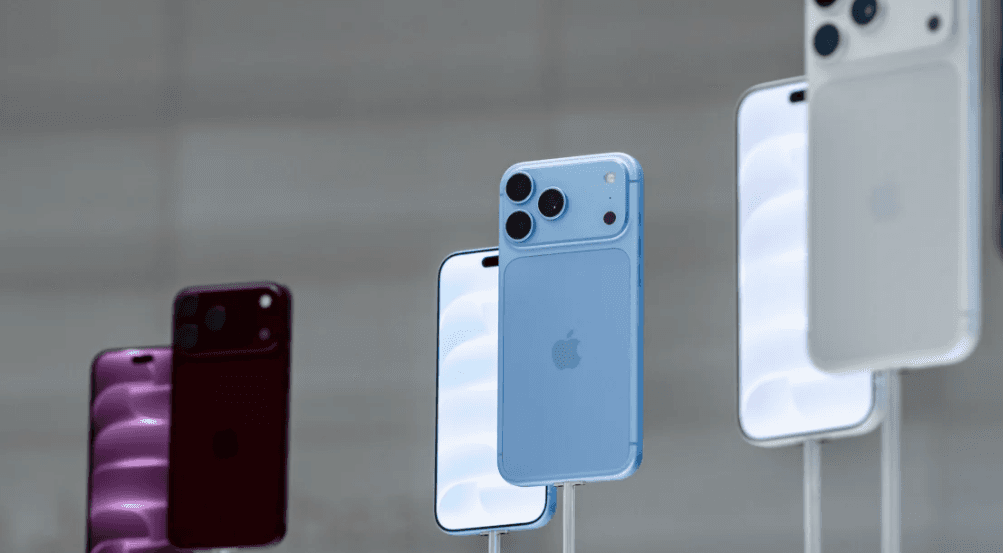
Build quality carries over Ceramic Shield 2 on the front glass, and the phone retains satellite connectivity and MagSafe compatibility, both of which were already present on the iPhone 17 Pro. Apple did add a small amount of weight this year, with the iPhone 18 Pro coming in about 5 grams heavier than its predecessor at 211 grams and 8.8mm thick, a change most people are unlikely to notice in daily handling but worth flagging for anyone upgrading from a lighter phone. The four launch colors are Black, Silver, Glacier, and Burgundy, with Glacier being a light blue and Burgundy replacing last year's Cosmic Orange as the standout seasonal shade.
Overall, the design philosophy here is evolution rather than reinvention, and Apple seems comfortable letting the iPhone 18 Pro's case design sit for another cycle while it focuses attention on what's happening inside. That's a reasonable strategy given how well the 17 Pro's chassis was already received, and it also means existing cases and accessories built for the 17 Pro should largely continue to fit the 18 Pro without issue. Anyone coming from an iPhone 15 Pro or earlier will notice a bigger jump in hand feel than someone stepping up from last year's model.
A20 Pro Chip and Everyday Performance
Under the hood, the iPhone 18 Pro runs Apple's new A20 Pro chip, built on a 2-nanometer manufacturing process with a 6-core CPU and a 7-core GPU that Apple says delivers up to 40 percent faster graphics performance than the A19 Pro used in last year's model. That's a substantial generational jump on paper, and it should translate into smoother performance in demanding mobile games and pro-level video editing apps, though as with most yearly chip upgrades, the difference will be far more obvious to power users than to someone mainly checking email and scrolling social feeds. The chip also includes a dual 16-core Neural Engine that Apple describes as doubling the AI processing capacity of the previous generation, which feeds directly into on-device Apple Intelligence features.
Cooling has also been redesigned around the new chip, with a next-generation vapor chamber attached directly to the A20 Pro that Apple says has three times the surface area of the previous design. In practical terms, this should help the phone sustain peak performance for longer under heavy load, whether that's an extended gaming session or continuous 4K video recording, without throttling as aggressively as thermal limits are approached. Apple has not published exact RAM figures, since it never lists memory capacity in official specifications, though early references in the Xcode 27 developer toolset point to 12GB of RAM in the iPhone 18 Pro.
For most everyday tasks, browsing, messaging, streaming video, and typical camera use, the performance difference between the A19 Pro and A20 Pro will likely be minimal in casual use. Where it matters more is in sustained workloads and future-proofing, since a faster chip generally ages better across the years most people keep an iPhone before replacing it. Anyone buying primarily for raw speed and longevity will find the A20 Pro a reasonable justification for upgrading, even if the everyday snappiness feels similar to a well-optimized iPhone 17 Pro.
Camera System: The Variable Aperture Breakthrough
The headline hardware change on the iPhone 18 Pro is its 48-megapixel Fusion Main camera, which becomes the first iPhone camera to use a genuine variable aperture rather than a fixed one. The lens can shift between four physical aperture settings of f/1.48, f/1.8, f/2.8, and f/4.0 using six aperture blades that Apple says are each thinner than a human hair, and the camera can either adjust automatically based on the scene or be set manually through a new Pro controls interface that also exposes shutter speed, white balance, and a histogram. Apple states the wider f/1.48 setting lets in roughly 50 percent more light than the previous main camera's maximum aperture, which should noticeably improve low-light and Night mode photography.
Ultra Wide and Telephoto Cameras
The 48-megapixel Fusion Ultra Wide camera remains at a fixed f/2.2 aperture with a 13mm equivalent focal length, supporting both standard ultra-wide shots and macro photography at close range. The 48-megapixel Fusion Telephoto camera is largely unchanged from the previous generation, keeping its f/2.8 aperture and periscope design with 4x and 8x optical zoom equivalent to 100mm and 200mm focal lengths, giving the full camera system an optical zoom range from 0.5x out to 8x. Sensor-shift optical stabilization is retained on the main camera, and the front-facing 18-megapixel Center Stage camera adds autofocus, automatic reframing, and stabilized video for better selfies and video calls.
Software and Video Features
Beyond the hardware, Apple introduced a new computational imaging pipeline it says produces sharper, more detailed images straight out of the Main camera, along with Smart Focus subject tracking and a faster-performing Night mode. Video capability now includes Cinematic effects at up to 60 frames per second and 4K Dolby Vision HDR time-lapse recording, and Apple added a feature called Apple Reference Image, which embeds verified capture metadata into a photo so it can later be shown to have come from a real camera rather than being AI-generated. That last feature feels like a direct response to growing concerns about AI-faked photography, and it's a thoughtful addition even if most casual users may never need to prove a photo's authenticity.
Battery, Charging and Connectivity
Apple built the iPhone 18 Pro around a 4,056mAh battery and lists up to 36 hours of video playback on a full charge, which the company describes as the longest battery life of any iPhone it has released to date. That figure benefits from both the more efficient A20 Pro chip and the redesigned cooling system, since a chip that runs cooler under load also tends to sip less power over extended use. MagSafe charging carries over unchanged from the iPhone 17 Pro, so existing MagSafe accessories and chargers should continue to work exactly as before.
On the connectivity side, Apple introduced its new N1 wireless chip, which brings Wi-Fi 7, Bluetooth 6, and Thread support to the iPhone 18 Pro for the first time. The phone also uses Apple's new C2 modem, which the company says consumes 15 percent less energy than the previous C1X modem while adding mmWave 5G support in the United States, a combination that should help extend battery life further during heavy cellular use. In the US, Canada, Japan, Mexico, and eight other markets, the iPhone 18 Pro ships eSIM-only with no physical SIM tray, while other regions retain the traditional physical SIM slot alongside eSIM support.
Apple has also leaned further into sustainability messaging this year, stating that the iPhone 18 Pro uses 40 percent recycled content overall and 100 percent recycled cobalt in its battery. These figures build on similar commitments from previous iPhone generations, and while they won't be the deciding factor for most buyers, they're a reasonable data point for anyone weighing the phone's environmental footprint against a refurbished alternative, which inherently avoids the resource cost of manufacturing a brand-new device altogether.
Software, Storage and Refurbished Outlook
The iPhone 18 Pro ships running iOS 27 and supports the full range of Apple Intelligence features, alongside a notable update to Siri that Apple is rolling out separately through a software update scheduled for September 14, ahead of the phone's actual store release. This updated Siri can reportedly pull information from across a user's apps to answer questions and complete tasks, and it introduces a dedicated Siri app for continuing conversations, though the rollout begins in English only, with additional languages following in October. It's worth noting that this enhanced Siri and other Apple Intelligence features will not be available on iPhones sold in the European Union at launch, and they remain unavailable in China while local regulatory requirements are worked out.
Storage options on the iPhone 18 Pro span 256GB, 512GB, 1TB, and, for the first time on this smaller Pro size, 2TB, giving buyers who shoot a lot of high-resolution photo and video content real headroom without needing to upgrade to the Pro Max for extra capacity. In India, pricing runs ₹1,64,900 for 256GB, ₹1,89,900 for 512GB, ₹2,39,900 for 1TB, and ₹3,14,900 for the top 2TB variant.
For anyone specifically waiting on a refurbished iPhone 18 Pro rather than buying new, patience is genuinely required right now, since refurbished stock depends entirely on customer trade-ins and returns rather than the original launch date. Industry tracking data on iPhone refurbishment timelines points to a typical gap of around 82 days in the US between an Apple release and the first refurbished units reaching the market, which would put the earliest realistic refurbished iPhone 18 Pro availability somewhere around late November to mid-December 2026. Buyers who need a phone sooner may find the refurbished iPhone 17 Pro a genuinely strong interim option, since its price has already started softening now that the newer model has arrived.
Frequently Asked Questions
Q. When did the iPhone 18 Pro actually release?
Apple unveiled the iPhone 18 Pro on September 9, 2026, opened pre-orders on September 12, and began selling the phone in stores on September 18, 2026, with wider availability following in additional countries on September 25.
Q. How much does the iPhone 18 Pro cost?
The iPhone 18 Pro starts at ₹1,64,900 for the 256GB model in India, rising to ₹1,89,900 for 512GB, ₹2,39,900 for 1TB, and ₹3,14,900 for 2TB, marking a ₹30,000 increase over the iPhone 17 Pro's ₹1,34,900 launch price last year.
Q. What is different about the iPhone 18 Pro's camera compared to last year?
The biggest change is the new 48-megapixel Fusion Main camera, which uses a genuine variable aperture with four selectable settings instead of a fixed aperture, allowing for better low-light performance and more control over depth of field than any previous iPhone camera.
Q. Does the iPhone 18 Pro support Wi-Fi 7?
Yes, the iPhone 18 Pro includes Apple's new N1 wireless chip, which brings Wi-Fi 7, Bluetooth 6, and Thread support to the phone for the first time in the iPhone lineup.
Q. Is the iPhone 18 Pro much faster than the iPhone 17 Pro?
The iPhone 18 Pro's A20 Pro chip offers up to 40 percent faster graphics performance than the A19 Pro chip in the iPhone 17 Pro, though the difference will be far more noticeable in demanding tasks like gaming and video editing than in everyday browsing and messaging.
Q. How much storage can the iPhone 18 Pro hold?
The iPhone 18 Pro is available with 256GB, 512GB, 1TB, or 2TB of storage, marking the first time the smaller Pro model has offered a 2TB option.
Q. Does the iPhone 18 Pro have a physical SIM slot?
In the United States, Canada, Japan, Mexico, and eight other markets, the iPhone 18 Pro ships eSIM-only with no physical SIM tray, while it retains a physical SIM slot alongside eSIM support in other regions.
Q. How long does the iPhone 18 Pro's battery last?
Apple lists up to 36 hours of video playback on a full charge, which the company describes as the best battery life of any iPhone it has released so far.
Q. Will Apple Intelligence and the new Siri work everywhere?
The updated Siri experience and certain Apple Intelligence features are rolling out in English first, with more languages arriving in October, and they will not be available at launch on iPhones sold in the European Union or in China due to regional regulatory considerations.
Q. When will a refurbished iPhone 18 Pro become available?
Based on typical refurbishment timelines of around 82 days after an Apple release, the first certified refurbished iPhone 18 Pro units are realistically expected to appear sometime between late November and mid-December 2026.
Final Take: Who Should Actually Buy the iPhone 18 Pro
The iPhone 18 Pro is a solid, meaningful upgrade rather than a dramatic reinvention, and that's actually the right way to think about it if you're deciding whether to buy now or wait. The variable aperture camera is the most genuinely new piece of hardware Apple has shipped on an iPhone in several years, and it's a real functional upgrade for anyone serious about photography, not just a marketing bullet point. Combined with the faster A20 Pro chip and noticeably longer battery life, this is a phone built to hold up well over a multi-year ownership cycle rather than one leaning on cosmetic changes alone.
That said, if your current phone is an iPhone 16 Pro or 17 Pro and it's still serving you well, there's no urgent need to rush into this upgrade, since the core day-to-day experience of using an iPhone hasn't fundamentally changed. The people who will benefit most immediately are photography enthusiasts who want manual aperture control, anyone whose current phone is genuinely struggling with battery life, and buyers upgrading from an iPhone 14 Pro or older who will feel every generation of improvement at once.
For budget-conscious buyers specifically watching the refurbished market, the smartest move right now is patience paired with a solid interim choice, since a refurbished iPhone 18 Pro realistically won't surface until the final weeks of 2026 at the earliest. In the meantime, a refurbished iPhone 17 Pro offers nearly all of the same core experience at a price that's already starting to soften now that its successor has launched, making it a genuinely sensible way to get most of this year's iPhone experience without paying flagship prices for brand-new hardware.