
iPhone 18 Pro Camera System Explained: 48MP Pro Fusion and Variable Aperture
The iPhone 18 Pro introduces a 48MP Fusion camera system with a variable-aperture Main camera. Here is what the upgrade means for photos, zoom, low light, and video.

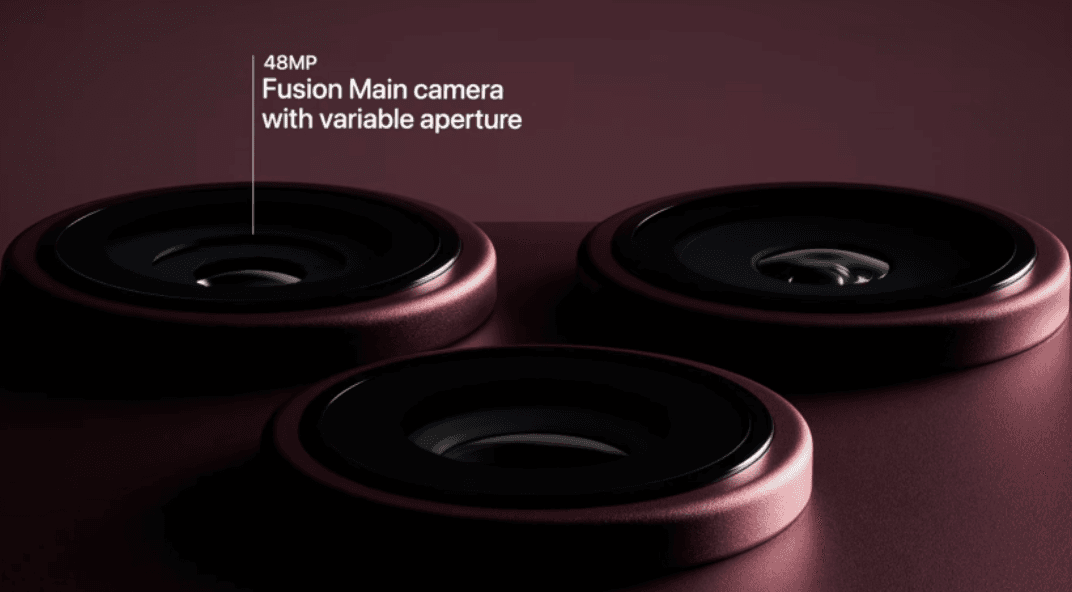
TL;DR The iPhone 18 Pro camera system builds on Apple's 48MP Fusion approach by adding a variable-aperture 48MP Main camera, while retaining 48MP Ultra Wide and Telephoto cameras. The Main camera can switch between ƒ/1.48, ƒ/1.8, ƒ/2.8, and ƒ/4.0, giving the camera more control over how much light enters the lens and how much of a scene stays in focus. Apple also adds manual Pro controls for aperture, shutter speed, white balance, and exposure monitoring through a histogram. The 48MP Telephoto provides 4x optical zoom and enables an 8x optical-quality telephoto option, while the Ultra Wide supports 48MP photography and macro shooting. Together, these changes make the iPhone 18 Pro more flexible for photography, although the biggest improvement is control rather than a complete change in the way everyday iPhone photos look.
What Is New In The iPhone 18 Pro Camera System?
The biggest camera change on the iPhone 18 Pro is the addition of variable aperture to the 48MP Fusion Main camera. Previous iPhone Pro models used a fixed aperture on the Main camera, whereas the iPhone 18 Pro can physically adjust the aperture between four settings: ƒ/1.48, ƒ/1.8, ƒ/2.8, and ƒ/4.0. In simple terms, aperture controls the opening through which light reaches the camera sensor. A wider aperture such as ƒ/1.48 allows more light into the system, while a narrower aperture such as ƒ/4.0 can help keep more of a scene in focus. Apple says the new system is designed to provide creative control that was not previously available on an iPhone.
The important detail is that the variable-aperture technology is limited to the Main camera. The iPhone 18 Pro still uses a three-camera rear system consisting of a 48MP Fusion Main, 48MP Fusion Ultra Wide, and 48MP Fusion Telephoto. The Ultra Wide has a fixed ƒ/2.2 aperture, while the Telephoto has a fixed ƒ/2.8 aperture. This distinction matters because the phrase "48MP Pro Fusion camera system" describes the overall camera system, not three variable-aperture lenses. The Main camera also uses second-generation sensor-shift optical image stabilization and 100% Focus Pixels, while the Telephoto adds 3D sensor-shift stabilization and autofocus.
Apple has also expanded the controls available in the Camera app. iPhone 18 Pro users can manually adjust aperture, shutter speed, and white balance, while a histogram can be used to evaluate exposure. These controls can be used in Photo, Video, Cinematic, Slo-mo, and Time-Lapse modes. That makes the camera more useful for people who want to make deliberate photography decisions rather than relying entirely on automatic processing. For everyday users, however, the camera can still adjust the aperture automatically, so you do not need to understand f-stops to use the system.
iPhone 18 Pro Camera Hardware At A Glance
| Camera | Resolution | Aperture | Key Features |
|---|---|---|---|
| Fusion Main | 48MP | ƒ/1.48, ƒ/1.8, ƒ/2.8, ƒ/4.0 | Variable aperture, sensor-shift OIS, autofocus |
| Fusion Ultra Wide | 48MP | ƒ/2.2 | 120° field of view, macro photography |
| Fusion Telephoto | 48MP | ƒ/2.8 | 4x optical, 8x optical-quality, tetraprism |
| Front Camera | Not specified as part of the 48MP Fusion system | N/A | Apple TrueDepth system |
How Variable Aperture Works On The iPhone 18 Pro
Variable aperture is easier to understand when you think about the amount of light entering the camera. The ƒ/1.48 setting is the widest option on the iPhone 18 Pro Main camera, so it can be useful when the scene is darker and the camera needs more light. Apple says the wider aperture can allow around 50% more light compared with the previous ƒ/1.8 maximum aperture. That does not mean every night photograph will suddenly look 50% better, because smartphone photography also relies heavily on computational photography, stabilization, exposure decisions, and multi-frame processing. The hardware simply gives the camera more light to work with.
At the other end, ƒ/2.8 and ƒ/4.0 allow the camera to use a smaller opening. A narrower aperture can increase depth of field, meaning more of a nearby scene can remain acceptably sharp. This can be useful for close-up subjects, documents, or group photographs where you want more of the frame to remain in focus. Apple's automatic system can select an appropriate aperture based on the scene, while users who want more control can select the setting themselves. Apple's own camera documentation confirms that aperture can be manually adjusted through the Camera app on iPhone 18 Pro models.
The effect should still be viewed realistically. Smartphone cameras have much smaller sensors and lenses than interchangeable-lens cameras, so changing the aperture does not create the same dramatic depth-of-field effects that you would get from a large camera lens. Early hands-on testing has found that the differences can be subtle in many situations, although the wider ƒ/1.48 setting can help in low light and the narrower settings can be useful for keeping more of a close subject in focus. The major change is therefore flexibility rather than a guarantee of dramatically different photographs every time you change the aperture.
Aperture Settings Explained
| Aperture | What It Does | Practical Use |
|---|---|---|
| ƒ/1.48 | Widest opening | Lower-light scenes and maximum light intake |
| ƒ/1.8 | Default setting | General everyday photography |
| ƒ/2.8 | Smaller opening | More depth of field in suitable scenes |
| ƒ/4.0 | Smallest opening | Close subjects and situations where more of the scene should remain in focus |
What The 48MP Pro Fusion Cameras Offer
The 48MP Fusion Main camera remains the central camera in the iPhone 18 Pro system. It has a 24mm equivalent focal length, second-generation sensor-shift optical image stabilization, 100% Focus Pixels, and support for 24MP and 48MP high-resolution photographs. Apple also includes its Photonic Engine, Deep Fusion, Smart HDR 5, Night mode, Photographic Styles, and next-generation Portrait features. This combination means the camera is not relying on its resolution alone. Apple's image processing continues to play a major role in producing the final photograph.
The 48MP Fusion Ultra Wide gives the phone a 13mm equivalent field of view with a 120-degree viewing angle and ƒ/2.2 aperture. It also supports 48MP photography and macro photography. That makes it useful when you need to fit a large building, landscape, room, or group into the frame without physically moving much farther away. The Ultra Wide also gives the iPhone 18 Pro a second 48MP camera rather than treating the wider lens as a lower-resolution supporting camera.
The 48MP Fusion Telephoto uses a 100mm equivalent focal length with a 4x optical zoom and ƒ/2.8 aperture. It also enables a 200mm equivalent 8x optical-quality telephoto option. Apple uses a tetraprism design, autofocus, and 3D sensor-shift optical image stabilization on this camera. The system can provide an optical-quality zoom range covering 2x optical zoom out through 8x optical-quality zoom, while digital zoom extends up to 40x. This gives the iPhone 18 Pro a broader photography range without requiring a separate camera for longer focal lengths.
Camera And Zoom Breakdown
| Camera | Focal Length | Resolution | Stabilization | Main Use |
|---|---|---|---|---|
| Main | 24mm | 48MP | Sensor-shift OIS | Everyday photography |
| Ultra Wide | 13mm | 48MP | Apple processing and stabilization features | Landscapes and macro |
| Telephoto | 100mm | 48MP | 3D sensor-shift OIS | Portraits and distant subjects |
| Optical-quality Telephoto | 200mm | 12MP output | 3D sensor-shift OIS | Longer-range shooting |
How The iPhone 18 Pro Handles Low-Light Photography
The wider ƒ/1.48 aperture is particularly relevant to low-light photography because it allows more light to reach the sensor. Apple says the Main camera can take in around 50% more light than the previous ƒ/1.8 maximum aperture. In practical terms, that gives the camera another tool for maintaining exposure when there is less available light. It can also help reduce the amount of time needed for certain Night mode captures, although the final result still depends on the scene, movement, processing, and stabilization.
The automatic aperture system is important here because most users will not manually change it. In darker conditions, the camera can open the Main lens to ƒ/1.48. In brighter situations, it can use other aperture settings when that provides a benefit. Apple has designed the system so that the computational photography experience remains central, while the physical aperture gives the camera additional control over the incoming light. That approach means casual users can simply point and shoot while more experienced photographers can take direct control when needed.
It is worth keeping expectations realistic. Current hands-on testing indicates that the difference between ƒ/1.48 and ƒ/1.8 can be visible in certain low-light situations, but it is not a night-and-day transformation. Smartphone computational photography was already highly capable, so the new aperture works more like an additional layer of control than a replacement for Apple's image processing. For someone upgrading mainly for night photography, the benefit is real, but it should be considered alongside the rest of the camera system rather than treated as a single feature that changes everything.
Where The Variable Aperture Helps Most
| Situation | Useful Aperture Behaviour | Expected Benefit |
|---|---|---|
| Dark scenes | Wider ƒ/1.48 | More light reaches the sensor |
| Everyday shooting | Automatic adjustment | Camera chooses a suitable setting |
| Group photos | Narrower aperture can help | More of the scene can remain in focus |
| Close-up subjects | ƒ/2.8 or ƒ/4.0 | Greater depth of field |
| Creative photography | Manual selection | More control over the final image |
iPhone 18 Pro Video And Pro Camera Controls
Apple has expanded the iPhone 18 Pro beyond still photography. Smart focus tracking can follow a subject and continue tracking when the subject temporarily leaves the frame. The phone also allows Cinematic effects to be applied after capture to compatible footage, rather than requiring the user to commit to Cinematic mode while recording. Apple has also added 4K Dolby Vision support for Cinematic recording at up to 60 fps, along with improvements to time-lapse and audio processing.
The new Pro controls are another meaningful part of the camera update. Users can manually adjust aperture, shutter speed, and white balance, while a histogram provides an exposure reference. Apple says these controls are available in Photo, Video, Cinematic, Slo-mo, and Time-Lapse modes. This brings the stock Camera app closer to the expectations of users who are accustomed to making manual adjustments on dedicated cameras, although it still does not turn the iPhone into a traditional interchangeable-lens camera.
For creators, the combination of variable aperture, manual controls, focus tracking, and post-capture Cinematic effects is arguably more important than the headline 48MP number. The resolution gives the system plenty of detail to work with, but control over exposure and focus can make a bigger difference when you are deliberately creating a shot. At the same time, people who primarily record family videos, travel clips, and social media content can continue using automatic shooting without needing to interact with these advanced controls.
Key Video And Pro Features
| Feature | iPhone 18 Pro Support |
|---|---|
| Manual aperture | Yes |
| Manual shutter speed | Yes |
| Manual white balance | Yes |
| Histogram | Yes |
| Smart focus tracking | Yes |
| Cinematic effects after capture | Yes |
| 4K Dolby Vision Cinematic | Up to 60 fps |
| ProRAW | Yes |
| 48MP macro photography | Yes |
Should You Upgrade For The iPhone 18 Pro Camera?
The iPhone 18 Pro camera is a meaningful hardware update, but it is best understood as an expansion of Apple's existing camera philosophy rather than a complete reinvention. The 48MP Fusion Main camera now has physical aperture control, while the 48MP Ultra Wide and 48MP Telephoto continue to provide the versatility expected from a Pro iPhone. The biggest difference for everyday users may happen automatically, because the camera can choose an aperture based on the scene without requiring manual intervention.
For photography enthusiasts, the upgrade is more interesting because the Camera app now gives you direct control over aperture, shutter speed, and white balance. That makes it possible to move beyond Apple's automatic decisions when you want a specific look or exposure. The variable aperture also gives the Main camera more flexibility in low light and in situations where controlling depth of field is useful. However, current testing suggests that many of the visible differences will be subtle rather than dramatic, particularly because modern smartphone photography already relies heavily on computational processing.
If you already own an iPhone 17 Pro, the camera upgrade should therefore be judged according to how much you value manual control, variable aperture, improved low-light capability, and the newer video features. Apple has retained the 48MP Ultra Wide and Telephoto cameras and their core zoom capabilities from the previous generation, so the biggest camera change is concentrated in the Main camera and software controls. For someone using an older iPhone, however, the overall Pro camera system can represent a much larger step forward.
Frequently Asked Questions
Q. What is the main camera upgrade on the iPhone 18 Pro?
The biggest upgrade is the 48MP Fusion Main camera with a variable aperture. It can switch between ƒ/1.48, ƒ/1.8, ƒ/2.8, and ƒ/4.0, giving the camera more control over incoming light and depth of field.
Q. Does every iPhone 18 Pro camera have a variable aperture?
No. Variable aperture is available on the 48MP Fusion Main camera. The 48MP Fusion Ultra Wide uses an ƒ/2.2 aperture, while the 48MP Fusion Telephoto uses an ƒ/2.8 aperture.
Q. What does ƒ/1.48 mean on the iPhone 18 Pro?
ƒ/1.48 is the widest aperture available on the Main camera. A wider aperture allows more light to reach the sensor and can be useful in darker conditions. Apple says it allows around 50% more light than the previous ƒ/1.8 maximum aperture.
Q. Can I manually control the aperture on the iPhone 18 Pro?
Yes. Apple provides manual controls for aperture, shutter speed, and white balance on iPhone 18 Pro models. A histogram is also available to help evaluate exposure.
Q. Does the iPhone 18 Pro have three 48MP rear cameras?
Yes. The Main, Ultra Wide, and Telephoto cameras are all 48MP Fusion cameras. However, their specifications and functions are different, and only the Main camera has the new variable-aperture system.
Q. What zoom does the iPhone 18 Pro offer?
The 48MP Telephoto camera provides 4x optical zoom and enables an 8x optical-quality telephoto option. Apple also lists digital zoom up to 40x.
Q. Is the iPhone 18 Pro better for low-light photography?
The Main camera's ƒ/1.48 maximum aperture can allow more light into the system and is designed to improve flexibility in low-light situations. However, the actual improvement varies by scene, and computational photography remains an important part of the final image.
Q. Does variable aperture make iPhone 18 Pro photos look like DSLR photos?
Not exactly. Variable aperture provides more control over light and depth of field, but smartphone sensors and lenses are much smaller than those used in interchangeable-lens cameras. The effect can therefore be more subtle than on a dedicated camera.
Q. Does the iPhone 18 Pro support 48MP macro photography?
Yes. Apple lists 48MP macro photography as one of the iPhone 18 Pro camera features, using the Fusion Ultra Wide system.
Q. Is the iPhone 18 Pro camera a major upgrade over the iPhone 17 Pro?
The biggest change is the variable-aperture 48MP Main camera and the addition of manual camera controls. The 48MP Ultra Wide and Telephoto systems retain broadly similar core specifications, so the size of the upgrade depends on how much you value the new aperture and control features.
Final Recommendation
The iPhone 18 Pro camera system is most interesting because Apple has added physical flexibility to a camera that was already heavily optimized through computational photography. The 48MP Fusion Main camera's ƒ/1.48 to ƒ/4.0 variable aperture gives it more control over light and depth of field, while the 48MP Ultra Wide and 48MP Telephoto cameras preserve the versatility of the Pro system. The addition of manual aperture, shutter speed, white balance, and histogram controls also makes the phone more useful for photographers who want to make their own decisions rather than relying entirely on automatic shooting.
For everyday users, the biggest advantage is that most of this technology works automatically. You can continue pointing and shooting while the camera adjusts the aperture according to the scene. For enthusiasts and creators, the manual controls and variable aperture provide more room to experiment with exposure, depth of field, and low-light photography. The camera should not be treated as a replacement for a dedicated interchangeable-lens camera, but it does give the iPhone 18 Pro a more flexible photography system than previous Pro models.
Overall, the iPhone 18 Pro's camera update is about greater control rather than simply more megapixels. The 48MP Pro Fusion system, variable-aperture Main camera, 4x Telephoto, 8x optical-quality zoom, 48MP macro capability, and expanded Pro controls make the camera system more versatile. If you primarily want effortless point-and-shoot photography, the automatic system handles most of the work. If you want to take more control over how your photos and videos are captured, the iPhone 18 Pro's new camera hardware gives you considerably more to work with.






