
HP ZBook Fury 15 G7 Review – The Ultimate Mobile Workstation for Professionals
Explore the HP ZBook Fury 15 G7 powered by Intel Core Ultra 7. A powerful mobile workstation designed for engineers, architects, and creators who need desktop-level performance on the go.

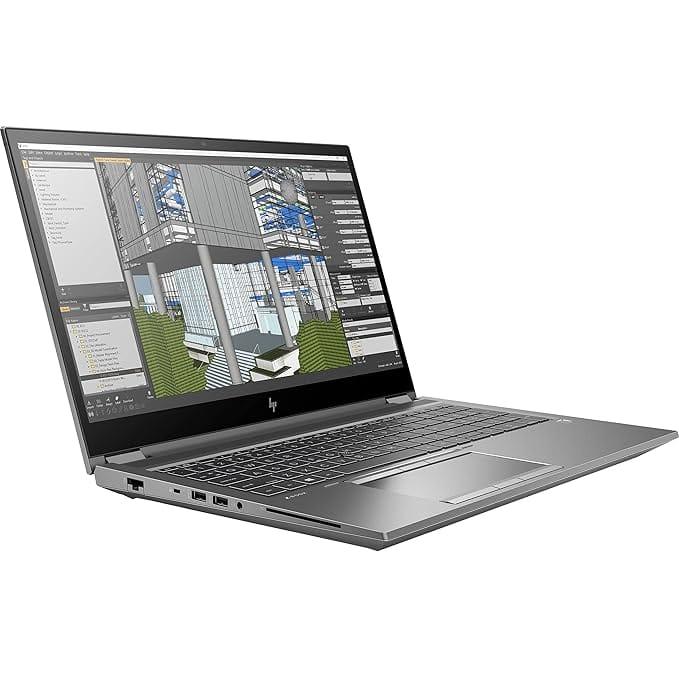
TL;DR The HP ZBook Fury 15 G7 remains one of the most serious workstation laptops you can buy in 2025, and its relevance only deepens in 2026 for professionals who need desktop-grade performance, ISV-certified graphics, expandable RAM and storage, military-grade durability, enterprise security, and long-session thermal stability. Built for engineers, architects, 3D artists, data scientists, AI/ML professionals, simulation-heavy researchers, and video creators, it continues to deliver elite performance in Windows-based professional workflows. Its real strength is not just raw speed, but the way it combines sustained CPU power, RTX professional graphics, upgrade flexibility, and dependable reliability in a chassis designed for years of serious work.
Why the ZBook Fury 15 G7 Still Feels Like a Serious Professional Machine
The HP ZBook Fury 15 G7 belongs to a very different class of laptops compared to mainstream premium notebooks. This is not a device built around thinness, lifestyle aesthetics, or casual portability. Instead, it is engineered as a true mobile workstation, designed for users whose work directly depends on stable compute performance over long sessions. That difference becomes obvious the moment you look at the way HP has balanced chassis design, cooling, expansion, GPU options, and enterprise-grade reliability.
In 2025, and with strong context extending into 2026, the Fury 15 G7 remains highly relevant because many professional workflows still scale better with Windows workstation ecosystems, CUDA acceleration, ISV-certified GPU drivers, and expandable hardware than with sealed creator laptops. For engineers running simulation tools, architects handling BIM models, editors working on multi-layer timelines, and researchers training local AI workflows, these practical advantages matter far more than synthetic benchmark scores.
The biggest reason it still dominates is that it was designed with long-term professional ownership in mind. Unlike many modern thin laptops that trade longevity for sleekness, the Fury lineup is built to remain useful for years through upgrades, better thermals, and enterprise serviceability. That long-term value becomes even more meaningful in India’s refurbished and premium used-workstation market in 2026.
Design, Build Quality and Why It Feels Built for Real Work
The first thing professionals notice about the ZBook Fury 15 G7 is that it feels like a machine built for actual field and office workloads rather than showroom aesthetics. The aluminium chassis with MIL-STD durability compliance gives it a level of physical confidence that many creator laptops simply do not offer.
This durability matters more than it may initially seem. Engineers, architects, consultants, and field professionals often move between offices, client sites, labs, campuses, production floors, and home setups, where accidental knocks, vibration, or transport stress are common. The Fury’s reinforced construction ensures the laptop feels dependable in these real-world situations.
At around 2.4 kg, it is naturally heavier than ultrabooks, but that weight is part of the machine’s professional identity. It allows room for better cooling, stronger GPU power delivery, easier service access, and expandability headroom, all of which directly contribute to the long-term workstation experience.
CPU Performance for Engineering, Rendering and Heavy Compute
The Intel Core Ultra 7 14th Gen architecture with 16 cores is where this workstation begins to separate itself from standard creator laptops. High-core-count workloads such as Blender rendering, SolidWorks assemblies, MATLAB simulations, AI preprocessing, ANSYS workloads, 8K timeline scrubbing, and large code builds benefit directly from this architecture.
What makes the Fury especially strong is not just the CPU’s burst performance, but its ability to sustain higher compute loads for longer periods without aggressive thermal collapse. In professional environments, sustained performance matters more than short benchmark spikes because many workloads run continuously for hours.
This makes the laptop exceptionally suitable for:
- 3D rendering
- simulation workloads
- AI model preprocessing
- architecture BIM workflows
- code compilation
- multi-cam video timelines
- scientific data pipelines
In 2026, this still remains one of the strongest Windows workstation CPU profiles for professionals who need portable desktop-class compute.
RTX Professional Graphics and Why It Matters More Than Gaming GPUs
The NVIDIA RTX Professional GPU options are one of the biggest reasons the ZBook Fury 15 G7 remains highly respected among professionals. Unlike gaming GPUs, these workstation GPUs prioritise driver certification, viewport stability, CAD reliability, CUDA workflows, and rendering precision.
For professionals using AutoCAD, Revit, CATIA, SolidWorks, Adobe After Effects, DaVinci Resolve, Unreal Engine visualisation, TensorFlow, and PyTorch, this translates into smoother and more predictable workflows.
The CUDA acceleration especially continues to matter in 2026 for AI-assisted editing, ML experimentation, simulation acceleration, and GPU-heavy rendering pipelines. For professionals whose output directly depends on software stability, the workstation GPU stack remains one of the Fury’s strongest advantages over creator-focused alternatives.
Display Quality for Editors, Designers and Precision Work
The 15.6-inch FHD and UHD panel options with HDR support and high refresh rates make this laptop especially attractive for visual professionals. The panel options with 100 percent DCI-P3 coverage remain highly valuable for editors, colorists, motion designers, and 3D artists who depend on colour trustworthiness.
What makes this display particularly strong is how it complements the workstation identity. A powerful CPU and GPU only matter when the visual output layer can support accurate grading, animation timelines, frame-by-frame review, CAD detailing, and multi-window precision workflows.
Even in 2026, the display quality still feels highly competitive for professionals who need a single-device mobile studio without external monitor dependence during travel or client reviews.
RAM, SSD Expansion and Why Long-Term Upgradability Wins
One of the biggest reasons professionals still choose the Fury lineup is the hardware upgrade path. Unlike sealed premium laptops, the ZBook Fury 15 G7 supports expandable DDR5 RAM and NVMe SSD storage upgrades, which dramatically improves long-term ownership ROI.
For AI datasets, CAD assemblies, local VMs, multiple creative apps, and long-form video projects, memory headroom becomes increasingly important. Starting with 32GB RAM is already strong, but the ability to scale higher is what keeps the machine future-resilient.
The same applies to storage. Local project archives, simulation outputs, raw footage, large texture libraries, and ML datasets quickly consume space. The Fury’s expansion support allows professionals to scale storage according to workflow growth rather than replacing the entire laptop.
Cooling, Battery and Long-Session Reliability
The 83Wh battery provides respectable runtime for a machine in this performance class, usually around 7 to 9 hours for mixed professional productivity, though GPU-heavy workloads will naturally reduce this.
Where the Fury truly excels is cooling. HP’s advanced vapor chamber thermal design ensures that even during long renders, simulation runs, or heavy GPU timelines, the laptop maintains stable performance without dramatic throttling.
For professionals, this thermal stability directly translates into predictable deadlines, fewer slowdowns, and consistent workstation trust, which is often more valuable than absolute battery numbers.
Why It Still Remains One of the Best Workstation Investments in 2026
The HP ZBook Fury 15 G7 continues to remain one of the smartest workstation investments because it solves the exact problems professionals still face in 2026: sustained performance, upgradeability, certified graphics stability, enterprise durability, and long-term ownership value.
For engineers, architects, data scientists, AI researchers, 3D artists, VFX professionals, and Windows-based enterprise users, it remains far more than a laptop. It is effectively a portable production workstation.
That is why even years later, it still feels like one of the most serious workstation choices for professionals who cannot afford compromises in reliability or compute stability.
Frequently Asked Questions
Q. Is the HP ZBook Fury 15 G7 good for AI and machine learning?
Yes, especially because of its RTX professional GPU options and strong multi-core CPU performance.
Q. Is it better than a MacBook Pro for engineering tools?
For Windows-based CAD, simulation, CUDA, and enterprise workflows, yes.
Q. Can RAM and SSD be upgraded later?
Yes, this remains one of its biggest professional advantages.
Q. Is it too heavy for daily travel?
It is heavier than ultrabooks, but still highly practical for workstation-class portability.
Q. Who should buy it in 2026?
Engineers, architects, AI/ML professionals, editors, VFX creators, and enterprise power users.
Ready to upgrade your tech?
Browse our collection of quality refurbished products at unbeatable prices.






