
HP ZBook Firefly G3 In 2026 India: Who Should Buy It And Who Should Skip?
A detailed 2026 India guide to HP ZBook Firefly G3 covering refurbished pricing, workstation performance, professional use cases, and buyer suitability.

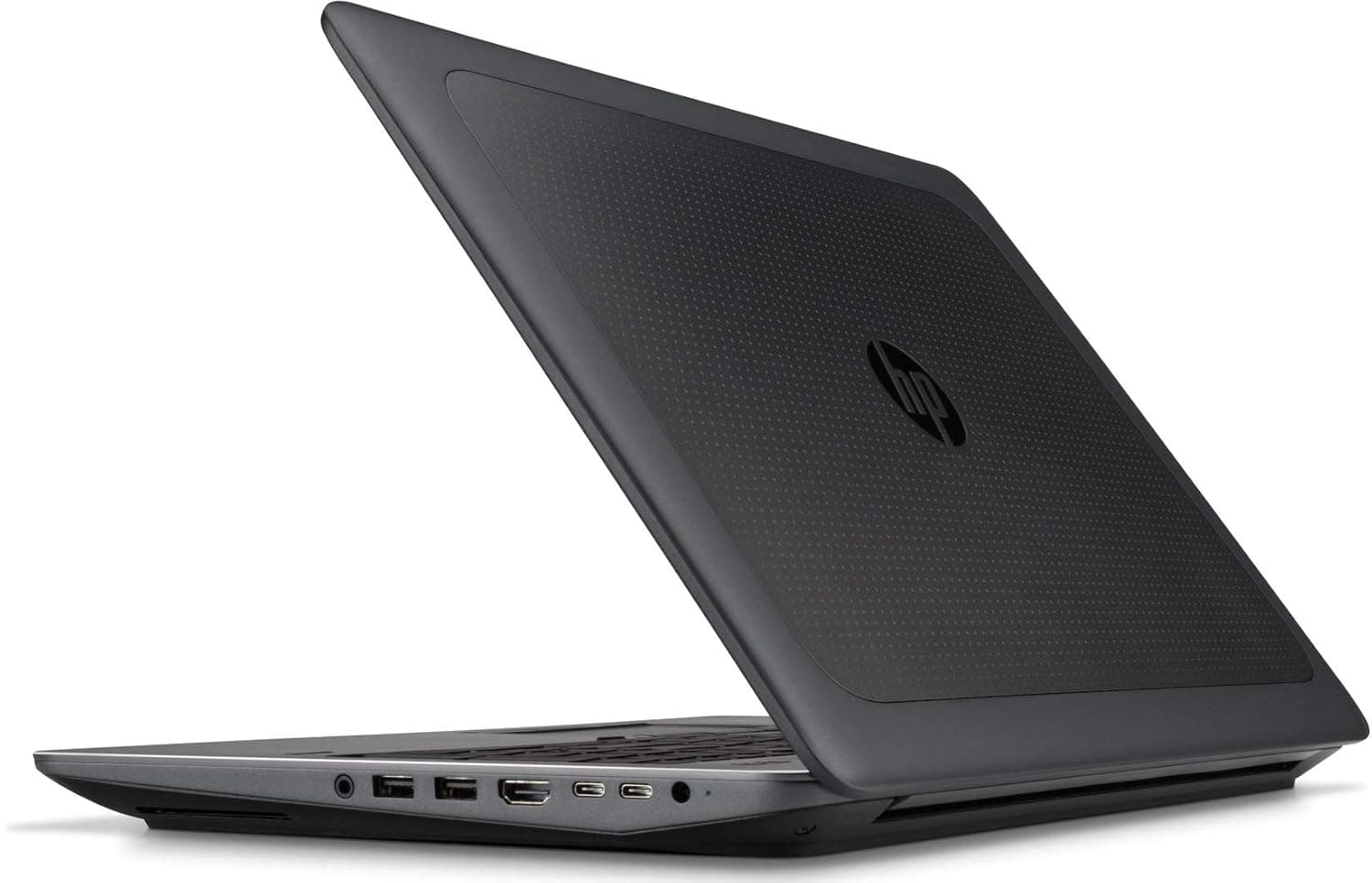
TL;DR The HP ZBook Firefly G3 is a lightweight professional mobile workstation designed for demanding productivity workloads rather than gaming, entertainment, or basic web browsing. In India in 2026, it delivers excellent overall value as a Refurbished HP ZBook Firefly G3, where its reliability, sustained performance, consistent battery behavior, and durable build quality can be secured at a significantly lower price than new workstations. It is particularly suitable for professionals such as engineers, developers, designers, analysts, and technical students who depend on predictable performance with professional applications. Users primarily focused on gaming, heavy 3D rendering, or consumer media consumption are likely better served by dedicated gaming laptops or other high-performance consumer devices.
HP ZBook Professional Workstation Laptops For High-Performance Workflows
A segment of laptops that rarely command attention in mainstream discussions or influencer-led coverage, yet continue to support professional productivity in demanding environments with quiet consistency. The HP ZBook Firefly G3 belongs to this segment. Even in the Indian market of 2026, where consumer ultrabooks, gaming-oriented machines, and visually distinctive notebooks dominate buyer interest, professional workstation laptops from the HP ZBook family remain outside popular discourse. This is particularly true for earlier-generation models such as the Firefly G3, which are now commonly found in verified refurbished channels like the HP ZBook collection available. Their lower visibility is not the result of limited capability, but of a fundamentally different design intent focused on reliability rather than spectacle.
The Firefly G3 was developed during a phase when HP’s mobile workstation strategy emphasized operational stability and predictable system behavior over aggressive performance scaling. Professionals using such machines typically work through extended sessions involving engineering software, enterprise applications, or development environments where uninterrupted execution matters more than headline benchmark scores. In this context, the real productivity risks come from thermal instability, inconsistent power management, or unexpected system interruptions rather than modest differences in raw speed. The Firefly G3 reflects this approach through conservative thermal design, controlled power delivery, and firmware tuned for long-duration workloads, aligning with the expectations of professional users rather than consumer performance trends.
Battery behavior follows the same pragmatic philosophy. Instead of promising inflated idle runtimes that collapse under actual workload pressure, the Firefly G3 focuses on delivering steady, predictable battery performance during real-world professional use. For Indian professionals who frequently shift between home offices, client locations, shared workspaces, and travel environments, this consistency is often more valuable than theoretical maximum battery claims. The Firefly G3 does not attempt to function as a replacement for fixed desktop workstations, nor does it chase the thinness or aesthetic priorities of consumer ultrabooks. Instead, it occupies a deliberate middle ground, where mobility, endurance, and long-term usability are balanced to support structured professional workflows without unnecessary compromise.
Why A Mobile Workstation Still Matters In 2026
It is increasingly common to assume that modern consumer laptops are sufficiently powerful for most professional needs, particularly as marketing narratives emphasize newer processor generations and headline benchmark improvements. For everyday activities such as document creation, video consumption, web-based work, and light multitasking, this assumption is largely accurate. Professional workloads, however, operate under a very different set of expectations. Disciplines such as engineering, architecture, software development, and analytical research rely on applications that place sustained demands on system stability rather than brief bursts of computational speed. These workflows involve extended sessions with complex files, persistent background processes, and professional software environments that are intolerant of instability.
Consumer-grade laptops are typically optimized to deliver strong short-term performance, often at the expense of thermal consistency and long-duration reliability. Under prolonged load, such systems may reduce performance through throttling or exhibit uneven behavior as thermal and power limits are reached. The HP ZBook Firefly G3, designed as a mobile workstation during its generation, reflects a different engineering approach. Its architecture prioritizes predictable performance across extended working periods, with conservative thermal management and power tuning intended to maintain steady operation rather than maximize momentary benchmark results. In practical professional scenarios such as compiling large projects, working with detailed design assemblies, or managing data-heavy analytical tasks, this consistency often translates into smoother workflows and fewer interruptions.
Another critical distinction lies in professional software compatibility. Mobile workstations like the Firefly G3 were built to support enterprise and professional applications that depend on stable drivers, validated system behavior, and reliable graphics performance. While consumer laptops may technically run the same software, they are not always designed with the same level of validation or long-term driver support. This can result in graphical anomalies, application instability, or unpredictable behavior during complex tasks. Even in 2026, this underlying difference explains why mobile workstations continue to matter. They are not defined by superficial performance metrics, but by their ability to deliver dependable, repeatable performance in environments where reliability directly affects professional output and confidence.
Core Technology And Professional Design Philosophy
The engineering approach behind the HP ZBook Firefly G3 is anchored in long-term reliability, controlled performance delivery, and enterprise-grade manageability rather than headline specifications. Introduced during an earlier phase of HP’s mobile workstation evolution, the Firefly G3 was designed for professionals whose workflows involve extended usage periods and consistent multitasking rather than short, high-intensity computing bursts. This design philosophy reflects how workstation-class users typically operate, with machines expected to remain stable across full workdays while running development environments, enterprise applications, and technical software in parallel.
A key element of this philosophy lies in HP’s historical emphasis on workstation validation and platform stability across the ZBook lineup. While detailed ISV certification documentation for the Firefly G3 is not as extensively surfaced as it is for newer generations, HP’s ZBook portfolio during this period was positioned explicitly as a professional workstation family. Systems were built using hardware configurations and drivers intended to behave predictably with widely used professional software, including CAD tools, engineering utilities, and enterprise productivity platforms. This validation-oriented mindset reduces the likelihood of display inconsistencies, driver conflicts, or unexpected application behavior, all of which can materially disrupt professional workflows.
Hardware and thermal decisions within the Firefly G3 further reinforce this professional orientation. Rather than prioritizing maximum short-term performance, the system’s cooling design and power management are tuned to sustain usable performance over longer sessions without excessive fan noise or abrupt throttling. While its thermal capacity is necessarily lighter than that of larger, more powerful workstation models, it is calibrated to support multi-hour workloads more reliably than consumer laptops optimized for intermittent performance spikes. This balance between portability and stability positions the Firefly G3 as a disciplined, purpose-built workstation designed to support real productivity demands rather than consumer-driven performance spectacle.
Target User Analysis And Ideal Buyer Profile
The HP ZBook Firefly G3 delivers its strongest value when its defining characteristics, system stability, predictable performance behavior, and professional software compatibility align closely with the realities of a user’s daily workflow. One of the most suitable user segments for this machine is mobile engineers and architects whose work routinely shifts between office environments, client locations, and collaborative project settings. These professionals frequently interact with CAD drawings, structured design files, and technical documentation rather than continuous high-intensity rendering. For such workflows, the Firefly G3’s emphasis on reliability and portability enables uninterrupted work sessions and supports professional credibility during on-site reviews and presentations.
Another user group that aligns well with the Firefly G3 includes field-based technical consultants and analytical professionals operating outside fixed office setups. These users often work with structured datasets, reports, and analytical tools that require consistency rather than extreme compute throughput. In many cases, their work environments involve travel, temporary workstations, or limited access to uninterrupted power. The Firefly G3’s controlled performance profile and predictable battery discharge behavior make it suitable for these conditions, allowing professionals to focus on analysis, documentation, and review tasks without frequent system-related interruptions.
A third profile that benefits from the Firefly G3 includes content professionals whose work depends on stability and accuracy within Windows-based productivity and creative applications. While the Firefly G3 is not intended for intensive 3D rendering pipelines or heavy video production, it supports moderate creative workloads such as photo editing, layout work, vector design, and editorial review with consistent responsiveness. For these users, dependable application behavior and steady system performance are often more important than peak processing output, especially when working under deadlines.
Across all of these professional profiles, the Firefly G3 functions not as a discretionary upgrade but as a dependable productivity asset tied directly to deliverables and timelines. Viewed through this lens, the HP ZBook Firefly G3 price in India reflects a practical investment in reliability, reduced workflow disruption, and extended usability rather than a pursuit of cutting-edge specifications. This perspective aligns closely with how professional users evaluate value, prioritizing consistency and trustworthiness over short-lived performance advantages.
Primary Target Demographics
The HP ZBook Firefly G3 resonates most strongly with user segments whose workflows depend on professional stability, portable performance, and consistent behavior across varied environments. One such group is mobile engineers and architects who conduct site visits, client presentations, and collaborative design reviews. These professionals require immediate and dependable access to complex applications such as CAD, analytical tools, and BIM environments. For them, the Firefly G3’s balanced design ensures that their project files render correctly and that performance remains predictable, even when conditions vary across locations.
Field-based technical consultants also benefit from Firefly G3’s professional orientation. Individuals working in sectors such as industrial design, geospatial analysis, or applied research often handle large data sets, complex calculations, and deliverables in external environments. Their workflows demand systems that can sustain performance without frequent throttling, graphical inconsistencies, or driver issues that disrupt presentations or data interpretation. The Firefly G3’s architecture supports these tasks with reliable behavior grounded in professional design priorities.
Another relevant demographic includes creative professionals and media editors working with Windows-based applications for visual content production, editorial work, or multimedia creation. While not a heavy 3D rendering workstation, the Firefly G3 can handle moderate creative workloads with stable performance and accurate representation, particularly when colors and precision matter in design reviews and visual output.
For these groups of users, the Firefly G3 is not a discretionary purchase it is a strategic investment in professional reliability. Downtime due to system instability, unexpected crashes, or inconsistent performance translates directly into lost productivity, missed deadlines, and professional risk. In this light, the HP ZBook Firefly G3 price in India represents a considered investment rather than a simple expense, justified by confidence in sustained, predictable execution across demanding professional workloads.
Users Better Served By Alternatives
Despite its strengths as a professional workstation, the HP ZBook Firefly G3 is not designed to be a universal solution, and recognizing its boundaries is essential for making a sound purchasing decision. Users whose daily computing needs are limited to routine productivity tasks such as document creation, email correspondence, browser-based work, and light presentations will generally find that mainstream consumer laptops meet these requirements effectively. In such scenarios, the workstation-oriented features of the Firefly G3, including its enterprise-grade firmware tuning and stability-focused design, are unlikely to deliver tangible benefits that justify the additional cost or weight when compared to standard ultrabooks.
Entertainment-focused users, particularly those interested in gaming, are also better served by alternatives tailored to that purpose. The Firefly G3 relies on professional graphics configurations optimized for accuracy, driver stability, and compatibility with certified applications rather than high frame rates or gaming-specific visual enhancements. Modern consumer gaming laptops equipped with entertainment-oriented GPUs are designed to prioritize real-time rendering performance and broad game compatibility. For users whose primary objective is leisure gaming or graphics-heavy entertainment, those systems provide a far more appropriate balance of performance and value than a workstation-class device like the Firefly G3.
Professionals whose workloads demand extreme computational output but who operate predominantly from fixed locations may find greater efficiency in larger mobile workstations or desktop-class systems. Such platforms offer higher thermal headroom, sustained power delivery, and expanded upgrade options that are better suited for intensive tasks such as large-scale 3D rendering, complex simulations, or heavy scientific computation. While the Firefly G3 is engineered for mobility and consistency, it is not intended to compete with physically larger systems built to maximize raw performance over portability.
Students outside technically intensive disciplines also represent a group for whom the Firefly G3 may be unnecessarily over-specified. Although students in engineering, architecture, or computational fields can benefit from workstation stability and software compatibility, those focused on general coursework, writing, presentations, or collaborative online learning will rarely leverage the platform’s professional capabilities. In such cases, cost-efficient consumer laptops often provide a more balanced and practical solution without the added expense of features that remain largely unused.
New Versus Refurbished In 2026
By 2026, the decision between purchasing a new or a refurbished HP ZBook Firefly G3 in India is shaped less by preference and more by practical availability and economic logic. As an earlier-generation mobile workstation, the Firefly G3 is no longer part of HP’s active retail lineup, which means brand-new units are rarely available through official channels. When unused or old-stock units do surface, they are typically priced at a premium that reflects scarcity rather than proportional value. For most professionals, this makes the new-device route inefficient, especially when the underlying hardware architecture is already several generations old compared to current workstation offerings.
The refurbished market, by contrast, aligns far more closely with the original design intent of the Firefly G3. This workstation was engineered for durability, extended operational life, and consistent performance in professional environments, often exceeding the lifecycle expectations of consumer laptops. When sourced through professional refurbishment channels, these systems are subjected to structured inspection processes that include hardware diagnostics, component-level verification, thermal and stress testing, and functional validation. Batteries, storage drives, and other wear-prone components are typically evaluated and replaced where required. The inclusion of limited warranty coverage further reduces ownership risk, allowing refurbished units to function as dependable professional tools rather than compromised second-hand devices.
In practical terms, refurbished HP ZBook Firefly G3 laptops significantly expand access to workstation-grade reliability for Indian professionals operating under budget constraints. Independent consultants, small firms, students in technical disciplines, and organizations deploying secondary machines can all benefit from the predictable performance characteristics of the Firefly G3 without absorbing the disproportionate cost of scarce new inventory. New or near-unused units may still suit environments where maximum remaining service life is a strict requirement, but for most use cases in 2026, refurbished models represent a more rational balance of cost, reliability, and professional utility.
Specifications And Practical Impact
The HP ZBook Firefly G3 sits within a generation of mobile workstations where specifications were deliberately selected to balance sustained performance, reliability, and serviceability rather than headline-grabbing numbers. Configurations available during this period typically revolved around Intel’s 6th-generation Core processors, including Core i5 and Core i7 variants designed for business and professional workloads. These processors emphasized stable multi-core performance over extended periods, which aligned well with professional applications that remained active for hours rather than minutes. The inclusion of professional NVIDIA Quadro graphics options, rather than consumer-grade GPUs, further reinforced the system’s orientation toward certified software stability instead of raw graphical throughput.
Memory and storage options were structured around real professional usage rather than minimal consumer baselines. The Firefly G3 platform supported expandable RAM, often up to 32 GB depending on configuration, allowing professionals to work with large CAD assemblies, datasets, or layered creative files without constant memory constraints. Storage configurations typically included SSD options that prioritized reliability and consistent performance, which mattered more for project integrity and system responsiveness than peak sequential speeds. These choices reflect a design approach where the system remains usable and predictable across years of professional use rather than optimized for short-term performance comparisons.
Battery performance followed the same pragmatic logic. Under typical professional workloads such as document-heavy workflows, presentations, moderate design tasks, or analytical applications, the Firefly G3 was engineered to provide several hours of dependable runtime. As expected for mobile workstations of its era, intensive compute or GPU-accelerated tasks reduced battery longevity, but the discharge behavior remained consistent rather than erratic. This predictability allowed professionals to plan work sessions with confidence, especially in environments where power access was intermittent. Overall, the specifications of the Firefly G3 illustrate a carefully balanced system where endurance, stability, and professional usability take precedence over isolated performance metrics.
HP ZBook Firefly G3 Typical Hardware Overview
This specification profile underscores why the Firefly G3 was positioned as a dependable professional tool rather than a performance showcase. When evaluated in the context of real workflows, the value lies not in any single specification but in how these components work together to deliver consistent behavior throughout a demanding workday.
Comparative Analysis Against Common Alternatives
Selecting a professional laptop often involves weighing it against both premium consumer notebooks and other workstation-class systems. When compared to high-end consumer laptops available during the Firefly G3’s lifecycle, the ZBook Firefly G3 differentiates itself through its enterprise-oriented engineering priorities rather than surface-level specifications. Features such as certified compatibility with professional software, conservative power tuning, and predictable sustained performance were central to its design. These attributes are rarely visible in short benchmark comparisons but become apparent during extended professional workloads, where stability and consistent system behavior carry more operational importance than momentary performance peaks.
Consumer laptops from the same period were typically optimized for media consumption, portability, or general productivity rather than technical workloads. While such systems often delivered appealing displays, lighter designs, or better entertainment-focused features, they generally lacked professional validation for engineering or enterprise software. Gaming-oriented machines of that era provided stronger graphics performance and higher instantaneous frame rates, but their thermal and power management strategies were usually optimized for intermittent loads. Under sustained professional applications, this often resulted in throttling or inconsistent behavior, which could disrupt technical workflows where predictability is essential.
When evaluated against larger mobile workstations, the Firefly G3 represents a deliberate compromise. Full-sized workstations from the same generation offered greater thermal headroom, higher-wattage processors, and more extensive internal expandability, making them better suited for continuous simulation, heavy rendering, or computation-intensive engineering tasks. However, these advantages came with significant trade-offs in size, weight, and mobility. The Firefly G3 prioritized portability and usable battery endurance while maintaining workstation-grade stability. For professionals whose workloads required dependable performance on the move rather than maximum computational output, the Firefly G3 occupied a practical middle ground between bulky workstations and less predictable consumer systems.
Final Recommendation And Decision Framework
When considered within the full context of India’s 2026 professional landscape, the HP ZBook Firefly G3 stands out as a competent, reliable mobile workstation that aligns with real-world productivity needs. It is neither a casual consumer device nor a maximalist performance machine; instead, it occupies a thoughtful niche designed for professionals who require predictable, sustained performance without unnecessary complexity.
Professionals who depend on stable performance across extended workdays will find the Firefly G3’s balance of battery endurance, system stability, and professional compatibility meaningfully differentiated from mainstream alternatives. In India’s evolving hybrid work culture where power sources are variable, deadlines are strict, and software complexity is high, a system that throttles unpredictably or crashes under load becomes a liability rather than an asset. The Firefly G3’s professional design priorities reflect this reality, emphasizing dependable performance behavior over short-lived burst metrics that look good in synthetic benchmarks but fail under sustained demand.
The choice between new and refurbished platforms adds an important dimension. For enterprise deployments or environments where pristine hardware condition and longest possible service life are paramount, investing in a newer workstation (even if not a G3 model) may provide peace of mind. However, the refurbished market in India offers a clear value proposition for individuals and small teams who understand that enterprise-grade performance and reliability do not always require premium, new-device pricing. Rigorous refurbishment standards and warranty coverage make refurbished Firefly G3 laptops a sensible, financially prudent choice for freelancers, consultants, and professionals alike. This dynamic helps expand access to professional-grade hardware without compromising core performance attributes.
Ultimately, the decision to choose the Firefly G3 hinges on alignment with workflow needs. For engineers, designers, analysts, and developers whose tasks align with its strengths, the system provides a consistent and productive platform. Those focused primarily on entertainment, extreme 3D rendering, or general casual use will likely find more suitable alternatives elsewhere. In this way, the Firefly G3 remains a reliable, balanced, and strategic choice for professionals who view their machines as tools for sustained productivity rather than status symbols or gaming devices.
Frequently Asked Questions About HP ZBook Firefly G3
Q. Is the HP ZBook Firefly G3 a real workstation?
A. Yes, the Firefly G3 is part of HP’s ZBook mobile workstation family and was engineered specifically for professional workloads rather than consumer use.
Q. Is refurbished HP ZBook Firefly G3 safe to buy?
A. Yes, when purchased from trusted vendors that provide verified testing, proper refurbishment processes, and warranty coverage.
Q. What is the HP ZBook Firefly G3 price in India in 2026?
A. Refurbished units are typically priced significantly lower than modern workstation models, with exact pricing depending on condition, configuration, and warranty support.
Q. Can the HP ZBook Firefly G3 handle CAD software?
A. Yes, it can reliably support light to moderate CAD, drafting, and design workflows within its hardware limits.
Q. Is the HP ZBook Firefly G3 suitable for coding and development?
A. Yes, it performs well for software development, documentation, virtual environments, and multitasking workflows.
Q. Does the Firefly G3 support hardware upgrades?
A. Many configurations support storage upgrades, and RAM upgradeability depends on the specific model and configuration.
Q. How is battery life on the HP ZBook Firefly G3?
A. Battery performance is dependable for professional use, though runtime decreases during sustained heavy workloads.
Q. Is the Firefly G3 better than a consumer laptop for professional use?
A. For sustained workloads and compatibility with professional software environments, yes it offers more predictable stability.
Q. Is the HP ZBook Firefly G3 still relevant in 2026?
A. Yes, particularly as a refurbished workstation option offering reliable performance at accessible pricing in India.
Q. Who should not buy the HP ZBook Firefly G3?
A. Gamers and users focused on heavy 3D rendering, entertainment workloads, or very light casual tasks may be better served by other laptop categories.
Ready to upgrade your tech?
Browse our collection of quality refurbished products at unbeatable prices.






