
How Much Does Your Old Phone Actually Lose in Value Each Year?
Your phone can lose significant value within its first year, but depreciation varies by brand, condition, storage, demand, and launch cycles. Here is how to estimate your phone’s resale value in 2026.

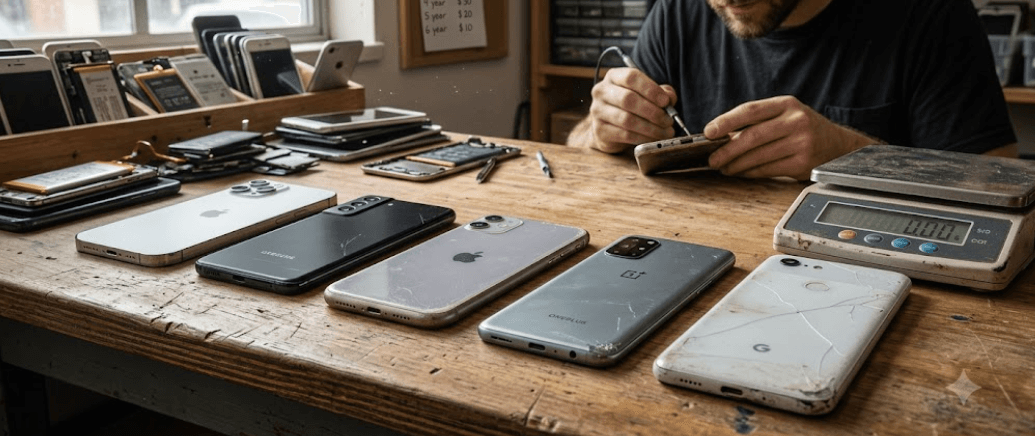
TL;DR Your old phone does not lose a fixed percentage of its value every year, and there is no universal depreciation rate that applies to every smartphone. In general, the biggest drop happens during the first year, while premium iPhones and some flagship Android models tend to retain value better than budget and mid-range devices. Current resale data suggests a typical iPhone can retain around 60% to 70% of its value after roughly a year, while many Android phones retain closer to 40% to 50%, although individual models can perform very differently. Condition, battery health, storage, software support, market demand, and the arrival of newer models can all change the final resale price.
How Phone Depreciation Works In 2026
Phone depreciation starts much earlier than most buyers expect. The moment a new smartphone becomes a used device, it enters a different pricing market. A retailer can sell a sealed phone with a warranty at its current market price, while a used-phone buyer has to consider age, condition, battery health, remaining software support, and the availability of newer models. That is why a phone that cost ₹60,000 when new may not be worth anything close to ₹60,000 once you decide to sell it. The important point is that depreciation is not a simple accounting calculation. It is driven by what another buyer is willing to pay for that specific phone at that specific time.
The first 12 months are usually the most important period. Current resale research indicates that strong value-holding phones can retain around 60% to 70% of their value after one year, while average Android devices can fall closer to the 40% to 50% range. Cashify's 2026 analysis similarly puts typical first-year depreciation for iPhones at around 20% to 25%, while Samsung Galaxy models and other Android categories can experience substantially higher declines. These figures should be treated as broad market patterns rather than guaranteed resale prices because the actual value depends on the exact model and its condition.
The second year usually brings another meaningful reduction, but the rate can become less dramatic because the phone has already absorbed its initial depreciation. A two-year-old flagship can still have strong demand if it has good cameras, reliable performance, and several years of software support remaining. On the other hand, a budget phone can become difficult to resell once newer models offer better hardware at similar prices. This is why asking how much your phone loses each year does not have one correct answer. A better question is how much value your particular model is likely to retain compared with competing used phones.
Typical Depreciation Pattern
| Phone Category | Approximate Value After 1 Year | Approximate Value After 2 Years |
|---|---|---|
| Strong-value iPhone | 60% to 70% | Around 40% to 60% |
| Samsung Galaxy flagship | 40% to 60% | Around 30% to 55% |
| Other flagship Android | 35% to 55% | Around 20% to 40% |
| Budget Android | Often below 50% | Can fall substantially further |
These are broad market ranges, not fixed depreciation rules. Current resale sources show considerable variation between individual models, storage versions, conditions, and markets.
Which Phones Lose Value The Fastest?
Budget and mid-range smartphones generally face stronger depreciation pressure because manufacturers launch newer models frequently and prices are highly competitive. If a ₹25,000 phone is replaced by a newer model offering a better processor, camera, display, and battery at a similar price, the older model has to become cheaper to remain attractive in the used market. This creates a difficult situation for owners because the phone may still work perfectly, but its market value falls simply because buyers have better alternatives. Current Indian resale-market guidance also shows that Xiaomi, Redmi, Poco, and Realme devices can experience particularly steep depreciation compared with stronger value-retaining premium phones.
Flagship Android phones generally perform better than budget Android devices, but they can still depreciate quickly. One reason is aggressive launch pricing and frequent discounts. A phone originally sold at ₹80,000 may later be available new for considerably less during sales, which immediately puts pressure on its used price. This is why the original launch price is not always the right number to use when calculating depreciation. If the same phone is being sold new at ₹60,000 after a major discount, a used unit priced at ₹65,000 has little appeal even if it originally cost ₹80,000.
Apple's iPhone range has historically been one of the stronger performers in resale markets. Current 2026 resale data continues to show iPhones retaining more value than many Android alternatives, although the difference varies by model. Factors include strong second-hand demand, long software support, brand recognition, and relatively predictable product cycles. This does not mean every iPhone is a guaranteed investment. A damaged iPhone, an unpopular storage configuration, or a model facing a major generation change can still lose value quickly.
Value Retention By Category
| Category | General Resale Outlook |
|---|---|
| iPhone | Strong |
| Samsung Galaxy S Series | Strong to moderate |
| Other Android Flagships | Moderate |
| Mid-Range Android | Moderate to weak |
| Budget Android | Weak |
What Determines Your Phone's Resale Value?
The age of your phone is only one part of the resale equation. Condition can make a major difference because buyers and refurbishers want devices that work properly without expensive repairs. A clean display, functional cameras, working speakers, healthy battery, and original components can all support a better offer. Cashify's current valuation process specifically considers the phone's model and condition, while its resale guidance highlights physical appearance, screen quality, battery health, original parts, and performance as important factors.
Storage capacity can also influence resale value because buyers often prefer higher-capacity variants, particularly for premium phones. A 256GB or 512GB model can be more attractive to someone who stores photos, videos, games, and offline media locally. However, additional storage does not automatically mean you will recover the entire amount you originally paid for that upgrade. The used market determines what buyers are willing to pay, so the premium for storage usually becomes smaller as the phone gets older.
Software support is another increasingly important factor in 2026. A phone with several years of security and operating-system updates remaining is easier to recommend as a used device than one approaching the end of its support cycle. Market demand also matters. If a particular model has a strong reputation for cameras, battery life, reliability, or gaming performance, buyers may continue searching for it even after newer phones launch. This creates a useful reminder for sellers: resale value is based on the phone's future usefulness, not simply how old it is.
Factors That Can Change Resale Value
| Factor | Effect On Resale |
|---|---|
| Physical condition | Major |
| Battery health | Significant |
| Brand and model demand | Major |
| Storage capacity | Moderate |
| Software support | Significant |
| New model launches | Significant |
| Original accessories | Can help |
| Repair history | Can reduce value |
When Should You Sell Your Old Phone?
The best time to sell is usually before the phone becomes several generations old, but the exact timing depends on its model and market demand. If you already know that you want to upgrade, waiting indefinitely rarely helps the resale value. Every additional year introduces more battery wear, more physical wear, and a greater chance that newer models will make the phone less attractive. Selling while the phone is still in good condition can therefore make more financial sense than keeping it until its resale value has already fallen sharply.
Product launches can also affect timing. When a new generation arrives, older phones often become less valuable because buyers compare them with the latest hardware. This effect can be particularly noticeable around predictable launch cycles. For example, BankMyCell's current iPhone analysis says trade-in values can fall sharply around new iPhone announcements, while Indian resale guidance recommends paying attention to major launch periods rather than treating every month as identical.
However, you should not sell purely because a new model has launched. If your current phone still meets your needs and selling it would force you to spend a large amount on an upgrade, keeping it can still be the financially smarter choice. Depreciation matters most when you are already planning to replace the phone. In that situation, checking its current resale value before the next major launch can help you avoid leaving unnecessary money on the table.
A Practical Selling Timeline
| Ownership Period | What Usually Happens |
|---|---|
| 0 to 12 months | Largest depreciation period |
| 12 to 24 months | Value continues falling, but demand can remain strong for popular models |
| 24 to 36 months | Software support and battery condition become more important |
| 36+ months | Resale value can become relatively low, especially for budget phones |
How To Get More Value From Your Old Phone?
The easiest way to protect resale value is to take care of the phone before you ever decide to sell it. A protective case and screen protector can reduce visible damage, while avoiding unnecessary repairs from third-party components can help preserve buyer confidence. Keeping the original charger, box, and accessories can also make the device easier to present to a buyer, although these items do not guarantee a higher price. Cashify's assured resale terms, for example, specifically state that missing or tampered accessories and major modifications can affect the final value.
Before selling, compare more than one valuation. A manufacturer's trade-in program may provide credit toward another device rather than cash. Apple's India Trade In terms, for example, state that eligible devices can receive credit toward an Apple product, while the final valuation is subject to inspection of the device's condition, year, and configuration. Independent buyback platforms may instead provide direct payment, so the highest headline number is not always directly comparable across programs.
You should also back up your data and properly remove your accounts before handing the phone over. This is especially important for devices protected by services such as Apple's Activation Lock or Android's account protection. A clean, functioning, unlocked device is easier to evaluate and resell. Most importantly, be honest about the condition when requesting a quote. Buyback companies can inspect the phone at pickup, and the final value can change if its actual condition differs from the information provided.
iPhone Vs Android Resale Value
The resale gap between iPhone and Android phones is real, but it should not be presented as an absolute rule. Current resale-market tracking shows iPhones generally retain more value than the average Android phone, particularly during the first few years. Swappa's 2026 data puts many iPhones around 60% to 70% value retention after roughly a year, while average Android phones are closer to 40% to 50%. Older BankMyCell tracking also found a substantial difference in depreciation between iOS and Android flagship devices, although those historical figures should not be treated as a direct prediction for every phone sold in 2026.
Samsung's premium Galaxy S range is an important exception to the idea that every Android phone depreciates quickly. Strong flagship hardware, brand recognition, long-term software support, and an established used market can help premium Galaxy models retain more value than cheaper Android phones. Recent resale tracking also suggests Samsung's flagship range has narrowed the gap with Apple compared with earlier years.
The bigger lesson is to compare phones within the same price and performance category. Comparing a ₹20,000 budget Android with a ₹90,000 iPhone does not tell you much about the quality of either product's depreciation. If resale value matters to you, focus on models with strong demand, reliable software support, good hardware, and a healthy secondary market. That gives you a better chance of recovering a meaningful portion of your original spending.
Broad Resale Comparison
| Phone Type | Resale Potential |
|---|---|
| Premium iPhone | Very strong |
| Premium Samsung Galaxy | Strong |
| Other Android flagship | Moderate |
| Mid-range Android | Moderate to weak |
| Budget Android | Weak |
Frequently Asked Questions
Q. How much value does a phone lose in one year?
There is no fixed annual percentage. Strong-value iPhones may lose around 20% to 30% in the first year, while many Android phones can lose considerably more. The exact figure depends on model, condition, demand, and market timing.
Q. Which phone brand has the best resale value?
Apple generally has the strongest resale performance, although premium Samsung Galaxy models can also retain substantial value. Individual models can perform differently, so brand alone should not determine your expectation.
Q. Does phone condition affect resale value?
Yes. Screen condition, physical damage, battery health, functionality, and original components can all affect the price offered by a buyer or buyback company.
Q. Does battery health reduce an old phone's value?
Yes. Battery condition is one of the factors considered when evaluating used phones because a weak battery can require replacement and reduce the device's usefulness.
Q. Does storage capacity affect resale value?
Yes. Higher storage can make a phone more attractive in the used market, particularly for premium devices, although you should not expect to recover the entire original storage upgrade cost.
Q. Is it better to sell a phone after one year or two years?
If maximizing resale value is your priority, selling while the phone is still relatively new can make sense. However, keeping it longer can provide more value from the device itself, so the right choice depends on your upgrade plans.
Q. Do new phone launches reduce the value of old phones?
They can. A new generation gives buyers another option and can reduce demand for older models. The effect is especially noticeable when the newer phone offers major improvements or when the older model receives large retail discounts.
Q. Do iPhones depreciate slower than Android phones?
On average, current resale data indicates that iPhones retain more value than many Android phones. However, premium Android models can perform better than the broader Android average.
Q. Can a phone lose value even if it is in perfect condition?
Yes. Market depreciation happens even when a phone is physically perfect. Newer models, lower new-phone prices, changing demand, and the age of the hardware can reduce its market value.
Q. Where should I check my phone's resale value?
You can compare manufacturer trade-in programs with established buyback platforms. Apple provides trade-in valuations for eligible smartphones, while Cashify calculates offers using device details and condition. Comparing multiple offers is the safest way to understand the current market value.
Final Recommendation
If you are wondering how much your old phone actually loses in value each year, the most important thing to remember is that there is no single depreciation percentage that applies to every smartphone. The first year generally brings the sharpest decline, but brand, model popularity, condition, battery health, storage, software support, discounts on new models, and launch cycles can completely change the outcome. Current 2026 resale data supports the broader pattern that iPhones tend to retain value better than the average Android phone, while premium Samsung models perform better than many lower-priced Android devices.
For buyers who care about future resale value, choosing a popular model with long software support and keeping it in good condition is the smarter approach than simply buying the cheapest phone today. For existing owners, the best strategy is to check the phone's current value before a major new launch, compare several trade-in or resale offers, and sell while the device is still desirable in the used market. That way, depreciation becomes something you can plan around rather than a surprise when you finally decide to upgrade.






