
Do You Need a Full-Frame Camera to Take Professional Photos?
A full-frame camera can offer better low-light performance, dynamic range, and shallow depth of field, but it is not essential for professional photography. Your lens, lighting, technique, and workflow often matter just as much.

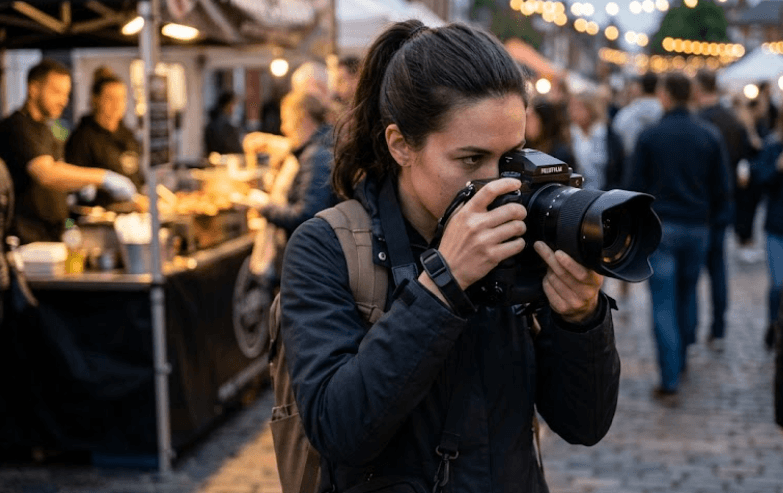
TL;DR You do not need a full-frame camera to take professional photos. Full-frame sensors can provide advantages in low-light shooting, dynamic range, wide-angle photography, and shallow depth of field, but those benefits do not automatically make a photo professional. APS-C and Micro Four Thirds cameras can also produce high-quality images for portraits, travel, wildlife, events, commercial work, and even professional assignments when paired with the right lens and used effectively. Full-frame becomes more useful when you regularly work in difficult lighting, need very shallow depth of field, require a wider field of view, or want the flexibility of a larger sensor for demanding post-processing.
What Does Full-Frame Mean in Photography?
A full-frame camera uses a sensor measuring approximately 36 x 24mm, which is the digital equivalent of the traditional 35mm film frame. Because the sensor is physically larger than APS-C and Micro Four Thirds sensors, it can capture a larger area of the image projected by a compatible lens. This gives full-frame cameras a wider field of view at the same focal length and can make it easier to create a shallow depth of field. The sensor itself, however, is only one part of the imaging system. The lens, aperture, exposure settings, autofocus, image processing, and photographer's technique all contribute to the final photograph.
The difference becomes easier to understand when you compare focal lengths. A 50mm lens on a full-frame camera provides the standard field of view associated with that focal length, while a 50mm lens on an APS-C camera produces a tighter field of view because of the crop factor. Adobe notes that common APS-C systems use crop factors around 1.5x or 1.6x, depending on the manufacturer. That means a 50mm lens can give a field of view similar to approximately 75mm or 80mm on those systems. This is not a magnification of the lens itself, but rather a result of the smaller sensor capturing a smaller portion of the lens's image circle.
This difference can be useful rather than problematic. A wildlife photographer may actually appreciate the tighter framing provided by a crop-sensor camera, while a landscape photographer may prefer the wider view available from a full-frame body. The important point is that sensor size changes how you use the same lens and how much of the scene you can capture. It does not create a simple professional-versus-amateur divide. Both full-frame and smaller-sensor cameras can be capable photographic tools when their strengths match the assignment.
Full-Frame vs Smaller Sensors
| Feature | Full Frame | APS-C | Micro Four Thirds |
|---|---|---|---|
| Sensor size | Approx. 36 x 24mm | Smaller than full frame | Smaller than APS-C |
| Field of view | No crop factor | Tighter field of view | Tighter field of view |
| Low-light potential | Generally stronger | Generally lower at equivalent conditions | Generally lower at equivalent conditions |
| Shallow depth of field | Easier to achieve | Possible, but typically requires different framing/lens choices | Possible, but typically requires different framing/lens choices |
| Camera and lens size | Often larger | Often smaller | Often smaller |
| Professional use | Yes | Yes | Yes |
Does Full Frame Produce Better Professional Photos?
Full-frame cameras can provide measurable advantages, particularly when the shooting conditions are demanding. A larger sensor can collect more light for a given framing and exposure setup, and modern full-frame cameras can offer strong high-ISO performance and dynamic range. Adobe identifies dynamic range and low-light performance among the major advantages associated with full-frame systems. This can be particularly useful when photographing weddings in dim venues, indoor events, night scenes, or subjects where you need to preserve detail across bright highlights and dark shadows.
Depth of field is another area where full frame can be useful. A larger sensor makes it easier to achieve a shallow depth of field for a particular field of view and aperture combination, which can help separate a portrait subject from the background. However, it is important not to oversimplify this as "full frame creates better bokeh." Aperture, focal length, subject distance, and background distance all affect depth of field. Adobe and Sony both explain that these factors work together, while sensor size changes the depth-of-field characteristics when you compare equivalent framing.
Full frame can also be valuable when you need a wide field of view. Because there is no crop factor, a wide-angle lens delivers its intended field of view on a full-frame body. This can be particularly useful for landscape, architecture, interiors, and real-estate photography. Nikon, for example, describes its full-frame Z5 as providing a broad field of view and shallow depth of field, while Adobe specifically notes the benefits of full frame for landscape, real estate, and architecture work.
Where Full Frame Has an Advantage
| Shooting Situation | Full-Frame Advantage |
|---|---|
| Low-light photography | More light-gathering potential and strong high-ISO performance |
| Portraits | Easier to achieve shallow depth of field |
| Landscapes | Wider field of view with compatible wide-angle lenses |
| Architecture | Wider framing can be useful in confined spaces |
| Weddings | Useful in dim venues and demanding lighting |
| Large prints | High-resolution full-frame bodies can provide substantial detail |
Can APS-C Cameras Take Professional Photos?
Yes. The idea that professional photography requires full frame is outdated and too broad. Professional photographers work across different sensor formats depending on the assignment, equipment requirements, and personal preferences. An APS-C camera can produce high-quality files suitable for professional delivery when the camera, lens, lighting, and technique are appropriate. The smaller sensor does not automatically prevent a photographer from producing commercially usable images.
APS-C cameras can also offer practical advantages. Their smaller sensors often allow manufacturers to produce more compact camera bodies and lenses, and the crop factor can be useful for wildlife, sports, and other situations where a tighter field of view is desirable. A photographer using a 200mm lens on a crop-sensor body, for example, gets a tighter angle of view than they would on full frame. This can make it easier to frame a distant subject without immediately moving to an even longer focal length.
The trade-off becomes more noticeable when you specifically need full-frame characteristics. If your work regularly involves very low light, extremely shallow depth of field, or wide-angle compositions, a full-frame system may give you more flexibility. But if you photograph well-lit portraits, products, travel, wildlife, social media content, or outdoor events, an APS-C camera can be more than capable. The quality of the lens and the photographer's ability to control light often have a much more visible impact than simply moving to a larger sensor.
When APS-C Makes Sense
An APS-C camera can be a practical choice for photographers who value portability, reach, and lower system costs. Wildlife and travel photographers may particularly appreciate the combination of a smaller body and tighter field of view. For someone building a first interchangeable-lens system, investing in a good lens and learning exposure, composition, autofocus, and lighting can also provide more practical value than immediately spending the entire budget on a full-frame body.
Is a Better Lens More Important Than Full Frame?
The camera body is only one part of a photographic system, and the lens can have a major effect on the images you produce. A fast prime lens with a wide maximum aperture can provide strong subject separation and low-light capability even on a smaller sensor. Similarly, a high-quality zoom can give you useful focal-length flexibility for events, travel, or commercial work. This is why comparing only the camera body can produce a misleading picture of what a system can actually deliver.
A full-frame body paired with an inexpensive or poorly matched lens is not automatically going to outperform a well-used APS-C camera with a high-quality lens in every situation. If you are photographing portraits, for example, lens choice, focal length, aperture, lighting, subject positioning, and background distance all influence the final look. A photographer who understands those variables can produce polished results without relying on the sensor size to create the effect.
Budget is another reason to consider the complete system rather than the body alone. Full-frame lenses can be larger and more expensive, particularly when you want fast apertures or professional-grade optical performance. Moving to full frame can therefore increase the total cost of ownership rather than simply increasing the price of the camera body. If your budget is limited, allocating money across the body, lens, lighting, storage, and other essential equipment can create a more useful setup.
What Actually Affects Photo Quality?
| Factor | Why It Matters |
|---|---|
| Lens | Controls focal length, aperture, perspective, and optical performance |
| Lighting | Determines exposure, contrast, shadows, and subject separation |
| Aperture | Controls light and contributes directly to depth of field |
| Shutter speed | Controls motion rendering and exposure |
| ISO | Affects exposure and image noise |
| Autofocus | Helps keep moving or critical subjects sharp |
| Sensor | Influences light collection, dynamic range, and depth-of-field characteristics |
| Technique | Determines composition, exposure, focus, and timing |
When Do You Actually Need a Full-Frame Camera?
A full-frame camera becomes easier to justify when your photography regularly pushes the limits of smaller sensors. Wedding and event photographers working in dim interiors may benefit from the low-light capabilities of modern full-frame systems. Portrait photographers who frequently want strong background separation can also benefit from the depth-of-field characteristics of the larger format. Landscape, architecture, and interior photographers may value the wider field of view available from full-frame lenses.
Commercial photographers may also choose full frame because of the combination of resolution, dynamic range, lens availability, and professional system options. However, the exact requirements vary considerably between assignments. A studio photographer working with controlled lighting may not need the same low-light performance as a wedding photographer. Similarly, a wildlife photographer may prioritize reach and autofocus performance over the wider field of view associated with full frame.
This is why "professional photographer" should not be treated as a specification. Professional describes the work and the standard expected from it, not a particular sensor size. A full-frame camera can be an excellent professional tool, but an APS-C or Micro Four Thirds system can also be appropriate for professional work. The right choice depends on the type of photography, working conditions, required output, available budget, and equipment you are comfortable carrying.
Full Frame Is Particularly Useful For
Full frame is worth considering if your work regularly includes low-light events, environmental portraits, wide landscapes, architecture, commercial photography, or situations where you need substantial post-processing flexibility. It can also make sense if you already own compatible full-frame lenses or intend to build a system around that format for several years.
When Should You Stick With APS-C or Micro Four Thirds?
Smaller sensors can be a better fit when portability and reach are more important than maximum low-light performance or the shallowest possible depth of field. Travel photographers may prefer a lighter kit that can be carried throughout a full day, while wildlife photographers may appreciate the tighter field of view. These systems can also make it easier to build a complete kit without spending as much on every lens.
Smaller-sensor cameras can also be excellent for photographers who are still developing their skills. Learning exposure, composition, lighting, focal length, autofocus, and post-processing will generally have a greater impact on your photographs than simply switching formats. If your current camera is producing soft, poorly exposed, or poorly composed images, moving to full frame will not automatically solve those problems.
The same principle applies to creators who mainly photograph products, food, travel, portraits, social media content, or outdoor scenes in reasonable lighting. If the camera meets your resolution, autofocus, lens, and workflow requirements, there is no professional requirement to upgrade simply because the sensor is smaller. The money saved can instead go toward better lenses, lighting equipment, memory cards, storage, or editing software.
Full Frame vs APS-C Buying Decision
| If You Prioritize | Consider |
|---|---|
| Low-light performance | Full frame |
| Very shallow depth of field | Full frame |
| Wide-angle photography | Full frame |
| Portability | APS-C or Micro Four Thirds |
| Wildlife reach | APS-C can be advantageous |
| Lower system cost | APS-C or Micro Four Thirds |
| Learning photography | Either format |
| Professional photography | Either format, depending on assignment |
Common Myths About Full-Frame Cameras
One common myth is that a full-frame camera automatically produces professional-looking photographs. It does not. A larger sensor can provide useful technical advantages, but it cannot compensate for poor lighting, weak composition, incorrect focus, or an unsuitable lens. Professional-looking images come from the combination of equipment and photographic decisions. The sensor can give you more flexibility, but the photographer still has to use that flexibility effectively.
Another misconception is that full frame is always better in every situation. Sensor size involves trade-offs. Full-frame systems can be physically larger, and equivalent lenses may also be larger and more expensive. Smaller systems can provide portability and reach that are useful for particular assignments. The best format therefore depends on what you photograph rather than where the format sits in a perceived hierarchy.
There is also a common misunderstanding around depth of field. Full frame can make shallow depth of field easier to achieve under equivalent framing, but aperture, focal length, and shooting distance remain important. A wide aperture lens and careful subject positioning can create substantial background blur on smaller formats as well. Depth of field is not controlled by sensor size alone.
Myth vs Fact
| Myth | Fact |
|---|---|
| Full frame is required for professional photography | Professional work can be done with multiple sensor formats |
| Full frame automatically creates better photos | Technique, lenses, lighting, and settings remain critical |
| Bigger sensor always means better | Different formats offer different strengths and trade-offs |
| APS-C is only for beginners | APS-C cameras can be used for demanding professional work |
| Full frame guarantees better bokeh | Depth of field depends on several factors, including aperture and focal length |
| Full frame is always the best choice | The right format depends on the assignment and photographer |
How to Choose the Right Camera for Professional Photography
Start with the type of photography you actually plan to do. If you photograph weddings, events, portraits, landscapes, wildlife, products, or real estate, your requirements will be different. A wedding photographer may value low-light performance and autofocus, while a wildlife photographer may prioritize reach and tracking. A landscape photographer may care more about dynamic range and wide-angle lens options. The camera format should follow those requirements rather than the other way around.
Next, consider the entire system. Look at the lenses available for the mount, their prices and sizes, autofocus performance, battery life, storage options, ergonomics, and the camera's ability to handle the file sizes and workflow you need. If you shoot RAW files, for example, your computer and storage requirements also become part of the decision. A camera that produces excellent images but is uncomfortable to carry or expensive to build around may not be the best fit for your actual working routine.
Finally, consider whether you are buying equipment to solve a real limitation. If your current camera struggles with noise at the ISO levels you regularly use, cannot provide the field of view you need, or does not give you the depth-of-field control you want, full-frame may address those limitations. If you simply believe professional photographers must own a full-frame camera, that is not a technical reason to upgrade. Choose the sensor format that gives you the capabilities your photography actually requires.
Frequently Asked Questions
Q. Do I need a full-frame camera to become a professional photographer?
No. Professional photography does not require a specific sensor size. APS-C, Micro Four Thirds, and full-frame cameras can all be used for professional work. The appropriate choice depends on the assignment, lens system, lighting conditions, portability requirements, and budget.
Q. Does full-frame produce better image quality than APS-C?
Full frame can provide advantages in areas such as low-light performance, dynamic range, and shallow depth of field, but image quality depends on the entire system. Lens quality, lighting, exposure, focus, processing, and technique also have a major influence on the final image.
Q. Is full frame better for portrait photography?
Full frame can make it easier to achieve a shallow depth of field and strong background separation at equivalent framing and aperture. However, APS-C cameras can also produce excellent portraits, especially when paired with an appropriate lens and used with careful subject and background positioning.
Q. Is full frame better for low-light photography?
A modern full-frame camera can offer an advantage in low-light situations because the larger sensor has greater light-gathering potential for a given framing and exposure setup. The exact performance still depends on the camera generation, lens, aperture, shutter speed, and ISO settings.
Q. Is APS-C good enough for professional photography?
Yes. APS-C cameras can be suitable for professional portraits, wildlife, travel, commercial, event, and other photography. Their smaller size and crop factor can even be advantageous for particular types of work. The important consideration is whether the camera and lens system meet the technical requirements of the assignment.
Q. Does full frame give you better bokeh?
Full frame can make shallow depth of field easier to achieve when comparing equivalent framing and exposure conditions, but bokeh is influenced by the lens design, aperture, focal length, subject distance, and background distance as well. Sensor size is only one part of the equation.
Q. Is a full-frame camera worth the extra money?
It can be worth the additional cost if you regularly need its advantages, such as strong low-light performance, wider fields of view, or greater control over shallow depth of field. If your current camera already meets your photography needs, upgrading solely for the full-frame label may not provide a meaningful benefit.
Q. Is full frame better for landscape photography?
Full frame can be useful for landscape photography because it provides a wider field of view with a given lens and can offer strong dynamic-range performance. However, APS-C and Micro Four Thirds systems can also produce excellent landscape photographs, particularly when portability and lens reach are important.
Q. Can a crop-sensor camera take professional-quality photos?
Yes. A crop-sensor camera can produce professional-quality photographs when the photographer uses suitable lenses, lighting, exposure, focus, and composition. Sensor size does not determine whether an image qualifies as professional.
Q. Should beginners buy a full-frame camera?
Beginners can buy full frame, but they do not necessarily need it. If the budget allows and the photographer understands why they need the larger format, it can be a useful long-term system. For many beginners, investing in a capable camera, good lens, and photography skills can be more useful than choosing a sensor format based only on its reputation.
Final Recommendation
You do not need a full-frame camera to take professional photos. Full frame is best understood as a tool that provides specific advantages rather than a requirement for professional photography. Its larger sensor can be particularly useful when you regularly shoot in low light, need a very shallow depth of field, want a wide field of view, or require substantial flexibility from your RAW files. Those advantages can make a noticeable difference for wedding, event, portrait, landscape, architecture, and commercial photographers.
For photographers whose priorities are portability, wildlife reach, travel, affordability, or a smaller overall kit, APS-C or Micro Four Thirds can make more sense. A smaller sensor does not prevent you from producing professional work, and in some situations its crop factor and compact lenses can be practical advantages. The better investment is the system that matches your subjects, shooting conditions, lenses, and workflow.
If you are upgrading from an existing camera, look for a specific limitation before spending on full frame. If you genuinely need better low-light performance, shallower depth of field, or a wider field of view, full frame can be a meaningful upgrade. If your current camera already delivers the resolution, autofocus, lens options, and image quality your work requires, there may be little reason to upgrade simply because professional cameras are often associated with full-frame sensors.






