Dell Precision Upgradability Explained: What Can You Add Later?
Dell Precision laptops vary widely in upgradability. Learn which models let you upgrade RAM and storage later, what soldered memory means, and how to choose the right configuration.

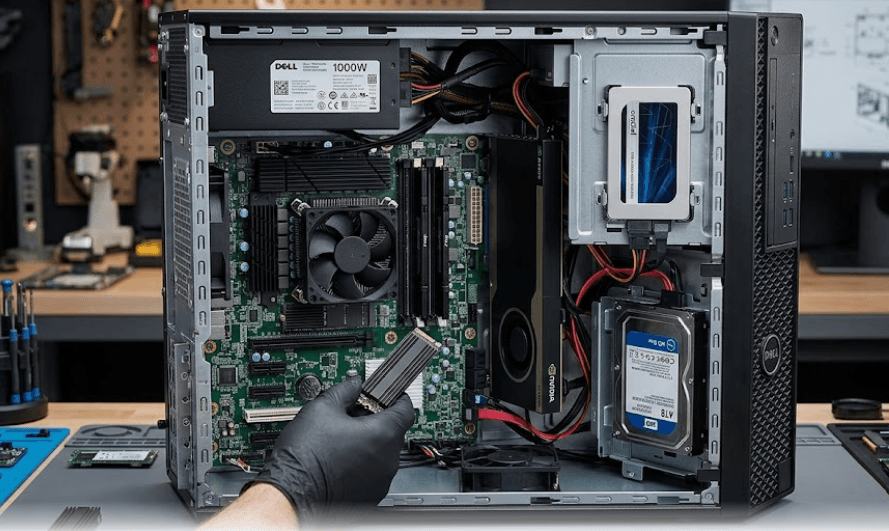
TL;DR Dell Precision laptops are not equally upgradeable, so checking the exact model before buying is important. Workstations such as the Precision 3590 and 3591 use removable DDR5 SODIMM memory, while the Precision 7680 and 7780 offer configurable memory through SODIMM or CAMM designs. In contrast, the Precision 5690 uses onboard LPDDR5x memory that Dell says is not replaceable or upgradeable. Storage is generally more flexible, with models such as the Precision 3591 and 5690 supporting replaceable M.2 SSDs. If you expect your workload to grow, choose a Precision configuration with socketed RAM and accessible storage rather than assuming every Precision workstation can be upgraded later.
What Can You Upgrade on a Dell Precision?
The answer depends heavily on the specific Precision model and configuration. Dell sells Precision workstations in several sizes and performance classes, and their internal designs are not identical. A Precision 3591, for example, has two SODIMM slots for DDR5 memory, while the Precision 5690 has LPDDR5x memory integrated directly onto the system board. That means the 3591 can accept a later RAM upgrade, but the 5690 cannot have its memory replaced with a larger module after purchase.
Storage is generally more upgrade-friendly than RAM. Dell's Precision 3591 documentation lists removable M.2 2230 and M.2 2280 SSD configurations, and the 5690 also uses M.2 SSD storage. Dell even provides a documented SSD replacement procedure for the 5690, confirming that the storage drive is serviceable even though its RAM is not. This distinction is important because a laptop can have soldered memory and still offer meaningful storage expansion or replacement.
Other components can also be serviceable, but their upgrade status depends on the exact model. Wireless cards, batteries, and other internal components may be replaceable rather than user-upgradeable in the traditional sense. Dell's Precision 3591 documentation, for example, identifies the wireless card, WWAN card, memory module, and SSD as components with removal and installation procedures. That gives buyers more flexibility over the life of the workstation, particularly when a battery or storage drive eventually needs replacement.
Dell Precision Upgradeability At A Glance
| Component | Can It Be Upgraded? | Example |
|---|---|---|
| RAM | Model dependent | 3591: Yes; 5690: No |
| SSD | Generally serviceable | 3591 and 5690 support replaceable M.2 SSDs |
| Wi-Fi | Model dependent | Replaceable on supported configurations |
| WWAN | Model dependent | Available as a serviceable option on some models |
| Battery | Replaceable on supported models | Replacement rather than capacity expansion |
| CPU | Generally not a practical user upgrade | Usually tied to the system board |
| GPU | Model dependent, usually not a simple upgrade | Some workstation designs use separate GPU hardware |
Which Dell Precision Models Have Upgradeable RAM?
If RAM upgradability is important to you, the Precision 3590 and 3591 are useful examples of the traditional workstation approach. Dell specifies two SODIMM slots on both models, with the Precision 3591 supporting up to 64GB using two 32GB DDR5 modules. This means someone buying a lower-memory configuration can potentially replace or add memory later, provided the replacement configuration is compatible with Dell's specifications.
The larger Precision 7680 and 7780 take a more flexible approach. Dell documents both CAMM and SODIMM memory options for these workstations. The Precision 7680 can support up to 128GB using a CAMM module or up to 64GB with SODIMM configurations, while the Precision 7780 similarly lists configurations up to 128GB CAMM or 64GB SODIMM. These machines therefore provide considerably more memory flexibility than a thin workstation with soldered LPDDR memory.
The important warning is that you should never buy a Precision workstation based only on its family name. The Precision 5690 is a good example of why. Dell states that its memory is integrated on the system board and is not replaceable or upgradeable, with configurations ranging from 16GB to 64GB of LPDDR5x memory. If you choose this type of design, the RAM capacity you select at purchase effectively becomes the RAM capacity you keep for the life of the system.
RAM Upgradeability By Model
| Precision Model | Memory Type | Upgradeable RAM | Maximum Listed Configuration |
|---|---|---|---|
| Precision 3590 | DDR5 SODIMM | Yes | 64GB |
| Precision 3591 | DDR5 SODIMM | Yes | 64GB |
| Precision 5690 | LPDDR5x onboard | No | 64GB |
| Precision 7680 | CAMM or SODIMM | Yes | Up to 128GB CAMM |
| Precision 7780 | CAMM or SODIMM | Yes | Up to 128GB CAMM |
The figures above come directly from Dell's model-specific documentation and illustrate why checking the exact Precision model is more useful than simply searching for an “upgradeable Dell Precision.”
Can You Upgrade the SSD Later?
SSD upgrades are one of the more practical ways to extend the useful life of a Dell Precision workstation. The Precision 3591 supports M.2 2230 and M.2 2280 NVMe SSD configurations, and Dell's documentation provides separate removal and installation procedures for its SSD slots. Dell lists capacities up to 2TB for the supported M.2 configurations on its documentation, although the exact drive configuration depends on the system ordered.
The Precision 5690 is another example of a laptop where soldered RAM does not mean everything is fixed. Dell lists M.2 2230 and M.2 2280 PCIe NVMe SSD options, including capacities up to 4TB for the M.2 2280 drive. Dell also published a replacement procedure for the 2230 SSD in September 2026, showing that the storage component can be physically removed and replaced.
Larger Precision workstations can provide even more storage flexibility. Dell's Precision 7780 documentation lists multiple M.2 storage slots and configurations involving multiple PCIe NVMe SSDs. That makes machines in this class particularly relevant for users working with large CAD assemblies, engineering datasets, virtual machines, video projects, or other files that can quickly consume a single drive.
What To Check Before Buying
| Upgrade | What To Check |
|---|---|
| RAM | SODIMM, CAMM, or onboard memory |
| SSD | M.2 size, number of slots, PCIe generation |
| Wireless | Whether the wireless module is replaceable |
| WWAN | Whether the configuration includes a supported WWAN option |
| Battery | Battery size and whether a replacement is available |
| Warranty | Dell's service and warranty requirements before opening the system |
Why Upgradability Matters for Professional Workloads
A workstation is often kept for several years, which makes upgradeability more useful than it might be on a short-term consumer laptop. A student may start with 16GB RAM for CAD coursework and later move into heavier engineering software. A designer might initially use a 512GB SSD and eventually need several terabytes for project files. Being able to replace a memory module or SSD can delay the need to replace the entire laptop.
RAM is particularly important because professional workloads can become more demanding as projects become larger. Running CAD software alongside browsers, communication tools, spreadsheets, rendering applications, or virtual machines can consume considerably more memory than ordinary office work. With a model such as the Precision 3591, the two SODIMM slots provide a path to increase memory later within Dell's supported limits.
Soldered memory changes that calculation. With the Precision 5690, Dell's documentation explicitly states that the LPDDR5x memory is integrated and cannot be replaced or upgraded. That does not make the workstation unusable for professional work, but it means buyers need to think further ahead when selecting the original configuration. Choosing sufficient RAM at purchase becomes more important when there is no future memory upgrade path.
When Upgradability Has The Most Value
| User Type | Why Upgradability Matters |
|---|---|
| Engineering Student | Workloads can become heavier over several academic years |
| CAD Professional | Large assemblies can increase memory and storage requirements |
| Content Creator | Video and project files can quickly consume SSD space |
| Developer | Virtual machines and development environments can require more RAM |
| Business User | Longer ownership makes repair and replacement options more valuable |
Soldered RAM Versus Upgradeable RAM
Soldered RAM is not automatically slower or worse. The Precision 5690, for example, uses dual-channel LPDDR5x memory at 7467 MT/s, while the upgradeable Precision 3591 uses DDR5 SODIMM memory at 5600 MT/s. These are different memory designs intended for different system architectures. The practical disadvantage of soldered memory is flexibility, not necessarily everyday performance.
Upgradeable RAM gives you more control over the laptop's lifespan. If you buy a Precision with two memory slots, you can potentially replace the existing modules with higher-capacity modules later, subject to Dell's supported configurations. That is particularly useful when the machine is expected to remain in service for four or five years and the workload is likely to increase.
Soldered memory can make sense when portability, power efficiency, and compact system design are important. The problem comes when buyers assume that a premium workstation automatically offers traditional RAM slots. The Precision 5690 demonstrates that even a professional workstation can use onboard memory, so checking Dell's service manual before purchasing is the safest way to avoid an expensive limitation.
Soldered And Upgradeable Memory Compared
| Factor | Soldered RAM | Upgradeable RAM |
|---|---|---|
| Future RAM upgrade | No | Yes, if supported |
| Repair flexibility | Lower | Higher |
| Compact design | Often easier to implement | Requires physical memory slots |
| Long-term capacity planning | Important at purchase | More flexible |
| Example | Precision 5690 | Precision 3591 |
How To Check Your Precision Before Buying
The safest approach is to identify the exact Precision model and then open Dell's official Owner's Manual or Setup and Specifications document. Do not rely on a retailer's headline saying “upgradeable” because configurations can differ within the same product family. Dell's manuals identify the memory type, number of slots, maximum supported capacity, storage interfaces, and component replacement procedures.
You should also check the exact configuration rather than only the maximum advertised specification. A Precision 7680, for example, can be configured around CAMM or SODIMM memory, so the internal design matters when planning a future upgrade. Dell also notes that the SODIMM interface board is optional on that model, which is another reason configuration-level checking matters.
For storage, look for the number and type of M.2 slots rather than simply asking whether the SSD is “upgradeable.” The Precision 7780, for example, supports multiple M.2 storage configurations, while the Precision 3591 provides two SSD positions in its documented design. This information gives you a much clearer picture of whether you can replace a drive, add another drive, or simply move to a larger SSD later.
Frequently Asked Questions
Q. Can you upgrade RAM on every Dell Precision laptop?
No. RAM upgradeability depends on the exact Precision model. The Precision 3591 has two DDR5 SODIMM slots, while the Precision 5690 uses onboard LPDDR5x memory that Dell says is not replaceable or upgradeable.
Q. Is the Dell Precision 5690 RAM upgradeable?
No. Dell specifies that the Precision 5690's LPDDR5x memory is integrated on the system board and cannot be replaced or upgraded. It is available in 16GB, 32GB, and 64GB configurations.
Q. Can I upgrade the SSD in a Dell Precision 5690?
Yes. Dell documents M.2 2230 and M.2 2280 NVMe SSD options for the Precision 5690 and provides procedures for replacing the SSD.
Q. How much RAM can the Precision 3591 support?
Dell lists two DDR5 SODIMM slots and a maximum supported memory configuration of 64GB using two 32GB modules.
Q. Can the Dell Precision 7680 RAM be upgraded?
Yes. Dell documents both CAMM and SODIMM memory configurations for the Precision 7680. The listed maximum is 128GB with CAMM or 64GB with SODIMM configurations.
Q. Can the Dell Precision 7780 RAM be upgraded?
Yes. Dell documents replaceable CAMM and SODIMM memory configurations for the Precision 7780, with support listed up to 128GB CAMM.
Q. Is SSD storage easier to upgrade than RAM?
Generally, yes, on the Precision models discussed here. Dell documents removable M.2 SSDs on the Precision 3591, 5690, and 7780, although the number of slots and supported configurations vary by model.
Q. Does soldered RAM mean a Dell Precision laptop is not worth buying?
Not necessarily. Soldered memory mainly means you need to select the appropriate RAM capacity when buying the laptop because you cannot replace the onboard memory later. The Precision 5690, for example, pairs onboard LPDDR5x memory with replaceable M.2 storage.
Q. Should I choose 16GB or 32GB RAM for a Dell Precision workstation?
The right capacity depends on the workload and expected ownership period. If the model has upgradeable RAM, starting with a supported configuration can leave room for a later upgrade. If the memory is soldered, selecting enough RAM at purchase is particularly important because the capacity cannot be increased afterward.
Q. What should I check before buying an upgradeable Dell Precision?
Check the exact model's Dell Owner's Manual for memory type, number of slots, maximum supported RAM, SSD slots, and replacement procedures. Do not assume that two Precision models have the same internal design simply because they belong to the same workstation family.
Final Recommendation
Dell Precision laptops can be excellent long-term workstations, but their upgradeability varies too much to make a blanket statement about the entire range. If future RAM upgrades are important, models such as the Precision 3590 and 3591 are easier to plan around because Dell provides two DDR5 SODIMM slots. For users who need very high memory capacity, the Precision 7680 and 7780 offer even more flexibility through CAMM and SODIMM configurations.
The Precision 5690 requires a different buying strategy. Its LPDDR5x memory is soldered and cannot be upgraded, so the RAM configuration should be chosen according to your expected workload rather than your needs on day one. At the same time, its M.2 SSD remains serviceable, proving that a laptop can combine soldered RAM with upgradeable storage.
The most important takeaway is to check the exact Precision model before buying, not just the Precision name. If you expect your workload to grow, prioritize socketed RAM and accessible M.2 storage. If you value a thinner workstation and are comfortable choosing your final RAM capacity upfront, a soldered-memory model can still be a practical option. Dell's own service documentation should be your final reference because memory layouts, slot availability, and supported capacities can differ significantly between Precision generations and configurations.
Ready to upgrade your tech?
Browse our collection of quality refurbished products at unbeatable prices.