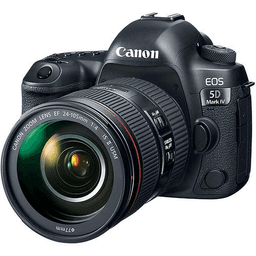
Canon 750D vs 800D: Which Rebel Series Camera Wins?
Canon 750D and 800D both offer 24.2MP APS-C photography, but the 800D adds faster shooting, a stronger autofocus system, newer processing, and better Live View performance.

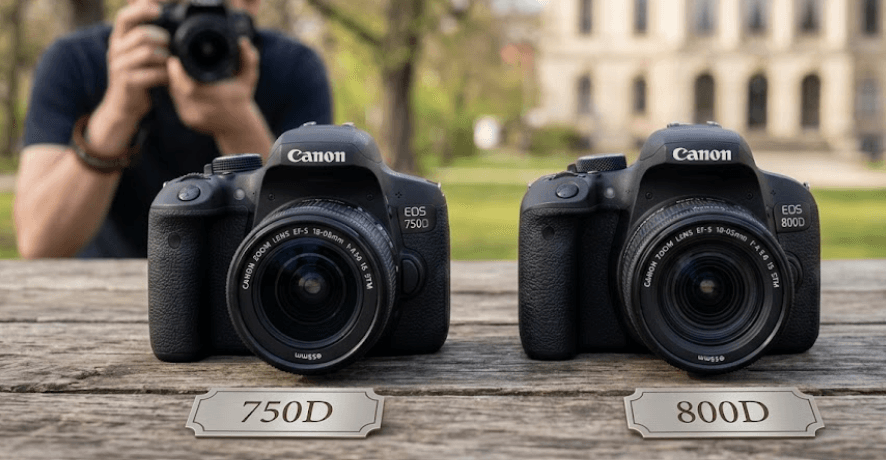
TL;DR The Canon EOS 750D and EOS 800D are both entry-level APS-C DSLRs built around 24.2MP sensors, articulating touchscreens, optical viewfinders, and Canon's EF/EF-S lens mount, but the EOS 800D is the more capable camera overall. Its DIGIC 7 processor, 45-point all-cross-type viewfinder autofocus system, 6fps continuous shooting, Dual Pixel CMOS AF in Live View, and Full HD 60p recording give it a noticeable advantage over the 750D's DIGIC 6 processor, 19-point autofocus, 5fps shooting, and Full HD 30p recording. The 750D still makes sense when found at a significantly lower used or refurbished price, especially for beginners primarily interested in still photography. However, if the price difference is reasonable, the EOS 800D is the better Rebel DSLR to buy because its improvements affect focusing, responsiveness, burst shooting, and video rather than just adding cosmetic features.
Canon 750D And 800D Overview
The Canon EOS 750D and EOS 800D belong to the company's Rebel series of entry-level DSLRs, known as the EOS Rebel T6i and T7i in the US market. The 750D arrived earlier, while the 800D followed as a newer generation with improvements to processing, autofocus, continuous shooting, and Live View operation. Both cameras use an APS-C CMOS sensor with approximately 24.2 megapixels, so the basic resolution is not a reason to choose one over the other. Both also use Canon's EF mount and support EF-S lenses, giving buyers access to a large range of Canon lenses as well as compatible third-party options.
Where the difference becomes more interesting is in everything surrounding that sensor. The 750D uses Canon's DIGIC 6 processor and offers up to 5 frames per second, while the 800D moves to DIGIC 7 and increases continuous shooting to approximately 6 frames per second. That one-frame-per-second difference may sound minor, but it becomes useful when photographing children, pets, sports, birds, or other subjects that move unpredictably. The 800D also has a much more advanced 45-point all-cross-type autofocus system for viewfinder shooting, compared with the 750D's 19-point system.
Both cameras are designed to be approachable for beginners without removing manual controls for photographers who want to learn. They have optical pentamirror viewfinders with approximately 95% coverage, 3-inch vari-angle touchscreens, built-in flashes, and support for JPEG and RAW capture. The 800D is also slightly lighter, weighing approximately 532g with its battery and card, compared with approximately 555g for the 750D. Neither is a particularly small camera by modern mirrorless standards, but both remain reasonably manageable for a DSLR when paired with a compact lens.
Key Specifications At A Glance
| Feature | Canon EOS 750D | Canon EOS 800D |
|---|---|---|
| Sensor | 24.2MP APS-C CMOS | 24.2MP APS-C CMOS |
| Processor | DIGIC 6 | DIGIC 7 |
| Viewfinder AF | 19-point AF, all cross-type | 45-point AF, all cross-type |
| Continuous Shooting | Approx. 5fps | Approx. 6fps |
| Maximum ISO | 12800, expandable to 25600 | 25600, expandable to 51200 |
| Live View AF | Hybrid CMOS AF III | Dual Pixel CMOS AF |
| Screen | 3-inch vari-angle touchscreen | 3-inch vari-angle touchscreen |
| Full HD Video | Up to 30p | Up to 60p |
| Battery | LP-E17 | LP-E17 |
| CIPA Viewfinder Battery Life | Approx. 440 shots | Approx. 600 shots |
| Weight With Battery/Card | Approx. 555g | Approx. 532g |
The specifications show why the 800D is more than a minor refresh. The resolution remains the same, but Canon upgraded several areas that affect how quickly and confidently the camera responds.
Image Quality And Sensor Performance
If you compare photographs taken in good lighting, the Canon 750D and 800D are much closer than their model numbers might suggest. Both use 24.2MP APS-C CMOS sensors, giving photographers enough resolution for everyday portraits, travel photography, landscapes, family photos, and social media work. The 750D already produces detailed images, and its sensor represented a meaningful step forward for Canon's entry-level Rebel line when it launched. DPReview's testing of the closely related Rebel T6i/T6s generation found solid image quality and competitive low-light noise performance for the class at the time.
The 800D does not suddenly turn the image quality into a completely different category. Its advantage is more about the overall shooting experience than a dramatic increase in resolution. You still get 24.2MP files, and your choice of lens, exposure, lighting, and technique can have a bigger impact on the final photograph than the relatively small generational differences between the two bodies. This is particularly important for beginners because spending the difference on a better lens can sometimes improve the results more noticeably than moving from the 750D to the 800D.
The 800D does, however, provide a broader native ISO range. Canon lists ISO 100 to 25,600 for the 800D, expandable to an equivalent of ISO 51,200, while the 750D offers ISO 100 to 12,800 with expansion to ISO 25,600. Higher ISO settings can help when shooting in dim conditions, although a higher selectable ISO does not automatically mean cleaner photographs at those settings. For practical photography, the biggest advantage is that the 800D gives you more flexibility when light becomes limited.
Which Camera Has Better Image Quality?
For still image quality alone, the difference between the two is not large enough to make the 750D a poor choice. The 750D remains capable of producing good photographs, particularly when paired with a sharp lens and used at sensible ISO settings. The 800D is the better overall camera, but it should not be marketed as though it produces dramatically higher-resolution images. Both cameras are fundamentally 24.2MP APS-C DSLRs, so the real upgrade is the shooting system around the sensor.
Autofocus And Shooting Speed
Autofocus is one of the clearest reasons to choose the Canon 800D over the 750D. The 750D has 19 autofocus points, with all 19 specified as cross-type under the applicable conditions, while the 800D moves to 45 autofocus points, with all 45 specified as cross-type. A larger, more capable AF array gives the 800D more flexibility when placing focus away from the center of the frame, particularly when tracking subjects or composing quickly.
The 800D also benefits from Dual Pixel CMOS AF for Live View shooting. This is particularly important because Live View is one area where the newer camera feels considerably more modern. Instead of relying on the older Hybrid CMOS AF III system used by the 750D, the 800D uses Dual Pixel CMOS AF with face tracking and other AF methods. For photographers who use the rear touchscreen to compose images, this can make focusing feel faster and more natural.
Continuous shooting is another area where the 800D pulls ahead. Canon rates the 750D at approximately 5 frames per second, while the 800D reaches approximately 6 frames per second under its specified conditions. Neither camera is intended to compete with modern professional sports cameras, but the 800D's extra speed can make it easier to capture a child's expression, a pet running across a room, or a brief moment during an event. The difference is modest, but it is useful in exactly the situations where timing matters.
Autofocus And Burst Comparison
| Feature | Canon EOS 750D | Canon EOS 800D |
|---|---|---|
| Viewfinder AF Points | 19 | 45 |
| Cross-Type AF Points | Up to 19 | Up to 45 |
| Live View AF | Hybrid CMOS AF III | Dual Pixel CMOS AF |
| Continuous Shooting | Approx. 5fps | Approx. 6fps |
| Touch Shutter | Yes | Yes |
| Face Tracking In Live View | Supported | Supported |
For beginners, the 800D's autofocus upgrade is arguably more important than its processor upgrade. It makes the camera easier to use when subjects are moving and gives the photographer more freedom to place the subject away from the center of the frame.
Video Features And Live View
The video difference is another strong point in the Canon 750D vs 800D comparison. The 750D can record Full HD video at up to 29.97p, while the 800D can record Full HD at up to 59.94p. That means the 800D can capture Full HD footage at 60 frames per second, which gives you smoother motion and provides more flexibility for certain slow-motion workflows when the footage is conformed to a lower frame rate. Neither camera records 4K video, so buyers should not expect modern mirrorless video capabilities from either model.
The 800D's Dual Pixel CMOS AF also makes a practical difference for video. Canon specifies Dual Pixel CMOS AF for Live View and movie shooting on the 800D, with Movie Servo AF available. This makes the camera more useful for people who want to record themselves, capture moving subjects, or use continuous autofocus while filming. The 750D has Movie Servo AF and Live View autofocus as well, but its Hybrid CMOS AF III system is an older implementation.
Both cameras have fully articulating touchscreens, which is helpful for shooting from low angles, high angles, or in front of the camera. The touch interface is also useful when selecting a focus point directly on the screen. For casual video creators, this makes either DSLR more flexible than a fixed-screen camera, although the 800D's newer autofocus system gives it the edge. If video is a major reason for buying, the 800D is the more sensible choice, but buyers should remember that both are older Full HD DSLRs rather than modern hybrid cameras.
Video Comparison
| Feature | Canon EOS 750D | Canon EOS 800D |
|---|---|---|
| Maximum Resolution | Full HD 1920 × 1080 | Full HD 1920 × 1080 |
| Maximum Full HD Frame Rate | 29.97p | 59.94p |
| Live View AF | Hybrid CMOS AF III | Dual Pixel CMOS AF |
| Movie Servo AF | Yes | Yes |
| Touchscreen | Yes | Yes |
| 4K Video | No | No |
The 800D is therefore the clear winner for video, although neither camera should be purchased primarily for 4K production in 2026.
Battery Life And Everyday Handling
Battery life is an underrated difference between these two cameras. Both use the LP-E17 battery, but Canon's CIPA figures rate the 750D at approximately 440 shots when shooting through the viewfinder at room temperature, while the 800D is rated at approximately 600 shots under comparable viewfinder conditions. In real-world photography, the number can vary depending on Live View use, flash, autofocus, screen usage, temperature, and shooting habits, but the official figures give the 800D a useful advantage for longer shooting sessions.
The 800D is also slightly lighter. Canon lists the 750D at approximately 555g with the battery and card, compared with approximately 532g for the 800D. The difference is only around 23g, so it is not enough to transform the handling experience, but it is still interesting because the newer camera manages to be lighter while adding more functionality. Both bodies have similar DSLR ergonomics, including a substantial grip that makes them comfortable with typical EF and EF-S lenses.
Connectivity is another small but useful difference. The 750D includes Wi-Fi and NFC, while the 800D adds Bluetooth Low Energy alongside Wi-Fi and NFC. The 800D also has a dedicated Wi-Fi button according to Canon's product material. These features were useful for transferring photographs and controlling the camera from compatible mobile devices, although modern smartphone connectivity can make older wireless systems feel less seamless than current cameras.
Battery And Handling Comparison
| Feature | Canon EOS 750D | Canon EOS 800D |
|---|---|---|
| Battery | LP-E17 | LP-E17 |
| Viewfinder Battery Rating | Approx. 440 shots | Approx. 600 shots |
| Live View Battery Rating | Approx. 180 shots | Approx. 270 shots |
| Weight With Battery/Card | Approx. 555g | Approx. 532g |
| Wi-Fi | Yes | Yes |
| NFC | Yes | Yes |
| Bluetooth | No | Yes |
The 800D has the advantage for photographers who spend long days shooting, especially if they rely heavily on the optical viewfinder rather than Live View.
Canon 750D Vs 800D: Which Offers Better Value?
The value question is different in 2026 because both cameras are older DSLR models and are primarily relevant through the used and refurbished market. Their original launch prices are not useful as current buying guidance, and actual prices can vary significantly depending on shutter count, body condition, included battery and charger, lens bundle, and seller warranty. This makes the condition of an individual 750D or 800D more important than simply looking at the model name.
The Canon 750D can be attractive when the price is substantially lower than an 800D. A beginner who mainly wants to learn photography, shoot portraits, take travel photographs, or experiment with interchangeable lenses can still get a lot from the older camera. Its 24.2MP sensor, optical viewfinder, articulating touchscreen, 19-point autofocus system, and 5fps burst mode are enough for many everyday photography situations. The camera is not obsolete simply because Canon later replaced it with newer models.
The 800D is the better value when the price difference is reasonable because its improvements are practical rather than superficial. The 45-point autofocus system, Dual Pixel CMOS AF, 6fps continuous shooting, DIGIC 7 processor, higher native ISO ceiling, 60p Full HD video, Bluetooth, and stronger battery rating collectively make it easier to recommend. For a buyer choosing between two similarly priced used bodies, paying a little more for the 800D is generally the more sensible decision.
Value Comparison
| Area | Better Choice | Reason |
|---|---|---|
| Basic Still Photography | 750D | Similar 24.2MP resolution |
| Autofocus | 800D | 45-point all-cross-type system |
| Live View | 800D | Dual Pixel CMOS AF |
| Burst Shooting | 800D | Approx. 6fps vs 5fps |
| Video | 800D | Full HD up to 60p |
| Battery Life | 800D | Approx. 600 vs 440 viewfinder shots |
| Lower Used Price | 750D | Older model can be cheaper |
| Overall Capability | 800D | Newer processing and AF system |
The most important point for a used-camera buyer is to compare the actual condition and bundle rather than blindly choosing the newer model. A well-maintained 750D with a good lens can be a better purchase than a heavily used 800D body with a questionable battery or damaged screen.
Who Should Buy The Canon 750D?
The Canon 750D is still worth considering if your main goal is affordable entry into DSLR photography. It gives beginners access to Canon's large EF and EF-S lens ecosystem, a 24.2MP APS-C sensor, an optical viewfinder, manual exposure controls, RAW shooting, and a fully articulating touchscreen. For portraits, landscapes, travel photography, family events, and general learning, those features remain useful. The camera's age does not prevent it from producing good photographs when the photographer understands exposure, focus, and lens selection.
It can also make sense for students or first-time photographers who find a clean used body at a noticeably lower price than an 800D. In this situation, the money saved can be redirected toward a better lens, spare battery, memory card, or basic camera accessories. A lens such as a fast prime can have a much more visible effect on the style of photographs you create than a small body-to-body upgrade. That is particularly relevant for beginners who are still learning how aperture, focal length, shutter speed, and ISO interact.
The limitation is that the 750D is not the better choice for demanding autofocus or video work. Its 19-point AF system is less flexible than the 800D's 45-point system, its burst rate is lower, and its Live View autofocus is based on the older Hybrid CMOS AF III system. If you expect to photograph fast-moving subjects or rely heavily on Live View, the 800D is worth prioritizing.
Who Should Buy The Canon 800D?
The Canon 800D is the stronger choice for photographers who want the more capable Rebel body without moving into Canon's higher-end DSLR ranges. Its 45-point all-cross-type autofocus system gives you considerably more focus-point flexibility than the 750D, while its 6fps continuous shooting provides a small but useful speed increase. These changes matter most when photographing movement, children, pets, events, or casual sports, where the ability to acquire focus and capture a sequence quickly can improve your keeper rate.
It is also the better choice for photographers who use Live View regularly. Dual Pixel CMOS AF makes the 800D much more comfortable for touchscreen focusing, self-shooting, and video. The ability to record Full HD at up to 60p further strengthens its position for casual video work. It still does not offer 4K, but Full HD 60p remains perfectly usable for basic YouTube videos, family footage, travel clips, and social content.
The 800D is therefore the camera to target when you want the Rebel body that feels more complete. The 750D remains capable, but the newer model improves several areas that directly affect everyday shooting. If both bodies are in similar condition and the price gap is not large, the 800D is the more future-friendly purchase, even though both are now older DSLRs.
Frequently Asked Questions
Q. Is the Canon 800D better than the 750D?
Yes. The Canon 800D is the more capable camera because it has a 45-point all-cross-type autofocus system, 6fps continuous shooting, DIGIC 7 processing, Dual Pixel CMOS AF, and Full HD 60p video. The 750D remains capable for basic photography but is the older design.
Q. Do the Canon 750D and 800D have the same megapixels?
Yes. Both cameras use 24.2MP APS-C CMOS sensors. The major differences are in autofocus, processing, shooting speed, Live View performance, video, and battery life rather than resolution.
Q. Which camera has better autofocus, the Canon 750D or 800D?
The Canon 800D has better autofocus. It provides up to 45 cross-type AF points for viewfinder shooting, compared with up to 19 cross-type AF points on the 750D. The 800D also uses Dual Pixel CMOS AF for Live View.
Q. Is the Canon 800D good for video?
The 800D is suitable for basic Full HD video and has an advantage over the 750D because it can record Full HD at up to 59.94p and uses Dual Pixel CMOS AF. However, neither camera offers 4K recording, so they are better suited to basic Full HD production than modern video-focused workflows.
Q. Does the Canon 750D shoot 60fps video?
The 750D can record HD 1280 × 720 video at up to 59.94p, but its Full HD 1920 × 1080 recording is limited to up to 29.97p. The 800D can record Full HD at up to 59.94p.
Q. Which Canon camera is faster, the 750D or 800D?
The Canon 800D is faster, with a maximum continuous shooting rate of approximately 6fps. The 750D is rated at approximately 5fps. The difference is useful when photographing moving subjects but does not turn either camera into a dedicated sports camera.
Q. Which has better battery life, the Canon 750D or 800D?
The Canon 800D has the better official battery rating. Canon rates it for approximately 600 viewfinder shots compared with approximately 440 for the 750D under the specified CIPA conditions. Live View ratings are also higher on the 800D.
Q. Are Canon 750D and 800D lenses interchangeable?
Yes. Both cameras use Canon's EF mount and are compatible with Canon EF and EF-S lenses. This means a buyer can generally use the same compatible lens collection on either body.
Q. Is the Canon 750D still worth buying in 2026?
Yes, if you find one in good condition at a significantly lower used or refurbished price. Its 24.2MP APS-C sensor, articulating touchscreen, optical viewfinder, and interchangeable-lens system remain useful for learning photography and everyday stills. The 800D is preferable if the price difference is small.
Q. Should you buy the Canon 750D or 800D for a beginner?
The 800D is the better beginner choice if your budget allows it. Its autofocus system, Live View focusing, burst speed, battery rating, and Full HD video capabilities make it easier to grow into. The 750D is the better budget option when a clean used unit costs substantially less.
Final Recommendation
The Canon EOS 800D wins this comparison because it improves the areas that matter most during actual photography rather than simply adding a newer model number. Both cameras give you 24.2MP APS-C image capture, an optical viewfinder, an articulating touchscreen, and access to Canon's EF and EF-S lens ecosystem, so the 750D can still be a sensible low-cost DSLR for beginners. However, the 800D's 45-point autofocus system, 6fps continuous shooting, DIGIC 7 processor, Dual Pixel CMOS AF, Full HD 60p recording, Bluetooth connectivity, and approximately 600-shot viewfinder battery rating make it the more complete package.
If you are buying in 2026, the decision should ultimately come down to the condition and price of the individual used or refurbished camera. Choose the 750D when it is considerably cheaper and your priority is still photography. Choose the 800D when the price gap is manageable and you want better autofocus, faster shooting, stronger Live View performance, and more capable Full HD video. For most buyers choosing strictly between these two Rebel models, the Canon EOS 800D is the camera I would recommend.
Ready to upgrade your tech?
Browse our collection of quality refurbished products at unbeatable prices.