Canon 5D Mark IV vs Sony A7 III: Which Full-Frame Camera Holds Value Better?
The Canon 5D Mark IV and Sony A7 III remain popular full-frame cameras in the used market. Here is how their specifications, systems, age, and resale appeal compare in 2026.

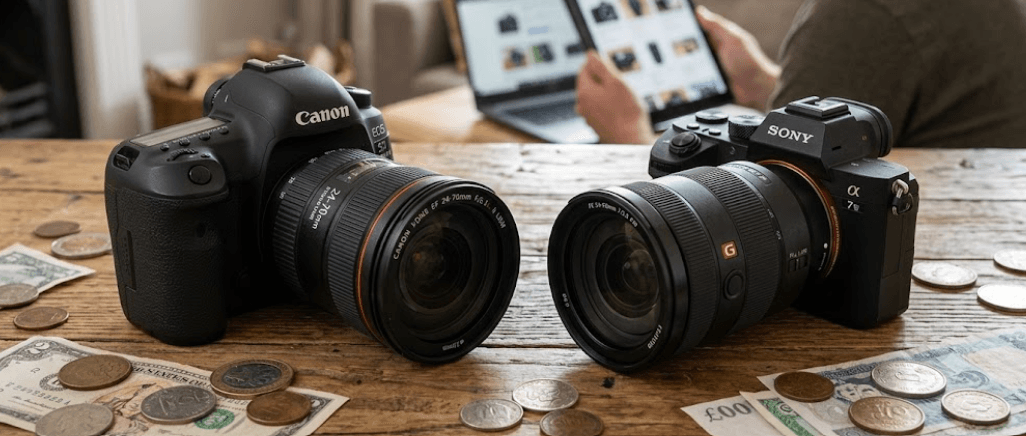
TL;DR The Canon EOS 5D Mark IV and Sony A7 III are both capable full-frame cameras, but they represent two very different approaches to long-term ownership. The 5D Mark IV is a professional DSLR with a 30.4MP sensor, strong optical-viewfinder experience, 7fps continuous shooting, and compatibility with Canon's extensive EF lens ecosystem. The Sony A7 III is a full-frame mirrorless camera with a 24.2MP sensor, 10fps shooting, 693 phase-detection AF points, 5-axis image stabilization, dual card slots, and a larger NP-FZ100 battery. The Canon launched in India at ₹2,54,995 in 2016, while the Sony arrived at ₹1,64,990 in 2018. In 2026, both have active second-hand markets, but the A7 III has a stronger case for resale liquidity because it remains part of Sony's E-mount ecosystem and is still sold through Indian retailers, while the 5D Mark IV belongs to a discontinued DSLR direction. That does not guarantee a higher resale percentage, because actual value depends heavily on condition, shutter count, accessories, and local demand.
Canon 5D Mark IV And Sony A7 III: Different Camera Generations
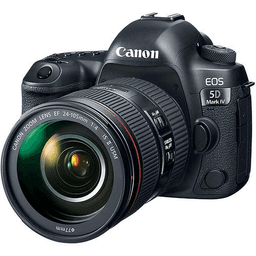
The Canon EOS 5D Mark IV was introduced in 2016 as a professional full-frame DSLR and continued the 5D line that had already built a strong reputation among wedding, portrait, commercial, and event photographers. Its 30.4MP full-frame CMOS sensor gives it more resolution than the Sony A7 III, while its optical viewfinder provides the traditional DSLR shooting experience. Canon also equipped it with Dual Pixel CMOS AF for Live View and video use, along with a 61-point autofocus system for viewfinder photography. These specifications are still perfectly usable for still photography in 2026, especially for photographers who already own Canon EF lenses and prefer the handling of a DSLR.
The Sony A7 III arrived in India in 2018 as a full-frame mirrorless camera aimed at photographers who wanted a more modern combination of autofocus, speed, video, stabilization, and battery performance. Its 24.2MP back-illuminated full-frame sensor has fewer pixels than the Canon, but the camera compensates with a 10fps continuous shooting rate, 693 phase-detection autofocus points, 425 contrast-detection points, and 5-axis in-body stabilization. The A7 III also uses Sony's E-mount, which gives owners access to a large selection of native Sony and third-party lenses. That broader mirrorless ecosystem is one of the reasons the camera continues to attract buyers years after its launch.
The difference becomes particularly important when discussing resale value. A camera does not retain value simply because its original specifications were impressive. Buyers in the used market also look at whether the system is still active, whether lenses are easy to find, how much modern functionality the body offers, and whether the model remains relevant to new photographers. The 5D Mark IV still has a capable sensor and excellent handling, but it belongs to the DSLR generation. The A7 III, meanwhile, remains compatible with the current Sony E-mount direction. That difference can influence how easily each camera finds its next owner.
Core Specifications Compared
| Feature | Canon EOS 5D Mark IV | Sony A7 III |
|---|---|---|
| Camera Type | DSLR | Mirrorless |
| Launch Year | 2016 | 2018 |
| Sensor | 30.4MP Full Frame CMOS | 24.2MP Full Frame CMOS |
| Continuous Shooting | Up to 7fps | Up to 10fps |
| Autofocus | 61-point AF | 693 phase + 425 contrast points |
| Image Stabilization | No in-body stabilization | 5-axis in-body stabilization |
| Video | DCI 4K up to 30p | UHD 4K up to 30p |
| Memory Cards | CF + SD | Dual SD |
| Lens Mount | Canon EF | Sony E |
| Weight | Approx. 800g | Approx. 650g |
Image Quality And Everyday Shooting
The Canon 5D Mark IV has a clear advantage in native resolution, with its 30.4MP sensor producing larger files than the 24.2MP Sony sensor. That extra resolution can be useful when you need to crop an image or produce larger prints, particularly in commercial, landscape, portrait, and studio photography. Canon's colour output and familiar DSLR controls also remain appealing to photographers who have spent years using the company's cameras. For someone who already owns EF lenses, flashes, batteries, and other accessories, the 5D Mark IV can still be a practical professional tool rather than an outdated piece of equipment.
The Sony A7 III takes a different approach. Its 24.2MP sensor is not as high-resolution as the Canon's, but it is paired with a fast hybrid autofocus system and 5-axis in-body stabilization. That stabilization can be useful when shooting handheld at slower shutter speeds, particularly with lenses that do not have optical stabilization. The A7 III's 10fps burst rate also gives it an advantage for action, events, children, and other subjects where timing matters. For many photographers, the combination of autofocus coverage, burst speed, stabilization, and a lighter body is more useful in everyday shooting than having several extra megapixels.
Neither camera should be judged solely by sensor resolution. A 30.4MP sensor does not automatically produce better photographs than a 24.2MP sensor, and a newer mirrorless design does not automatically make every image better either. Lens quality, exposure, lighting, photographer technique, autofocus performance, and post-processing remain important. The more meaningful difference is how each camera helps you get the shot. The Canon feels designed around traditional professional DSLR photography, while the Sony provides a more modern mirrorless workflow with electronic viewing, broader autofocus coverage, and in-body stabilization.
Autofocus, Video, And Handling
Autofocus is one of the biggest areas where the Sony A7 III feels more modern. Its 693 phase-detection AF points and 425 contrast-detection points cover a large portion of the frame, giving photographers more flexibility when placing subjects away from the center. The camera also supports Eye AF, which can be particularly useful for portraits and people photography. Its 10fps continuous shooting makes it better suited to fast-moving subjects than the Canon's 7fps maximum. These capabilities helped establish the A7 III as a strong hybrid camera rather than a body designed primarily around traditional still photography.
The Canon 5D Mark IV remains very capable through its optical viewfinder, with 61 autofocus points and 41 cross-type points. Its Dual Pixel CMOS AF is also important because it provides smoother focusing when using Live View and during video recording. Canon supports DCI 4K Motion JPEG recording at 30p or 24p, along with Full HD recording at up to 60p and HD recording at up to 120p. However, its 4K implementation is more restrictive than what many modern hybrid shooters expect, and the camera lacks the in-body stabilization found on the Sony.
Handling also separates these cameras. The 5D Mark IV is larger and heavier, weighing about 800g, while the A7 III weighs about 650g with battery and memory card. That difference becomes noticeable during travel, weddings, long events, or outdoor shoots where the camera remains on your shoulder for several hours. The Canon's larger body can nevertheless be an advantage for photographers who prefer a substantial grip and traditional controls. The Sony is easier to carry, while the Canon can feel more substantial in the hand.
Which Camera Fits Different Shooters?
| Shooting Need | Canon 5D Mark IV | Sony A7 III |
|---|---|---|
| High-resolution stills | Strong fit | Good fit |
| Portrait photography | Strong fit | Strong fit |
| Action photography | Good fit | Strong fit |
| Handheld low-light shooting | Good fit | Strong fit |
| Professional DSLR handling | Strong fit | Not applicable |
| Lightweight travel setup | Less convenient | Strong fit |
| Video and hybrid shooting | Good fit | Strong fit |
| Existing EF lens collection | Strong fit | Requires adaptation |
| Native mirrorless lens growth | Limited to DSLR EF system | Strong fit |
Lens Ecosystem And Long-Term Ownership
Lens ownership is one of the most important factors when calculating the real value of an interchangeable-lens camera. Someone who already owns several Canon EF lenses may find that the 5D Mark IV remains financially sensible because moving to Sony would require selling equipment and rebuilding a lens collection. The EF ecosystem also has a huge second-hand market, with many older Canon lenses available at prices below their original launch prices. For a working photographer, the value of an existing kit can be much greater than the resale value of the camera body alone.
The Sony A7 III benefits from the continued development of the E-mount system. Photographers can choose from Sony's own FE lenses as well as a wide range of third-party options. This gives the A7 III an easier upgrade path within the same mount. A photographer can start with an affordable lens and gradually move to more advanced optics without replacing the camera body. That ecosystem matters for resale because buyers are not only evaluating the body. They are also evaluating whether buying into the system gives them room to grow.
This is where the value discussion becomes more complicated. A camera with an active mount can remain attractive even after several generations have launched, because the body can still be paired with newer lenses. The A7 III benefits from this situation. The 5D Mark IV has a mature and extensive EF ecosystem, but Canon's current full-frame direction is centered on the RF mount and EOS R mirrorless cameras. That does not make EF equipment unusable, but it does mean the long-term growth story is different for a new buyer choosing between these two systems.
Price And Resale Value In India
The original Indian launch prices provide useful context. Canon launched the EOS 5D Mark IV at ₹2,54,995 for the body in 2016. Sony launched the A7 III at ₹1,64,990 for the body in 2018. These prices cannot be compared as a simple depreciation calculation because the cameras launched in different years and occupied different market positions. Still, they establish an important baseline for understanding why current resale prices should not be judged against today's unusually high new-stock listings alone.
Current Indian pricing also shows why buyers need to be careful. The Sony A7 III body is still listed by Indian retailers at roughly ₹1.16 lakh to ₹1.45 lakh depending on the seller and offer, while current new listings for the Canon 5D Mark IV can be unusually high because remaining stock is limited. Those inflated new prices do not necessarily represent what a used buyer is willing to pay. In the second-hand market, Canon 5D Mark IV examples are appearing around substantially lower levels, with Cashify currently showing a potential buyback value of up to ₹49,100 and individual marketplace listings varying considerably based on condition and included equipment.
For resale, therefore, the Sony A7 III currently has the clearer case for market liquidity. It remains available as a new product from Indian sellers, has a large E-mount lens ecosystem, and continues to attract used-camera buyers. The Canon 5D Mark IV still has value because of its professional build, 30.4MP sensor, EF compatibility, and established reputation, but its DSLR format and age can narrow the pool of buyers compared with the Sony. This does not prove that every A7 III will sell for more than every 5D Mark IV. Condition, shutter count, service history, accessories, and lens bundles can completely change an individual transaction.
Current Value Factors
| Value Factor | Canon 5D Mark IV | Sony A7 III |
|---|---|---|
| Original India Body Price | ₹2,54,995 | ₹1,64,990 |
| Launch Year | 2016 | 2018 |
| Current New-Stock Availability | Limited and inconsistent | Still available |
| Used-Market Interest | Established | Strong and active |
| Lens Ecosystem Direction | Mature EF system | Active E-mount system |
| Body Weight | Approx. 800g | Approx. 650g |
| Resale Consideration | Strong existing DSLR demand | Stronger current mirrorless relevance |
What Affects Resale Value The Most?
The condition of the camera can matter more than the model name when you eventually sell it. Shutter count, sensor condition, LCD condition, ports, buttons, battery health, weather sealing, and signs of physical damage all affect buyer confidence. A well-maintained 5D Mark IV with a low shutter count can attract a better offer than a heavily used example, while a clean A7 III with complete accessories can also command a premium within the used market. Keeping the original box, charger, battery, strap, manuals, and purchase invoice can make the transaction easier.
Lens ownership also affects the economics of resale. A camera body may depreciate, but desirable lenses can retain their value differently. If you already own expensive Canon EF L-series lenses, switching systems purely because the Sony body may be easier to resell can create additional costs. The same applies to Sony users who have invested in FE lenses. The total value of your photography kit is therefore more important than the resale price of the camera body in isolation.
Timing matters as well. A camera can lose value when a direct successor becomes more affordable or when newer technology changes what buyers expect. The A7 III has already been succeeded by newer A7 models, but its feature set remains relevant enough that it continues to have an active market. The 5D Mark IV has also been surpassed by Canon's mirrorless R-series direction. For either model, selling before the body becomes significantly less desirable can help protect value, while holding it indefinitely does not guarantee that the price will keep pace with inflation or newer equipment.
Which Full-Frame Camera Holds Value Better?
When you think about resale in 2026 I see the Sony A7 III as the option. It is a modern mirrorless camera that uses the E‑mount system. It has autofocus and in‑body stabilization. It also has two card slots, a battery that lasts a time and it is still sold in India. In the market buyers still look at the Sony A7 III years after it first came out. That makes the Sony A7 III easier to describe as a full‑frame camera, not just an older professional model.
The Canon 5D Mark IV stays valuable for a reason. It has a 30.4‑megapixel sensor, a DSLR body, an optical viewfinder and a strong battery. It also has an EF lens system that many people already own. If you already own EF lenses the money you would spend to replace them may be more than the benefit of switching to Sony. In that case keeping a well‑maintained Canon 5D Mark IV can be cheaper, than buying a new system.
For a new buyer thinking about future resale, however, the A7 III is the easier system to justify. It is lighter, more current in terms of platform direction, and supported by a broad native lens ecosystem. The 5D Mark IV still makes sense when bought at a sensible used price, particularly for photographers who value resolution, optical viewing, Canon ergonomics, or existing EF glass. The important point is that "holds value better" does not mean "will always sell for more." It means the A7 III currently has more factors working in its favor for continued demand and resale liquidity.
Frequently Asked Questions
Q. Which camera was more expensive when launched in India?
The Canon EOS 5D Mark IV launched at ₹2,54,995 for the body, while the Sony A7 III launched at ₹1,64,990 for the body. The Canon was therefore launched at a substantially higher price, although the two cameras entered the market in different years.
Q. Does the Canon 5D Mark IV have more megapixels than the Sony A7 III?
Yes. The Canon 5D Mark IV has a 30.4MP full-frame sensor, while the Sony A7 III has a 24.2MP full-frame sensor. The higher resolution can provide more room for cropping, although megapixel count alone does not determine overall image quality.
Q. Is the Sony A7 III faster than the Canon 5D Mark IV?
Yes, in terms of maximum continuous shooting speed. The Sony A7 III can shoot at up to 10fps, while the Canon EOS 5D Mark IV reaches up to 7fps.
Q. Does the Sony A7 III have image stabilization?
Yes. The Sony A7 III has a 5-axis sensor-shift stabilization system. The Canon 5D Mark IV does not have in-body image stabilization, although stabilization can be available through compatible lenses.
Q. Which camera is better for video?
The Sony A7 III generally offers the more flexible hybrid-video platform, with UHD 4K recording and a mirrorless design that includes sensor stabilization. The Canon 5D Mark IV also records 4K, including DCI 4K Motion JPEG at up to 30p, but its 4K implementation is less flexible for many modern video workflows.
Q. Which camera is lighter?
The Sony A7 III is lighter. Sony lists the body at approximately 650g with battery and memory card, while the Canon 5D Mark IV is approximately 800g. The difference can become noticeable during travel or long shooting sessions.
Q. Can I use Canon EF lenses on the Sony A7 III?
Canon EF lenses can be used on Sony E-mount bodies with appropriate adapters, but autofocus performance and other functions can vary depending on the adapter and lens. Native Sony E-mount lenses generally provide the most integrated experience.
Q. Is the Canon 5D Mark IV still worth buying used in 2026?
It can be, particularly if you want a professional DSLR, already own Canon EF lenses, or prefer an optical viewfinder and the camera's handling. The used price matters significantly because the camera is now an older DSLR platform.
Q. Is the Sony A7 III still relevant in 2026?
Yes. Its 24.2MP full-frame sensor, 10fps shooting, 693 phase-detection AF points, 5-axis stabilization, dual card slots, and E-mount compatibility remain useful. Its continued availability through Indian retailers also supports its relevance in the current market.
Q. Which camera holds value better, the Canon 5D Mark IV or Sony A7 III?
The Sony A7 III currently has the stronger resale case because it remains part of an active mirrorless ecosystem and has continued demand in the used market. However, there is no standardized Indian transaction dataset proving a universal depreciation advantage, so actual resale value will depend on condition, shutter count, accessories, lenses, and the selling channel.
Final Recommendation
For buyers choosing specifically with long-term resale and system relevance in mind, the Sony A7 III is the more practical choice in 2026. Its combination of a 24.2MP full-frame sensor, 10fps shooting, broad autofocus coverage, 5-axis stabilization, dual card slots, lighter body, and active E-mount ecosystem gives it a strong foundation for continued use. Its current presence in the Indian retail and used markets also gives buyers more confidence that there will be demand when they eventually decide to sell.
The Canon 5D Mark IV should not be dismissed simply because it is older or uses a DSLR design. It remains a capable professional camera, and its 30.4MP sensor, optical viewfinder, solid build, and Canon EF compatibility can make it particularly attractive to existing Canon users. If you already own valuable EF lenses, flashes, and accessories, staying with the 5D Mark IV may make more financial sense than switching systems.
The most important buying rule is therefore to judge the complete system rather than the body alone. For a new buyer starting from scratch and thinking about resale, the Sony A7 III has the more current platform story. For an existing Canon photographer with an EF collection, the 5D Mark IV can still deliver strong value when purchased at an appropriate used-market price. In either case, a clean body with a documented history, reasonable shutter count, original accessories, and well-maintained lenses will generally be easier to resell than a heavily used kit, regardless of the brand.