Canon 200D vs 200D Mark II: What's the Real Difference?
Canon 200D vs 200D Mark II looks like a small upgrade, but the Mark II adds DIGIC 8, better Live View AF, Eye Detection AF, and 4K video. Here is what actually changes and which camera makes more sense in 2026.

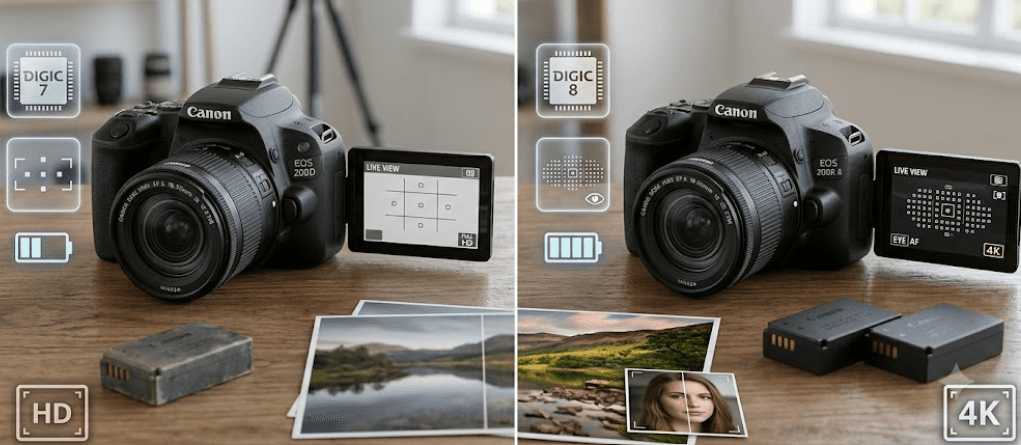
TL;DR The Canon EOS 200D and EOS 200D Mark II are compact entry-level DSLRs that share the same basic design, EF/EF-S lens mount, vari-angle touchscreen, optical viewfinder, and 24MP-class APS-C sensor. The EOS 200D Mark II, however, is the more capable camera because Canon upgraded it to the DIGIC 8 processor, added Eye Detection AF in Live View, expanded Live View autofocus to 3,975 selectable positions, and introduced 4K video recording. The original EOS 200D remains capable for still photography and offers the same 5fps maximum viewfinder shooting speed, so the Mark II is not a dramatic image-quality revolution. Its biggest advantage is that it makes focusing and video more modern while remaining almost identical in size.
Canon 200D vs 200D Mark II: Core Differences
The Two Cameras Share More Than You Might Expect
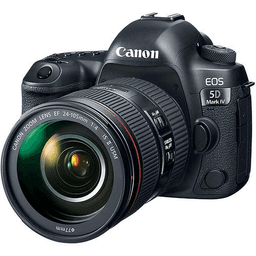
The first thing to understand about the Canon 200D vs 200D Mark II comparison is that these cameras are much closer than their names might suggest. The original EOS 200D, also known as the EOS Rebel SL2 in some markets, was introduced as a compact DSLR with a 24.2MP APS-C CMOS sensor, DIGIC 7 processing, Dual Pixel CMOS AF in Live View, a 9-point optical viewfinder autofocus system, and 5fps continuous shooting. Canon positioned it as an easy-to-use DSLR for people moving up from smartphones or simpler cameras.
The EOS 200D Mark II follows almost exactly the same physical formula. It uses a 24.1MP APS-C CMOS sensor, a 9-point autofocus system through the optical viewfinder, a 3-inch vari-angle touchscreen, and the same 122.4 x 92.6 x 69.8mm body dimensions. The Mark II is also slightly lighter at approximately 449g including the battery and card, compared with about 453g for the black EOS 200D. So, if you are expecting a dramatically smaller or lighter camera, that is not what the Mark II upgrade is about.
The real difference appears once you move away from the basic body design. Canon replaced DIGIC 7 with DIGIC 8 and significantly expanded the Live View autofocus system. The original 200D offers a maximum of 49 selectable Live View AF positions, while the 200D Mark II provides 3,975 selectable focus positions and adds Eye Detection AF in Live View. The newer model also adds 4K movie recording. Those changes make the Mark II more versatile, particularly for people who compose through the touchscreen rather than relying primarily on the optical viewfinder.
Specification Comparison
| Feature | Canon EOS 200D | Canon EOS 200D Mark II |
|---|---|---|
| Sensor | 24.2MP APS-C CMOS | 24.1MP APS-C CMOS |
| Processor | DIGIC 7 | DIGIC 8 |
| Viewfinder AF | 9 points | 9 points |
| Live View AF | Dual Pixel CMOS AF, up to 49 positions | Dual Pixel CMOS AF, 3,975 selectable positions |
| Eye Detection AF | No | Yes, in Live View |
| Maximum Shooting Speed | 5fps | 5fps |
| Video | Full HD up to 60p | 4K up to 25p, Full HD up to 60p |
| Screen | 3-inch vari-angle touchscreen | 3-inch vari-angle touchscreen |
| Lens Mount | EF/EF-S | EF/EF-S |
| Dimensions | 122.4 x 92.6 x 69.8mm | 122.4 x 92.6 x 69.8mm |
| Weight With Battery/Card | Approx. 453g | Approx. 449g |
Specifications are based on Canon documentation for both models.
Image Quality And Performance
Similar Sensors Mean Similar Still Images
If your main concern is still photography, the Canon 200D vs 200D Mark II difference is smaller than you might expect. The original 200D has a 24.2MP APS-C CMOS sensor, while the Mark II uses a 24.1MP APS-C CMOS sensor. That tiny difference in resolution is not something you would normally notice in everyday photographs. Both cameras also use Canon's EF/EF-S lens mount, so lens choice can have a much larger effect on the final image than the small sensor-resolution difference between the two bodies.
This is important if you are buying a used or refurbished DSLR in 2026. The Mark II should not be treated as a camera that suddenly produces dramatically sharper photographs simply because it has a newer processor. A good lens, proper exposure, and sensible shooting technique remain much more important for image quality. The original 200D was already considered a capable compact DSLR, with DPReview noting its 24MP APS-C sensor, DIGIC 7 processor, and Dual Pixel autofocus as key strengths.
The Mark II does have an advantage in processing and autofocus. DIGIC 8 enables features such as improved Live View autofocus behavior, Eye Detection AF, Auto Lighting Optimizer improvements, Digital Lens Optimizer, and Highlight Tone Priority. That does not mean every photograph will automatically look better, but it does make the newer camera more convenient when you are shooting people, using Live View, or working in situations where autofocus responsiveness matters more than the basic resolution figure.
Where The Mark II Feels Faster
For viewfinder photography, both cameras are rated at up to 5fps, so there is no major burst-speed upgrade to point to. The Mark II becomes more interesting when you switch to Live View. Canon lists up to 5fps with One-Shot AF and 3.5fps with Servo AF, while its Live View system provides a much larger focusing area than the original 200D. This gives the newer model a more flexible shooting experience when you are composing through the rear screen.
Autofocus And Video Differences
Live View Is Where The Mark II Pulls Ahead
Autofocus is arguably the most meaningful practical improvement in the EOS 200D Mark II. The original EOS 200D already uses Dual Pixel CMOS AF in Live View, which was one of its strongest features when it launched. Canon lists up to 49 Live View AF positions on the original model. The Mark II takes that concept much further with 3,975 selectable focus positions and Eye Detection AF for both One-Shot and Servo AF in Live View.
That difference matters when photographing people. Instead of relying mainly on a single manually selected focus position, the Mark II can use Eye Detection AF when shooting through Live View. This is particularly useful for portraits, family photography, casual events, and self-recorded content where keeping a face or eye in focus can be more important than having the most sophisticated tracking system available on a modern mirrorless camera. The original 200D remains usable, but its Live View autofocus system is less advanced.
The other major upgrade is video. The EOS 200D records Full HD video up to 60p, while the EOS 200D Mark II adds 4K recording at 23.98p or 25p. That makes the Mark II the obvious choice if video is part of your buying decision. However, 4K does not automatically make it a modern video camera by today's standards. Canon itself notes that autofocus can take longer or have difficulty with some lenses during 4K recording, so buyers should not assume the Mark II delivers the same video experience as a current mirrorless camera.
Video Capability At A Glance
| Video Feature | Canon EOS 200D | Canon EOS 200D Mark II |
|---|---|---|
| Maximum Resolution | Full HD 1920 x 1080 | 4K 3840 x 2160 |
| 4K Recording | No | Yes |
| Full HD | Up to 60p | Up to 60p |
| Live View AF | Dual Pixel CMOS AF | Dual Pixel CMOS AF |
| Eye Detection AF | No | Yes |
| External Microphone | Yes | Yes |
The Mark II supports 4K at 23.98p/25p and Full HD at up to 59.94p/50p, while Canon's documentation confirms an external microphone input.
Battery Life, Size, And Everyday Use
The Physical Difference Is Very Small
One of the reasons the EOS 200D became popular was its compact DSLR design. Canon lists the original model at 122.4 x 92.6 x 69.8mm, with the black version weighing approximately 453g including the battery and card. The Mark II keeps exactly the same listed body dimensions and drops to approximately 449g including the battery and card. In practical terms, you should not choose between these cameras based on portability because the difference is too small to matter for most photographers.
Battery performance is more interesting. The Mark II uses the LP-E17 battery, and Canon lists approximately 1,070 shots with 50% flash firing and up to 1,630 shots without flash under its specified test conditions when shooting through the optical viewfinder. The original 200D was also designed around the same LP-E17 battery family and offered strong battery performance when using its optical viewfinder. This is one area where DSLRs can still be convenient for photographers who spend long periods shooting through an optical viewfinder.
Both cameras also retain features that make them approachable for beginners. The vari-angle touchscreen can be turned toward the photographer or positioned for low- and high-angle compositions, while the optical viewfinder gives you the traditional DSLR shooting experience. The Mark II adds Canon's Guided Display and Creative Assist features, which can help newer photographers understand settings without having to learn every technical term before taking their first photographs.
Everyday Specifications
| Feature | Canon EOS 200D | Canon EOS 200D Mark II |
|---|---|---|
| Battery | LP-E17 | LP-E17 |
| Body Dimensions | 122.4 x 92.6 x 69.8mm | 122.4 x 92.6 x 69.8mm |
| Weight With Battery/Card | Approx. 453g | Approx. 449g |
| Screen | 3-inch vari-angle touchscreen | 3-inch vari-angle touchscreen |
| Wireless | Wi-Fi, Bluetooth, NFC | Wi-Fi, Bluetooth |
| External Mic | Yes | Yes |
Canon lists Wi-Fi, Bluetooth and NFC for the original EOS 200D, while the Mark II retains Wi-Fi and Bluetooth but drops NFC.
Which Canon 200D Should You Buy In 2026?
The Better Choice Depends On The Price Gap
In 2026, the Canon 200D and 200D Mark II should be viewed primarily as older DSLR options rather than direct alternatives to the latest mirrorless cameras. That makes the condition of the individual camera and the price of the complete kit particularly important if you are buying used or refurbished. A clean EOS 200D with a good lens can still be a sensible beginner camera if it is substantially cheaper than a Mark II, because the underlying 24MP-class APS-C sensor and 5fps shooting capability remain useful for photography.
The EOS 200D Mark II becomes easier to recommend when the price difference is reasonable. Its DIGIC 8 processor, Eye Detection AF, much larger Live View AF area, and 4K recording address the main areas where the older 200D feels dated. These upgrades are particularly useful for people who photograph people through the touchscreen, record video, or want a more flexible autofocus system. Canon also confirms that the Mark II remains compatible with the EF/EF-S lens ecosystem, so buyers can build a larger setup over time instead of replacing the camera and lenses together.
However, do not pay a large premium for the Mark II simply because the name says "Mark II." The cameras share the same compact body dimensions, similar sensor resolution, 9-point optical viewfinder autofocus, 5fps maximum viewfinder shooting speed, vari-angle touchscreen, and EF/EF-S lens compatibility. If your priority is straightforward still photography and you find the original 200D at a much lower price, it can remain the better-value purchase. If you want 4K, Eye Detection AF, and stronger Live View capability, the Mark II is worth paying more for.
Quick Buying Guide
| Your Priority | Better Choice |
|---|---|
| Lowest purchase price | Canon EOS 200D |
| Beginner still photography | Canon EOS 200D |
| Portraits through Live View | Canon EOS 200D Mark II |
| Eye Detection AF | Canon EOS 200D Mark II |
| 4K video | Canon EOS 200D Mark II |
| Compact DSLR design | Both |
| EF/EF-S lens compatibility | Both |
| Best overall capability | Canon EOS 200D Mark II |
| Best value at a large price discount | Canon EOS 200D |
Final Recommendation
Which One Makes More Sense?
The Canon EOS 200D Mark II is the better camera overall, but the difference is more about features and usability than a dramatic jump in still-image quality. Both cameras have compact bodies, APS-C sensors with roughly 24MP resolution, 5fps maximum viewfinder shooting, optical viewfinders, vari-angle touchscreens, and access to Canon's extensive EF/EF-S lens ecosystem. The Mark II earns its advantage through DIGIC 8, Eye Detection AF, a much larger Live View autofocus system, and 4K recording.
If you are choosing between the two for photography in 2026, buy the EOS 200D when you find a well-maintained unit at a significantly lower price and your priority is still photography. It remains a capable beginner DSLR and its 24.2MP sensor, Dual Pixel Live View AF, and 5fps shooting are still useful. The EOS 200D Mark II is the safer choice if the price difference is manageable, particularly for portraits, Live View shooting, casual video, and anyone who wants 4K recording.
The biggest takeaway from the Canon 200D vs 200D Mark II comparison is that the Mark II is an evolution rather than a complete replacement. For a buyer who wants the more capable and flexible camera, the 200D Mark II is the one to choose. For a buyer focused on value and still photography, a cheaper EOS 200D with a good lens can be the smarter purchase. In either case, condition, shutter count, lens quality, battery health, and the actual refurbished or used price should be checked before buying an older DSLR.
Frequently Asked Questions
Q. Is the Canon 200D Mark II better than the Canon 200D?
Yes. The EOS 200D Mark II is more capable because it adds DIGIC 8, Eye Detection AF in Live View, 3,975 selectable Live View focus positions, and 4K video. However, the improvement in basic still-image quality is not dramatic because both cameras use 24MP-class APS-C sensors.
Q. Does the Canon 200D Mark II have 4K video?
Yes. The EOS 200D Mark II can record 4K video at 23.98p or 25p. The original EOS 200D is limited to Full HD recording up to 60p.
Q. Does the Canon 200D have Dual Pixel autofocus?
Yes. The EOS 200D uses Dual Pixel CMOS AF during Live View shooting. It was one of the camera's notable features when it launched and helps provide responsive autofocus when using the rear touchscreen instead of the optical viewfinder.
Q. Does the Canon 200D Mark II have Eye Detection AF?
Yes. Canon lists Eye Detection AF for Live View shooting on the EOS 200D Mark II, including One-Shot AF and Servo AF modes. This is one of the useful autofocus upgrades over the original EOS 200D.
Q. Is the Canon 200D Mark II good for beginners?
Yes. Its compact DSLR body, vari-angle touchscreen, Guided Display, Creative Assist features, and straightforward controls make it approachable for beginners. It also gives new photographers room to learn manual exposure and interchangeable-lens photography.
Q. Which camera has better autofocus, the Canon 200D or 200D Mark II?
The EOS 200D Mark II has the more advanced Live View autofocus system. It provides 3,975 selectable focus positions and Eye Detection AF, while the original 200D provides up to 49 selectable Live View AF positions. Both retain a 9-point autofocus system when using the optical viewfinder.
Q. Are the Canon 200D and 200D Mark II the same size?
Yes. Both cameras have listed dimensions of 122.4 x 92.6 x 69.8mm. The Mark II is slightly lighter, at approximately 449g with battery and card, compared with approximately 453g for the black EOS 200D.
Q. Which camera is better for video, the Canon 200D or 200D Mark II?
The EOS 200D Mark II is clearly better for video because it adds 4K recording, while the original 200D records up to Full HD 60p. The Mark II also has Dual Pixel CMOS AF in Live View and Eye Detection AF, although its 4K autofocus has limitations with some lenses.
Q. Can I use the same lenses on the Canon 200D and 200D Mark II?
Yes. Both cameras use Canon's EF/EF-S lens mount, so compatible EF and EF-S lenses can be used with either camera. This makes the choice easier for existing Canon DSLR users who already own compatible lenses.
Q. Should I buy the Canon 200D or 200D Mark II in 2026?
The EOS 200D Mark II is the better overall choice if the price difference is reasonable because of its improved Live View autofocus, Eye Detection AF, DIGIC 8 processor, and 4K video. The original 200D is worth considering when it is substantially cheaper and your main priority is still photography.
Ready to upgrade your tech?
Browse our collection of quality refurbished products at unbeatable prices.