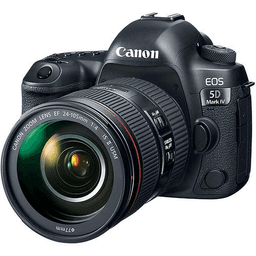
Canon 1300D Review: Is India's Most Popular Entry DSLR Still Worth Buying?
The Canon EOS 1300D remains a capable beginner DSLR with an 18MP APS-C sensor, interchangeable lenses, optical viewfinder, and Wi-Fi. But in 2026, its age makes condition, price, and lens selection more important than ever.

TL;DR The Canon EOS 1300D is still a usable beginner DSLR in 2026, but it is no longer a modern entry-level camera. Launched in 2016, it combines an 18MP APS-C CMOS sensor, DIGIC 4+ processor, nine-point autofocus system, optical viewfinder, Full HD video recording, and built-in Wi-Fi and NFC. Its image quality remains perfectly usable in good light, and the EF/EF-S lens ecosystem gives beginners plenty of room to learn photography. However, its slow 3fps burst rate, basic autofocus system, limited high-ISO performance, fixed 3-inch LCD, and dated video capabilities are significant limitations today. Canon’s current India interchangeable-lens lineup has moved toward newer EOS R mirrorless cameras, so the 1300D makes the most sense in 2026 as an affordable used DSLR for learning photography, provided you find a well-maintained body and lens at the right price.
Canon EOS 1300D: What You Get
The Canon EOS 1300D was introduced as an entry-level DSLR and succeeded the EOS 1200D. Its basic formula was straightforward: give beginners a relatively simple camera body, an APS-C sensor, an optical viewfinder, interchangeable lenses, and enough manual control to grow beyond smartphone photography. Canon lists an approximately 22.3 x 14.9mm APS-C CMOS sensor with around 18 effective megapixels, while the camera supports Canon EF lenses, including EF-S lenses. That lens compatibility is one of the strongest reasons the camera can still be interesting to beginners who want to learn photography rather than simply point and shoot.
The camera uses Canon's DIGIC 4+ image processor and offers JPEG, RAW, and simultaneous RAW plus JPEG recording. Its native ISO range is 100 to 6400, with expansion to an equivalent of ISO 12800. The optical pentamirror viewfinder covers approximately 95% of the frame, while the 3-inch LCD has a 920,000-dot resolution. These specifications were reasonable for an affordable DSLR when the camera launched, although they now look distinctly entry-level compared with current mirrorless cameras.
The EOS 1300D also has a feature that was particularly useful when it launched: built-in Wi-Fi and NFC. Canon says the camera can connect to smartphones, transfer images, and support remote control through a smartphone connection. That makes the 1300D more convenient than some older beginner DSLRs, particularly if you want to move photographs to a phone instead of removing the memory card every time.
Canon EOS 1300D Specifications At A Glance
| Specification | Canon EOS 1300D |
|---|---|
| Sensor | 18MP APS-C CMOS |
| Processor | DIGIC 4+ |
| Lens Mount | Canon EF/EF-S |
| Autofocus | 9-point AF |
| Continuous Shooting | Approx. 3fps |
| ISO Range | 100 to 6400, expandable to 12800 |
| Display | 3-inch, 920K-dot LCD |
| Viewfinder | Optical pentamirror |
| Video | Full HD up to 30fps |
| Connectivity | Wi-Fi and NFC |
| Battery | LP-E10 |
| Weight | Approx. 485g with battery and card |
Image Quality And Everyday Photography
The EOS 1300D's 18MP APS-C sensor is still capable of producing good photographs, particularly when you shoot in daylight and use a decent lens. Resolution is sufficient for social media, personal albums, basic prints, and learning photography fundamentals. The larger APS-C sensor also gives you considerably more control over depth of field than a typical smartphone, particularly when paired with a lens with a wider aperture. This is where the camera continues to feel like a genuine photography tool rather than simply an older piece of technology.
The camera's limitations become more visible as lighting gets difficult. Contemporary testing found that image quality remained solid at lower ISO settings, while noise and loss of detail became increasingly noticeable at higher ISO values. That means the 1300D is better suited to daylight, outdoor portraits, travel photography, and reasonably well-lit indoor scenes than demanding night photography. You can still get good low-light results by using manual controls, a wider-aperture lens, a tripod, or additional lighting, but the sensor does not have the low-light flexibility of newer cameras.
Lens choice also has a major impact on the final image. A basic 18-55mm kit lens is useful for learning composition and covering everyday subjects, but upgrading to a brighter prime or a better zoom can make the camera considerably more capable. The important point is that the 1300D's image quality should not be judged only by the body. A beginner who learns exposure, shutter speed, aperture, ISO, and focal length can still produce noticeably better photographs with this camera than someone who relies entirely on automatic settings.
Image Quality At Different ISO Levels
| ISO Range | Expected Use |
|---|---|
| ISO 100 to 400 | Best choice for bright daylight and clean images |
| ISO 800 | Generally usable with controlled noise |
| ISO 1600 | Noticeable noise and some loss of detail |
| ISO 3200 | Significant noise, especially in darker areas |
| ISO 6400 | Useful only when necessary, with substantial quality loss |
| ISO 12800 | Extended setting with very limited practical use |
Autofocus And Performance
Autofocus is one of the areas where the Canon EOS 1300D shows its age most clearly. Canon gives it nine autofocus points, with the centre point being cross-type sensitive under specified conditions. That was enough for casual photography, portraits, landscapes, and basic moving subjects, but modern cameras provide far more sophisticated autofocus systems. The 1300D does not have the subject-detection and eye-tracking capabilities that buyers now associate with newer mirrorless cameras.
The camera can shoot continuously at approximately 3 frames per second, according to Canon's specifications. That is adequate for casual action but not particularly useful for fast sports, wildlife, or unpredictable movement. Contemporary testing also found the burst mode to be one of the camera's weaker areas. If you are photographing a child running, a sports event, or fast-moving animals, a newer camera with faster continuous shooting and more advanced autofocus will give you considerably more flexibility.
For everyday photography, however, the performance is straightforward. The physical controls are easy to understand, the optical viewfinder provides a traditional DSLR shooting experience, and the PASM modes allow you to move gradually from automatic photography into aperture priority, shutter priority, and manual exposure. That learning curve is actually one of the reasons the 1300D can still make sense for a student or beginner who wants to understand photography rather than simply produce instant results.
Performance Comparison
| Feature | EOS 1300D Today |
|---|---|
| Everyday Photography | Suitable |
| Portraits | Suitable with a good lens |
| Landscapes | Suitable |
| Sports | Limited |
| Wildlife | Limited |
| Night Photography | Limited at high ISO |
| Fast Action | Not ideal |
| Photography Learning | Strong fit |
Video Recording And Connectivity
The EOS 1300D can record Full HD video at up to 1920 x 1080 resolution and 30fps. That makes it capable of basic video recording, family clips, simple YouTube projects, and learning the fundamentals of camera-based video. However, Full HD at 30fps is a very basic video specification by 2026 standards. Buyers who regularly create social media videos, vlogs, or professional-looking short-form content will find newer cameras much more flexible.
Another limitation is video autofocus and stabilisation. Contemporary testing noted that the camera lacks video stabilisation and that autofocus motor noise can be picked up during recording. For better results, users may need a tripod, external stabilisation, or manual focusing. This is manageable for controlled shots, but it becomes inconvenient when you want to record handheld moving footage.
Connectivity is one area where the 1300D remains surprisingly useful. Its built-in Wi-Fi and NFC can connect the camera to compatible smartphones for image transfer and remote shooting. Canon's documentation confirms smartphone viewing, image transfer, and remote control functionality. This does not make the camera modern, but it removes one of the small annoyances associated with older digital cameras.
Battery Life And Build Quality
The EOS 1300D uses Canon's LP-E10 battery, and Canon rates it for approximately 500 shots when shooting through the optical viewfinder under its stated CIPA testing conditions. Live View reduces the rated figure substantially, to approximately 180 shots at room temperature. Real-world battery life depends on shooting conditions, flash usage, Live View, reviewing photographs, and battery condition, which is particularly important when buying a camera that is around a decade old.
The body weighs approximately 485g according to Canon's CIPA figure, while the body-only weight is approximately 440g. Contemporary reviews described the construction as predominantly plastic but reasonably comfortable to hold, with a textured grip and familiar Canon control layout. It is not a premium or weather-sealed camera, so buyers should be more careful about used units that have experienced heavy outdoor use, moisture, or physical impact.
When buying a used 1300D in 2026, physical condition becomes just as important as specifications. Check the shutter operation, battery, memory-card slot, LCD, buttons, flash, lens mount, autofocus, and sensor condition. Look carefully at the kit lens for fungus, haze, scratches, or focusing problems. A clean camera with a healthy battery and good lens can be much more useful than a cheaper unit that needs repairs or replacement accessories.
What To Check Before Buying Used
| Component | What To Inspect |
|---|---|
| Sensor | Dust, scratches, visible damage |
| Lens | Fungus, haze, scratches, autofocus |
| Battery | Charging and real-world capacity |
| LCD | Dead pixels and physical damage |
| Shutter | Consistent operation |
| Autofocus | Focus accuracy and consistency |
| Wi-Fi | Smartphone pairing |
| Memory Slot | Reliable card detection |
| Body | Drops, cracks, moisture damage |
Canon 1300D Vs Modern Cameras In 2026
The biggest question is not whether the EOS 1300D can take good photographs. It can. The more important question is whether its limitations are acceptable compared with what you can buy today. Canon's current India interchangeable-lens lineup includes newer EOS R-series cameras such as the EOS R100, EOS R50, EOS R10, and other mirrorless models. That shows how far the entry-level camera market has moved since the 1300D launched.
A modern mirrorless camera can offer a more advanced autofocus system, electronic viewfinder features, newer processors, stronger video capabilities, and more modern connectivity. You also have the advantage of a newer battery and less concern about buying a camera that has already spent years in someone else's hands. For someone looking for a long-term primary camera, those factors deserve serious consideration.
The 1300D has one particularly strong advantage for budget-conscious beginners: the used DSLR market gives you access to an enormous range of older Canon EF and EF-S lenses. That can make photography more affordable if you are willing to buy second-hand equipment carefully. The camera is therefore easier to recommend as a learning platform than as a modern feature-packed camera. The distinction matters because the right choice depends on whether your goal is to learn photography cheaply or to buy the most current technology.
Canon EOS 1300D Vs Modern Entry-Level Expectations
| Area | EOS 1300D | Modern Expectations |
|---|---|---|
| Sensor | 18MP APS-C | Higher-resolution APS-C options |
| Autofocus | 9-point system | Advanced subject detection |
| Burst Shooting | Approx. 3fps | Much faster on many models |
| Video | Full HD 30fps | 4K is common |
| Screen | Fixed LCD | Touch and/or vari-angle options common |
| Connectivity | Wi-Fi and NFC | More advanced wireless workflows |
| Lens Ecosystem | EF/EF-S | Modern RF/RF-S ecosystems |
| Buying Route | Mostly used market | New and used options |
Is The Canon 1300D Worth Buying In 2026?
The answer depends heavily on price and condition. There is no reliable current official Canon India retail price for the EOS 1300D in the company's current interchangeable-lens product listings, where newer EOS R models are featured instead. That means buyers should treat current 1300D listings primarily as used or old-stock purchases and compare them against newer alternatives rather than relying on the camera's original launch price.
For a beginner who wants to learn manual photography, the 1300D still has plenty going for it. You get an APS-C sensor, optical viewfinder, interchangeable lenses, RAW shooting, manual exposure controls, and a familiar DSLR handling experience. Those features teach the fundamentals of photography in a way that is still valuable even though the underlying technology is old. The ability to use EF and EF-S lenses also gives beginners a path to experiment with different focal lengths without immediately spending heavily on new equipment.
The problem is that buying an old camera is not automatically a bargain. If a used 1300D is priced close to a newer entry-level mirrorless camera, the newer model may offer a better overall ownership experience. The 1300D makes the most sense when you specifically want a low-cost DSLR, find a clean unit, and value the Canon EF/EF-S lens ecosystem. It is much harder to justify if you want advanced autofocus, modern video, fast burst shooting, or a camera designed for long-term future use.
Frequently Asked Questions
Q. Is the Canon EOS 1300D still good in 2026?
The Canon EOS 1300D is still capable of producing good photographs, particularly in daylight and with a good lens. However, its nine-point autofocus, approximately 3fps continuous shooting, Full HD video, and older sensor and processor make it clearly outdated compared with modern cameras.
Q. Is the Canon 1300D good for beginners?
Yes. Its straightforward controls, optical viewfinder, manual exposure modes, RAW shooting, and interchangeable lenses make it useful for learning photography. A beginner can learn aperture, shutter speed, ISO, focal length, and composition without needing an expensive modern camera.
Q. Does the Canon 1300D have Wi-Fi?
Yes. The EOS 1300D includes Wi-Fi and NFC. Canon states that it can connect to smartphones for viewing, image transfer, and remote camera control.
Q. How many megapixels does the Canon 1300D have?
The EOS 1300D has approximately 18 effective megapixels from its APS-C CMOS sensor. Canon lists a maximum recorded image size of approximately 17.9 megapixels, or 5184 x 3456 pixels.
Q. Can the Canon 1300D record 4K video?
No. The EOS 1300D records Full HD video at up to 1920 x 1080 resolution and 30fps. It does not offer 4K recording.
Q. How good is the Canon 1300D for low-light photography?
Low-light performance is limited by modern standards. Contemporary testing found increasing noise and loss of detail as ISO rises, particularly at ISO 3200 and 6400. A faster lens, tripod, or additional lighting can help produce better results.
Q. What lenses work with the Canon 1300D?
The camera uses Canon's EF mount and supports EF lenses, including EF-S lenses. EF-M lenses are not compatible. This gives users access to a large range of Canon DSLR lenses.
Q. How long does the Canon 1300D battery last?
Canon rates the LP-E10 battery for approximately 500 shots when using the optical viewfinder at room temperature under its testing conditions. Live View reduces the rated figure to approximately 180 shots. An older used battery may deliver less capacity.
Q. Is the Canon 1300D good for video?
It is adequate for basic Full HD video but is not a strong choice for modern video creation. It lacks 4K recording and video stabilisation, while contemporary testing found autofocus motor noise could be picked up during recording.
Q. Should you buy a used Canon 1300D in 2026?
A used EOS 1300D can make sense if you find a clean, fully working unit at a suitably low price and your priority is learning photography. Before buying, check the sensor, shutter, battery, autofocus, LCD, memory-card slot, lens condition, and overall body for damage. If the price approaches that of a newer entry-level mirrorless camera, compare the newer option carefully.
Final Recommendation
The Canon EOS 1300D is not a modern camera, and it should not be presented as one. It was launched in 2016 as an entry-level DSLR, and its 18MP APS-C sensor, DIGIC 4+ processor, nine-point autofocus system, 3fps continuous shooting, fixed LCD, and Full HD video capabilities reflect that generation of camera technology. At the same time, those specifications do not make it useless. The camera can still produce attractive photographs, offers genuine manual controls, supports RAW files, and gives beginners access to Canon's extensive EF and EF-S lens ecosystem.
For someone buying a first camera on a tight budget, a well-maintained EOS 1300D can still be a sensible learning tool, especially when paired with a good lens. It is particularly suitable for portraits, landscapes, travel photography, family photography, and learning the fundamentals of exposure. Its limitations become much more obvious for sports, wildlife, demanding low-light work, fast action, and serious video production.
The key is to judge the specific used unit and its price, rather than buying the model simply because it carries the Canon name. Canon's current India lineup has moved toward newer EOS R mirrorless cameras, so buyers with a larger budget should also compare those newer options before committing to an older DSLR.
The Canon 1300D is worth buying in 2026 only when its low used-market cost, condition, and beginner-friendly DSLR experience outweigh its ageing autofocus, video, burst-shooting, and low-light limitations. For learning photography inexpensively, it can still do the job. For buyers looking for modern autofocus, advanced video, and longer-term technology, a newer camera is the more appropriate direction.