
Best travel cameras of 2026: Lumix L10, RX10 V, and what else made the list
The best travel cameras of 2026 balance image quality, portability, versatility, and battery life. From the Panasonic Lumix L10 and Sony RX10 V to compact and rugged options, here are the cameras worth considering.

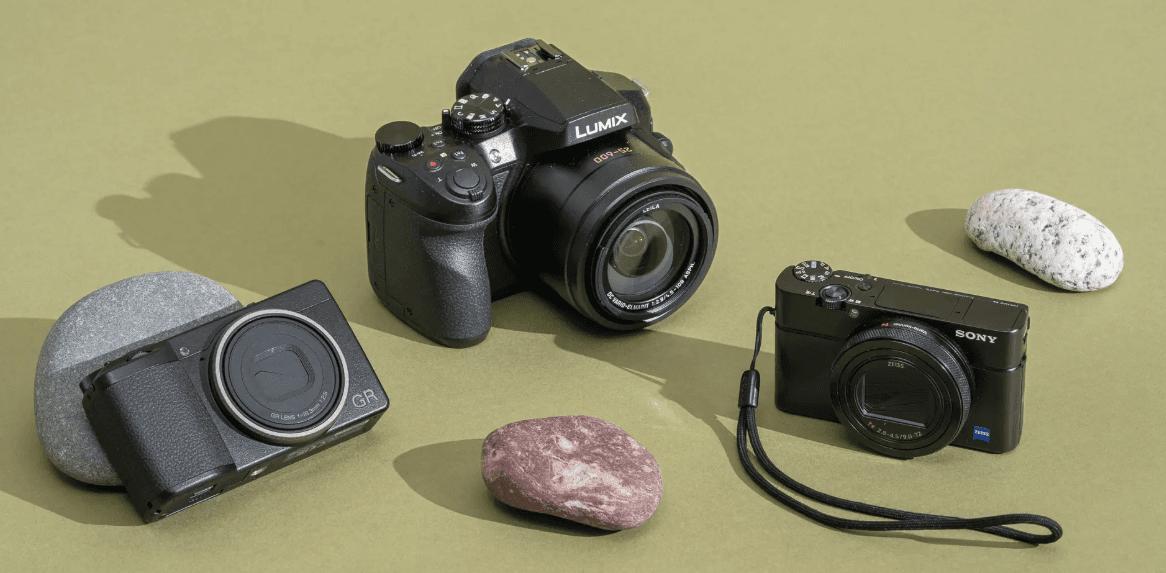
TL;DR The best travel camera in 2026 depends on how you plan to shoot rather than simply how much you want to spend. The Panasonic Lumix L10 is a strong premium everyday choice because its 24-75mm equivalent f/1.7-2.8 zoom gives travellers useful flexibility without requiring multiple lenses. The Sony Cyber-shot RX10 V is the better option if you want one camera that can cover everything from wide landscapes to distant wildlife, thanks to its 24-600mm equivalent lens, fast autofocus, and high-speed shooting. Other strong choices include the Fujifilm X100VI for photographers who want a compact fixed-lens camera, the Ricoh GR IV for maximum pocketability, the OM System OM-5 II for weather-sealed travel, and the Nikon Z5 II for travellers who want full-frame image quality. These recommendations reflect current 2026 travel-camera guides and testing, including recent updates to the Panasonic Lumix L10 and Sony RX10 V.
What Makes A Good Travel Camera In 2026?
A good travel camera needs to solve a practical problem: giving you better image quality and more creative control than a phone without becoming another piece of luggage. That means portability matters almost as much as image quality. A camera may have an excellent sensor and powerful processor, but if it is uncomfortable to carry through a full day of sightseeing, you may simply leave it in your bag. Current travel-camera recommendations therefore span everything from pocketable compacts to interchangeable-lens mirrorless cameras, with each type targeting a different kind of traveller.
Lens flexibility is another major consideration. Travelers may photograph architecture in the morning, portraits at lunch, and wildlife in the afternoon, so a camera with a useful focal-length range can be more valuable than one with a larger sensor but a restrictive lens. This is where cameras such as the Panasonic Lumix L10 and Sony RX10 V stand out for different reasons. The Lumix L10 uses a 24-75mm equivalent zoom, while the RX10 V stretches from 24mm all the way to 600mm equivalent. That difference can completely change how useful the camera is on a trip.
You should also consider autofocus, stabilization, battery life, weather resistance, and video capabilities before making a decision. Travel photography rarely happens in controlled conditions, so a camera needs to cope with changing light, moving subjects, crowded streets, and long days away from a charger. A camera with strong autofocus and stabilization can therefore be more useful than one that simply has a higher megapixel count. Current testing also puts considerable emphasis on portability, battery life, build quality, and practical handling rather than judging cameras by specifications alone.
Travel Camera Types At A Glance
| Camera Type | Best For | Main Advantage |
|---|---|---|
| Premium compact | Everyday travel photography | High image quality in a small body |
| Bridge camera | Wildlife and sightseeing | Huge built-in zoom range |
| Mirrorless | Enthusiasts and creators | Interchangeable lenses and flexibility |
| Rugged compact | Adventure travel | Weather and water resistance |
| Full-frame mirrorless | Serious photography | Strong image quality and low-light performance |
| Pocket camera | Minimalist travelers | Extremely easy to carry |
Panasonic Lumix L10: Best Premium Everyday Travel Camera
The Panasonic Lumix L10 has become one of the notable additions to the 2026 travel-camera conversation because it offers a combination that makes sense for everyday trips. It uses a Micro Four Thirds sensor and a built-in 24-75mm equivalent zoom lens with a bright f/1.7-2.8 aperture. That range is useful for the situations travellers encounter most often, from city streets and buildings to food, portraits, and casual landscapes. Amateur Photographer currently places it as its best premium travel camera, while TechRadar highlights it as a stylish everyday option.
The biggest advantage is that you do not have to think about carrying multiple lenses. A 24mm equivalent wide end gives you enough room for architecture and landscapes, while 75mm equivalent provides a useful reach for portraits and details. The bright aperture also helps when shooting indoors or in lower light. Recent testing has praised the Lumix L10 for its autofocus, battery life, video features, and real-time LUT colour grading, making it a practical camera rather than one that is focused only on still photography.
The Lumix L10 is therefore particularly appealing to travellers who want a premium shooting experience without moving into a large interchangeable-lens kit. It is not the camera to choose if your main goal is extreme telephoto photography, because its built-in lens stops at a 75mm equivalent. However, for city breaks, family holidays, food photography, portraits, and general sightseeing, that limitation can actually make the camera easier to live with. Its combination of size, lens flexibility, and image quality is what makes it a strong all-round travel option.
Panasonic Lumix L10 At A Glance
| Feature | Panasonic Lumix L10 |
| Sensor | Micro Four Thirds |
| Lens | 24-75mm equivalent |
| Maximum Aperture | f/1.7-2.8 |
| Camera Type | Premium compact |
| Best For | Everyday travel |
| Key Strength | Versatile built-in zoom |
Sony RX10 V: Best For Long-Range Travel Photography
The Sony Cyber-shot RX10 V takes a completely different approach. Instead of being designed around maximum compactness, it is built around versatility. Its fixed Zeiss 24-600mm equivalent f/2.4-4 lens covers an enormous range, allowing you to move from wide landscapes to distant subjects without changing lenses. That makes it particularly useful for safaris, wildlife trips, aviation photography, sports, and destinations where you may not know what you will encounter. Amateur Photographer currently names it the best premium bridge camera for travel.
The RX10 V also has the performance to match its ambitious lens. It uses a 20.1MP 1-inch Exmor RS CMOS sensor and can shoot at up to 30fps electronically. Sony's BIONZ XR processor and dedicated AI processing unit improve subject-recognition autofocus, while the camera can record 4K video at up to 120p with a crop. These features make it much more capable for moving subjects than a conventional compact camera.
The trade-off is size and price. The RX10 V is not a pocket camera, and its 1-inch sensor cannot match the image quality of larger-sensor interchangeable-lens cameras in every situation, particularly when you want strong background separation or low-light performance. However, replacing a 24-600mm equivalent range with an interchangeable-lens system would require carrying multiple lenses. For travellers who prioritize versatility over minimal weight, that can make the RX10 V a compelling one-camera solution.
Sony RX10 V At A Glance
| Feature | Sony RX10 V |
| Sensor | 20.1MP 1-inch Exmor RS CMOS |
| Lens | 24-600mm equivalent |
| Aperture | f/2.4-4 |
| Burst Shooting | Up to 30fps electronic |
| Video | 4K 60p, 4K 120p cropped |
| Best For | Wildlife, travel, sports and long-range shooting |
Other Travel Cameras That Made The List
The Fujifilm X100VI remains one of the strongest options for travellers who want a genuinely compact camera without giving up a large sensor. It uses a 40.2MP APS-C sensor and a fixed 35mm equivalent f/2 lens, making it particularly well suited to street photography, portraits, food, and everyday travel scenes. Its limitation is obvious: the fixed focal length means you cannot zoom in or out. For photographers who enjoy working with one focal length, however, that simplicity can be part of the appeal. Current 2026 guides continue to rank it highly for compact travel photography.
The Ricoh GR IV takes the portability idea even further. It is designed to be genuinely pocketable while still offering substantially more photographic control than a typical smartphone. It is a particularly good fit for travellers who walk extensively and want a camera that can stay with them rather than sitting in a backpack. Meanwhile, the OM System OM-5 II is a stronger choice for travellers who expect challenging weather or outdoor conditions. Its compact Micro Four Thirds design and weather-sealed construction make it better suited to hiking and adventure travel than many conventional compact cameras.
For travellers who want full-frame image quality, the Nikon Z5 II is another important option. It is larger than the compact models, but the larger sensor gives photographers more flexibility, particularly in demanding light. If video is your main priority, the DJI Osmo Pocket 4 is also worth considering because its pocketable, gimbal-based design makes stabilized video extremely convenient. The right choice therefore depends on whether your trip is primarily about still photography, wildlife, video, adventure, or simply carrying the smallest possible camera.
Best Travel Cameras By Use Case
| Camera | Best For | Main Reason |
| Panasonic Lumix L10 | Everyday premium travel | Versatile 24-75mm equivalent zoom |
| Sony RX10 V | Wildlife and long-range | 24-600mm equivalent lens |
| Fujifilm X100VI | Street photography | 40MP APS-C sensor and compact body |
| Ricoh GR IV | Pocketable photography | Extremely portable design |
| OM System OM-5 II | Adventure travel | Compact weather-sealed body |
| Nikon Z5 II | Full-frame travel | Larger sensor and interchangeable lenses |
| DJI Osmo Pocket 4 | Travel video | Pocketable gimbal-stabilized design |
How To Choose The Right Travel Camera?
The first question to ask is how much equipment you actually want to carry. If you want one camera and one lens that can cover most everyday situations, the Panasonic Lumix L10 is easier to recommend than a traditional interchangeable-lens setup. Its 24-75mm equivalent range is broad enough for most holiday photography, while the relatively bright aperture gives you more flexibility when light levels fall. It is a particularly sensible option for travellers who want premium results without turning photography into a gear-management exercise.
If your trip involves wildlife, birds, sports, or distant subjects, the calculation changes. The Sony RX10 V's 24-600mm equivalent lens is its defining advantage, and having that range available without changing lenses can be extremely useful while traveling. Its fast autofocus and 30fps electronic burst shooting also make it better equipped for unpredictable subjects. The camera is considerably larger, but that is the price of having such a powerful built-in zoom.
Portability should also be considered alongside the way you actually travel. A street photographer may prefer the Fujifilm X100VI or Ricoh GR IV, while an adventure traveller may get more value from the OM System OM-5 II. Someone carrying professional equipment may prefer the Nikon Z5 II because the larger sensor and interchangeable lenses provide more room to grow. There is no single specification that defines a great travel camera. The best choice is the one that gives you the right combination of image quality, focal-length flexibility, size, durability, and ease of use for your trip.
Common Mistakes When Buying A Travel Camera
One common mistake is choosing a camera based only on sensor resolution. More megapixels can be useful, but they do not automatically produce better travel photographs. Lens quality, autofocus, stabilization, dynamic range, and the camera's handling all influence the final result. A 40MP compact camera may be excellent for street photography, but it will not necessarily be a better choice than a 20.1MP camera with a 24-600mm equivalent lens if your trip involves wildlife. The Sony RX10 V is a good example of why the entire system matters more than one number on a specification sheet.
Another mistake is underestimating the importance of the lens. Travelers sometimes choose a camera body first and only later realize that the lenses they need make the entire setup heavier and more expensive. A fixed-lens camera such as the Lumix L10 or RX10 V avoids that problem by giving you a built-in range. Interchangeable-lens cameras offer more flexibility, but that flexibility comes with additional equipment. Before buying, think about whether you are genuinely likely to carry a second or third lens around a city all day.
It is also easy to buy more camera than you need. A full-frame mirrorless body can produce excellent results, but if you mainly photograph family holidays, restaurants, architecture, and casual street scenes, a smaller camera may be more enjoyable. Conversely, buying an ultra-compact model for a wildlife trip can leave you frustrated by its limited reach. The best travel camera is therefore not necessarily the most expensive one. It is the camera you will actually carry, use, and feel comfortable shooting with throughout the trip.
Frequently Asked Questions
Q. What is the best travel camera in 2026?
The Panasonic Lumix L10 is one of the strongest premium everyday travel options in 2026 because it combines a Micro Four Thirds sensor with a versatile 24-75mm equivalent f/1.7-2.8 built-in zoom.
Q. Is the Sony RX10 V good for travel photography?
Yes. The RX10 V is particularly useful for travellers who photograph wildlife, sports, distant landmarks, or other subjects that require a long zoom. Its 24-600mm equivalent lens provides exceptional flexibility without requiring lens changes.
Q. Is the Panasonic Lumix L10 better than the Sony RX10 V for travel?
Neither is universally better. The Lumix L10 is more appealing for everyday travel because its 24-75mm equivalent lens is relatively compact and versatile, while the RX10 V is the stronger choice when long-range photography is important.
Q. Is the Fujifilm X100VI a good travel camera?
Yes. Its 40.2MP APS-C sensor, compact body, and fixed 35mm equivalent f/2 lens make it particularly attractive for street photography and everyday travel.
Q. Which travel camera is best for wildlife?
The Sony RX10 V is one of the strongest all-in-one choices because its 24-600mm equivalent lens provides substantial reach, while its autofocus and high-speed burst shooting are designed to handle moving subjects.
Q. Which travel camera is easiest to carry?
The Ricoh GR IV is designed around portability and is one of the better options for travellers who want a camera that can genuinely fit into a pocket.
Q. Which travel camera is best for adventure trips?
The OM System OM-5 II is a strong option for adventure travel because it combines a compact design with weather-sealing, making it better suited to outdoor conditions than many conventional compact cameras.
Q. Is the Sony RX10 V too large for travel?
It is considerably larger than pocketable travel cameras, but its size is partly justified by the built-in 24-600mm equivalent lens. For travellers who value zoom flexibility more than minimal weight, that trade-off can make sense.
Q. Should I buy a full-frame camera for travel?
A full-frame camera such as the Nikon Z5 II can be an excellent choice if image quality and lens flexibility are priorities. However, it is larger than compact alternatives, so travellers should consider whether the additional capability justifies carrying a larger system.
Q. Are travel cameras still worth buying when smartphones are so good?
Yes, particularly if you want greater optical zoom, larger sensors, manual control, better subject tracking, or interchangeable lenses. Dedicated cameras remain useful when you want capabilities that are difficult to reproduce with a phone.
Final Recommendation
The Panasonic Lumix L10 is the strongest recommendation for most travellers who want a premium camera that remains practical to carry. Its 24-75mm equivalent f/1.7-2.8 lens covers the everyday range most travellers actually use, while its compact premium design makes it easier to live with than a larger interchangeable-lens setup. It is particularly well suited to city breaks, family holidays, food photography, portraits, and general sightseeing.
The Sony RX10 V should be the pick for travellers who want maximum focal-length flexibility from a single camera. Its 24-600mm equivalent lens, fast autofocus, 30fps shooting, and 4K video capabilities make it unusually versatile for wildlife, sports, aviation, and destinations where you may encounter subjects at very different distances.
For everyone else, the choice should follow the type of travel you actually do. Pick the Fujifilm X100VI for compact street photography, the Ricoh GR IV when pocketability matters most, the OM System OM-5 II for rugged outdoor trips, and the Nikon Z5 II if you want full-frame capability. The key is not to buy the camera with the longest specification sheet. Buy the one you will be willing to carry every day, because that is ultimately what makes a travel camera useful.






