
Best Lens Pairings for Every Camera We Buy: A Complete Guide
Choosing a second lens can be harder than choosing the camera itself. This guide covers 50 practical lens pairings for portraits, travel, wildlife, landscapes, video, and everyday photography.

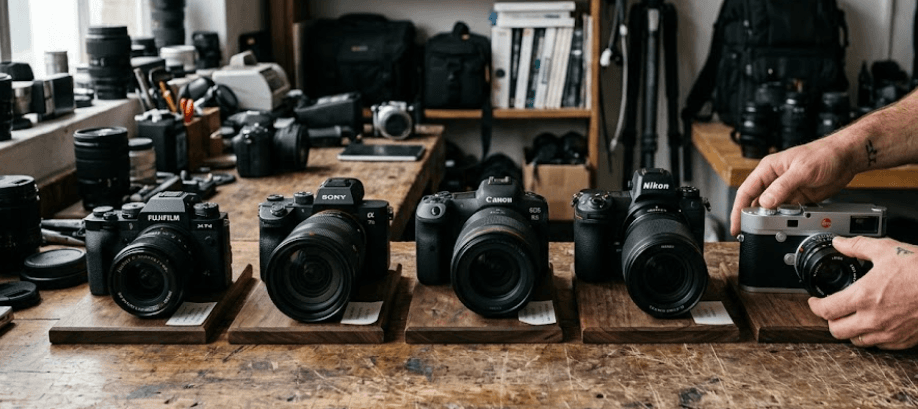
TL;DR The best lens pairing depends on what you actually photograph, not simply how expensive your camera is. A 24-70mm and 70-200mm combination is one of the most versatile full-frame setups, while a 16-35mm and 50mm pairing works well for travel, landscapes, and everyday photography. Portrait photographers may prefer a 35mm and 85mm combination, while wildlife shooters usually need much longer focal lengths such as 100-500mm or 200-600mm. The most important thing is to choose two lenses that cover different perspectives without creating unnecessary overlap. Before buying, always check the lens mount, camera format, autofocus compatibility, and whether the lens is designed for your specific camera system.
How To Choose The Right Lens Pairing
The easiest way to build a useful two-lens kit is to start with the subjects you photograph most often. Focal length determines how much of a scene you can include and how large distant subjects appear in the frame. Canon broadly categorizes lenses into wide-angle, standard, and telephoto groups, with wide lenses useful for landscapes and interiors, standard lenses offering a more natural perspective, and telephoto lenses helping bring distant subjects closer.
A good pairing should therefore give you two noticeably different perspectives. For example, a 24-70mm and 70-200mm combination covers everyday scenes, portraits, events, and distant subjects without requiring a large collection of lenses. A 16-35mm and 85mm pairing is more specialized, but it gives you a strong wide perspective alongside a portrait-friendly focal length. The right answer depends on whether you value flexibility, low-light performance, portability, or reach.
You should also consider whether you prefer primes or zooms. Prime lenses generally offer a fixed focal length and can provide large apertures in relatively compact designs, while zoom lenses let you change framing without changing position. Nikon similarly describes primes as compact and useful for low light, while zooms provide flexibility across establishing, mid-range, and close-up shots.
What Makes A Pairing Practical
A useful pairing should reduce the number of times you need to change lenses while still giving you noticeably different framing options. For travel, for example, a wide zoom combined with a standard or telephoto zoom can cover architecture, street scenes, portraits, and distant details. For wildlife, two short lenses are usually less useful because the primary need is reach.
| Photography Need | First Lens | Second Lens | Why It Works |
|---|---|---|---|
| Everyday | 24-70mm | 70-200mm | Broad general coverage |
| Travel | 16-35mm | 70-200mm | Landscapes plus distant details |
| Portraits | 35mm | 85mm | Environmental and classic portraits |
| Wildlife | 100-500mm | 200-600mm | Flexible long-range coverage |
| Street | 28mm | 50mm | Wide environmental and natural views |
| Video | 24-70mm | 70-200mm | Flexible production coverage |
50 Best Lens Pairings For Different Photography Styles
There is no single best two-lens combination for every photographer. A wedding photographer has very different requirements from someone photographing birds, while a travel photographer may value compactness more than maximum aperture. That is why these 50 pairings are organized around practical shooting situations rather than simply ranking lenses from best to worst.
The focal lengths below are especially useful as starting points for interchangeable-lens cameras. They are not universal prescriptions, because sensor size changes the effective field of view. A 50mm lens on a full-frame camera does not frame exactly like a 50mm lens on an APS-C camera. This is also why checking your camera system's compatibility information is important before purchasing a lens. Sony, for example, advises users to check the specific camera's lens compatibility information before buying.
For photographers building a first serious kit, it is usually better to buy two lenses that complement each other than two lenses that perform almost the same job. If one lens handles wide scenes and another provides reach or subject isolation, the combination becomes more useful across different shooting conditions.
Pairings 1 To 25
| No. | Best For | Lens Pairing |
|---|---|---|
| 1 | Everyday photography | 24-70mm + 70-200mm |
| 2 | Travel | 16-35mm + 70-200mm |
| 3 | Landscapes | 14-24mm + 24-70mm |
| 4 | Street photography | 28mm + 50mm |
| 5 | Environmental portraits | 35mm + 85mm |
| 6 | Classic portraits | 50mm + 85mm |
| 7 | Weddings | 24-70mm + 70-200mm |
| 8 | Events | 24-70mm + 70-200mm |
| 9 | Wildlife | 100-500mm + 200-600mm |
| 10 | Sports | 70-200mm + 100-500mm |
| 11 | Architecture | 14-24mm + 24-70mm |
| 12 | Interiors | 16-35mm + 24-70mm |
| 13 | Food photography | 35mm + 85mm |
| 14 | Fashion | 35mm + 85mm |
| 15 | Product photography | 50mm + 100mm macro |
| 16 | Macro and nature | 100mm macro + 70-200mm |
| 17 | Astrophotography | 14-24mm + 20mm prime |
| 18 | Night photography | 24mm + 50mm |
| 19 | Family photography | 35mm + 85mm |
| 20 | Concerts | 24-70mm + 70-200mm |
| 21 | Documentary | 24mm + 50mm |
| 22 | Photojournalism | 24-70mm + 70-200mm |
| 23 | Urban travel | 24mm + 70-200mm |
| 24 | Adventure | 16-35mm + 70-200mm |
| 25 | General video | 24-70mm + 70-200mm |
Best Lens Pairings For Portraits And People
Portrait photography is where focal length becomes particularly important because the lens affects how much of the environment appears around the subject and how prominently the subject fills the frame. A 35mm lens can work well for environmental portraits because it allows the surroundings to remain part of the story, while an 85mm lens gives you a tighter perspective that is commonly useful for traditional portraits. The exact result still depends on camera format, shooting distance, aperture, and composition.
A 50mm and 85mm pairing is therefore a practical choice for photographers who primarily photograph people. The 50mm can handle full-body portraits, indoor shooting, family groups, and everyday scenes, while the 85mm can provide tighter framing and stronger background separation. A 35mm and 85mm combination is another useful option if you want a wider environmental perspective without giving up a dedicated portrait focal length.
For weddings and events, a 24-70mm and 70-200mm combination is harder to beat for versatility. Nikon specifically highlights the 24-70mm as a versatile walking-around range and the 70-200mm as a useful range for portraits and isolating details within a scene.
Pairings 26 To 35
| No. | Photography Style | Lens Pairing |
|---|---|---|
| 26 | Wedding portraits | 24-70mm + 70-200mm |
| 27 | Studio portraits | 50mm + 85mm |
| 28 | Environmental portraits | 35mm + 85mm |
| 29 | Fashion portraits | 35mm + 85mm |
| 30 | Family portraits | 35mm + 85mm |
| 31 | Candid people | 35mm + 85mm |
| 32 | Travel portraits | 24-70mm + 85mm |
| 33 | Street portraits | 28mm + 85mm |
| 34 | Lifestyle photography | 35mm + 50mm |
| 35 | Events and parties | 24-70mm + 70-200mm |
Best Lens Pairings For Travel And Landscapes
Travel photography often rewards flexibility because you may move from a wide city square to a portrait in a narrow street and then photograph a distant landmark without warning. A 16-35mm paired with a 70-200mm gives you a particularly broad range while keeping the two lenses distinct. The wide zoom can handle landscapes, architecture, interiors, and large scenes, while the telephoto can isolate details or compress distant subjects.
For photographers who want a lighter setup, a 24-70mm paired with a compact telephoto can be more practical than carrying an ultra-wide zoom and a large telephoto. Nikon's travel guidance emphasizes versatility, low-light capability, and travel-friendly design, which are useful considerations when a camera bag has to be carried for an entire day.
A landscape-focused photographer may instead prefer an ultra-wide lens paired with a standard zoom. The ultra-wide lens can capture dramatic foregrounds and expansive scenery, while the standard zoom provides a more natural perspective for details, people, and smaller compositions. Canon similarly identifies wide-angle lenses as useful for landscapes, interiors, and large subjects or areas.
Pairings 36 To 42
| No. | Use Case | Lens Pairing |
|---|---|---|
| 36 | Landscape travel | 14-24mm + 24-70mm |
| 37 | City travel | 16-35mm + 24-70mm |
| 38 | Adventure travel | 16-35mm + 70-200mm |
| 39 | Scenic travel | 24-70mm + 70-200mm |
| 40 | Architecture travel | 14-24mm + 24-70mm |
| 41 | Backpacking | 24-70mm + 70-300mm |
| 42 | Travel details | 24-70mm + 70-200mm |
Best Lens Pairings For Wildlife, Sports, And Action
Wildlife and sports photography change the priorities completely. The main challenge is usually not getting a wider view, but getting enough reach to fill the frame when you cannot physically move close to the subject. Canon notes that telephoto lenses are particularly useful for sports, wildlife, distant landscapes, and subjects such as people or architectural details.
A 100-500mm and 200-600mm pairing provides a very long-range-focused kit for photographers who regularly shoot distant subjects. However, the overlap is substantial, so this is not necessarily the best two-lens purchase for everyone. A 70-200mm combined with a 100-500mm can be more flexible if you also photograph portraits, events, or closer action.
Sports photographers may prioritize a 70-200mm alongside a longer telephoto because the shorter lens remains useful when subjects move closer. Wildlife photographers who frequently photograph birds may benefit from even longer focal lengths, depending on the camera system and shooting conditions. Nikon's lens resources similarly separate sports and action, nature and wildlife, and other specialist applications when helping photographers choose lenses.
Pairings 43 To 47
| No. | Photography Style | Lens Pairing |
|---|---|---|
| 43 | Wildlife | 100-500mm + 200-600mm |
| 44 | Bird photography | 200-600mm + 600mm prime |
| 45 | Sports | 70-200mm + 100-500mm |
| 46 | Motorsports | 100-500mm + 200-600mm |
| 47 | Safari | 70-200mm + 100-500mm |
Best Lens Pairings For Macro, Video, And Creative Work
Macro photography needs a different approach because the ability to focus closely matters more than simply choosing a long focal length. A dedicated macro lens can provide true close-up capability, while a standard or telephoto lens can complement it for subjects that are larger or farther away. Nikon's lens guidance specifically identifies Micro-NIKKOR lenses for close-up work and highlights macro as a separate lens application.
For video, zooms are often especially practical because they allow framing changes without physically moving the camera. A 24-70mm and 70-200mm combination can therefore cover establishing shots, medium shots, interviews, and tighter details. However, filmmakers may prefer prime lenses when they prioritize wide apertures, consistent visual character, or a specific focal length.
Creative photographers should not treat these pairings as rules. A 35mm and 85mm kit can work for portraits, documentary projects, travel, and lifestyle photography, while a 24mm and 50mm kit can be extremely effective for street and environmental storytelling. The best combination is ultimately the one that supports the way you naturally compose images.
Pairings 48 To 50
| No. | Use Case | Lens Pairing |
|---|---|---|
| 48 | Macro photography | 100mm macro + 70-200mm |
| 49 | Video production | 24-70mm + 70-200mm |
| 50 | Creative everyday shooting | 35mm + 85mm |
Prime Vs Zoom Lens Pairings
Prime and zoom lenses solve different problems, so choosing between them should be based on how you shoot rather than which type sounds more professional. A prime lens forces you to work with one focal length, which can encourage deliberate composition and often provides a wide aperture in a relatively compact design. A zoom, on the other hand, gives you several focal lengths in one lens and can be particularly useful when your position is restricted.
A photographer who regularly works in changing environments may therefore prefer two zooms. The 24-70mm and 70-200mm combination is a good example because the lenses complement one another while covering a large portion of common shooting situations. Nikon describes zooms as useful for establishing, mid-range, and close-up shots, while primes are generally compact and well suited to low-light shooting and background blur.
Prime pairings can make more sense when size, low-light capability, or a particular visual style matters more than convenience. A 35mm and 85mm combination gives you two distinct perspectives without carrying large zooms. The key is to understand what each lens contributes instead of buying two lenses simply because they are popular.
| Priority | Better Starting Pair |
|---|---|
| Maximum flexibility | 24-70mm + 70-200mm |
| Compact setup | 35mm + 85mm |
| Travel versatility | 24-70mm + 70-200mm |
| Low-light photography | 35mm + 85mm |
| Wildlife | 100-500mm + 200-600mm |
| Landscape | 14-24mm + 24-70mm |
| Video | 24-70mm + 70-200mm |
How To Avoid Buying The Wrong Lens Pair?
The first mistake is buying lenses based only on focal-length numbers. A lens that looks perfect on a full-frame camera may provide a very different field of view on an APS-C or other sensor format. You should therefore check the camera system, mount, sensor format, autofocus support, and any crop-factor considerations before spending money.
The second mistake is choosing two lenses that overlap too heavily. If you already own a 24-70mm, buying another lens that mostly repeats that range may not expand your creative options very much. A 70-200mm, 100mm macro, 85mm prime, or ultra-wide lens may add a more meaningful capability depending on what you photograph.
The third mistake is ignoring weight and real-world use. Nikon's travel guidance emphasizes that a lens should be versatile and travel-friendly because carrying equipment all day changes how enjoyable photography becomes. A technically excellent lens that stays at home because it is too heavy may be less useful than a smaller lens that you actually carry.
Frequently Asked Questions
Q. What is the best two-lens combination for most photographers?
The 24-70mm and 70-200mm pairing is one of the most versatile choices for full-frame photographers. It covers everyday photography, travel, portraits, events, and many forms of action photography without requiring a large lens collection.
Q. Is a 35mm and 85mm combination good for portraits?
Yes. A 35mm can be useful for environmental portraits and situations where you want the surroundings included, while an 85mm provides a tighter portrait perspective and stronger subject isolation.
Q. Is a 24-70mm better than two prime lenses?
Not necessarily. A 24-70mm offers greater framing flexibility, while two primes can provide wider apertures, smaller designs, or a preferred shooting experience. The better choice depends on whether convenience or prime-lens characteristics matter more to you.
Q. What lenses should I buy for travel photography?
A 24-70mm and 70-200mm combination is highly versatile, while a 16-35mm and 70-200mm pairing gives you more coverage at both the wide and telephoto ends. Weight should also be considered if you will carry the kit all day.
Q. What is the best lens pairing for wildlife photography?
A 70-200mm paired with a 100-500mm can provide a flexible wildlife setup. Photographers who regularly shoot very distant birds may instead prioritize longer lenses such as a 200-600mm, depending on their camera system and budget.
Q. Do I need a 70-200mm if I already have a 24-70mm?
If you photograph portraits, events, sports, wildlife, or distant details, a 70-200mm can add substantially more reach. If you mostly photograph landscapes, interiors, and everyday subjects, another lens may be more useful.
Q. Is a 50mm lens good for everyday photography?
Yes. A 50mm lens can provide a relatively natural perspective on a full-frame camera and works well for everyday scenes, portraits, street photography, and low-light shooting. The field of view changes on smaller sensor formats.
Q. Should I buy prime or zoom lenses first?
Zooms are usually the easier starting point if you need flexibility across many subjects. Primes can be a better choice if you value compactness, wide apertures, or a fixed focal length that encourages more deliberate composition.
Q. Can the same lens pairing work on every camera?
The general focal-length concept can transfer between systems, but the actual field of view, mount, autofocus compatibility, image stabilization behavior, and physical compatibility can differ. Always check your camera manufacturer's compatibility information before buying.
Q. What is the most versatile lens pairing for video?
A 24-70mm and 70-200mm combination can cover a wide range of video framing, from wider establishing shots to tighter subjects. For specific productions, primes may be preferred for their aperture, size, or visual consistency.
Final Recommendation
The best lens pairing is not the one with the longest range or the highest price. It is the combination that gives you two genuinely different ways to frame your subjects without making your camera bag unnecessarily heavy. For a general full-frame setup, the 24-70mm and 70-200mm combination remains one of the safest recommendations because it covers everyday photography, portraits, travel, events, and many action situations. Nikon's own travel guidance uses the 14-24mm, 24-70mm, and 70-200mm ranges as a versatile three-lens approach, which reinforces how complementary these focal-length ranges can be.
If you primarily photograph people, consider a 35mm and 85mm or 50mm and 85mm pairing. Landscape photographers can look toward 14-24mm and 24-70mm, while wildlife shooters should prioritize telephoto reach with combinations such as 70-200mm and 100-500mm or longer specialist lenses. Macro photographers should add a dedicated macro lens rather than relying solely on general-purpose zooms.
Most importantly, check compatibility before buying. Camera mounts are system-specific, and manufacturers provide compatibility information for individual camera and lens combinations. Canon, Sony, and Nikon all provide system-specific lens information, making the manufacturer's compatibility page the safest place to confirm a purchase. A thoughtful two-lens kit will usually serve you better than collecting several lenses that rarely leave the camera bag.






