Best Canon 90D Settings for Sports and Action Shots
Learn the best Canon 90D settings for sports and action photography, from shutter speed and autofocus to ISO, aperture, drive mode, and tracking techniques.

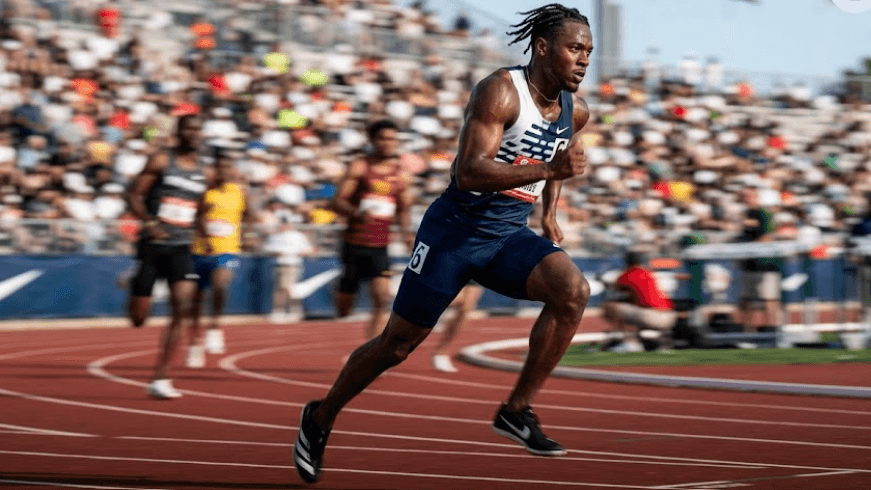
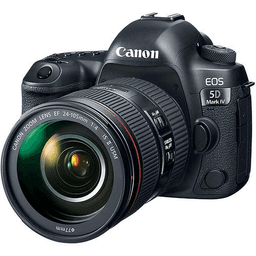
TL;DR The best Canon 90D settings for sports and action photography start with a fast shutter speed, continuous autofocus, and high-speed continuous shooting. A good starting point is 1/1000 second, AI Servo AF, High-speed continuous shooting, Auto ISO, and a wide aperture such as f/2.8 to f/5.6, depending on your lens and available light. The EOS 90D is well suited to action because it has a 32.5MP APS-C sensor, a 45-point all-cross-type AF system when using the optical viewfinder, and continuous shooting of up to 10 fps through the viewfinder. Canon also rates Live View shooting at approximately 11 fps in certain conditions, making the camera capable of handling fast-moving subjects when the settings are matched to the situation.
Why the Canon 90D Works Well for Sports Photography
The Canon EOS 90D remains a capable DSLR for sports and action photography because its specifications are designed around speed rather than simply high resolution. Its 32.5MP APS-C sensor gives you plenty of detail for cropping, which can be useful when you are photographing athletes from a distance. More importantly, the camera can shoot at up to 10 frames per second through the optical viewfinder, with autofocus and exposure tracking during continuous shooting. That combination gives you a better chance of capturing the exact moment a footballer kicks the ball, a runner crosses the finish line, or a cyclist moves through a difficult section of a course.
Autofocus is equally important because a fast shutter speed cannot rescue a photograph if the subject is out of focus. When you use the optical viewfinder, the 90D has a 45-point all cross-type autofocus system, which Canon specifically highlights for moving subjects such as athletes and motorsports. The camera also supports Servo AF, which is the appropriate autofocus mode when the distance between the camera and subject is constantly changing. For sports photography, this means you should generally think about shutter speed and autofocus together rather than treating them as separate settings.
The biggest advantage of the 90D is that it gives you enough control to adapt to different types of action. A daytime football match, an indoor basketball game, and an evening athletics event require different combinations of shutter speed, aperture, and ISO. There is no single setting that will produce perfect results in every situation. Instead, the goal is to establish a reliable starting point and then adjust exposure based on the available light, the speed of the subject, and the lens you are using.
Canon 90D Sports Settings at a Glance
| Setting | Recommended Starting Point |
|---|---|
| Shooting Mode | Manual or Shutter Priority |
| Shutter Speed | 1/1000 sec |
| Autofocus | AI Servo AF |
| Drive Mode | High-Speed Continuous |
| Aperture | f/2.8 to f/5.6 |
| ISO | Auto ISO or manually adjusted |
| AF Area | 45-point area or suitable zone/point selection |
| File Format | RAW or RAW + JPEG |
| White Balance | Auto White Balance |
| Image Stabilization | On when supported and useful |
Best Shutter Speed for Sports and Action
Shutter speed is arguably the most important setting when you are photographing sports. If your shutter is too slow, the athlete's movement can appear blurred even when the autofocus is accurate. For many outdoor sports, 1/1000 second is an excellent starting point because it is fast enough to freeze many forms of running, jumping, cycling, and ball sports. If the subject is moving extremely quickly, or you want to freeze something such as a footballer's foot during a kick, you may benefit from moving toward 1/1600 or 1/2000 second when the lighting allows it.
You do not always need an extremely fast shutter speed, though. A runner moving across the frame may be adequately frozen at around 1/1000 second, while a slower sporting event may work at 1/500 or 1/800 second. The important thing is to look at the movement you are trying to capture rather than automatically selecting the highest shutter speed available. Faster shutter speeds reduce the amount of light reaching the sensor, so pushing the shutter speed unnecessarily high can force the ISO upward and introduce more visible noise.
For panning shots, the approach is completely different. If you want to create a sense of speed by keeping a moving cyclist, runner, or car relatively sharp while the background becomes blurred, you deliberately use a slower shutter speed. Something around 1/30 to 1/125 second can be a starting range, depending on the subject and your technique. The Canon 90D is therefore capable of both frozen action and motion-blur effects, but they require very different shutter-speed choices.
Shutter Speed Guide
| Action Type | Suggested Starting Speed |
|---|---|
| General outdoor sports | 1/1000 sec |
| Fast action | 1/1600 to 1/2000 sec |
| Moderate movement | 1/500 to 1/800 sec |
| Panning | 1/30 to 1/125 sec |
| Very fast subjects | 1/2000 sec or faster when light allows |
Best Autofocus Settings for Moving Subjects
For sports photography with the optical viewfinder, AI Servo AF should generally be your starting point because it continuously adjusts focus while the subject moves. One-Shot AF is designed for subjects that are relatively stationary, so using it for a player running toward you can result in the camera focusing on the subject's earlier position rather than continuously updating focus. AI Servo is therefore much better suited to football, cricket, athletics, motorsports, and wildlife-style action where the subject does not remain at a fixed distance.
The 90D's 45-point all cross-type AF system through the optical viewfinder gives you several ways to approach moving subjects. Automatic selection can be useful when the subject is easy to distinguish from the background, while manually selecting a smaller group or point can give you more control when there are multiple people in the frame. For example, if you are photographing a football match and want one particular player rather than whichever player happens to be closest to the camera, more controlled AF selection can help prevent the camera from jumping to another subject.
Your autofocus choice should also depend on how predictable the movement is. A runner moving directly toward you presents a different challenge from a tennis player moving unpredictably from side to side. In the first situation, tracking a single subject can be relatively straightforward. In the second, you may need a broader AF area and careful framing. Canon also provides Dual Pixel CMOS AF for Live View, including face detection and tracking capabilities, but the exact autofocus behavior differs between Live View and optical-viewfinder shooting.
Recommended Autofocus Approach
| Situation | AF Starting Point |
|---|---|
| Runner approaching camera | AI Servo AF |
| Football or cricket | AI Servo AF |
| Motorsports | AI Servo AF |
| Multiple subjects | Broader AF area |
| Isolated athlete | More controlled AF selection |
| Live View action | Dual Pixel CMOS AF tracking |
Choosing Aperture and ISO for Sports
Aperture determines how much light reaches the sensor and how much of the scene appears in focus. A wide aperture such as f/2.8 is particularly useful for sports because it lets you maintain a fast shutter speed in lower light while also separating the athlete from the background. If you are using a lens with an f/2.8 maximum aperture, it can be a major advantage for indoor sports or evening matches. However, not every sports photographer has access to an f/2.8 telephoto lens, so f/4, f/5.6, or another available aperture can still produce excellent results when the light is sufficient.
ISO becomes the setting you use to compensate when you need a fast shutter speed but do not have enough light. In bright daylight, ISO 100 or a relatively low ISO may be enough at 1/1000 second. As the light drops, you may need ISO 400, 800, 1600, 3200, or higher depending on the situation. The 90D has a standard ISO range of 100 to 25,600, expandable to ISO 51,200, according to Canon. That does not mean you should automatically use the highest ISO available, but it does give you flexibility when fast shutter speeds are essential.
For unpredictable lighting, Auto ISO can be particularly practical because it allows you to prioritize shutter speed and aperture while the camera adjusts sensitivity to maintain exposure. This can be useful during a football match when clouds move across the field or when a sporting event transitions from daylight into evening. If you are shooting under controlled lighting, manually setting ISO can give you more consistent results from one frame to the next.
Aperture and ISO Starting Points
| Lighting Condition | Aperture | ISO Starting Point |
|---|---|---|
| Bright sunlight | f/4 to f/5.6 | ISO 100 to 400 |
| Overcast outdoor sports | f/2.8 to f/5.6 | ISO 400 to 800 |
| Evening sports | f/2.8 to f/4 | ISO 800 to 3200 |
| Indoor sports | f/2 to f/4 where available | ISO 1600 and above |
Best Drive Mode and Burst Settings
The EOS 90D's continuous shooting capability is one of the reasons it can work so well for action. Through the optical viewfinder, Canon specifies continuous shooting of up to 10 frames per second, while Live View can reach approximately 11 frames per second under specified conditions. This gives you the ability to capture several stages of an action sequence rather than relying on a single shutter press.
High-speed continuous shooting is particularly useful when the exact moment is difficult to predict. A footballer's foot may connect with the ball between two frames, a basketball player's expression can change quickly during a jump, or a runner's stride can look completely different from one frame to the next. Shooting a short burst increases your chances of getting the frame where the body position, expression, and ball placement all come together.
However, continuous shooting should not mean holding the shutter down for every second of an event. Long bursts create more images to review and can fill the camera's buffer. A better approach is to anticipate the action and use short bursts around the key moment. This also makes the editing process easier because you are creating a smaller number of intentional sequences rather than thousands of nearly identical frames.
Canon 90D Settings for Different Sports
Different sports require different approaches because movement, lighting, and subject distance vary considerably. Football and cricket often involve periods of waiting followed by sudden bursts of movement, so a fast shutter speed and continuous autofocus are useful. Track events can be more predictable because athletes usually follow a defined path, allowing you to pre-position yourself and anticipate where the action will occur. Motorsports, on the other hand, can require extremely fast shutter speeds for frozen images or slower speeds when you intentionally want to create motion through panning.
Indoor sports are usually more demanding because the available light is lower. Basketball, volleyball, and indoor badminton may require a wide aperture and higher ISO to maintain a fast shutter speed. This is where a bright lens becomes particularly valuable. You should resist the temptation to lower the shutter speed too far simply to keep ISO low because motion blur can be much more distracting than moderate high-ISO noise.
Wildlife and bird photography can also benefit from the same basic principles. The 90D's APS-C sensor and high resolution can be useful when you need to crop into a distant subject, while AI Servo and continuous shooting help with moving animals. Canon specifically positions the 90D as suitable for wildlife and motorsports photography, reinforcing its usefulness for action-oriented shooting.
Quick Settings by Activity
| Activity | Shutter Speed | AF | Drive |
|---|---|---|---|
| Football | 1/1000 sec | AI Servo | High Speed |
| Cricket | 1/1000 to 1/2000 sec | AI Servo | High Speed |
| Athletics | 1/1000 sec | AI Servo | High Speed |
| Motorsports | 1/1000+ or slower for panning | AI Servo | High Speed |
| Basketball | 1/800 to 1/1000 sec | AI Servo | High Speed |
| Wildlife | 1/1000 sec or faster | AI Servo | High Speed |
Common Mistakes When Shooting Action With the Canon 90D
One of the most common mistakes is choosing a shutter speed that is too slow because the photographer is trying to keep ISO low. Clean-looking noise is not useful if the athlete's face, hands, or body is blurred. For most fast sports, start around 1/1000 second and only move lower when you have a specific reason. Another common mistake is relying on autofocus without thinking about where the camera is actually focusing. If several players are close together, automatic AF selection may not always choose the athlete you want.
Another issue is shooting at the maximum burst rate continuously. The 90D can shoot quickly, but that does not mean every situation benefits from holding down the shutter. Short, deliberate bursts are usually more efficient and give you fewer duplicate frames to sort through later. You should also make sure your memory card has sufficient capacity and speed for the way you intend to shoot, particularly if you regularly capture RAW files.
Finally, many photographers forget to adapt their settings when the lighting changes. A setting that works beautifully in bright afternoon sunlight may become unsuitable as the sun goes down. If your shutter speed starts dropping below what the action requires, increase ISO rather than accepting motion blur. The best Canon 90D settings are therefore not a fixed recipe but a starting framework that you adjust as the scene changes.
Frequently Asked Questions
Q. What is the best shutter speed for sports photography on the Canon 90D?
For general sports photography, 1/1000 second is a strong starting point. For extremely fast action, you may need 1/1600 or 1/2000 second, while slower speeds can be useful for panning effects.
Q. Which autofocus mode should I use for sports on the Canon 90D?
AI Servo AF is generally the best starting point for moving subjects because it continuously adjusts focus as the subject changes distance from the camera.
Q. How many frames per second can the Canon 90D shoot?
The EOS 90D can shoot up to 10 fps through the optical viewfinder. Canon also specifies approximately 11 fps in Live View under applicable shooting conditions.
Q. Should I use Auto ISO for sports photography?
Auto ISO can be very useful when lighting changes because it lets you prioritize shutter speed and aperture while the camera adjusts sensitivity. It is particularly convenient for outdoor events with changing light.
Q. What ISO should I use for indoor sports with the Canon 90D?
Indoor sports often require ISO 1600 or higher because you need both a fast shutter speed and sufficient exposure. The exact ISO depends on the venue lighting and your lens aperture.
Q. Should I use Manual mode or Shutter Priority for sports?
Both can work. Manual mode with Auto ISO gives you strong control over shutter speed and aperture, while Shutter Priority is convenient when freezing movement is your main priority.
Q. What aperture is best for sports photography?
A wide aperture such as f/2.8 is useful when available because it lets in more light and can separate the subject from the background. If lighting is strong, f/4 or f/5.6 can also work well.
Q. Is the Canon 90D good for wildlife photography?
Yes. Its 32.5MP APS-C sensor, continuous shooting capability, and autofocus system make it a capable choice for wildlife and action photography. Canon specifically highlights wildlife and motorsports among the camera's suitable uses.
Q. Should I shoot RAW or JPEG for sports?
RAW gives you greater flexibility when correcting exposure and white balance during editing, while JPEG files are smaller and easier to use immediately. RAW is generally preferable when image quality and editing flexibility are priorities.
Q. Can the Canon 90D freeze fast-moving subjects?
Yes. With a sufficiently fast shutter speed, appropriate autofocus, and good technique, the 90D can produce sharp images of fast-moving subjects. The camera's 10 fps optical-viewfinder shooting capability also helps you capture critical moments.
Final Recommendation
The best Canon 90D settings for sports and action shots should start with AI Servo AF, High-Speed Continuous shooting, and a shutter speed around 1/1000 second. From there, adjust the aperture according to your lens and lighting, and use Auto ISO or raise ISO manually when you need to preserve that fast shutter speed. For extremely fast subjects, moving toward 1/1600 or 1/2000 second can help freeze more demanding movements, while slower shutter speeds are better reserved for intentional motion blur and panning.
The Canon EOS 90D has the core capabilities needed for serious action photography: a 32.5MP APS-C sensor, a 45-point all cross-type AF system through the optical viewfinder, and up to 10 fps continuous shooting. The real difference, however, comes from how you combine those features with the conditions in front of you. If you learn to prioritize shutter speed, maintain continuous autofocus, use short bursts, and adjust ISO when the light changes, the 90D can produce consistently sharp sports photographs without requiring complicated settings every time.