Best Camera to Buy for Shooting 4K Video on a Budget
Compare the best budget 4K cameras for 2026, including Canon, Nikon and DJI options. Find the right balance of video quality, stabilization, lenses and price.

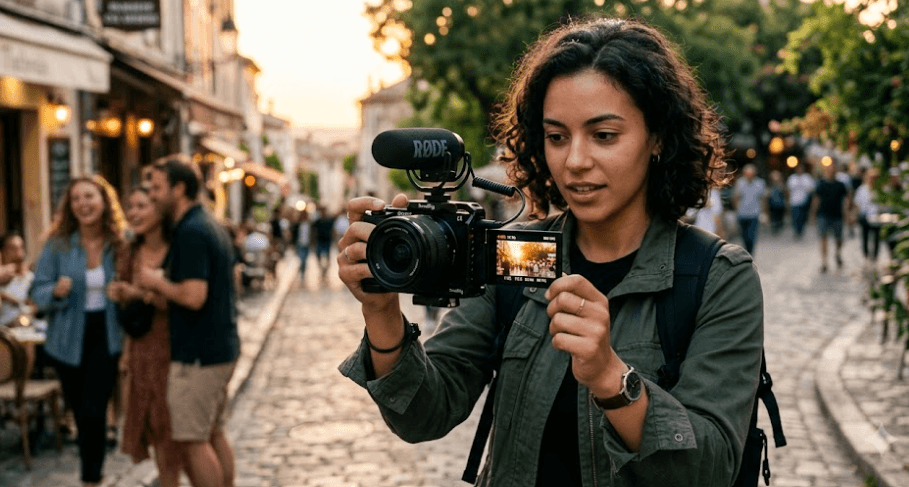
TL;DR If you want a dedicated camera for 4K video without spending flagship-level money, the Canon EOS R50 with its 18-45mm kit lens is a strong starting point because it combines a 24.2MP APS-C sensor, 4K 30p recording, reliable autofocus, and a compact body. The DJI Osmo Pocket 4 is a better fit if portability and built-in stabilization matter more than interchangeable lenses, while the Nikon Z30 is worth considering if you want a simple APS-C setup built specifically around video and vlogging.
What To Look For In A Budget 4K Camera
Buying a camera for 4K video is not simply about finding the cheapest model with a 4K logo on the box. A camera can technically record 4K and still be frustrating for real-world video if autofocus is unreliable, stabilization is weak, the lens is unsuitable, or the camera becomes difficult to handle during longer shoots. For budget buyers, the goal is to find the right combination of image quality, focusing, lens flexibility, audio support, and usability without spending money on features that will not affect the type of videos you actually make.
Sensor size is one of the first things worth checking. Cameras such as the Canon EOS R50 and Nikon Z30 use APS-C sensors, which give you considerably more flexibility than very small camera sensors when you are working with different lenses and lighting conditions. A larger sensor also gives creators more control over depth of field, although the final image depends on the lens, aperture, lighting, and processing as much as the sensor itself. The DJI Osmo Pocket 4 takes a different approach with a 1-inch sensor and a fixed lens, trading lens flexibility for a much smaller and easier-to-carry design.
You should also look beyond the maximum resolution. For many creators, dependable autofocus, a useful lens, a flip or articulating screen, microphone support, and stabilization can have a bigger impact on the finished video than moving from 4K 30p to a higher frame rate. A camera that is easy to set up and carry is more likely to be used regularly. That is particularly important for YouTube videos, travel content, interviews, product demonstrations, and social media videos where you may be moving between locations instead of working from a controlled studio.
The Important Specifications
| Feature | Why It Matters For 4K Video |
|---|---|
| Sensor size | Affects low-light performance and depth-of-field options |
| 4K frame rate | Determines whether you can shoot 24p, 30p, 60p or higher |
| Autofocus | Helps keep faces and moving subjects sharp |
| Stabilization | Reduces unwanted camera movement while shooting handheld |
| Lens system | Determines framing, background blur and upgrade options |
| Microphone input | Allows better external audio options |
| Screen design | Makes self-shooting and unusual angles easier |
| Battery life | Determines how practical longer shooting sessions are |
Canon EOS R50 For Budget 4K Video
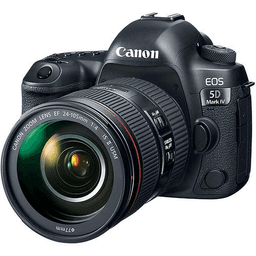
The Canon EOS R50 is one of the most approachable interchangeable-lens options for budget-conscious video creators. Canon lists a 24.2MP APS-C CMOS sensor, a lightweight body of approximately 375g, 4K 30p video using 6K oversampling, and Full HD recording at up to 120p. Its Dual Pixel CMOS AF II system also supports subject detection and tracking, which is useful when you are recording yourself or moving subjects. Canon India currently lists the RF-S 18-45mm kit at an MRP of ₹75,995, while Canon's online store has shown the kit at ₹65,990.
The 18-45mm kit lens is important because the camera's price should not be judged by the body alone. Buying a body and then immediately needing a lens can change the budget considerably. The kit lens gives you a practical starting range for everyday shooting, although its relatively modest maximum aperture means you may eventually want a faster lens for low-light work or stronger background separation. The R50 also has a vari-angle touchscreen, which is useful for creators who record themselves, frame low-angle shots, or need to monitor composition without standing directly behind the camera.
For someone moving up from a smartphone, the R50 makes sense because it provides a conventional camera system that can grow with your skills. You can begin with the kit lens and later invest in additional RF or RF-S lenses as your requirements change. Its 4K 30p recording is sufficient for standard YouTube, travel, educational, product, and social media production. The main limitation is that this is not a cinema camera with every professional video feature, so buyers should think of it as a capable entry-level mirrorless camera rather than a low-cost replacement for a high-end production setup.
Canon EOS R50 At A Glance
| Specification | Canon EOS R50 |
|---|---|
| Sensor | 24.2MP APS-C CMOS |
| 4K video | 4K 30p |
| 4K method | 6K oversampled |
| Slow motion | Full HD 120p |
| Lens | RF-S 18-45mm kit option |
| Autofocus | Dual Pixel CMOS AF II |
| Weight | Approx. 375g |
| Canon India MRP | ₹75,995 with 18-45mm lens |
DJI Osmo Pocket 4 For Portable 4K Video
The DJI Osmo Pocket 4 takes a completely different approach to budget 4K video. Instead of using interchangeable lenses, it combines a compact camera with a built-in three-axis mechanical gimbal. DJI lists a 1-inch stacked CMOS sensor, a 20mm-equivalent f/2.0 lens, a 2-inch OLED touchscreen, and 4K recording at up to 60fps for normal video. It can also record up to 4K 240fps in slow-motion mode. In India, current retail listings put the standard combo around ₹52,990, although prices can change with promotions and stock.
That built-in gimbal is the biggest reason to consider the Pocket 4 instead of a traditional mirrorless camera. If you are walking through a market, travelling, filming a room tour, recording yourself outdoors, or creating quick social media videos, mechanical stabilization can make handheld footage considerably easier to manage. You also do not need to purchase a separate gimbal before you can start shooting stabilized footage. The small form factor makes the Pocket 4 particularly practical for creators who value convenience and do not want to carry a camera body, lenses, and stabilization equipment separately.
There is a trade-off, however. The Pocket 4's fixed lens does not give you the same creative flexibility as the interchangeable-lens systems used by Canon and Nikon. You cannot simply mount a wide-angle, telephoto, or fast prime lens when your requirements change. That makes the Pocket 4 especially attractive for travel, vlogging, walking videos, and fast-moving content, while the R50 is more flexible for creators who expect their production needs to grow over time. The choice therefore comes down to whether portability and stabilization or lens flexibility matter more to you.
Pocket 4 Versus A Mirrorless Camera
| Factor | DJI Osmo Pocket 4 | Canon EOS R50 |
|---|---|---|
| Sensor | 1-inch stacked CMOS | 24.2MP APS-C CMOS |
| Lens | Fixed 20mm-equivalent f/2.0 | Interchangeable RF/RF-S |
| Normal 4K | Up to 4K 60fps | Up to 4K 30p |
| Slow motion | Up to 4K 240fps | Up to Full HD 120p |
| Stabilization | Built-in 3-axis gimbal | Depends on camera/lens setup |
| Portability | Extremely compact | Compact mirrorless |
| Upgrade path | Limited lens flexibility | Large lens ecosystem |
Nikon Z30 For Beginner Video Creators
The Nikon Z30 is another APS-C mirrorless camera designed with creators in mind. Nikon's Indian product page lists the Z30 with a 23.5 x 15.7mm DX-format sensor and describes it as the lightest and most compact Z-series camera. The 16-50mm VR kit is currently listed at ₹73,495, while the body-only price is ₹59,895. The camera records UHD 4K at 30p and Full HD at higher frame rates, making it suitable for standard creator workflows.
The Z30 is designed without an electronic viewfinder, which helps keep the body compact but means you compose your shots through the screen. For video creators, that can actually be perfectly reasonable because many people shooting themselves or filming from a tripod will use the rear display anyway. Nikon also includes dual microphones, and the camera is positioned around video creation, vlogging, streaming, and social content rather than traditional viewfinder-based photography. The 16-50mm VR lens provides a useful starting range and includes optical vibration reduction.
The bigger question is price. The Z30 kit sits close to the Canon EOS R50 kit in the Indian market, so buyers should compare the exact street prices rather than assuming one is automatically cheaper. Both give you APS-C sensors and interchangeable lenses, while their handling and autofocus systems differ. If you already own Nikon Z lenses or prefer Nikon's controls and ecosystem, the Z30 becomes more compelling. For a completely new buyer, the choice should be based on the camera's handling, available lenses, current kit pricing, and the kind of video you plan to produce.
Nikon Z30 At A Glance
| Specification | Nikon Z30 |
|---|---|
| Sensor | 20.9MP DX-format CMOS |
| Sensor size | APS-C/DX |
| 4K video | UHD 4K 30p |
| Lens option | NIKKOR Z DX 16-50mm VR |
| Microphones | Built-in stereo microphones |
| Viewfinder | No electronic viewfinder |
| Body weight | Approx. 350g class |
| 16-50mm kit MRP | ₹73,495 |
Sony ZV-E10 Still Makes Sense On Sale
The original Sony ZV-E10 remains relevant because it was designed specifically around content creation and uses a 24.2MP APS-C sensor. Sony's specifications confirm 4K recording at 24p, 25p, and 30p, with XAVC S recording and support for multiple picture profiles including S-Log2, S-Log3, and HLG. It also supports Full HD recording at up to 120p.
Its biggest attraction in 2026 is not that it is the newest option, but that its older position can make it interesting when discounted. The E-mount system gives you access to a broad selection of lenses, while the camera's video-focused design includes features that appeal to vloggers and creators. However, buyers should be careful about paying too much for an older body simply because it has a familiar name. If the ZV-E10 approaches the price of a newer competitor, the total package should be compared carefully.
Sony's newer ZV-E10 II is a much more capable camera, but it moves beyond what most people would call a budget purchase. Sony India lists the ZV-E10 II at ₹99,490 for the body and ₹1,09,990 for the 16-50mm kit. It supports 4K 60p and 10-bit 4:2:2 recording, which is a meaningful step up for creators doing more serious post-production. That makes it a camera to consider when the budget expands, rather than the default recommendation for someone specifically looking for an affordable 4K setup.
Budget Camera Comparison
| Camera | Approx. Current India Price | Sensor | 4K Capability | Best Suited For |
|---|---|---|---|---|
| DJI Osmo Pocket 4 | ₹52,990 | 1-inch | Up to 4K 60p | Travel and handheld video |
| Canon EOS R50 + 18-45mm | ₹65,990 selling price shown by Canon | APS-C | 4K 30p | Beginner creators |
| Nikon Z30 + 16-50mm | ₹73,495 MRP | APS-C/DX | 4K 30p | Vlogging and creator video |
| Sony ZV-E10 II + 16-50mm | ₹1,09,990 MRP | APS-C | 4K 60p, 10-bit | Advanced creators |
How To Choose The Right 4K Camera For Your Budget
If you mainly shoot travel videos, walking tours, reels, family events, or handheld content, the DJI Osmo Pocket 4 deserves serious consideration. Its integrated gimbal removes one of the biggest practical problems with handheld video, while its 1-inch sensor, 4K recording, and compact body keep the setup simple. It is also easier to carry than a traditional mirrorless camera with a lens attached, which can make a noticeable difference when you are recording throughout the day.
If you want to learn camera fundamentals and build a system that can grow with you, an APS-C mirrorless camera makes more sense. The Canon EOS R50 and Nikon Z30 both give you interchangeable lenses, allowing you to change your field of view and eventually move into faster lenses or more specialized optics. This makes them better suited to creators who might move from basic vlogging into interviews, product videos, photography, short films, or more controlled indoor shoots.
You should also reserve part of your budget for accessories. A fast memory card, spare battery, microphone, tripod, and basic lighting can improve the final result more than spending the entire budget on the camera body. Audio deserves particular attention because viewers may tolerate slightly imperfect visuals, but poor or distracting sound can make an otherwise good video difficult to watch. A balanced ₹60,000 to ₹80,000 setup can therefore be more useful than spending the entire amount on a camera and having nothing left for the equipment around it.
Budget Planning
| Total Budget | Camera Approach | What To Prioritize |
|---|---|---|
| Under ₹55,000 | Compact creator camera | Stabilization and portability |
| ₹55,000–₹75,000 | Entry-level mirrorless | Sensor and kit lens |
| ₹75,000–₹1,00,000 | Better lens/accessory setup | Audio, lens and lighting |
| Above ₹1,00,000 | Advanced creator camera | 10-bit, 4K 60p and lens options |
Common Mistakes When Buying A 4K Camera
The first mistake is assuming that 4K automatically means better video. Resolution only describes the number of pixels recorded. A camera with good autofocus, exposure control, stabilization, and a suitable lens can produce more useful footage than a camera with a higher headline specification but poor handling. This is why the Pocket 4's stabilization and the R50's autofocus should be considered alongside their respective 4K capabilities rather than treating resolution as the only deciding factor.
Another mistake is ignoring the lens. An interchangeable-lens camera gives you much more flexibility, but the kit lens is still part of the system you are buying. The Canon 18-45mm and Nikon 16-50mm lenses are useful starting points, but creators working in dim rooms or looking for strong background separation may eventually want a faster prime lens. A fixed-lens camera avoids this decision entirely, but you also lose the ability to change your optical setup later.
The final mistake is spending the entire budget on the camera. Video production requires storage, audio, power, stabilization, and sometimes lighting. A creator recording talking-head videos indoors may benefit more from a microphone and soft light than from spending another ₹20,000 on a camera body. Likewise, someone travelling frequently may value a compact stabilized camera more than a larger interchangeable-lens setup. Think about the complete shooting system before deciding which camera is actually affordable.
Frequently Asked Questions
Q. What is the best budget camera for shooting 4K video?
The Canon EOS R50 is a strong option for buyers who want an interchangeable-lens camera. It has a 24.2MP APS-C sensor and records 4K 30p using 6K oversampling. The DJI Osmo Pocket 4 is another strong option if portability and built-in stabilization are more important than interchangeable lenses.
Q. Is the Canon EOS R50 good for 4K video?
Yes. The Canon EOS R50 records 4K 30p using 6K oversampling and also supports Full HD recording at up to 120p. Its Dual Pixel CMOS AF II system provides subject detection and tracking, making it useful for beginner creators and people who record themselves.
Q. Is the DJI Osmo Pocket 4 good for YouTube videos?
Yes. The Pocket 4 is particularly useful for travel, walking videos, vlogging, and handheld YouTube content because it combines a compact body with a built-in three-axis gimbal. It supports 4K recording up to 60fps for normal video and higher frame rates in slow-motion mode.
Q. Is 4K 30fps enough for YouTube?
For many YouTube videos, 4K 30fps is more than sufficient. Talking-head videos, educational content, product demonstrations, interviews, and travel videos can all be produced effectively at 30fps. Higher frame rates become more useful when you specifically want smoother motion or slow-motion footage.
Q. Should I buy a mirrorless camera or a compact camera for 4K video?
Choose a mirrorless camera if you want interchangeable lenses and an upgrade path. Choose a compact camera such as the DJI Osmo Pocket 4 if you prioritize portability, stabilization, and quick setup. Your shooting style should determine which design makes more sense.
Q. Is the Nikon Z30 good for beginners?
The Nikon Z30 is designed with video creators in mind and offers an APS-C/DX-format sensor, 4K 30p recording, a creator-focused body, and built-in microphones. The 16-50mm VR kit also gives beginners a practical lens to start with.
Q. Is the Sony ZV-E10 still worth buying in 2026?
The original Sony ZV-E10 can still make sense when available at a competitive price. It records 4K up to 30p and uses an APS-C sensor with Sony's E-mount. However, buyers should compare its current price against newer cameras before purchasing.
Q. Do I need a gimbal for 4K video?
Not always. A gimbal is useful when you want smooth moving shots, but it is not essential for tripod-based videos or controlled shooting. The DJI Osmo Pocket 4 has a built-in three-axis gimbal, which removes the need to buy a separate gimbal for basic stabilized handheld shooting.
Q. Is a larger sensor important for 4K video?
Sensor size matters, but it is only one part of image quality. APS-C cameras such as the Canon EOS R50 and Nikon Z30 provide greater lens flexibility and useful control over depth of field. A 1-inch camera such as the Pocket 4 can still produce high-quality 4K footage while being significantly more compact.
Q. What accessories should I buy with a budget 4K camera?
A suitable memory card, spare battery, microphone, tripod, and basic lighting are the most useful additions for many creators. The exact accessories depend on the camera and shooting style, but leaving some of the budget for audio and support equipment can improve the final production more than spending everything on the camera itself.
Final Recommendation
For most beginners who want a dedicated camera and expect their video work to grow, the Canon EOS R50 with the 18-45mm kit lens is the most balanced starting point. Its APS-C sensor, 4K 30p recording, 6K oversampling, Dual Pixel CMOS AF II, compact body, and interchangeable-lens system give you a practical foundation without moving into professional-camera pricing. Canon's current Indian store listing has shown the kit at ₹65,990, although buyers should check the live selling price before purchasing.
The DJI Osmo Pocket 4 is the better fit when portability and stabilization are the priority. Its 1-inch sensor, built-in three-axis gimbal, 4K 60p recording, and compact design make it particularly convenient for travel and handheld content. At around ₹52,990 in current Indian listings, it also leaves more room in the budget for storage, audio, and other accessories.
The Nikon Z30 is worth considering if you prefer Nikon's system and want an APS-C creator camera with an interchangeable lens. Meanwhile, the Sony ZV-E10 II is better treated as an advanced option once the budget crosses ₹1 lakh. Ultimately, the best budget 4K camera is not necessarily the one with the longest specification sheet. It is the camera that matches how you shoot, fits the complete equipment budget, and is easy enough to carry and use that you will actually keep creating with it.