Apple Vision Pro 2 vs Meta Quest 4: Which Headset Wins in 2026?
Apple Vision Pro 2 and Meta Quest 4 are not officially available in 2026. Here is what is confirmed, what is rumored, and which current headset makes more sense today.

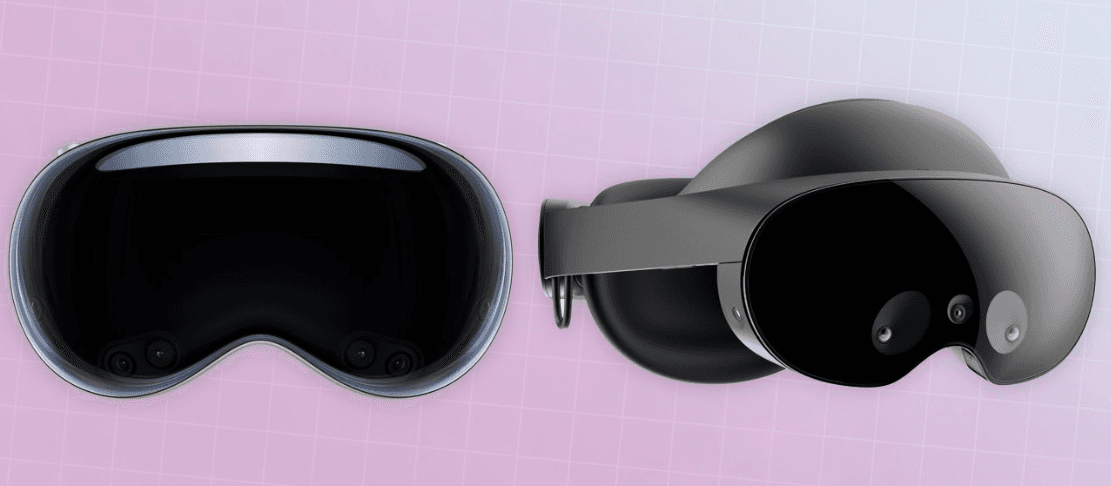
TL;DR: Apple Vision Pro 2 and Meta Quest 4 are not actually available as competing retail headsets in 2026. Apple’s current headset is the M5-equipped Vision Pro, while credible reporting points to a true Vision Pro successor being at least a couple of years away. Meta’s latest officially released Quest models remain the Quest 3 and Quest 3S, with Quest 4 reportedly pushed to 2027 or later. So, there is no factually sound winner between Vision Pro 2 and Quest 4 yet. For buyers today, the M5 Apple Vision Pro is the more advanced premium spatial-computing option, while the Meta Quest 3 remains the more practical mainstream VR choice.
Apple Vision Pro 2 vs Meta Quest 4: What Is Actually Available in 2026?
Before comparing the Apple Vision Pro 2 and Meta Quest 4, there is an important correction to make. Neither headset has been officially launched as a 2026 consumer product. Apple’s current Vision Pro was refreshed in October 2025 with the M5 chip and a redesigned Dual Knit Band, while Meta’s official Quest line-up continues to center on the Quest 3 and Quest 3S. This means many articles presenting Vision Pro 2 and Quest 4 as finished products with confirmed prices, processors, displays, and release dates are mixing reported information with speculation. For a buyer-focused comparison, those claims should not be treated as confirmed specifications.
Apple’s current Vision Pro is already a high-end spatial computer rather than a conventional VR headset. The M5 update increased rendering performance, allows refresh rates of up to 120Hz in supported scenarios, and renders 10 percent more pixels on its custom micro-OLED displays than the previous version. Apple also continues to position visionOS around spatial apps, Mac Virtual Display, immersive video, and interaction through eye tracking, hand gestures, and voice. So, when discussing a future Vision Pro 2, it is more accurate to talk about what Apple could improve rather than presenting rumoured specifications as settled facts.
The same caution applies to Meta. Quest 3 officially launched as Meta's next-generation mixed-reality headset in 2023, and Meta later introduced Quest 3S as a more affordable option. Reporting in late 2025 suggested Meta had changed its hardware roadmap, with an ultralight headset taking priority and the traditional Quest 4 moving to a later window. More recent reporting has placed the gaming-focused Quest 4 in 2027 or later, but Meta has not officially announced a consumer Quest 4 with a confirmed launch date or specifications.
Current Status At A Glance
| Headset | Status In 2026 | Confirmed Hardware | Confirmed Release |
|---|---|---|---|
| Apple Vision Pro 2 | Not officially launched | No confirmed final specifications | No confirmed 2026 launch |
| Meta Quest 4 | Not officially launched | No confirmed final specifications | No confirmed 2026 launch |
| Apple Vision Pro | Available, M5 version | M5, micro-OLED, visionOS | October 2025 refresh |
| Meta Quest 3 | Available | Snapdragon XR2 Gen 2, mixed reality | October 2023 |
| Meta Quest 3S | Available | Snapdragon XR2 Gen 2, mixed reality | October 2024 |
The biggest takeaway is simple: there is no legitimate Vision Pro 2 vs Quest 4 specification battle to settle in August 2026. Any comparison that gives exact prices, RAM, battery capacity, display resolution, or processor specifications for both future models should clearly label those figures as rumours rather than facts.
Vision Pro 2 vs Quest 4: Display And Visual Experience
Display quality is likely to remain one of the biggest differences between Apple's premium headset strategy and Meta's more consumer-focused Quest platform. The current Vision Pro already uses custom micro-OLED displays and has extremely high pixel density, while Apple's M5 update increased the number of rendered pixels by 10 percent and enables refresh rates of up to 120Hz in supported experiences. This makes the existing Vision Pro particularly strong for reading text, viewing detailed interfaces, watching immersive video, and using a large virtual Mac workspace.
A future Vision Pro successor would therefore have a high bar to clear. However, Apple has not officially published the specifications of a product called Vision Pro 2. Reports have suggested different directions for Apple's future headset strategy, but those reports have changed over time. Reuters reported in 2025 that Apple had paused development of a planned cheaper and lighter Vision Pro variant while redirecting resources toward smart glasses, while later reporting has suggested a true successor could be several years away. That uncertainty makes it impossible to responsibly claim that Vision Pro 2 will have a particular display resolution or refresh rate.
Quest 4 faces the opposite situation. Meta has already demonstrated that it can deliver strong mixed-reality experiences at a much lower price than Apple's headset with Quest 3. Quest 3 brought higher resolution, stronger performance, and improved mixed reality compared with Quest 2, and Quest 3S broadened access to the platform. A future Quest 4 could improve display quality, passthrough, processing power, and comfort, but the final specifications remain unconfirmed. For now, the Quest 3 is the hardware benchmark that any future Quest 4 comparison should use.
Which Display Approach Looks More Promising?
| Area | Apple Vision Pro | Future Vision Pro 2 | Meta Quest 3 | Future Quest 4 |
|---|---|---|---|---|
| Display technology | Micro-OLED | Unconfirmed | LCD | Unconfirmed |
| High refresh rate | Up to 120Hz in supported use | Unconfirmed | Up to 120Hz | Unconfirmed |
| Resolution | Very high | Unconfirmed | High | Unconfirmed |
| Eye tracking | Yes | Expected to continue, not officially confirmed | No equivalent confirmed for Quest 3 | Rumored, not confirmed |
| Mixed reality | Advanced | Unconfirmed | Strong | Expected to improve, not confirmed |
For pure display quality and fine text, Apple's current Vision Pro has a clear advantage over Quest 3. However, that does not automatically mean a future Vision Pro 2 will beat Quest 4 because neither product's final hardware has been announced.
Performance, Gaming, And Mixed Reality
Performance is where the comparison becomes more complicated because Apple and Meta are building their headsets for somewhat different purposes. The current Vision Pro uses Apple's M5 chip after the 2025 refresh, giving it a class of processing hardware that is much closer to Apple's Mac and iPad ecosystem than to conventional standalone VR hardware. Apple uses that performance for spatial applications, high-resolution environments, Mac Virtual Display, immersive media, and sophisticated visionOS experiences.
Meta's Quest platform is much more directly connected to standalone VR gaming. Quest 3 uses Qualcomm's Snapdragon XR2 Gen 2 platform and supports a large library of VR and mixed-reality experiences without requiring a computer. Meta has also built its platform around controllers, hand tracking, mixed-reality passthrough, and a dedicated software ecosystem. That makes Quest hardware much easier to recommend to someone whose primary goal is gaming rather than premium spatial productivity.
A future Quest 4 could potentially narrow the performance gap with newer Qualcomm hardware, but there is no confirmed processor specification yet. Similarly, Apple could improve graphics performance, thermal efficiency, or AI capabilities in a future Vision Pro successor, but none of those should be presented as confirmed features. The safest conclusion in 2026 is that Apple currently has the stronger premium computing platform, while Meta has the more established consumer VR gaming proposition. Meta's official Quest announcements also emphasize gaming and mixed-reality experiences as major parts of the platform.
Gaming And Productivity Comparison
| Use Case | Apple Vision Pro | Meta Quest 3 | Future Vision Pro 2 | Future Quest 4 |
|---|---|---|---|---|
| VR Gaming | Good, but not its primary focus | Excellent | Unconfirmed | Expected to be a major focus |
| Mixed Reality | Excellent | Excellent | Unconfirmed | Unconfirmed |
| Productivity | Excellent | Good | Unconfirmed | Unconfirmed |
| Mac Integration | Excellent | Limited | Expected to remain strong | Unconfirmed |
| Standalone Operation | Yes | Yes | Expected | Expected |
| Game Ecosystem | Smaller | Strong | Unconfirmed | Expected to expand |
If gaming is your main reason for buying a headset, the Quest ecosystem is currently the safer choice. If your priority is spatial productivity, high-resolution media, and integration with Apple's ecosystem, Vision Pro is the more compelling platform.
Design, Comfort, And Everyday Use
Comfort could become one of the most important battlegrounds for the next generation. The original Vision Pro was widely criticized for its weight and price, and Apple's 2025 M5 refresh introduced a Dual Knit Band designed to improve comfort and weight distribution. However, the headset remains a premium, relatively substantial device rather than something designed to disappear on your face. Apple has not confirmed a second-generation design that would completely change this equation.
Meta has been moving in a different direction. Reporting in 2025 indicated that the company was exploring an ultralight mixed-reality headset, internally associated with the codename Puffin, while side-lining earlier Quest 4 designs. The reported concept was intended to be much lighter by moving processing and battery components into an external device. These reports are not equivalent to a confirmed consumer product, but they show that Meta is actively exploring ways to make mixed reality less bulky.
For buyers, this matters because comfort affects how often a headset is actually used. A headset can have excellent displays and powerful processors, but if you remove it after 20 minutes because of weight or pressure, those specifications become less useful. This is another reason it would be premature to declare a Vision Pro 2 or Quest 4 winner before both products have been officially announced and independently tested.
Price And Value In 2026
Price is probably where the biggest difference between Apple's and Meta's approaches will remain. The original Apple Vision Pro launched in the United States at $3,499, placing it firmly in a premium computing category rather than mainstream VR. Apple's 2025 M5 refresh retained that positioning. Meta, meanwhile, introduced Quest 3 at $499.99 for the 128GB version at launch and subsequently introduced Quest 3S as a more affordable option.
That price gap changes what buyers expect from each device. A Vision Pro buyer is more likely to evaluate the headset against a Mac, high-end monitor, or workstation, while a Quest buyer is more likely to compare it with a game console, gaming PC accessory, or entertainment device. Calling one headset "better" without considering price therefore misses one of the most important parts of the buying decision.
There is no confirmed Indian price for Vision Pro 2 or Quest 4 because neither has been officially launched. Any current listing that presents a definitive India price for either future headset should be treated carefully unless it comes directly from the manufacturer. For buyers shopping in 2026, the more useful comparison is between the M5 Apple Vision Pro and currently available Quest hardware.
Value Position
| Category | Apple Vision Pro | Meta Quest 3 |
|---|---|---|
| Positioning | Premium spatial computer | Mainstream standalone VR/MR |
| Launch US Price | $3,499 | $499.99 for 128GB |
| Primary Strength | Spatial computing | Gaming and mixed reality |
| Ecosystem | Apple visionOS | Meta Horizon OS |
| Value For Gaming | Lower | Higher |
| Value For Productivity | Higher | Lower |
The future Vision Pro 2 and Quest 4 could change this balance significantly, but until their prices are confirmed, assigning a winner would be speculation.
Which Headset Should You Wait For?
If you are already invested in Apple hardware and want a headset primarily for spatial productivity, immersive media, and Mac workflows, Apple's direction is worth watching. The current Vision Pro already demonstrates what Apple can do with high-resolution displays, eye and hand interaction, and Mac Virtual Display. However, buyers should not delay a purchase solely because they expect a Vision Pro 2 to arrive in 2026. Current reporting does not support that expectation.
For gamers, Meta's roadmap is more interesting. Quest 3 already provides a mature standalone VR platform, while reporting indicates that a gaming-focused Quest 4 remains on Meta's roadmap but has moved beyond the originally expected 2026 window. UploadVR reported that the traditional Quest 4 could follow a separate ultralight headset, potentially landing in late 2027 or later. That timeline is reported, not officially confirmed by Meta, so it should be treated accordingly.
The practical advice is therefore different for each buyer. If you need a headset today, buy based on the hardware that actually exists. If you are specifically waiting for the next generation, do not treat leaked Quest 4 or Vision Pro 2 specifications as final. The next generation could bring major improvements in weight, processing, displays, passthrough, eye tracking, battery life, or AI, but none of those improvements should be counted as guaranteed until Apple and Meta announce them.
Frequently Asked Questions
Q. Is Apple Vision Pro 2 available in 2026?
No. Apple has not officially launched a product called Vision Pro 2 as of August 2026. The current model is the Apple Vision Pro with the M5 chip, introduced in October 2025.
Q. Is Meta Quest 4 available in 2026?
No. Meta has not officially launched Quest 4 in 2026. Current reporting suggests a traditional Quest 4 may arrive in 2027 or later, but Meta has not confirmed a consumer release date.
Q. Which is better, Vision Pro 2 or Quest 4?
There is no factual winner yet because neither product has been officially released. Comparing their rumoured specifications as if they were confirmed would be misleading.
Q. What is the current Apple Vision Pro model?
The current Apple Vision Pro was updated with Apple's M5 chip and a Dual Knit Band in October 2025. Apple says the M5 version can render 10 percent more pixels and support refresh rates up to 120Hz in supported scenarios.
Q. What is the latest Meta Quest headset available?
Meta's current mainstream line-up includes Quest 3 and Quest 3S. Meta officially introduced Quest 3 in 2023 and Quest 3S in 2024.
Q. Is Vision Pro better for gaming than Meta Quest?
For dedicated standalone VR gaming, Meta Quest is currently the safer choice because Meta has built the platform around VR gaming and has a broad library of experiences. Vision Pro is more strongly positioned around spatial computing and immersive media.
Q. Is Vision Pro better for productivity?
The current Vision Pro has a strong productivity advantage, particularly for Apple users who want features such as Mac Virtual Display and a high-resolution spatial workspace. A future Vision Pro 2 could improve this further, but its specifications are not confirmed.
Q. Will Quest 4 launch in 2026?
Current reporting does not support a confirmed 2026 Quest 4 launch. Reports have suggested that Meta's gaming-focused Quest 4 has moved to 2027 or later, although Meta has not provided an official release date.
Q. Should I buy Quest 3 instead of waiting for Quest 4?
If you want a standalone VR headset now, Quest 3 is a sensible option because it is an officially released product with an established software ecosystem. If you are comfortable waiting and do not need a headset immediately, waiting for Meta's next official announcement makes more sense than relying on leaks.
Q. Should I wait for Apple Vision Pro 2?
Only if you specifically want a future-generation Apple headset and do not need one immediately. Current reporting suggests Apple's next true Vision Pro successor is not expected soon, so there is little reason to delay an otherwise necessary purchase solely for a rumoured 2026 launch.
Final Recommendation
The Apple Vision Pro 2 vs Meta Quest 4 comparison needs one major qualification in 2026: neither headset is an officially released product. That means there is no responsible way to declare one the winner based on rumored specifications. Apple currently has the M5-equipped Vision Pro, which is the stronger premium spatial-computing platform, while Meta's Quest 3 remains the more practical choice for mainstream standalone VR and gaming.
If you want a headset today, choose the M5 Apple Vision Pro if you have the budget and primarily want spatial productivity, immersive media, and deep Apple ecosystem integration. Choose the Meta Quest 3 if gaming, mixed reality, affordability, and a mature standalone VR library matter more. If you are specifically waiting for Vision Pro 2 or Quest 4, wait for official announcements rather than buying into leaked specifications.