43-inch vs 50-inch TV: Which Size Is Right for Your Room?
Choosing between a 43-inch and 50-inch TV? Compare screen dimensions, viewing distance, room layout, picture quality, and value to find the right size for your home.

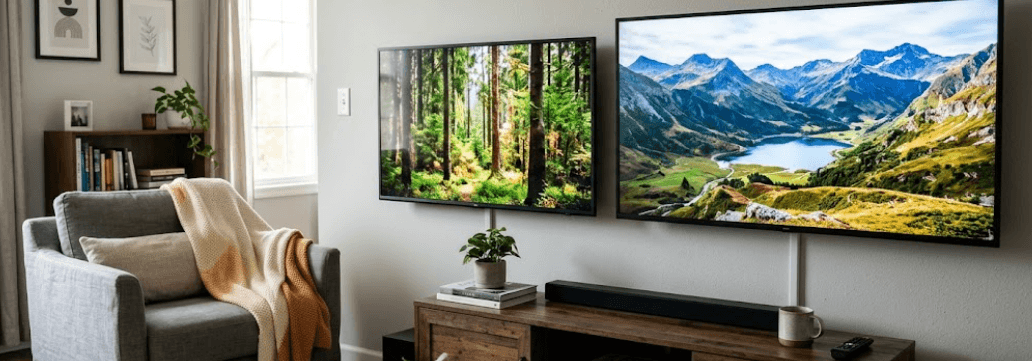
TL;DR: Choosing between a 43-inch and 50-inch TV depends on your viewing distance, available wall space, and how you watch content. A 43-inch TV is a practical choice for bedrooms, compact apartments, and smaller living rooms where the seating position is relatively close to the screen. A 50-inch TV offers a more immersive experience for movies, sports, and group viewing, provided your room can accommodate the larger display. Both sizes are available in 4K, but overall picture quality depends on the panel, brightness, contrast, processing, and HDR performance of the specific model. Measure your room before buying, compare the features within your budget, and choose the screen that feels comfortable from your usual seating position.
Understanding the Difference Between 43-Inch and 50-Inch TVs
When comparing a 43-inch vs 50-inch TV, the first thing to understand is that screen size refers to the diagonal measurement from one corner of the display to the opposite corner. It does not represent the TV's total width or height. Assuming a standard 16:9 aspect ratio, a 43-inch screen measures approximately 37.5 inches wide and 21.1 inches high, while a 50-inch screen measures around 43.6 inches wide and 24.5 inches high. The actual television may be slightly larger because of its bezels, frame, and stand, so check the manufacturer's dimensions before deciding where to place it.
The seven-inch difference might not sound significant on paper, but it changes how much of your field of vision the screen occupies. A 50-inch TV has approximately 35% more screen area than a 43-inch model with the same aspect ratio. This can make movies, sports broadcasts, and console games feel more engaging, particularly when several people watch together. However, a bigger screen is not automatically the better choice for every room. If you sit close to the television or have limited wall space, a 43-inch model may fit your setup more naturally without dominating the room.
It is also important to separate screen size from picture quality. A well-calibrated 43-inch 4K television with good contrast and brightness can deliver a better picture than a budget 50-inch model with weaker image processing. Similarly, two televisions of the same size may look noticeably different because one uses a better panel or handles HDR content more effectively. Instead of choosing based on inches alone, compare resolution, brightness, contrast, refresh rate, available HDMI ports, and smart TV features. These details will help you decide whether the extra screen area of a 50-inch TV is worth the additional cost.
43-Inch vs 50-Inch TV Dimensions
| Measurement | 43-Inch TV | 50-Inch TV |
|---|---|---|
| Approximate screen width | 37.5 inches | 43.6 inches |
| Approximate screen height | 21.1 inches | 24.5 inches |
| Screen area | 791 sq. inches | 1,068 sq. inches |
| Best suited to | Compact spaces | Medium-sized spaces |
| Main advantage | Easier placement | More immersive viewing |
These measurements assume a 16:9 screen and exclude the outer frame and stand. Actual product dimensions vary by model.
Which TV Size Is Better for Your Room?
Room size is a useful starting point, but the distance between your seating position and the screen is usually more important than the room's total floor area. A small living room with a sofa positioned far from the television may benefit from a 50-inch screen, while a larger room with a chair close to the TV may work better with a 43-inch model. Before shopping, measure the distance from where you normally sit to the wall or cabinet where the television will go. This gives you a practical basis for comparing screen sizes rather than relying on general rules about what belongs in a small or large room.
A 43-inch television often works well in bedrooms, study rooms, guest rooms, and compact urban apartments. It can fit comfortably on a smaller entertainment unit without taking up too much visual space. It is also a sensible option for people who mainly watch television while sitting relatively close, such as when the TV is placed opposite a bed. In these settings, a 50-inch model may still work, but its larger dimensions could make furniture placement more difficult or leave less space for other items. Measuring the available width and height helps prevent an otherwise avoidable mismatch.
For a main living room, a 50-inch television can be a better choice when several people regularly watch movies, cricket, or streaming content together. Its larger display makes on-screen details easier to appreciate from a typical sofa position, particularly with high-quality 4K content. However, do not assume that every living room needs a 50-inch TV or that a 43-inch model is only suitable for a bedroom. The right size depends on your seating layout, viewing habits, and the space available around the screen. If you are unsure, mark out both screen sizes on the wall with painter's tape before making your purchase.
Recommended Viewing Distance
Sony's viewing guidance suggests a mixed-use viewing distance of approximately 1.86 meters for a 43-inch 4K TV and 2.06 meters for a 50-inch 4K TV. These recommendations are useful starting points, not strict minimum or maximum limits. For a more cinematic experience, viewers may prefer to sit closer, while those who prioritize a less immersive view may sit farther away.
| Room Setup | Suggested Starting Point | Why It Works |
|---|---|---|
| Small bedroom | 43-inch TV | Easier to position in a compact space |
| Study or guest room | 43-inch TV | Practical for occasional viewing |
| Compact living room | 43-inch or 50-inch TV | Depends on seating distance |
| Medium-sized living room | 50-inch TV | Offers a larger viewing area |
| Family movie-watching area | 50-inch TV, if space permits | Creates a more immersive experience |
Picture Quality: Does a 50-Inch TV Look Better?
A larger screen does not automatically produce a sharper picture. Resolution determines how many pixels make up the image, while panel quality, contrast, brightness, and image processing influence how that image looks. If both televisions are 4K models, they have the same total pixel count, but the 43-inch screen packs those pixels into a smaller area. At typical viewing distances, both can look sharp. The difference you notice most may be the larger image on the 50-inch model rather than an improvement in the underlying picture quality.
Viewing distance also affects how much detail you can appreciate. When you sit too far from a small screen, fine details may be harder to notice, which can make a larger television more appealing for movies and sports. On the other hand, a 43-inch TV can provide a comfortable experience when you sit closer, particularly in a bedroom or compact apartment. Sony notes that the appropriate distance depends on screen size and resolution, and its guidance allows viewers to adjust their seating position according to their preferences.
When comparing specific televisions, pay attention to the display technology and performance rather than assuming that the larger model is superior. A 50-inch LED TV may offer more screen area but weaker contrast than a good 43-inch model. An OLED or well-designed Mini LED television may provide better black levels or brightness than a basic LED alternative, although the result depends on the specific product. Also check whether the TV supports HDR formats, whether its brightness is sufficient for your room, and whether its picture processing handles lower-resolution broadcasts well. These factors can make a more meaningful difference to your viewing experience than the seven-inch size gap alone.
What to Compare Before Buying
| Feature | Why It Matters |
|---|---|
| Resolution | 4K offers more pixels than Full HD |
| Contrast | Helps distinguish dark and bright details |
| Brightness | Important in rooms with substantial daylight |
| HDR support | Enables compatible content to display a wider range of brightness and color |
| Refresh rate | Relevant for motion handling and supported gaming features |
| Viewing angle | Matters when people watch from different seating positions |
Price, Power Consumption, and Everyday Value
The price difference between a 43-inch and 50-inch TV varies by brand, model, and sale. A basic 50-inch television may cost less than a premium 43-inch model, so comparing screen sizes alone is not enough to determine value. Before purchasing, compare televisions within similar product ranges and check the exact model number, display specifications, warranty, and included features. In India, festive sales and online promotions can also change the price gap. Rather than assuming that the smaller TV will always be cheaper, compare current listings for models that meet your needs.
Power consumption depends on the television's technology, brightness settings, energy efficiency, and usage. A 50-inch TV generally has a larger display area to illuminate, but screen size alone cannot tell you exactly how much electricity a particular model will use. Check the product's energy label or published power consumption figures where available, especially if the television will run for several hours each day. Lowering brightness in a dim room and enabling appropriate energy-saving settings can also help reduce consumption without requiring you to choose a smaller screen purely for electricity savings.
Everyday value also includes how comfortably the TV fits into your routine. If you mainly watch news, YouTube, and occasional shows in a bedroom, paying extra for a larger screen may not improve your experience enough to justify the expense. If your family regularly streams movies, follows sports, or plays console games in the living room, the additional screen area of a 50-inch model may be worth the investment. Think about how often you use the television, how many people watch at once, and which features you will actually use. The best-value purchase is the one that meets those needs without making you pay for features or screen space you do not need.
Which Size Offers Better Value?
| Buying Priority | Better Starting Point | Reason |
|---|---|---|
| Limited budget and space | 43-inch TV | Can meet everyday needs in a smaller room |
| Larger screen for streaming | 50-inch TV | Provides more viewing area |
| Bedroom television | 43-inch TV | Often easier to position |
| Family entertainment | 50-inch TV | More suitable for group viewing when distance allows |
| Best picture for the money | Compare individual models | Panel quality matters more than size alone |
Common Mistakes to Avoid When Choosing a TV
One common mistake is buying the largest television that fits the budget without measuring the room. The TV may physically fit on the wall yet feel uncomfortable from the usual seating position, or it may overwhelm a small cabinet. Another mistake is measuring only the screen and forgetting the outer frame, stand, and space needed for cables or ventilation. Before placing an order, check the manufacturer's complete dimensions and confirm that your wall mount or entertainment unit supports the television's size and weight. These simple checks can prevent installation problems and unnecessary returns.
Another mistake is assuming that a larger TV automatically offers better picture quality. A 50-inch screen can make content feel more immersive, but it cannot compensate for weak contrast, poor brightness, or limited HDR performance. Buyers sometimes focus heavily on screen size while overlooking the display panel, HDMI connectivity, software support, or refresh rate. If you plan to connect a gaming console, for example, check whether the television supports the resolution and refresh rate you want. For everyday streaming, app availability, Wi-Fi performance, and a responsive interface may be more useful than a gaming feature you will never use.
Finally, avoid treating viewing-distance recommendations as fixed rules. The ideal position depends on the television's resolution, the type of content you watch, and what feels comfortable to you. A person who enjoys an immersive movie experience may prefer sitting closer to a 50-inch TV, while someone who watches television casually may prefer a smaller screen or a greater distance. If possible, visit a store and view both sizes from a distance similar to your home setup. You can also use painter's tape to outline each screen on your wall. Seeing the approximate dimensions in your actual room can make the final decision much easier.
Final Recommendation
For bedrooms, study rooms, guest rooms, and compact apartments, a 43-inch TV is a practical choice when your seating position is relatively close and you want a display that is easy to accommodate. It can deliver excellent results for streaming, news, everyday entertainment, and gaming, especially when you choose a model with good picture quality. A 43-inch television is not inherently inferior to a larger model; its suitability depends on the distance from which you watch and the features included in the specific TV you buy.
For a main living room, family movie nights, sports, and shared viewing, a 50-inch TV is often the more satisfying option if your furniture layout and viewing distance allow it. Its larger screen can make films and games feel more engaging, and it may help you appreciate details that are harder to notice on a smaller display from farther away. Before spending more, make sure the screen fits your wall or cabinet and compare the larger model's panel quality, brightness, connectivity, and energy use with the smaller alternative.
Ultimately, the right choice in the 43-inch vs 50-inch TV comparison is the one that balances room dimensions, viewing distance, picture quality, and budget. Measure your space first, compare the specifications of actual models, and consider how you watch television most often. If both sizes fit comfortably and the price difference is manageable, a 50-inch model is worth considering for a more immersive living-room experience. If space is limited or you sit close to the screen, choose a good 43-inch television and prioritize picture quality over size.
Frequently Asked Questions
Q. Is a 43-inch or 50-inch TV better for a small room?
A 43-inch TV is often easier to fit into a small bedroom or compact living room, particularly when the seating is close to the screen. A 50-inch model can still work if the room layout allows enough space. Measure your viewing distance and available wall width before deciding.
Q. How much bigger is a 50-inch TV than a 43-inch TV?
Assuming a 16:9 aspect ratio, a 50-inch TV is approximately 43.6 inches wide, compared with 37.5 inches for a 43-inch TV. The 50-inch screen also has around 35% more display area, making the difference more noticeable than the seven-inch diagonal measurement might suggest.
Q. What is the ideal viewing distance for a 43-inch TV?
For a 43-inch 4K television, Sony suggests approximately 1.86 meters for mixed viewing. You can sit closer for a more cinematic experience or farther away according to your comfort, room layout, and content preferences.
Q. What is the ideal viewing distance for a 50-inch TV?
Sony recommends approximately 2.06 meters as a mixed-use viewing distance for a 50-inch 4K TV. This is a guideline rather than a strict requirement, so adjust your seating position based on the room and the viewing experience you prefer.
Q. Does a 50-inch TV have better picture quality than a 43-inch TV?
Not necessarily. Screen size affects how large the image appears, but picture quality depends on resolution, contrast, brightness, panel technology, and image processing. A good 43-inch TV can outperform a budget 50-inch model in several aspects of image quality.
Q. Is 4K worth it on a 43-inch TV?
Yes, 4K can be worthwhile on a 43-inch television, especially if you watch high-quality streaming content or sit close enough to appreciate the additional detail. However, the benefits you notice depend on viewing distance, content resolution, and the TV's overall picture performance.
Q. Is a 50-inch TV too big for a bedroom?
Not always. A 50-inch TV can work well in a bedroom if you have sufficient wall space and a comfortable viewing distance. If the bed is close to the screen or the room is narrow, a 43-inch model may be easier to accommodate.
Q. Does a 50-inch TV consume more electricity than a 43-inch TV?
It may, because a larger screen generally requires more display area to illuminate. However, actual electricity consumption depends on the panel technology, brightness, energy efficiency, and usage. Compare the published power figures for the exact models rather than relying on screen size alone.
Q. Which TV size is better for gaming?
A 50-inch TV can provide a more immersive gaming experience when you sit far enough away, while a 43-inch TV may be better for a compact gaming setup. Check refresh rate, input lag, HDMI features, and supported resolution before choosing either size.
Q. Should I buy a 43-inch or 50-inch TV for watching movies?
Choose a 50-inch TV if you want a larger, more immersive picture and have enough room to sit comfortably. A 43-inch TV remains a good option for bedrooms and smaller spaces. Your viewing distance and the quality of the individual model should guide the final decision.
Ready to upgrade your tech?
Browse our collection of quality refurbished products at unbeatable prices.