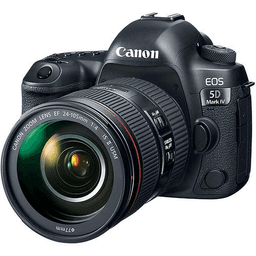
200MP Smartphone Cameras: Are They Better Than DSLRs?
200MP smartphone cameras can capture incredible detail, but megapixels alone do not make them better than DSLRs. Compare sensors, lenses, low-light performance, zoom, and usability before choosing.


TL;DR 200MP smartphone cameras have made phone photography remarkably advanced, but they are not automatically better than DSLRs. A 200MP sensor can capture highly detailed images and provide useful cropping flexibility, while pixel-binning technology can combine pixels to improve low-light performance. However, a DSLR can still have a major advantage because of its larger sensor, interchangeable lenses, optical controls, RAW shooting, and ability to create natural depth of field. Modern 200MP phones such as the Samsung Galaxy S26 Ultra show how far computational photography and mobile camera hardware have progressed, but the right choice depends on what you photograph. For everyday photos, travel, social media, and convenience, a 200MP smartphone can be the better tool. For serious photography, controlled shooting, interchangeable optics, and maximum creative flexibility, a DSLR remains more capable.
What Does A 200MP Smartphone Camera Actually Mean?
A 200MP smartphone camera has an image sensor capable of recording up to 200 million pixels in its highest-resolution shooting mode. On paper, that sounds dramatically better than the 20MP to 30MP resolution found on many dedicated cameras, but megapixel count alone does not determine image quality. The physical size of the sensor, the quality of the lens, pixel size, autofocus system, image processing, stabilization, and shooting conditions all influence the final photograph. This is why a 200MP smartphone camera can produce extremely detailed images while still behaving differently from a DSLR with a much larger sensor. Samsung's current Galaxy S26 Ultra, for example, combines a 200MP wide camera with a 50MP telephoto, 50MP ultra-wide, and 10MP telephoto camera, showing that manufacturers increasingly treat high resolution as only one part of a complete camera system.
Pixel Binning Makes 200MP More Practical
Another important detail is that a 200MP phone does not necessarily produce every photograph at 200MP. High-resolution smartphone sensors commonly use pixel binning, where multiple neighbouring pixels are combined to create a larger effective pixel for certain shooting conditions. Samsung's ISOCELL technology, for example, can combine pixels to produce lower-resolution images designed to improve light sensitivity, while still allowing the user to capture a full-resolution image when maximum detail is required. This means a 200MP camera can operate as a flexible imaging system rather than simply taking enormous 200MP photographs every time you press the shutter.
The benefit becomes particularly noticeable when you need to crop an image. A high-resolution photograph gives you more pixels to work with, which can help preserve detail when you crop into part of the frame. However, cropping cannot recreate information that the lens or sensor never captured. If the photograph was taken in very low light, contains significant motion blur, or has poor optical detail, simply increasing the resolution does not solve those problems. This is why the question of whether a 200MP smartphone is better than a DSLR needs to go beyond the megapixel number and look at the complete imaging system.
| Camera Factor | 200MP Smartphone | DSLR |
|---|---|---|
| Maximum Resolution | Can reach 200MP on supported models | Varies by camera model |
| Sensor Size | Generally much smaller | Usually larger |
| Lens System | Fixed built-in lenses | Interchangeable lenses |
| Computational Processing | Very advanced | Generally less computationally aggressive |
| RAW Shooting | Available on some models | Widely supported |
| Portability | Excellent | Lower |
| Manual Control | Available on many phones | Extensive |
Why Sensor Size Matters More Than Megapixels?
Sensor size is one of the biggest reasons a DSLR can still outperform a high-megapixel smartphone in demanding photography. A larger sensor can collect more light under comparable conditions, and dedicated cameras can pair that sensor with much larger lenses. Nikon's DSLR line-up, for example, includes DX-format sensors measuring around 23.5 x 15.6mm, while its FX full-frame format measures approximately 36 x 24mm. Smartphone camera sensors are generally far smaller because they have to fit inside a very thin device alongside the display, processor, battery, and other components.
This physical difference matters most when you photograph in difficult conditions. A DSLR with a large sensor and a suitable lens can provide cleaner images at higher ISO settings and greater control over exposure. It can also create stronger natural background separation when paired with a wide-aperture lens. A smartphone can imitate some of these effects computationally, particularly in portrait modes, but software-generated blur is not exactly the same as the optical characteristics produced by a large sensor and interchangeable lens.
More Megapixels Do Not Automatically Mean More Detail
A 200MP sensor can be genuinely useful when there is enough light and the optical system can resolve sufficient detail. Samsung's ISOCELL HP9, for example, is a 200MP mobile sensor designed for telephoto use and uses pixel binning to switch between different effective resolutions depending on lighting conditions. Samsung says the sensor can combine 16 pixels into a larger effective pixel for 12MP output, demonstrating why high-resolution sensors are often designed around flexibility rather than simply maximum megapixel output.
A DSLR does not need hundreds of megapixels to produce excellent photographs. A 24MP DSLR can produce highly detailed images because resolution is only one part of the imaging equation. The quality of the lens, sensor, exposure, focus, image processing, and shooting technique all contribute to the result. This is why comparing a 200MP smartphone directly with a 24MP DSLR based only on the numbers can create a misleading impression. The phone may have more pixels, but the DSLR may capture those pixels with a larger sensor and better optical system.
200MP Smartphones vs DSLRs For Image Quality
In good daylight, the difference between a high-end smartphone and a DSLR can be much smaller than many buyers expect. Modern phones use multi-frame processing, HDR, sharpening, noise reduction, tone mapping, and computational photography to produce attractive images quickly. This is one reason smartphone photographs often look ready to share immediately. A 200MP mode can add another layer of detail when the subject is relatively still and lighting is favourable. Samsung's current Galaxy S26 Ultra, for example, uses its 200MP wide camera alongside its ProVisual Engine to process high-resolution image data and improve detail and clarity.
The DSLR advantage becomes more obvious when you move outside ideal smartphone conditions. Fast-moving subjects, challenging lighting, complex scenes, controlled studio photography, and situations requiring specific focal lengths can benefit from dedicated camera hardware. Interchangeable lenses allow a photographer to select a wide-angle lens, standard lens, telephoto lens, or macro lens according to the subject. A DSLR also gives the photographer greater control over aperture, shutter speed, ISO, focus, and exposure, which is valuable when the goal is to create a particular photographic result rather than simply capture a usable image.
Where Smartphones Can Actually Win?
There are situations where a 200MP smartphone can be the more practical choice. A phone is already in your pocket, it can automatically process the photograph, and it can immediately share the result through messaging apps or social media. Computational photography can also combine multiple frames to improve HDR and difficult-light results without requiring the photographer to understand every manual setting. For travel photography, family moments, food photography, casual portraits, and social media content, this convenience can be more important than the theoretical advantage of a dedicated camera.
| Photography Scenario | Better Choice | Main Reason |
| Everyday photography | 200MP Smartphone | Convenience and automatic processing |
| Social media | 200MP Smartphone | Fast capture and sharing |
| Travel | 200MP Smartphone | Smaller and easier to carry |
| Professional portraits | DSLR | Lens and depth-of-field control |
| Wildlife photography | DSLR | Long telephoto lens options |
| Studio photography | DSLR | Manual control and lighting flexibility |
| Casual night photography | 200MP Smartphone | Computational processing |
| Large prints and controlled work | DSLR | Sensor and lens flexibility |
Zoom, Low-Light Photography, And Video
Zoom is another area where the comparison becomes more complicated. A 200MP sensor can provide useful cropping and high-resolution zoom techniques, but digital cropping is not the same as having a dedicated optical telephoto lens. Modern flagship phones increasingly combine high-resolution sensors with dedicated telephoto cameras. The Galaxy S26 Ultra, for example, has a 50MP telephoto camera with 5x optical zoom and a separate 10MP telephoto camera with 3x optical zoom, while its 200MP wide camera also supports optical-quality zoom modes.
DSLRs have a different advantage because the lens itself can be changed. A photographer shooting wildlife can attach a long telephoto lens, while someone photographing architecture can switch to a wide-angle lens. This flexibility remains difficult for smartphones to replicate because the phone has to fit several small cameras into a thin body. Smartphone computational zoom has become extremely sophisticated, but dedicated optical systems still give photographers more control over focal length and perspective.
Low-light photography is where both technologies show how different their strengths are. Smartphones can use pixel binning, multi-frame processing, noise reduction, HDR, and computational algorithms to create surprisingly bright night photographs. Dedicated cameras benefit from larger sensors and lenses that can collect substantial amounts of light, especially when paired with a fast aperture. The result is that a phone may produce a brighter and more processed image automatically, while a DSLR can provide the photographer with more control over how the scene is exposed and rendered.
200MP Smartphone Cameras vs DSLRs: Which Should You Buy?
The better choice depends on what you want from the camera rather than which device has the bigger number on its specification sheet. If you want a camera that is always with you, requires minimal setup, produces attractive photographs automatically, and can share them immediately, a flagship smartphone with a 200MP camera can be an excellent choice. The technology is no longer simply about marketing a huge megapixel number. High-resolution sensors, pixel binning, computational photography, stabilization, and dedicated telephoto cameras have made modern smartphones extremely capable everyday cameras.
A DSLR remains the better choice when photography itself is the priority. The ability to change lenses, work with a larger sensor, shoot RAW files, control exposure manually, and build a complete photography system gives dedicated cameras an advantage for serious enthusiasts and professionals. Nikon's DSLR specifications demonstrate this difference clearly, with interchangeable lens mounts, RAW formats, manual exposure capabilities, and larger DX or FX sensor formats.
The Real Difference Is The Complete Camera System
The simplest way to understand the comparison is to stop treating megapixels as a score. A 200MP smartphone can beat an older or entry-level DSLR in some everyday situations, particularly when computational photography produces a cleaner image with less effort. At the same time, a DSLR can outperform the phone in situations where sensor size, lens quality, depth of field, optical zoom, RAW files, and manual control are more important. The camera that produces the better photograph is therefore determined by the subject, lighting, lens, photographer, and intended output.
| Priority | Recommended Camera |
| Convenience | 200MP Smartphone |
| Social Media | 200MP Smartphone |
| Travel Photography | 200MP Smartphone |
| Professional Photography | DSLR |
| Wildlife | DSLR |
| Portrait Photography | DSLR |
| Manual Control | DSLR |
| Quick Everyday Photos | 200MP Smartphone |
Frequently Asked Questions
Q. Does a 200MP smartphone camera take better photos than a DSLR?
A. Not automatically. A 200MP smartphone can produce excellent photographs, but a DSLR can have advantages from its larger sensor, interchangeable lenses, and greater manual control. Image quality depends on the complete camera system rather than megapixel count alone.
Q. Is 200MP better than 24MP for photography?
A. Higher resolution can preserve more detail and provide greater cropping flexibility, but 200MP does not automatically produce better image quality than 24MP. Sensor size, lens quality, exposure, focus, and processing are also important.
Q. Why do 200MP phones usually take lower-resolution photos by default?
A. High-resolution sensors can use pixel binning, which combines neighbouring pixels to create larger effective pixels. This can improve light sensitivity and produce a more practical file size while retaining the option to capture at the sensor's full resolution.
Q. Can a 200MP smartphone replace a DSLR?
A. It can replace a DSLR for many casual users, travellers, and social media creators, but it is not a complete replacement for photographers who need interchangeable lenses, extensive manual control, RAW workflows, and dedicated camera accessories.
Q. Are 200MP smartphone cameras good in low light?
A. They can be very capable in low light because modern phones combine pixel binning, image stabilization, multi-frame processing, and computational photography. However, a larger-sensor camera with an appropriate fast lens can still provide significant advantages in demanding low-light situations.
Q. Does a 200MP camera give better zoom?
A. High resolution can provide more room for cropping and some high-resolution zoom techniques, but it does not replace a dedicated optical telephoto lens. Some flagship smartphones combine 200MP cameras with separate telephoto lenses for this reason.
Q. Why do DSLRs still have an advantage over smartphone cameras?
A. DSLRs offer larger sensors, interchangeable lenses, RAW capture, extensive manual controls, and greater flexibility over focal length and depth of field. These characteristics are particularly valuable for professional and enthusiast photography.
Q. Is a 200MP phone camera useful for printing photos?
A. Yes, when the original photograph contains enough genuine detail. A high-resolution image can provide more flexibility for cropping and larger prints, but the quality of the lens, lighting, focus, and processing still determines how much usable detail the image actually contains.
Q. Which is better for professional photography, a 200MP phone or DSLR?
A. A DSLR is generally the more flexible professional tool because photographers can select lenses, control exposure, shoot RAW files, and build a system around different assignments. A smartphone can still be extremely useful as a secondary or everyday camera.
Q. Should I choose a 200MP smartphone based only on its camera resolution?
A. No. Check the sensor size, lens configuration, optical stabilization, telephoto capabilities, aperture, RAW support, video features, and image-processing system before making a decision. The 200MP number should be treated as one specification rather than the complete camera story.
Final Recommendation
A 200MP smartphone camera is not automatically better than a DSLR, and comparing the two purely through megapixels misses the most important part of photography. A high-resolution phone can be the smarter choice for everyday users because it combines a capable camera system with portability, automatic processing, computational photography, and instant connectivity. Current flagship phones demonstrate that 200MP sensors can be useful for capturing detail, cropping images, and supporting high-resolution zoom techniques.
However, choose a DSLR if you are serious about photography and want control over the entire image-making process. A larger sensor, interchangeable lenses, RAW capture, manual exposure, and optical flexibility can matter far more than having 200 million pixels. The DSLR's advantage becomes especially relevant for wildlife, professional portraits, studio work, controlled lighting, and photography where lens choice and depth of field are central to the result.
For most people, the decision is therefore straightforward. Choose a 200MP smartphone if you want the best combination of convenience and high-quality everyday photography. Choose a DSLR if photography is a serious hobby, profession, or creative discipline where control matters more than convenience. The better camera is not the one with more megapixels. It is the one whose sensor, lens, processing, and controls match the way you actually photograph.