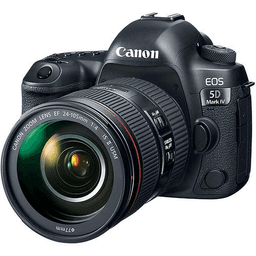
Best Beginner Camera to Buy Under ₹40,000
Looking for your first proper camera under ₹40,000? Here is what you can realistically buy in India, from beginner-friendly Canon and Nikon DSLRs to newer mirrorless alternatives.

TL;DR For beginners in India, finding a genuinely good new interchangeable-lens camera under ₹40,000 in 2026 is harder than it sounds. The Canon EOS 1500D and Nikon D3500 remain interesting options when available at discounted prices, with both offering APS-C sensors, interchangeable lenses, and simple controls that make learning photography less intimidating. The Canon EOS 1500D offers 24.1MP resolution and Full HD recording, while the Nikon D3500 uses a 24.2MP APS-C sensor and is known for its straightforward beginner-friendly design. The newer Canon EOS R100 is a more modern mirrorless alternative, but current Indian pricing generally puts the kit above the ₹40,000 target.
What Makes A Good Beginner Camera?
Buying your camera is different from buying your first phone or laptop. A camera is not about the number that says "MP". You are buying into a system that includes the body, the lens, the controls, the battery, the memory card and later on, more lenses. That is why a simple camera with a lens can be a better learning tool than a model that looks impressive but has a complicated menu system. For someone just starting out with photography the ability to understand shutter speed aperture, ISO, focus and composition is more important than trying to get the processor or the highest resolution.
The biggest benefit of using a camera is the bigger sensor and the system where you can change the lens. Cameras like the Canon EOS 1500D and the Nikon D3500 have APS-C sensors which're much bigger than the sensors, in regular compact cameras. This helps beginners try things with background blur taking pictures in low light and using different focal lengths. The Nikon D3500 for example has a 24.2MP APS-C CMOS sensor while the Canon EOS 1500D has a 24.1MP APS-C CMOS sensor.
There is also something surprisingly useful about starting with an older camera. You are less likely to become obsessed with features you do not understand yet. A beginner can learn photography perfectly well with a camera that does not have the latest autofocus system or 4K video. What matters initially is whether the camera gives you manual controls, a decent sensor, a usable kit lens and enough flexibility to experiment. That is why older Canon and Nikon models still make sense when the budget is firmly capped at ₹40,000.
What Should A Beginner Look For?
The first thing to check is the sensor. An APS-C sensor is a starting point because it gives you the advantages of an interchangeable-lens camera without going into the much more expensive full-frame category. Next is the lens. A standard 18-55mm kit lens is not exciting. It handles everyday subjects very well from family photos and portraits to travel and simple street photography.
You should also look at the controls and viewfinder. A physical viewfinder can make outdoor photography easier because you are not always dealing with reflections on the screen. The Canon EOS 1500D has a viewfinder and the Nikon D3500 also has an optical viewfinder. Both cameras are therefore DSLR designs and not touchscreen-first mirrorless cameras.
Finally think about what you want to photograph. A student taking travel photographs has needs from someone who wants to make YouTube videos. A beginner who mainly wants photography can save money by choosing an older DSLR and use the rest of the budget on a better lens or accessories. Someone who focuses a lot, on video should consider spending because newer mirrorless cameras provide better video features.
Canon EOS 1500D: A Practical First Camera
The Canon EOS 1500D remains one of the more realistic options for a beginner working with a ₹40,000 ceiling. It uses a 24.1MP APS-C CMOS sensor and supports interchangeable Canon EF/EF-S lenses, giving a new photographer access to a huge ecosystem of older and widely available lenses. Current Indian price trackers show the camera with its 18-55mm lens at around ₹32,049 at one listed retailer, although another current tracker lists the kit at ₹40,299, so the exact price depends heavily on stock and seller.
The camera is especially appealing if your goal is to learn photography rather than to become a video creator right away. The camera’s optical viewfinder gives you the DSLR shooting experience and the camera’s 24.1‑megapixel sensor offers plenty of detail for everyday photographs. The camera also supports RAW capture which's important if you want to learn editing properly instead of just using the camera’s JPEG output. The camera records Full HD video than 4K, which clearly shows that this is an older design. Its age is both a benefit and a limitation. You can get an inexpensive entry into Canon’s lens ecosystem with the camera but you do not get the convenience or autofocus sophistication of a modern mirrorless body. For a beginner who wants to learn exposure, framing and lenses that may not be a problem all. If you can find the 1500D with the 18‑55mm kit lens, below ₹40,000 from a reputable seller it becomes a sensible starting point.
Canon EOS 1500D Specifications
| Feature | Canon EOS 1500D |
|---|---|
| Camera Type | DSLR |
| Sensor | 24.1MP APS-C CMOS |
| Lens Mount | Canon EF/EF-S |
| Kit Lens | 18-55mm |
| Viewfinder | Optical |
| Video | Full HD |
| Wi-Fi | Yes |
| RAW | Yes |
| Best For | Beginner photography |
The important point is that the 1500D should not be sold as a cutting-edge camera in 2026. It is not. Its appeal comes from being an accessible entry into interchangeable-lens photography. Current price listings also vary considerably, so buyers should check the exact kit, seller, warranty and stock status before ordering.
Nikon D3500: Simple And Beginner Friendly
The Nikon D3500 is another camera worth considering when you are shopping around ₹40,000. It has a 24.2MP APS-C CMOS sensor and uses Nikon's F-mount system, giving beginners access to a large selection of Nikon lenses. Current Indian listings put some 18-55mm kit configurations around ₹31,000, although several listings are currently out of stock. That availability issue is important because the D3500 is an older model and is no longer as straightforward to buy as newer mirrorless cameras.
The D3500's biggest strength is simplicity. It is the sort of camera that can make sense to someone who has never owned a proper interchangeable-lens camera before. Its 24.2MP sensor gives you enough resolution for everyday photography, while the optical viewfinder provides the familiar DSLR shooting experience. It also records Full HD rather than 4K, so it is much more naturally suited to still photography than to modern creator-focused video work.
One reason the D3500 remains relevant is that a beginner does not necessarily need the newest camera to learn. Photography fundamentals have not changed because mirrorless cameras became popular. Understanding light, exposure, composition and focal length is still the foundation. If you find a genuine D3500 kit from a reliable seller within your budget, it can be a useful first camera. The bigger concern is availability, not whether the basic image-making hardware is capable.
Nikon D3500 Specifications
| Feature | Nikon D3500 |
|---|---|
| Camera Type | DSLR |
| Sensor | 24.2MP APS-C CMOS |
| Lens Mount | Nikon F |
| Common Kit Lens | 18-55mm |
| Viewfinder | Optical |
| Video | Full HD |
| Display | 3-inch LCD |
| RAW | Yes |
| Best For | Beginner still photography |
The D3500 is therefore best viewed as a budget-friendly entry into photography rather than a modern hybrid camera. If your priorities are portraits, travel, family photographs and learning manual controls, its basic design is still perfectly relevant. If your priorities are 4K video, vlogging or advanced autofocus, you should look beyond this class of camera.
Canon EOS R100: The Mirrorless Option To Watch
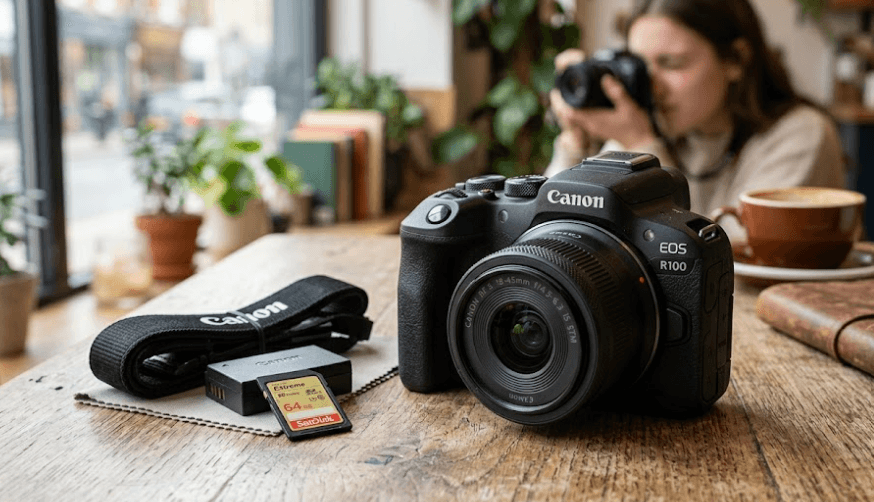
The Canon EOS R100 is important because it shows what a more modern beginner camera looks like, even though it does not consistently fit a strict ₹40,000 new-camera budget in India. Canon lists the R100 with a 24.1MP APS-C CMOS sensor, 4K 25p video, Full HD 60p recording, Eye Detection AF, Wi-Fi and an RF-S 18-45mm kit lens. Canon's own 2025 range brochure lists an MRP of ₹64,995 for the kit, while current price aggregators put it around ₹48,460.
That makes the R100 a camera to watch during major sales rather than one that should automatically be described as a ₹40,000 camera. If its price drops close to your budget, it becomes much more interesting because you get a newer mirrorless platform and Canon's RF mount. You also get 4K recording and more modern autofocus features than the older 1500D. These are meaningful upgrades if you plan to keep the camera for several years.
There is a catch, though. The R100 is still positioned as an entry-level model, and its rear screen and video functionality are less creator-focused than cameras such as the Nikon Z30 or Sony ZV-E10. Digital Camera World notes that the R100's fixed rear screen and 4K limitations make it less attractive for budding content creators, while its viewfinder and still-photography focus suit beginners learning photography.
How The Options Compare
| Camera | Sensor | Video | Lens System | Current Budget Situation |
|---|---|---|---|---|
| Canon EOS 1500D | 24.1MP APS-C | Full HD | EF/EF-S | Often below ₹40K |
| Nikon D3500 | 24.2MP APS-C | Full HD | Nikon F | Often below ₹40K, stock limited |
| Canon EOS R100 | 24.1MP APS-C | 4K 25p | RF/RF-S | Usually above ₹40K |
| Nikon Z30 | 20.9MP APS-C | 4K 30p | Nikon Z | Generally above ₹40K |
| Sony ZV-E10 | 24.2MP APS-C | 4K | Sony E | Generally above ₹40K |
The Nikon Z30 and Sony ZV-E10 are worth knowing about because they are much more modern creator-oriented cameras, but current pricing puts them outside a strict ₹40,000 new-camera budget. Nikon confirms that the Z30 uses a 20.9MP APS-C sensor and records 4K UHD at up to 30p. Independent testing also finds that both the Z30 and Sony ZV-E10 offer 4K video, with the Sony having a particularly broad lens ecosystem.
DSLR Or Mirrorless For A Beginner?
The DSLR versus mirrorless debate can become unnecessarily complicated. For someone buying their first camera, the easiest way to understand it is this: a DSLR uses an optical viewfinder and a mirror mechanism, while a mirrorless camera uses an electronic viewfinder when one is provided and does not need the DSLR mirror system. Both can produce excellent photographs. The more important question is what you want to learn and how much you want to spend.
At ₹40,000, older DSLRs have one major advantage: they can give you a relatively large APS-C sensor and interchangeable lens for less money. The Canon 1500D and Nikon D3500 are good examples. Their specifications are not modern by 2026 standards, but their fundamental photography capabilities remain useful. This is especially true if your main interest is still photography rather than social-media video.
Mirrorless cameras become more attractive when you want a smaller body, newer autofocus, better video features and access to current lens systems. The problem is simply price. Current Indian pricing means modern mirrorless kits from Canon, Nikon and Sony generally sit above this strict ₹40,000 target.
What Should Your Budget Cover?
Do not spend every rupee on the camera body. A beginner also needs an SD card, spare battery eventually, camera bag and potentially a tripod. More importantly, lenses can completely change what your camera can do. An inexpensive camera with a useful lens can teach you more than an expensive body paired with a poor or unsuitable lens.
For example, an 18-55mm kit lens is useful for learning because it covers a practical range. Once you understand what you photograph most, you can decide whether you actually need a portrait prime, telephoto lens or wide-angle lens. That is a much smarter upgrade path than immediately buying expensive glass because someone online called it essential.
This is also why older Canon and Nikon cameras can make sense for students and first-time photographers. If the body costs ₹30,000 to ₹35,000 rather than the full ₹40,000, the remaining money can go toward an SD card, bag and basic accessories. The camera then becomes a complete setup rather than a body that leaves you with nothing left for the essentials.
What To Check Before Buying Under ₹40,000
The first thing to check is whether the camera is actually new and whether the kit contains the lens shown in the listing. This sounds obvious, but older camera models can have confusing listings with body-only versions, single-lens kits and dual-lens bundles appearing at very different prices. Current listings for the Canon 1500D, for example, show substantial differences between the body-only, 18-55mm and dual-lens configurations.
Next, check the seller and warranty. A cheap camera is not a bargain if the listing turns out to be old stock with unclear warranty coverage. This matters even more with the Nikon D3500 and Canon 1500D because both are older models and current availability can be inconsistent. Some current listings show the cameras as out of stock even when a price is displayed, so do not treat a search-result price as guaranteed availability.
Finally, remember that a camera is an optical system, not just an electronics product. Check the included lens, battery, charger, memory-card requirement and mount before ordering. If you are considering a used camera, inspect the shutter count, sensor condition, lens fungus, autofocus operation, battery health and overall body condition. A clean used camera with a good lens can sometimes make more sense than an old, overpriced new unit.
Beginner Camera Buying Checklist
| Check | Why It Matters |
|---|---|
| APS-C sensor | Better starting point for serious photography |
| Kit lens included | Lets you start shooting immediately |
| Optical/electronic viewfinder | Useful for composition and bright outdoor shooting |
| RAW support | Gives you more control when editing |
| Autofocus | Important for moving subjects |
| Video resolution | Check if you need Full HD or 4K |
| Lens availability | Determines future upgrade options |
| Warranty | Important with older stock |
| Seller reputation | Helps avoid questionable listings |
| Total setup cost | Leaves room for card, bag and accessories |
Common Beginner Mistakes To Avoid
The first mistake is buying based only on megapixels. A 24MP APS-C camera can be an excellent learning tool, and adding another 10 or 20 megapixels does not automatically make photographs better. Lens quality, lighting, composition, focus and exposure have a much bigger effect on the final image than a small difference in resolution.
The second mistake is spending the entire budget on the body. Beginners often forget that they need a memory card and bag immediately, and they may eventually want another lens. If your budget is ₹40,000, a ₹32,000 camera kit can actually be more sensible than a ₹39,500 body if the cheaper setup leaves you money for the accessories you need.
The third mistake is buying an older DSLR without understanding why you are buying it. If you mainly want photography and want to learn the basics, an older DSLR can work beautifully. If your goal is YouTube, vlogging and frequent 4K video, however, it makes more sense to stretch the budget toward a newer mirrorless model rather than forcing an old DSLR to do a job it was not designed to prioritize.
Frequently Asked Questions
Q. What is the best beginner camera to buy under ₹40,000?
The Canon EOS 1500D is one of the most practical options when it is available with the 18-55mm kit lens below ₹40,000. It has a 24.1MP APS-C sensor, optical viewfinder, RAW support, and interchangeable lenses. Current Indian pricing varies, so check the exact kit and seller before buying.
Q. Is the Canon EOS 1500D still worth buying in 2026?
Yes, if your priority is learning still photography on a limited budget. It is an older DSLR and lacks modern features such as 4K video, but its 24.1MP APS-C sensor, optical viewfinder, and interchangeable-lens system remain useful for beginners.
Q. Is the Nikon D3500 good for beginners?
The Nikon D3500 is a beginner-friendly DSLR with a 24.2MP APS-C sensor and optical viewfinder. It is particularly suitable for people who primarily want to learn photography rather than create video. Current availability in India can be inconsistent because it is an older model.
Q. Can I get a new mirrorless camera under ₹40,000 in India?
Options are limited at this budget. The Canon EOS R100 is one of the closest modern options, but current Indian price listings put its kit above ₹40,000. Older DSLR kits are easier to find within the budget.
Q. Is Canon EOS R100 better than Canon EOS 1500D?
The R100 is the newer mirrorless design and offers features such as 4K recording and Eye Detection AF. The 1500D is an older DSLR with Full HD video. However, the R100's current kit pricing is generally above ₹40,000, while the 1500D can fit the budget more easily.
Q. Should a beginner buy a DSLR or mirrorless camera?
Either can work. At ₹40,000, an older DSLR can offer more camera for the money, while mirrorless becomes more attractive if you can stretch the budget and want newer autofocus, compact designs and stronger video features.
Q. Is 24MP enough for beginner photography?
Yes. A 24MP APS-C camera provides enough resolution for everyday photography, travel, portraits and learning photography. More megapixels are not automatically better if the lens, lighting and technique are limiting factors.
Q. Is the Nikon D3500 still available in India?
It can still appear in Indian listings, but availability is inconsistent. Current price trackers show prices below ₹40,000 for some configurations while also marking several listings out of stock.
Q. Do I need a second lens as a beginner?
Not immediately. An 18-55mm kit lens is enough to learn composition, exposure, portraits, travel photography and everyday shooting. After using it for a while, you can identify the focal length or shooting style you actually need before spending more.
Q. Should I buy a used camera under ₹40,000?
A used camera can make sense at this budget, especially if it allows you to move into a better body or lens system. Check shutter count, sensor condition, lens condition, autofocus, battery health, accessories and seller reliability before paying.
Final Recommendation
If the budget is strictly ₹40,000 and you want a camera rather than a phone, the Canon EOS 1500D with its 18-55mm kit lens is the most straightforward option to look for when you can find it at a legitimate sub-₹40,000 price. Its 24.1MP APS-C sensor, optical viewfinder, RAW support and interchangeable-lens system give a beginner the fundamentals needed to actually learn photography. Current Indian listings show the kit at different prices, including around ₹32,049 in one current listing, while other listings are above ₹40,000, so the seller and exact configuration need to be checked before purchase.
The Nikon D3500 is another option if you find a genuine kit within budget and prefer Nikons controls and lens ecosystem. The Nikon D3500 has a 24.2MP APS‑C sensor and a straightforward DSLR design that remains perfectly usable for photography although the Nikon D3500s stock is less predictable. If you can stretch beyond ₹40,000 the Canon EOS R100 is the model I would watch than pretending the Canon EOS R100 currently belongs in the strict sub‑₹40,000 category. The Canon EOS R100 brings a mirrorless platform, 4K video and Eye Detection AF but current Indian pricing puts the Canon EOS R100 kit above the stated budget. The important thing though is not to let the ₹40,000 limit turn your first camera into a specification hunt. Buy the complete kit you can find from a reliable seller then spend time learning how to use the camera. A beginner who understands light, composition, aperture, shutter speed and focal length will get more, from a 24MP APS‑C camera than someone who buys a newer body and leaves everything in Auto.