Why Smartphone Upgrade Cycles Are Getting Longer in 2026?
Smartphone upgrade cycles are getting longer in 2026 as buyers prioritize battery life, software support, repairability, and value over annual launches. Learn when to upgrade, key market trends, and the signs that your current phone truly needs replacing.

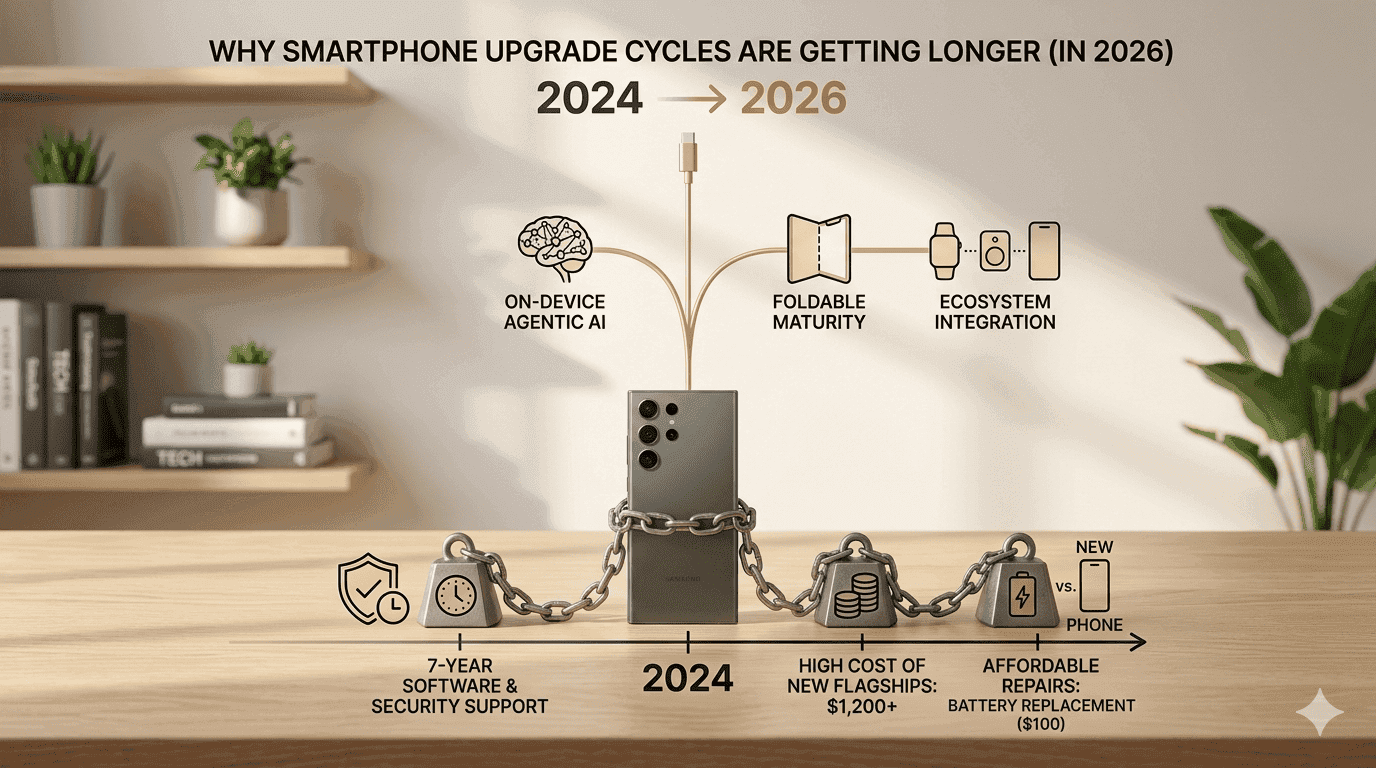
TL;DR The smartphone upgrade cycle is stretching in 2026, with many users keeping phones for about 3 years or longer. Battery health, repairability, software support, and cost pressure are making replacement feel optional instead of urgent.
Why Longer Ownership Is Sticking?
Longer ownership is the biggest reason the smartphone upgrade cycle has slowed. A phone that still handles calls, messaging, payments, maps, and everyday apps can stay useful for years. That makes replacement feel optional instead of urgent, especially when the screen, battery, and storage still hold up.
Battery health and storage pressure still push people toward upgrades, but repairs now delay that decision for months. For many people, a quick repair buys another year or more of normal use, and that is enough to keep the device in use longer. It also means less time spent shopping for a replacement, which matters to both users and consumers.
Android and iPhone models now stay usable for years because software updates last longer and basic performance holds up. People are also more willing to buy refurbished devices, especially when the current phone still runs WhatsApp, Chrome, Spotify, and UPI without trouble. The Right to Repair movement has changed trust, because people expect more life from the device they already own.
The numbers back that up. Only 20% of respondents recycle old phones, and 8% still throw them in the trash. The average age of devices traded in or upgraded in the U.S. reached 3.84 years in 2025. In India, the average replacement cycle has increased from 24 months to almost 36 months. That is a big shift in a short time, and it shows how much the market has changed.
When You Should Upgrade Your Smartphone?
The short answer to when you should upgrade your smartphone is simple: upgrade when the phone stops matching your daily needs, not when a launch event makes you feel behind. If the device still handles calls, messages, photos, maps, and payments cleanly, there is no reason to rush. A 2025 survey found that 21% of respondents wait until their phone actually breaks before replacing it.
Another 27% upgrade every two years, while 23% stretch their devices to three or four years. That spread shows how different ownership habits can be, even within the same smartphone market. The average replacement cycle for smartphones has gone from around 2 years in 2015 to approximately every 3 years in 2025.
In other words, the old annual refresh habit is fading, and most users are no longer treating phones like disposable gadgets. People who edit video in CapCut, process photos in Lightroom, or juggle Slack, Gmail, and Google Maps will notice limits sooner. A lighter user who mostly texts, browses, and streams can hold onto a handset much longer.
Signs Your Current Phone Is Actually Done
The clearest signs that a phone is done are practical, not cosmetic. The battery may drop too fast to make it through a normal day of work, travel, or school. Storage may run down so often that you spend time deleting photos, apps, or data every week.
Apps can also become a warning sign. Android or iPhone apps may crash, freeze, or stop getting updates that you rely on. For many Americans, the decision comes down to whether the phone still supports the features they use every day.
If it does, there is no need to add a replacement just because a new model is available. That is why the phone upgrade cycle is personal, not universal. A heavy user will hit limits sooner than someone who mainly texts and streams.
Smartphone Upgrade Cycle Trends by Market
The broad trend is clear, but each region is moving at a different pace. Verizon customers are set to go beyond once every 3 years, which points to slower replacement behaviour in a major U.S. market. That lines up with the wider shift toward longer ownership and fewer rushed upgrades.
India is moving in the same direction, but the timeline is different. The average replacement cycle has increased from 24 months to almost 36 months. That means many buyers are now waiting a full 3 years before replacing a phone.
The U.S. data also shows that traded-in or upgraded devices reached an average age of 3.84 years in 2025. That figure helps explain why the smartphone upgrade cycle now feels slower across markets. Buyers are holding onto devices longer because the phones still do enough of the daily work.
What does the 2026 Upgrade Cycle mean for Buyers?
The 2026 smartphone upgrade cycle is slower because more people can keep a device useful for longer. The average replacement cycle has moved from around 2 years in 2015 to approximately every 3 years in 2025, while Verizon customers are set to go beyond once every 3 years. It also shows that 23% of users already stretch their phones to three or four years.
For buyers, that means the best time to upgrade is when the phone no longer fits daily needs, not when a new model launches. If the battery, storage, and apps still work well, it makes sense to keep using the device and delay the purchase. That approach fits both lighter users and people who already repair instead of replace.
If your phone still handles your routine, keep it. If it no longer lasts through the day, loses app support, or creates constant storage problems, it is time to move on. The smartest upgrade decision in 2026 is the one based on use, not pressure.
Frequently Asked Questions
Q. How long is the average smartphone upgrade cycle now?
The average smartphone upgrade cycle has moved from around 2 years in 2015 to approximately every 3 years in 2025. In the U.S., traded-in or upgraded devices reached an average age of 3.84 years in 2025. In India, the average replacement cycle has increased from 24 months to almost 36 months.
Q. What makes people keep phones longer in 2026?
Battery health, repairability, software support, and cost pressure are the biggest reasons. A phone that still handles calls, messaging, payments, maps, and everyday apps can stay useful for years. Repairs can also delay replacement for months or even another year.
Q. When should I replace my phone instead of waiting?
You should replace it when the battery cannot last a normal day, storage fills up constantly, or apps stop working properly. The article also notes that 21% of respondents wait until their phone breaks before replacing it. If your device still supports the features you use every day, waiting is reasonable.
Q. How do heavy users and light users differ on upgrade timing?
Heavy users notice limits sooner, especially if they edit video in CapCut, process photos in Lightroom, or use Slack, Gmail, and Google Maps often. Light users who mostly text, browse, and stream can keep a phone much longer. That is why the upgrade cycle is personal, not universal.
Q. What does the India data say about replacement timing?
In India, the average replacement cycle has increased from 24 months to almost 36 months. That means many buyers are now holding phones for close to 3 years before replacing them. The trend matches the broader slowdown seen in other markets.
Q. What do the recycling numbers say about old phones?
Only 20% of respondents recycle old phones, and 8% still throw them in the trash. Those numbers show that people are keeping devices longer, but end-of-life habits are still weak. The slower upgrade cycle is not yet matched by strong recycling behaviour.
What Buyers Should Do Next?
The smartest move in 2026 is to judge your phone by daily use, not by launch timing. If your device still handles calls, messages, photos, maps, payments, and the apps you rely on, keeping it longer is the better value. The article shows that many users already stretch replacement to about 3 years, and some go even longer.
Buyers who use their phones lightly should feel comfortable waiting until a real problem appears. Heavy users, especially people who edit media or rely on multiple work apps, may need to upgrade sooner when battery life, storage, or app support starts slipping. That difference is why the smartphone upgrade cycle now varies so much from person to person.
Use the signs in this article as your checklist before spending money. If the phone still works for your routine, keep it and repair it when needed. If it no longer fits your day, upgrade with confidence instead of waiting for a launch cycle to decide for you.