
Why Flagship Phones Are Switching to Larger Camera Sensors?
Discover why bigger camera sensors matter more than megapixels in flagship phones. Learn how sensor size improves low-light photography, video quality, zoom, and everyday photos to help you choose the best camera phone for your needs.

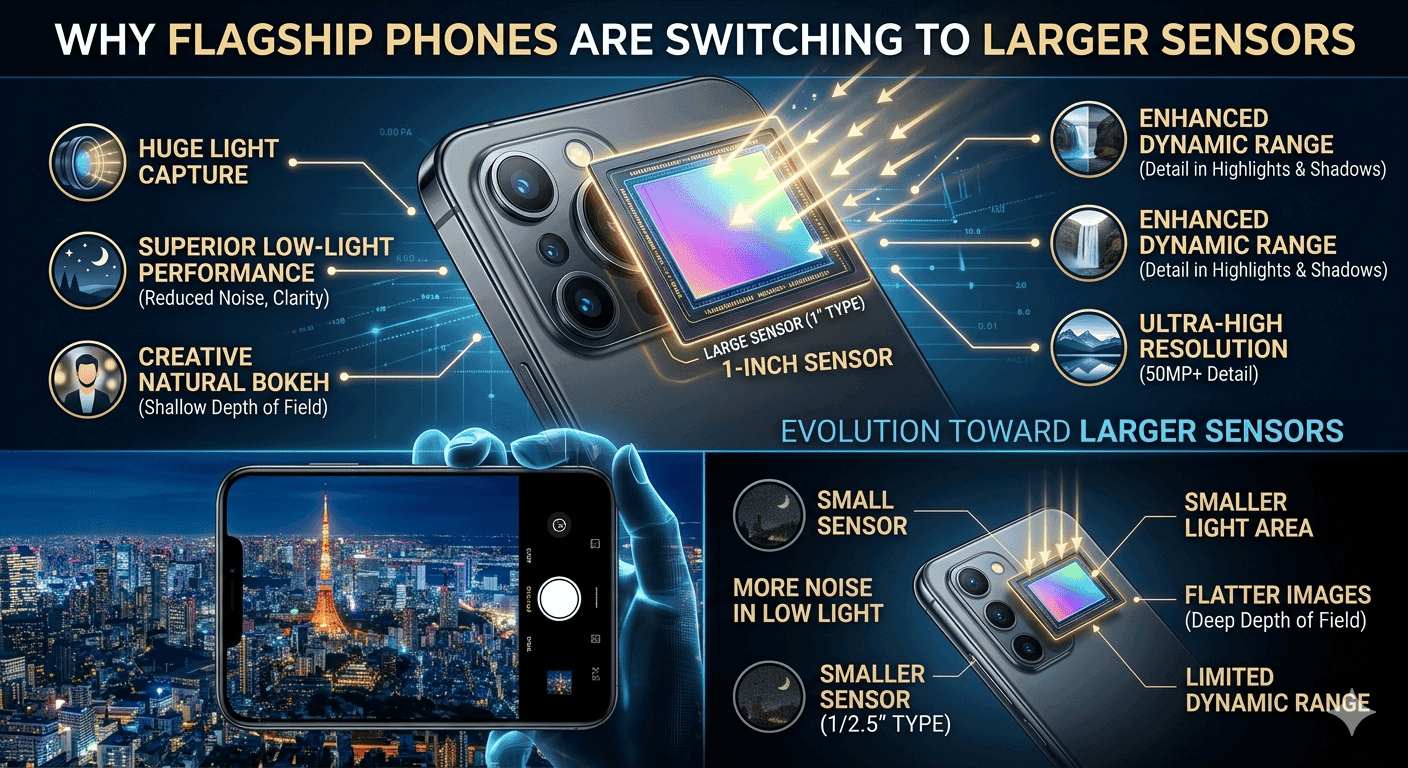
TL;DR Camera flagship phones are moving toward larger main sensors because bigger pixels, better light capture, and stronger crop tolerance matter more than raw megapixel counts. For most buyers, the smartest choice is still the phone with the strongest main camera, especially if you shoot people, food, indoor scenes, and video.
What Bigger Sensors Change in Camera Flagship Phones?
That is why a flagship phone camera comparison now starts with sensor size before it gets to megapixels. The practical difference shows up the moment you move from bright outdoor shots to mixed light. You get cleaner skin texture, more believable fabric detail, and less mush in foliage and hair.
Megapixels only tell you how many pixels the sensor records. They do not tell you how well the sensor captures light, which is why future flagship smartphone camera sensors are discussed in terms of physical size. Bigger sensors improve light capture without forcing the phone to lean so hard on noise reduction, and that changes how the image holds up after cropping.
The main camera remains the most important lens because it is the one you use for family photos, street scenes, food, and quick video clips.
Why sensor size beats pure megapixels?
A larger sensor can preserve detail more naturally before software steps in. It also gives the phone more room to keep texture in faces, clothing, and backgrounds. That matters when you want a file that still looks clean after editing in Lightroom Mobile or Photoshop.
A 50MP sensor can still look average if the hardware is small and the tuning is aggressive. By contrast, a well-implemented 50MP or 200MP main camera can hold detail in a way that feels closer to a digital camera than a typical phone.
What you notice in everyday use?
The difference also shows up when you reframe a photo after the fact. A stronger main sensor gives you more room to adjust without the image falling apart. That matters for the kind of shooting most people actually do.
A quick lunch photo, a child running across a room, or a messy restaurant table all benefit from a sensor that does not need perfect light to look good. In a real review, that is the difference between a photo you keep and a photo you delete.
Where the main camera still wins
The main camera is usually the most useful part of the system for people, food, indoor scenes, and quick clips. It sets the look of the photo before any other lens gets involved. Brands use that hardware as the foundation for the rest of the camera stack, then tune colour, contrast, and sharpening around it.
If the foundation is weak, the rest of the system has to work too hard.
- The main sensor matters most for family photos, street shots, and short clips.
- 50MP and 200MP labels matter less than how the camera handles light.
- A strong main camera often matters more than a flashy telephoto headline.
Main Camera Gains in Real Use
Recent flagship launches follow the same pattern: the main camera is where the largest sensor upgrades pay off first. That is why a flagship phone camera comparison gets more interesting when you look at daylight detail, shadow recovery, and how much of the scene survives after a crop.
A larger sensor can hold texture in leaves, clothing, and building edges more cleanly, even when the phone does not rely on aggressive sharpening. Indoor shots expose the gap fast. Under office lighting, in restaurants, or beside a window at dusk, a larger main sensor gives the phone more usable data before the processing engine cleans up the frame.
One phone may lean harder on consistency, while another depends more on computational correction. In practice, that difference can be reduced by stronger tuning, but only to a point.
Daylight detail is not just about resolution
It also helps when you want to crop a shot later without losing too much clarity. That matters for travel photos, group shots, and anything you may want to reframe later. This is also where the best review language can get misleading.
A phone can look excellent in a bright showroom and still fall apart once you point it at a backlit café table or a shaded alley.
Indoor shots expose the gap fast
That is why indoor photography often reveals the difference sooner than daylight shooting. Office lights, restaurant tables, and window light all test the sensor quickly. A strong main camera also helps when you shoot documents, menus, or whiteboards.
Those are not glamorous uses, but they are where a phone earns its keep. The best phones do not just look sharp in a demo, they stay readable when the light gets awkward.
The table that matters most
The main camera is the one most people use every day. It affects portraits, food, pets, and casual video more than any other lens. That is why camera flagship phones live or die on the quality of this single module.
| Main camera trait | What it changes | Why it matters |
|---|---|---|
| Larger sensor | Better light capture | Cleaner indoor shots and less noise |
| Stronger tuning | More natural processing | Better skin tone and less oversharpening |
| Better stabilization | Smoother handheld clips | More usable video in TikTok or CapCut |
- Indoor scenes need less aggressive clean-up when the camera starts with more light.
- Cropping hurts less when the file begins with more usable detail.
- A full camera review should always start with the main sensor, not the zoom label.
Low Light, Night Mode, and Noise
A larger sensor collects more light per frame, so the phone can keep ISO lower or shutter speeds more reasonable, without turning the image into a noisy mess. That matters for night streets, dim restaurants, concerts, and indoor family shots where the camera has to choose between motion blur and grain.
Most buyers blame the night mode label when a shot looks rough, but the underlying issue is usually sensor size. Smaller sensors need more aggressive noise reduction, and that is what wipes out hair detail, brick texture, and the fine edges around signs or neon.
A big sensor also changes how the phone chooses exposure. It can hold highlights a little better while keeping the shadows from collapsing into black patches, which helps in scenes with streetlights, car headlights, or restaurant lamps. That is especially useful for video, where exposure shifts are more obvious than in still photos.
Software can clean up a bad frame, but it cannot restore detail that never reached the sensor. The file starts with more usable information, and that is the part most people miss when they compare camera phones by night mode branding alone. A good review should point out when a phone is doing less work, not more.
Exposure behaviour changes in the dark
It also keeps shadows from turning into flat black patches. That balance matters in real night scenes. If you shoot city lights, a concert stage, or a dim bar, the camera needs to protect highlights without crushing the rest of the frame.
Software can polish the file, but it cannot invent clean light out of thin air.
Night mode is better when it does less
The less the phone has to invent, the more natural the result looks. That usually means better texture and fewer artifacts. It also means the photo keeps more of the scene’s original mood instead of looking overprocessed.
A camera flagship phone with a strong sensor can keep the scene believable without turning every dark area into watercolour noise. In a real review, that is worth more than a gimmicky mode name.
- Night scenes look cleaner when the sensor captures more light up front.
- A better sensor reduces the need for heavy noise reduction.
- Streetlights, signs, and neon hold their edges more naturally.
- Video in low light benefits just as much as still photography.
Zoom and Telephoto Trade-offs
That is where brand strategy starts to split. The real question is how much crop tolerance you get before image quality starts to fall apart. Portrait separation is not just a telephoto story, because the main camera still decides how good the image looks before you crop or hand off to another lens.
A phone can advertise strong zoom numbers, but the main camera still decides how much detail survives before cropping. If the main sensor is large and sharp enough, you can crop more confidently before handing the job over to telephoto hardware. What changes is the threshold where you need to switch lenses.
The S26 and S26 Ultra may both lean on zoom features, but the real difference is how far the main camera can carry the shot before the telephoto takes over.
Portraits depend on more than focal length
Good portraits need clean subject separation, natural skin detail, and enough background control to avoid harsh edges. A strong main camera helps all three. That is why portrait quality often improves before zoom numbers do.
This matters whether you are shooting a wedding, a family dinner, or a quick selfie camera shot before you leave the house. The main sensor still shapes the face, the background, and the colour on skin. A telephoto lens can help, but it cannot rescue a weak starting file.
Zoom charts hide the real trade-off
The main camera still decides how much detail survives before cropping. That makes it the more important starting point. It also explains why some ultra phones feel more useful than others.
The flagship phone camera comparison only makes sense when you judge the whole chain.
Where telephoto still wins?
Telephoto still matters for distant subjects, tighter portraits, and scenes where you cannot move closer. It also helps when you want a more compressed look. The main camera simply sets the floor for everything else.
That is why the top camera phones usually pair a strong main sensor with a telephoto lens that is actually useful, not just present for the spec sheet. If you shoot sports, stage performances, or architecture, the telephoto still earns its place. For everybody else, the main camera does most of the work.
- The main camera still sets the baseline for detail and colour.
- Strong crop tolerance matters more than a flashy zoom label.
- A good review should separate telephoto quality from main-camera quality.
Video Quality, Stabilization, and Cropping
The main benefit is not just cleaner footage, but more flexibility for stabilization, reframing, and keeping detail intact when the phone crops into the frame. That matters because 4K video, high-frame-rate recording, and social clips all depend on how much image data survives before the software starts trimming edges.
A larger sensor gives the phone more margin to work with. If you shoot 4K in CapCut, DaVinci Resolve, or Final Cut Pro, you know that stabilization and reframing can eat into image quality fast. A larger sensor gives you more margin, so the final clip keeps better texture after the phone trims the edges.
That matters for vlog-style recording, product demos, and quick B-roll where you want the footage to survive editing without looking soft. For performance, the sensor’s starting point affects how well the clip holds up in post. High-frame-rate recording is unforgiving because there is less time for the camera to gather light.
That is where weak sensors show their limits quickly, especially in indoor or evening scenes.
Cropping hurts less when the sensor starts larger
That helps when you need to straighten a shot or cut in closer during editing. It also matters for creators who switch between the native camera app and a third-party editor. If the source clip starts strong, you can push colour and contrast harder in post without the image breaking apart.
High frame rates expose weak sensors
Fast recording modes leave less time to collect light. That can raise noise and reduce detail quickly. A stronger sensor handles that pressure better, especially when you record indoors or under mixed lighting.
Stabilization is only half the story
Stabilization helps with motion, but it cannot fix missing detail. The sensor has to capture enough information first. The software matters, but the hardware is still the foundation.
When the main camera is strong, the final clip looks more credible before any color work begins.
- A larger sensor preserves more detail after stabilization.
- Cropping for vertical video hurts less when the source is cleaner.
- High-frame-rate clips need more light than many buyers expect.
- The best video phones keep texture, not just motion smoothness.
Flagship Sensor Strategies by Brand
The biggest brands are not all solving the same problem in the same way. Some focus on a dependable sensor baseline, while others push harder on new hardware combinations and tuning choices. The result is that two phones with similar camera labels can still behave very differently in real use.
Sony flagship phone camera sensor choices matter because many brands depend on Sony-made hardware for their main cameras. That matters less as a badge and more as a clue about tuning priorities and sensor generation. When a brand chooses a Sony flagship phone camera sensor, it usually wants a dependable starting point that can support both stills and video without forcing the software to do all the work.
The practical question is not which brand name appears on the spec sheet. It is whether the phone gives you a main camera that stays consistent across daylight, indoor scenes, and video.
The Sony sensor question
Sony sensors often appear in premium phones because they give brands a known hardware base. That does not guarantee the best result, but it does help with consistency. The tuning still decides the final look, and that is where the review gets interesting.
The difference is in how the brand handles contrast, colour, and motion. That is why the best results can feel very different even when they share a 50MP or 200MP headline.
Who is actually replacing old hardware?
The real shift is not just about one sensor supplier replacing another. It is about brands moving away from smaller main sensors and toward larger ones that hold up better in everyday use. That is what changes the way a phone handles crops, indoor light, and video stability.
Why tuning still matters?
The best hardware can still look harsh if the processing is too aggressive. Good tuning keeps detail, skin tone, and colour more natural. That is what makes the camera pleasant to use over time.
This is where a full review earns its keep. A phone can have a strong main sensor, but if the sharpening is too heavy or the white balance jumps around, the photo still feels off. That is why tuning matters as much as the sensor itself.
Match the camera to your priorities
Choose a camera flagship phone if you shoot mostly people and indoor scenes. A larger main sensor is the best choice when you shoot kids, pets, meals, and everyday moments. It gives you cleaner results in restaurants, offices, and homes where light changes quickly.
The real gain is consistency. Choose an ultra model if you care about zoom and flexibility. An ultra-wide setup makes sense if you shoot concerts, travel scenes, or architecture where telephoto matters. The main camera still matters, but the telephoto system becomes more valuable.
When a smaller phone makes sense?
Choose a smaller flagship if you value pocketability. A compact flagship can still be excellent if you mostly shoot daylight and social media clips. It is easier to carry, easier to use one-handed, and often cheaper than the biggest ultra models.
The trade-off is that the camera usually has less room to work with in low light and crop-heavy shots. That makes the choice simple for many buyers, especially when the price is a factor.
- Choose a larger sensor if you shoot indoors, at night, or in mixed light.
- Choose an ultra phone if zoom and travel photography matter to you.
- Choose a Pro Max style device if you want the most complete camera package.
- Skip a compact model if you regularly crop, zoom, or shoot low-light video.
Frequently Asked Questions
Q. What makes these components different from regular flagship smartphones?
Camera flagship phones use larger main sensors, better tuning, and stronger video pipelines than most regular flagships. That gives you cleaner indoor photos, better low-light results, and more usable crops. The best models also keep skin tone and color more natural.
Q. Is a 200MP camera always better than a 50MP camera?
A 200MP camera is not automatically better than a 50MP camera. The sensor size, lens quality, and processing matter more than the headline number. A well-tuned 50MP main camera can outperform a weaker 200MP setup in photography and video.
Q. Should I wait for future flagship smartphone camera sensors?
You should wait only if your current phone already handles your photos and videos well. Future flagship smartphone camera sensors will keep improving, but the biggest gains still show up when your current camera is missing detail in low light or when you crop too hard.
Q. Are smartphones always the best choice for photography?
Ultra phones are often the best choice for photography if you want the most complete camera setup. They usually combine a strong main sensor, a useful telephoto, and better video features. If you mostly shoot casual photos, a smaller flagship can still be the smarter choice.
Q. What should I look for in a real camera review?
A real camera review should include daylight, indoor, night, zoom, selfie, and video samples. That gives you a full picture of how the phone handles different lighting and motion. It also helps you compare the main sensor against the telephoto system instead of judging one spec in isolation.
Which Camera Flagship Phone Is Worth Buying?
A larger main sensor gives you the best mix of cleaner indoor shots, better low-light performance, and more forgiving crops. That is why a 50MP or 200MP label matters less than the way the phone handles light, texture, and stabilization in real use. If you want the safest all-around choice, focus on the phone with the strongest main camera first.
Buy the ultra model if you care about zoom, travel shots, and a more complete camera package. Buy the smaller flagship if you value pocketability and mostly shoot daylight or social clips. Buy the Pro Max style phone if you want the broadest camera coverage and do not mind the size.
The best next step is simple: compare the main camera first, then check low-light, video, and crop performance in real reviews. That order will tell you more than the spec sheet alone. It will also help you choose the phone that matches how you actually shoot.
What Bigger Sensors Mean for Buyers?
A 50MP label or even a 200MP label does not guarantee better results if the sensor is small or the tuning is too aggressive. A larger main sensor can keep texture, color, and crop tolerance more usable in everyday use. If you are choosing between camera flagship phones, start with the main sensor, then compare how the phone handles daylight, low light, zoom, and video in real reviews.
Use that order when you shop so you pick the phone that matches how you actually shoot. That approach works better than chasing the biggest number on the box. It also keeps you focused on the camera you will use most, which is usually the main one.






