
When Does It Make Sense to Buy a Real Camera Instead of Using Your Phone?
Smartphones are good enough for most everyday photos, but a real camera makes sense when you need better lens flexibility, low-light control, subject tracking, depth of field, or professional workflow.

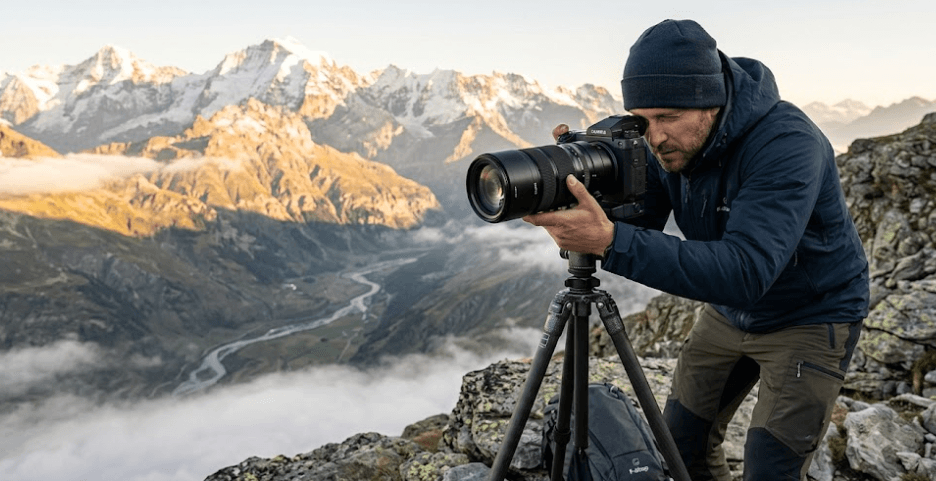
TL;DR For most people, a smartphone is still the more practical camera because it is always with you, processes images automatically, and makes editing and sharing almost effortless. Modern phones can produce impressive results through computational photography, especially in everyday daylight and challenging scenes. However, buying a real camera starts to make sense when photography itself becomes the priority rather than simply capturing a moment. A mirrorless or DSLR camera gives you a much larger sensor, interchangeable lenses, stronger manual control, more deliberate autofocus options, and greater flexibility for subjects such as wildlife, sports, portraits, commercial photography, and serious video. The decision is therefore less about whether cameras are better than phones in every situation and more about whether your photography needs have moved beyond what a phone is designed to do.
Why Your Phone May Already Be Enough
A smartphone is difficult to beat when convenience matters more than absolute image quality. It is already in your pocket, opens almost instantly, focuses automatically, and usually processes the photograph before you even see it. Computational photography can combine multiple frames, manage dynamic range, reduce noise, and adjust exposure and color automatically. Adobe notes that smartphones have improved significantly through better sensors, lenses, processors, and computational photography, to the point where their image quality can rival larger cameras in many everyday situations. For family photos, travel snapshots, food photography, social media, documents, and casual memories, that convenience can matter more than having a larger sensor or interchangeable lens.
A phone is also a particularly strong option when the final photograph will mainly be viewed on a phone screen or shared through messaging and social platforms. You do not necessarily need a dedicated camera to take a good photograph of a birthday dinner, a college event, a sunset, or a weekend trip. In fact, having fewer controls can sometimes make photography easier because you can concentrate on composition, light, and the subject instead of thinking about aperture, shutter speed, ISO, and lens selection. Adobe's smartphone photography guidance makes a similar point: the simplicity of a phone can help photographers focus on fundamentals such as composition, light, shadow, contrast, scale, and emotion.
The other advantage is the complete workflow. A smartphone can capture the image, edit it, back it up, and share it within minutes without moving files between devices. That matters if your photography is mainly connected to Instagram, WhatsApp, Google Photos, Lightroom Mobile, or short-form content. A dedicated camera introduces additional steps, including charging another device, carrying lenses or batteries, transferring files, and learning a more involved editing workflow. If those extra steps do not solve a real problem for you, buying a camera can simply add complexity rather than improving your photography.
When A Phone Is The Practical Choice
| Your Main Need | Smartphone Makes Sense Because |
|---|---|
| Everyday photos | Always available and quick to use |
| Social media | Easy editing and instant sharing |
| Travel snapshots | Lightweight and convenient |
| Family moments | Fast autofocus and automatic processing |
| Casual video | Simple recording and editing |
| Basic photography | Minimal learning curve |
When A Larger Camera Starts To Make Sense
The biggest reason to move from a phone to a real camera is not megapixels. It is the amount of control and physical imaging hardware available to you. Interchangeable-lens cameras can use substantially larger sensors than smartphones, and a larger sensor can provide advantages in noise, detail, dynamic range, and depth-of-field control. Sony, for example, explains that its larger camera sensors can produce less noise and more detail, particularly in low-light conditions, while also making shallow depth of field possible. That does not mean every camera photograph will automatically look better, but it gives the photographer more information and control to work with.
The second major difference is the lens. A smartphone typically gives you a small set of fixed camera modules, such as a main, ultrawide, and telephoto camera. A mirrorless camera can use interchangeable lenses designed for specific jobs. You can use a wide-angle lens for landscapes and interiors, a standard lens for everyday subjects, a fast prime for portraits, or a telephoto lens for wildlife and sports. Canon's lens guidance highlights how focal length changes the field of view and how different focal lengths are suited to different types of photography. That flexibility is one of the clearest reasons to buy a dedicated camera.
Control becomes equally important once photography stops being purely casual. A dedicated camera lets you deliberately control settings such as aperture, shutter speed, ISO, focus, and exposure, depending on the model and shooting mode. Phones can offer manual controls through their camera apps, and some even support RAW capture, but their physical limitations remain. Adobe's Project Indigo documentation specifically notes that smartphone photographers can gain manual control and RAW capture through software, while also explaining that smartphone cameras still have limitations compared with larger cameras in challenging situations.
What A Real Camera Adds
| Capability | Smartphone | Dedicated Camera |
|---|---|---|
| Interchangeable lenses | No | Yes |
| Large sensor options | Limited by phone size | Yes |
| Manual exposure | Available on some phones/apps | Extensive |
| Optical reach | Multiple fixed cameras | Wide range of lenses |
| Shallow depth of field | Often computational | Optical and lens-based |
| RAW workflow | Available on some models/apps | Common on modern cameras |
| Long shooting sessions | Convenient but device-dependent | Designed for dedicated shooting |
Low-Light Photography Changes The Equation
Low light is one of the situations where a dedicated camera can become noticeably more useful. A larger sensor can collect more light, and a suitable lens can provide a wide aperture, giving the camera more flexibility when light levels fall. Sony specifically identifies larger sensors as an advantage for reducing noise and retaining detail in low-light photography. This becomes particularly relevant for indoor events, night photography, concerts, city scenes, and situations where you want to preserve a natural exposure rather than relying heavily on computational processing.
That does not mean smartphones are poor at night photography. Modern phones can be remarkably good in difficult lighting because computational photography can combine multiple exposures and process them to reduce noise and improve dynamic range. Adobe's research into smartphone photography describes multi-frame capture and computational processing as important reasons modern phones can produce surprisingly clean images in difficult conditions. The difference becomes more noticeable when you want control over how the image is captured rather than simply wanting a bright, usable photograph.
For example, imagine photographing a person at a dimly lit restaurant. A smartphone may produce a bright and clean image automatically, which is exactly what most people want. A camera with a larger sensor and fast lens gives you more control over shutter speed, aperture, ISO, and background rendering. You can decide whether you want more ambient light, motion blur, shallow depth of field, or a darker and more atmospheric image. That creative control is often a stronger reason to upgrade than simply chasing sharper photographs.
Where The Difference Is Most Noticeable
| Situation | Phone | Real Camera |
|---|---|---|
| Well-lit outdoor scenes | Excellent | Excellent |
| Indoor family photos | Very good | More control |
| Night street photography | Very good computational results | Greater manual control |
| Concert photography | Limited by reach and light | Better lens flexibility |
| Portraits | Strong computational blur | Natural optical depth of field |
| Night creative work | Convenient | Greater exposure flexibility |
Wildlife, Sports, And Distant Subjects
Wildlife and sports are two areas where buying a real camera can become much easier to justify. The problem is not simply image quality. It is reach, autofocus behaviour, shutter speed, and the ability to keep a moving subject large enough in the frame. Adobe notes that photographing wildlife still requires long telephoto lenses and that fast-moving sports can demand the ability to capture action in a single frame. These are physical and optical requirements that are difficult to reproduce with the small fixed-camera systems found in phones.
A dedicated camera also gives you the option of choosing a lens specifically for the subject. A long telephoto lens can fill the frame with a bird sitting far away, while a faster lens can help when the subject is moving in poor light. Modern mirrorless cameras can also provide sophisticated subject detection and continuous autofocus. Nikon, for example, describes its APS-C Z50II as offering subject detection and autofocus designed for moving subjects, while also highlighting the benefits of interchangeable lenses for creators.
This is where buying a camera becomes less about wanting a "better camera" and more about solving a specific photographic limitation. If your phone already captures everything you photograph comfortably, a dedicated camera may not change much. If you repeatedly miss birds because they are too far away, lose sports action because the subject moves too quickly, or cannot achieve the framing you want, then a real camera can solve a problem your phone cannot easily overcome.
Portraits And Creative Photography
Portrait photography is another area where a dedicated camera can provide a different kind of result. Smartphone portrait modes use computational techniques to separate a person from the background and simulate blur. The effect can be very convincing, especially on a phone screen. A larger camera sensor combined with an appropriate lens can instead create optical depth of field, where the background becomes naturally blurred because of the physical characteristics of the lens and sensor system. Sony highlights shallow depth of field and bokeh as advantages associated with larger camera sensors.
The difference becomes more important when you want to control the character of the photograph rather than simply produce a blurred background. A portrait lens can influence compression, perspective, background rendering, and the relationship between the subject and surroundings. Changing lenses also lets you approach the same person or scene differently. That is difficult to reproduce with a phone because its physical lenses and sensor sizes are constrained by the need to fit inside a very thin device.
However, portrait photography alone is not automatically a reason to buy a camera. Smartphone portrait modes are already useful for casual portraits, profile photographs, and social content. If you rarely print photographs or examine them closely on a large display, you may not notice enough of a difference to justify the expense. A camera becomes more worthwhile when you actively want to learn lighting, lenses, exposure, posing, composition, and editing as part of the photography process.
Portrait Photography Comparison
| Requirement | Smartphone | Dedicated Camera |
|---|---|---|
| Quick portraits | Excellent | Good |
| Background blur | Computational | Optical |
| Lens selection | Limited | Extensive |
| Lighting control | Basic to advanced with accessories | Extensive |
| Learning photography | Easier starting point | More control to learn |
| Professional portrait workflow | Possible | More flexible |
Video Can Be A Reason To Upgrade
Video is more complicated because smartphones have become extremely capable video devices. They are compact, easy to stabilise, quick to share, and often include multiple cameras for different fields of view. For short-form content, travel clips, family videos, and casual YouTube content, a phone can be more convenient than a camera. The best device is often the one you will actually carry and use consistently.
A dedicated camera becomes more compelling when you need specific lenses, stronger control over exposure and focus, longer-form production workflows, or consistent results in challenging lighting. Nikon's creator-focused guidance, for example, points to sustained recording, autofocus consistency, genuine depth of field, and interchangeable lenses as reasons a mirrorless camera can solve problems that smartphones cannot.
There is also a workflow consideration. A camera can produce files intended for a more deliberate editing process, while a phone is designed around immediate capture and consumption. Neither approach is inherently better. If you are producing paid videos, client work, documentaries, product shoots, or controlled creative projects, the additional control can justify the equipment. If you are primarily making Instagram Reels during college or recording occasional travel videos, a phone may still be the more sensible tool.
The Cost Of Owning A Real Camera
The purchase price of the camera body is only one part of the cost. Once you enter the interchangeable-lens ecosystem, you may eventually want additional lenses, spare batteries, memory cards, a camera bag, a tripod, filters, lighting equipment, and storage for your files. Canon's current lens guidance itself reflects how broad the lens ecosystem can become, with different lenses designed for different photographic situations.
This is why buying a camera because you simply want "better photos" can be an expensive decision. A phone may already meet your needs for the majority of your photography. A camera makes more sense when you can identify a capability you need and understand what equipment will provide it. For example, someone interested in wildlife photography may need to budget for a telephoto lens, while a portrait photographer may prioritise a fast prime lens.
The learning curve also has a cost, although it can be a positive one. Understanding exposure, focal length, aperture, shutter speed, ISO, autofocus modes, and RAW editing takes time. If you enjoy learning those skills, the camera becomes part of the hobby rather than simply another gadget. If you do not want that complexity, a modern smartphone can deliver impressive results with much less effort.
What You May Need Beyond The Camera
| Purchase | Why It May Matter |
|---|---|
| Extra lens | Different focal lengths and subjects |
| Spare battery | Longer shooting sessions |
| Memory card | More photo and video storage |
| Camera bag | Protection and portability |
| Tripod | Long exposures and stable video |
| Editing software | RAW processing and advanced editing |
| Lighting | Controlled portraits and products |
How To Decide If You Are Ready For A Camera
The easiest test is to look at the limitations you encounter repeatedly. If you often think your phone cannot get close enough to a subject, cannot isolate the background naturally, struggles to freeze fast action, or does not give you enough control over exposure, you may have reached the point where a camera would add real value. Those are concrete problems rather than vague expectations, and they are much better reasons to buy a camera.
You should also think about how often you photograph. Someone who takes photographs every day and enjoys editing them may benefit more from investing in a camera than someone who takes a few pictures each month. Photography becomes much easier to justify as a dedicated hobby when you are prepared to carry the equipment, learn the controls, organise files, and spend time editing the results.
Finally, do not assume you need a full-frame camera just because you want to move beyond your phone. APS-C mirrorless cameras can provide a meaningful step up in sensor size, lens flexibility, autofocus, and control while keeping the system smaller and potentially more approachable. Nikon specifically positions APS-C mirrorless as an upgrade path for creators moving beyond smartphones without necessarily requiring the complexity of a full-frame setup.
Camera Or Phone?
| If You Mostly... | Consider |
|---|---|
| Take casual everyday photos | Smartphone |
| Post frequently on social media | Smartphone |
| Travel light | Smartphone |
| Photograph wildlife | Dedicated camera |
| Shoot sports | Dedicated camera |
| Want natural background blur | Dedicated camera |
| Shoot client photography | Dedicated camera |
| Want to learn photography deeply | Dedicated camera |
| Need interchangeable lenses | Dedicated camera |
| Want maximum convenience | Smartphone |
Frequently Asked Questions
Q. Is a camera actually better than a smartphone?
A dedicated camera can offer advantages in sensor size, lens flexibility, manual control, autofocus, and optical reach, but that does not mean it is better for every user or every situation. Modern smartphones are extremely capable for everyday photography and benefit from computational photography.
Q. When should I buy a camera instead of using my phone?
Buy a camera when your phone repeatedly limits what you want to photograph. Wildlife, sports, portraits, professional work, demanding low-light photography, and situations requiring interchangeable lenses are strong examples.
Q. Are smartphone cameras good enough for travel photography?
For many travellers, yes. A phone is lightweight, always available, and easy to edit and share. A dedicated camera becomes more useful if travel photography is a serious hobby and you want optical reach, interchangeable lenses, RAW files, or greater creative control.
Q. Does a larger camera sensor really make a difference?
Yes, sensor size can affect noise, detail, dynamic range, and depth-of-field possibilities. Larger sensors are particularly useful in low light, although the final result also depends on the lens, processing, exposure, and photographer.
Q. Are mirrorless cameras better than phones for portraits?
They can provide more natural optical background separation and much greater lens flexibility. However, modern phones can create convincing computational portrait effects, so the difference matters most when you want greater control or plan to produce photographs professionally.
Q. Do I need a DSLR or mirrorless camera in 2026?
You do not need one simply to take better everyday photographs. If you want an interchangeable-lens system, current mirrorless cameras provide a modern route into dedicated photography with electronic viewfinders, large sensors, autofocus systems, and extensive lens options.
Q. Can a phone replace a camera for professional photography?
A phone can handle some professional photography tasks, particularly social content and situations where portability matters. However, specialised professional work can require the lens flexibility, sensor performance, RAW workflow, and control available from dedicated cameras.
Q. Is buying an expensive camera worth it for a beginner?
Not necessarily. A beginner can start with an entry-level or mid-range mirrorless camera and an appropriate lens. Spending more only makes sense when the additional features solve a genuine need.
Q. Do I need multiple lenses when buying a camera?
No. You can start with one versatile lens and add lenses later as your photography develops. Canon's beginner guidance specifically highlights versatile zoom lenses as practical options for people starting with interchangeable-lens cameras.
Q. Can smartphone photography still improve without buying a camera?
Absolutely. Composition, lighting, framing, timing, and subject choice can make a significant difference regardless of the device. Adobe's photography guidance emphasises these fundamentals rather than treating expensive equipment as a requirement for better photographs.
Final Recommendation
A real camera makes sense when you have moved beyond simply wanting to take better-looking pictures and can identify what your phone is preventing you from doing. If you mainly photograph friends, food, travel moments, documents, social media content, and everyday scenes, a good smartphone is likely to remain the more practical choice. Modern computational photography has narrowed the gap considerably, and the convenience of having a capable camera in your pocket is difficult to ignore.
A dedicated mirrorless camera becomes easier to justify when you need interchangeable lenses, stronger optical reach, genuine shallow depth of field, better control in difficult lighting, reliable tracking of moving subjects, or a more serious RAW-based photography workflow. Those are tangible capabilities rather than simply higher numbers on a specification sheet.
The simplest approach is to start with your photography habits rather than your budget. If your phone consistently handles everything you shoot, keep using it. If you repeatedly run into the same limitations and are willing to carry, learn, and maintain another device, that is when buying a real camera starts to make practical sense.






