USB-C GaN Chargers
Compare USB-C GaN chargers in India by wattage, ports, prices, and value tiers to find the right charger for your devices.

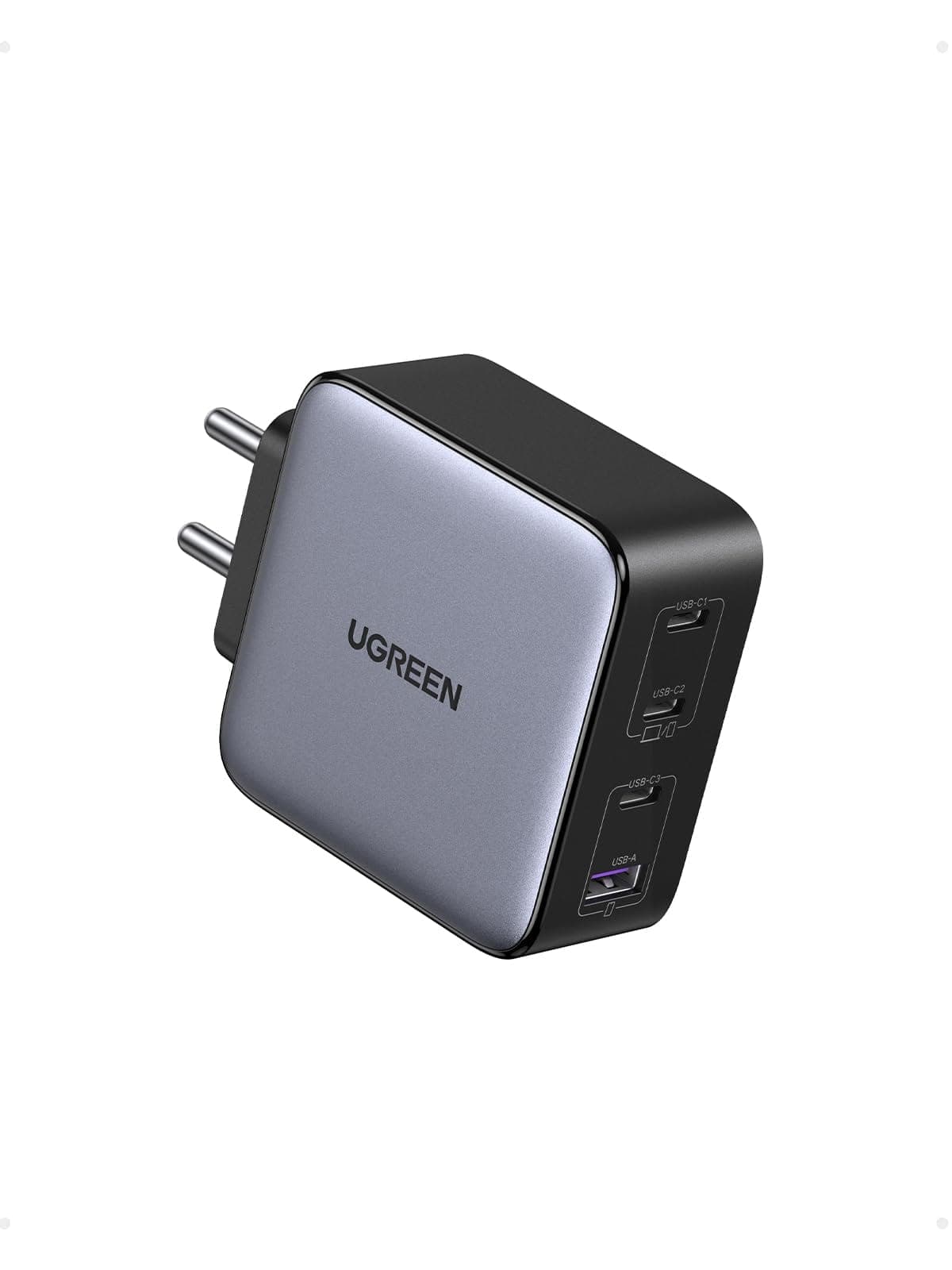
TL;DR USB-C GaN chargers are a smart buy for most Indian laptop and phone owners because they pack more power into a smaller body, run cooler, and support modern fast-charging standards. The UGREEN 30W Mini GaN USB-C Charger at ₹1,887 is the affordable pick, while the UGREEN Nexode Pro 100W GaN Charger at ₹7,331 suits buyers who want more headroom.
Understanding USB-C GaN Chargers and Why They Matter
GaN chargers use Gallium Nitride instead of traditional silicon in their internal circuitry, and that material change is why they feel different in daily use. The chemistry matters less than the result, because GaN designs are three times as efficient as standard silicon-based chargers, and they produce less heat while doing the same work. For you, that means a charger that wastes less power as heat, stays more compact on a desk or in a backpack, and is easier to carry on a flight or a long commute.
They also support modern fast-charging protocols like USB Power Delivery and Qualcomm Quick Charge, which lets one charger work across laptops, phones, and tablets instead of being locked to one device family. That flexibility matters when you move between a MacBook Pro, an iPhone, and a second USB-C device in the same day. In India, that makes these chargers a strong fit because people often juggle a phone, a laptop, and another device from one wall socket.
A compact GaN charger also makes more sense in apartments, co-working desks, and travel bags where outlet space is limited. Heat buildup becomes annoying during long charging sessions, especially when a desktop station already has a laptop, monitor, and phone cable sharing the same area. The safety angle matters too, because less heat is part of why GaN chargers are easier to trust for long charging cycles.
If you spend hours in Excel on a laptop while keeping your iPhone or Galaxy on charge beside it, a cooler charger is simply less irritating to live with. It is one reason these chargers are increasingly sold as a practical everyday upgrade, especially in 45W and higher-output options that suit both phones and laptops.
How to Choose the Right Wattage and Port Layout
Wattage is the first number you should check, because it decides whether a charger is a phone accessory or a laptop power source. A 45W brick can keep an iPhone or a lightweight USB-C device topped up, but a MacBook Pro asks for more headroom if you want meaningful charging while working in Chrome, Slack, and VS Code at the same time. That is why a GaN fast charger with the right wattage matters more than a flashy port count on the box.
The mistake many buyers make is buying a charger that looks powerful enough on paper but cannot sustain their device charging needs once two gadgets are connected. You should think about your biggest device first, then decide whether the charger also needs to cover a second phone or tablet. If your daily routine includes a MacBook Pro, an iPhone, and maybe a Galaxy phone in the same household, choosing a charger with enough output and the right port layout helps you save time and avoid slow or uneven charging.
Port layout is the second filter. A multi port charger is useful only if the mix matches your devices, because a USB-C port is the core requirement for modern laptops and phones, while USB-A still helps with older cables and accessories. The Noise Power Series GaN 100W Adapter gives you three USB-C ports and one USB-A port, while the Noise Power Series GaN 65W Adapter uses two USB-C ports and one USB-A port.
That difference matters if you routinely charge a MacBook Pro, an iPhone, and a second device at the same desk. Compatibility is where many buyers get burned, so it helps to look for USB Power Delivery and Qualcomm Quick Charge support. If you want one charger to handle a laptop bag, a bedside table, and a desk, the safest choice is the one that clearly lists protocol support and built-in protection rather than vague claims.
- Check wattage against your main device first, not the number printed in large type on the package.
- Count USB-C and USB-A ports based on the cables you actually use every day.
- Confirm USB PD and Quick Charge support if you charge an iPhone, Galaxy, or modern laptop.
- Prefer chargers with explicit protection features when you plan to use them for long sessions.
- Choose a multi device layout only if you really charge more than one product at once.
For most buyers, a 65W multi port GaN charger is the sweet spot if you split time between a laptop and a phone. That balance gives you enough output for daily work without pushing you into a larger or more expensive adapter than you need. It also keeps the charger useful across more than one device without making the desk setup complicated.
Comparing Popular USB-C GaN Chargers by Specs and Performance
The best way to compare USB-C GaN chargers is to weigh output, port count, and portability. The ASUS 65W USB-C GaN Charger is a compact single-device model. The Noise Power Series units lean more toward multi-device use. At the premium end, the UGREEN Nexode Pro 100W GaN Charger is built for serious laptop charging.
The ASUS model is the cleanest portability play. It gives you up to 65 watts when charging one device, and it keeps the body down to 120 grams. That makes it a realistic daily carry for a laptop bag or a slim travel pouch.
The Noise 65W adapter adds a second USB-C port and a USB-A port. It makes more sense if you swap between a phone, a tablet, and a laptop. The ASUS charger can take an empty phone battery to 50% in 30 minutes, which is the kind of number that matters when you leave home with a low battery and only have a short stop near a wall socket.
The UGREEN Nexode Pro 100W fits buyers who want premium headroom and do not mind paying for it. The Noise 100W unit is the stronger multi-port option for family use or a desk with several devices. If you want the most balanced everyday option, the Noise Power Series GaN 65W Adapter is the most practical multi-device pick.
Anker Prime also sits in the premium conversation. It charges two 14-inch MacBook Pros to 50% in just under half an hour. That is not a casual phone-brick metric, and it shows the charger is designed for heavy laptop use and multi-device power delivery.
- ASUS 65W is the portable pick if you want a light charger for one phone or one laptop.
- Noise 65W is better if you need one USB-C port for a laptop and another for a phone.
- Anker Prime is the serious choice when MacBook Pro charging speed matters more than size.
If you need a charger for a MacBook Pro and a second laptop-class device, the Anker Prime behaves like a high-output power tool rather than a phone accessory. If you want a lighter everyday carry, the ASUS unit stays easier to live with. The Noise models sit in the middle and cover mixed-device charging better than a single-port brick.
Price Comparison and Value Tiers in India
The Indian market has a wide price spread, and that spread shows what you are paying for. At the low end, the Ambrane 67W GaN USB-C Laptop Charger sits at ₹1,799, while the UGREEN 30W Mini GaN USB-C Charger is ₹1,887. At the top, the UGREEN 140W Nexode 3-Port USB-C GaN II Charger reaches ₹8,999.
The budget tier is where you buy a charger for one job. These models suit a travel bag, a bedside outlet, or a secondary wall charger. The Ambrane 67W model gives you a low-cost laptop charger, and the UGREEN 30W Mini GaN USB-C Charger is the more affordable pick for phone-first users.
The entry-mid and mid-range options widen the use case. The Ambrane 65W model gives you a low-cost laptop charger, while the UGREEN 65W 3-Port unit adds flexibility. In rupee terms, that makes the step up easier to justify for mixed-device charging.
This is the most interesting tier because it covers the widest range of real-world use. The UGREEN Nexode 100W and 100W 4-Port models move into serious multi-device territory. If you work on a MacBook Pro during the day and keep an iPhone or Galaxy on charge beside it, this is where the value equation starts to make sense.
The premium tier is not about novelty. It is about headroom. The UGREEN Nexode Pro 100W and the UGREEN 140W Nexode 3-Port charger are for people who will push the adapter hard. That could mean a laptop-plus-phone setup or a more demanding desk environment.
- Ambrane 67W is the budget pick if you want the lowest entry price for laptop charging.
- UGREEN 65W 3-Port is the practical step up for mixed device charging.
- UGREEN Nexode Pro 100W is for buyers who want a premium charger with more breathing room.
- UGREEN 140W Nexode 3-Port is only worth it if your devices can actually use that extra output.
The smartest value move in India is usually not the cheapest charger. It is the one that matches your device mix without overpaying for power you never use. If you are buying refurbished or discounted stock, the value gap widens even more. The hardware is already compact and long-lived, so the right usb-c gan charger at a lower price can be a very sensible purchase.
Buying the Right Charger for Your Daily Use
The most common mistake is buying a charger that looks powerful but does not match your actual load. That is why wattage and protocol support matter more than brand slogans, especially when you expect one charger to handle a MacBook and an iPhone at the same time. A charger that is fine for a phone can be a poor fit for a laptop.
Port count is not a luxury detail when you rely on multiple devices. A multi port charger only helps if the mix of USB-C and USB-A matches your cables, and protocol support only helps if the charger can speak the language your devices expect. USB Power Delivery and Qualcomm Quick Charge are the names to look for because they are the practical bridge between the charger and the device, not just marketing copy on the box.
Low-quality chargers are risky because they may skip the protection features that help keep heat and power delivery under control. A cheap charger can still fit the wall socket, but that does not mean it should be trusted for long charging sessions or overnight use. The right way to shop is simple, buy for the devices you own today, not the devices you think you might own later.
If you need a charger for one laptop and one phone, a well-specified multi port model is better than a cheap high-wattage brick with no safety detail. That is especially true in India, where one charger often ends up doing the work of two or three separate adapters. If you only charge one device at a time, a simpler charger can be enough.
Future Trends and Market Growth in India
The Indian GaN charger market is no longer a small accessory niche. One forecast puts the market at USD 280. Those are not modest numbers, and they explain why charger launches are moving faster and getting more ambitious every year.
The growth story is tied to a simple behavior shift: people now expect one charger to handle more than one device. A phone-only brick no longer feels enough when your bag also holds a laptop, earbuds, and a tablet. That is why multi port GaN charger designs keep gaining attention, because buyers want fewer adapters and more flexible power delivery from a single wall plug.
Innovation in this space is already visible. Stuffcool launched India's first 100W charger, the Centurion, in 2021, which shows quickly the category moved from basic phone charging to serious laptop support. The next wave is not just higher wattage, but smarter layouts that balance power across multiple devices without making the charger huge.
The biggest driver of future demand is simple convenience. People want a charger that can handle a MacBook, an iPhone, and perhaps a second laptop or tablet in a shared room, office, or travel setup. As more devices rely on USB-C, the charger becomes a central accessory rather than a throwaway cable companion.
Gallium Nitride lets charger makers shrink the electronics that handle power conversion without giving up output. Traditional silicon chargers need more room to manage the same electrical load, which is why old laptop adapters are bulky and warm after a long session. GaN changes that equation by letting the charger deliver higher power outputs efficiently, which is why many modern fast charger designs now fit into bodies that look closer to a phone brick than a laptop adapter.
Which USB-C GaN Charger Makes the Most Sense for You
If you want a compact, affordable option for phone-first use, the UGREEN 30W Mini GaN USB-C Charger at ₹1,887 is the easiest entry point. If you need a low-cost laptop charger, the Ambrane 67W GaN USB-C Laptop Charger at ₹1,799 and the Ambrane 65W Fast Charging Type C Laptop/MacBook Charger at ₹2,299 both make sense for different budgets. If you want a balanced multi-device charger at ₹3,999, the UGREEN 65W 3-Port USB-C Charger is the middle ground.
You regularly charge a laptop and a phone from the same adapter, and you want more flexibility than a single-port brick without moving into premium pricing. You do not need 100W-class headroom, and your daily charging is mostly phone-only or light laptop use. If you only charge one device at a time, a higher-output option may not be necessary.
For most buyers, the smartest move is to match the charger to the device mix you already own. The UGREEN Nexode 100W USB-C Charger at ₹5,899 and the UGREEN 100W 4-Port GaN Fast PD Charger at ₹6,220 sit in a strong middle ground if you want more output and more ports. The UGREEN 140W Nexode 3-Port USB-C GaN II Charger at ₹8,999 is the right call only when you truly need the extra headroom.
Is a USB-C GaN Charger Worth Buying in India
USB-C GaN chargers are worth buying in India if you want one adapter that can cover a phone, a tablet, and a laptop without taking up much space. The strongest value usually sits around 65W, because that level works well for mixed daily use without forcing you into the highest price tiers. The UGREEN 30W Mini GaN USB-C Charger at ₹1,887 is still a good buy for phone-first users, while the UGREEN Nexode Pro 100W at ₹7,331 makes sense for heavier laptop use.
If you are a student, office worker, or frequent traveler, the practical choice depends on how many devices you charge at once. One-device users can stay with a smaller and cheaper model, while people who move between a laptop and phone should look at 65W or 100W options. The Noise Power Series and UGREEN multi-port models are especially useful when one wall socket has to do more than one job.
The best next step is to match wattage, port layout, and price to your real routine. If you want the simplest answer, start with 65W for everyday mixed use and move to 100W only when your laptop setup needs more room to breathe. That approach keeps the purchase practical, avoids overspending, and gives you a charger that fits the way you actually work.
Frequently Asked Questions
Q. Why does GaN matter for Indian buyers?
GaN matters in India because many people charge more than one device from the same wall socket. That makes it easier to use at home, at work, and on the move. It also helps explain why 65W and 100W models have become so practical for laptop and phone owners.
Q. How do I choose the right wattage?
Start with your largest device, because that sets the minimum power level you should consider. A phone can work well with a smaller charger, but a laptop usually needs more headroom. If you charge a laptop and a phone from the same adapter, a 65W or 100W model is usually the more practical direction.
Q. Do I need multiple ports?
You need multiple ports if you regularly charge more than one device at the same time. A multi port charger is most useful when the port mix matches the cables you already own. The Noise Power Series GaN 100W Adapter, with three USB-C ports and one USB-A port, is a clear example of that kind of setup.
Q. What should I check for compatibility?
Look for USB Power Delivery and Qualcomm Quick Charge support, because those are the common standards that help chargers work across different devices. You should also check whether the charger includes built-in protection features. That combination matters more than brand slogans when you plan to use the charger every day.
Q. Which charger is best for phone-first users?
The UGREEN 30W Mini GaN USB-C Charger at ₹1,887 is the clearest phone-first option in this article. It sits in the budget tier and works well for small-device charging. If you only charge one device at a time, that lower-output choice is easier to justify than a 100W model.
Q. Which option gives the most headroom for laptops?
The UGREEN 140W Nexode 3-Port USB-C GaN II Charger at ₹8,999 gives the highest headroom in this group. The UGREEN Nexode Pro 100W at ₹7,331 is the more moderate premium choice if you want strong laptop support without going all the way to 140W. Both make more sense for heavy laptop use than a 30W or 65W phone-first charger.