Under-Display Cameras: Are They Finally Good Enough in 2026?
Stay updated with the latest Android versions, release timeline, security support, and installation process. Learn how to check Android updates, understand support windows, and choose a phone that will receive updates for years to come.

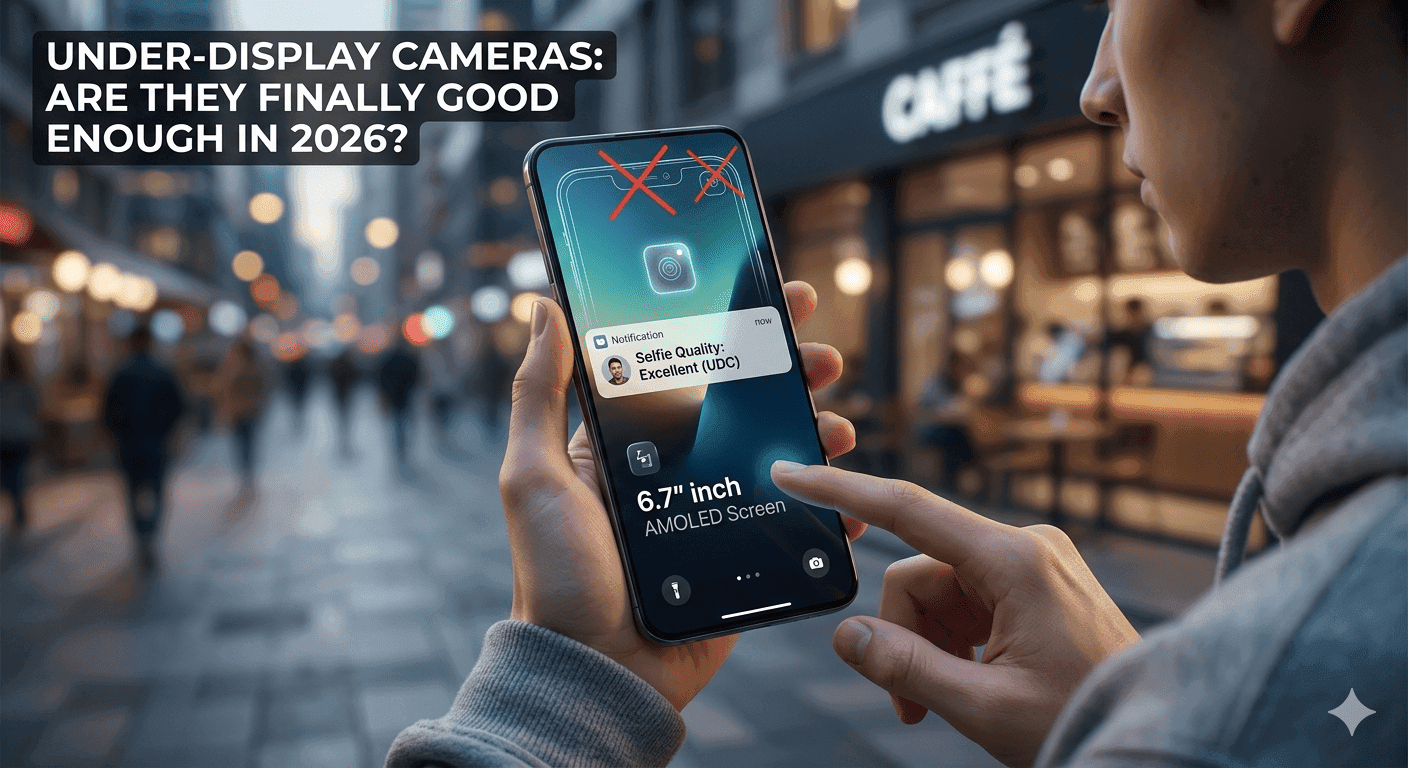
TL;DR Under-Display Cameras give you a cleaner front and a more open viewing experience, but the hidden camera still trails normal selfie hardware, especially in low light. The Red Magic 11 Air at ₹46,990 is the cheapest entry point, while the Red Magic 11S Pro at ₹79,990 is the premium option.
Why the design still matters?
Under-Display Cameras place the front camera beneath the screen instead of cutting a hole into it. That keeps the display visually intact, which is the main reason people notice the feature right away. When you open YouTube, read in Kindle, or scroll through Gmail on a mobile device, the top edge feels less busy. The cleaner front matters because your eyes stay on the content instead of on a notch or punch-hole.
Community.iqoo.com calls that a full-screen experience, and that description fits well. Reliancedigital.in also notes that these smartphones look slimmer and more void of bezels and punch-hole cameras, which is why the design feels so different in hand. On devices like the ZTE Axon Ultra, that cleaner front is part of the appeal, and it can feel almost perfect for people who want the screen to take center stage.
Where the idea fits best?
This is the kind of feature that makes sense if you care about the screen more than the selfie. It is also a strong fit for a smartphone that spends a lot of time on video playback, reading, or facial recognition. The front looks cleaner, and the device feels more premium because the technology is still uncommon.
That scarcity is part of the appeal, but it also means you should judge the rest of the hardware carefully. A hidden lens does not fix a weak chip, a mediocre panel, or poor tuning. For the right user, though, the result can feel very polished.
- The clean look helps when you watch Netflix or Prime Video and want fewer distractions.
- The design also works well in Zoom or Google Meet because the top of the panel stays uncluttered.
- The benefit is most obvious when you use the phone one-handed and keep glancing at the top edge.
Key Specs and Historical Milestones
The ZTE Axon 20 5G matters because it was the world’s first cell phone with an under-display camera, introduced in 2020. That made it the starting point for the category and a key tech milestone. It proved that the idea could move from demo to real retail hardware, even if the first attempt was rough.
The ZTE Axon 40 Ultra is the better-known example today, and the ZTE Axon line is often used as the reference point for current performance. It uses a 16MP camera UDC with an f/2.0 aperture, and it pairs that hidden sensor with a Snapdragon 8 Gen 1 processor. The 6.8-inch display with 1116 x 2480 pixels gives the camera more room to hide beneath the phone, which is the entire engineering challenge here.
The hardware behind the trick
The technology works by lowering pixel density around the camera area so more light can pass through. Samsung describes that approach clearly, and it explains why the screen over the lens is never perfectly invisible. The pixels above the sensor have to balance image quality and transparency, so the circuit beneath the panel is always fighting physics.
That is why the Galaxy Z Fold4 and Z Fold5 use an Under Display Camera, or UDC, on the main display. Samsung rates that UDC at 4MP, which is a clear sign that the company prioritizes panel continuity over camera ambition. The same idea also shows up in the Galaxy series as a design statement, not as a replacement for a real front camera.
Early commercial steps
The ZTE Axon 20 5G used a 32MP in-display camera without a notch or punch-hole, which made it the first commercially available smartphone of its kind. The ZTE Axon 30 then added a 120Hz refresh rate, which matters because the screen is the part users stare at all day. A smoother panel does more for the experience than a hidden lens ever will.
Apple is also working toward placing both Face ID and the front-facing camera under the display in future iPhones. That shows the idea is still moving forward across the industry and across each region of the market. Even so, the technology is mostly found in premium and concept phones today, not in mainstream mid-range models.
- The ZTE Axon 20 5G is the historical start point for the category.
- The ZTE Axon 40 Ultra is the most useful real-world reference for current performance.
- The Galaxy Z Fold4 and Z Fold5 UDC fits into a premium foldable series.
- The ZTE Axon 30 adds a reminder that refresh rate still shapes the overall feel.
Camera Performance Limits You Should Expect
The biggest drawback is still the camera itself. If you move from a normal front camera to this setup, you will notice softer detail and less reliable color. The Axon 40 Ultra has also been criticized for producing images with inaccurate colors, which is especially noticeable in a selfie or video call where skin tones and white balance matter most.
Low-light is the real weak spot
Under-display cameras struggle with low-light performance because the display blocks light before it reaches the sensor. That makes dim rooms, evening video calls, and indoor selfies harder to capture cleanly. The result is usually less detail, more noise, and weaker subject separation.
The technology can also introduce lens flares and refraction, especially when bright light hits the panel at the wrong angle. In practical use, that means the hidden lens is fine for quick calls, but not for photos you care about. This is still a usable display camera UDC for Face Unlock and short video calls.
Samsung treats UDC that way on the Galaxy Z Fold4 and Z Fold5, and that is the right expectation to have. If your work depends on crisp front-camera output in Microsoft Teams or Google Meet, a conventional selfie camera is still safer. Its 64MP triple-camera rear setup is the part that does the heavy lifting, while the UDC exists mainly to preserve the screen.
That split tells you a lot about how manufacturers think about the feature, even if the result is more immersive than ideal for camera quality. The hidden lens supports the display-first design, but it does not replace a strong imaging system. For buyers who care most about selfies, the trade-off remains real.
- Use it for Face Unlock and quick calls, not creator-grade selfies.
- Treat the rear triple-camera array as the real imaging system.
Pricing and Market Position
The price gap between these models tells the story quickly. The Red Magic 11 Air at ₹46,990 is the cheapest option, the Nubia Red Magic 10 Pro at ₹59,990 sits in the middle, and the Red Magic 11S Pro at ₹79,990 is the most expensive. That spread matters because under-display camera hardware is usually bundled with gaming or premium features, not sold as a standalone bargain.
| Model | India Price | Market Position |
|---|---|---|
| Red Magic 11 Air | ₹46,990 | More affordable |
| Nubia Red Magic 10 Pro | ₹59,990 | Mid-range |
| Red Magic 11S Pro | ₹79,990 | Premium-priced |
What the market says about demand?
The market is still growing, but it is not yet mainstream. Shipments of smartphones featuring the hardware are still limited compared with conventional front-camera phones, and that keeps the category relatively niche. The current price spread from ₹46,990 to ₹79,990 also shows that most buyers are paying for a premium design idea rather than a mass-market necessity.
If you want the cleaner front and can accept the camera trade-off, compare the Red Magic 11 Air, Nubia Red Magic 10 Pro, and Red Magic 11S Pro before you buy. The cheapest model gives you the entry point, while the highest-priced model reflects the premium side of the category. The middle option makes sense if you want to balance cost and positioning.
Who Should Buy Under-Display Cameras in 2026?
Under-Display Cameras make the most sense for buyers who value screen continuity, gaming, media, and a cleaner front design more than selfie quality. The Red Magic 11 Air at ₹46,990 is the most approachable option, while the Nubia Red Magic 10 Pro at ₹59,990 gives you a middle ground. If you want the premium route, the Red Magic 11S Pro at ₹79,990 sits at the top of the current price range.
People who watch a lot of video, read on their phones, or want a less cluttered display will get the most visible benefit from the feature. Buyers who rely on front cameras for work calls, creator content, or low-light selfies should be more cautious. The Galaxy Z Fold4 and Z Fold5 show how the feature can support a premium foldable design, but they also show that the hidden camera is still a compromise.
If you are shopping now, start with your priorities and then compare the models already in this article. Choose the Red Magic 11 Air if price matters most, the Nubia Red Magic 10 Pro if you want a balanced middle option, and the Red Magic 11S Pro if you want the premium tier. If your main concern is camera quality, wait until the rest of the hardware and the hidden lens tuning both meet your needs.
Frequently Asked Questions
Q. What is the main advantage of Under-Display Cameras?
The main advantage is a cleaner screen with no notch or punch-hole cutting into the display. That design helps the front feel more open when you watch YouTube, read in Kindle, or use Gmail. The category started with the ZTE Axon 20 5G in 2020, so the idea has already moved from concept to real products.
Q. Which phone is the cheapest option in this article?
The Red Magic 11 Air is the cheapest option at ₹46,990. The Nubia Red Magic 10 Pro sits at ₹59,990, and the Red Magic 11S Pro reaches ₹79,990. That spread shows how the feature usually appears in premium or gaming-focused phones.
Q. Why do Under-Display Cameras struggle in low light?
They struggle because the display blocks light before it reaches the sensor. That leads to softer detail, more noise, and weaker subject separation in dim rooms. The article also notes that bright light can create lens flares and refraction, which makes the hidden camera less reliable for serious selfies.
Q. Is the ZTE Axon 40 Ultra a good reference for this category?
Yes, because it is one of the clearest real-world examples of the technology in a modern phone. It uses a 16MP camera UDC with an f/2.0 aperture and a Snapdragon 8 Gen 1 processor. Its 6.8-inch display with 1116 x 2480 pixels also shows how much engineering goes into hiding the camera.
Q. Should I use the hidden camera for video calls?
You can use it for quick calls and Face Unlock, but it is not the best choice for high-quality front-camera work. The article says a conventional selfie camera is safer for Microsoft Teams or Google Meet if image quality matters. Samsung’s 4MP UDC on the Galaxy Z Fold4 and Z Fold5 shows that the feature is still more about preserving the screen than maximizing camera output.
Q. Who should avoid buying a phone with this feature?
People who depend on crisp selfies, creator-grade video, or dependable low-light front-camera performance should be careful. The hidden lens still trails normal selfie hardware, especially when lighting drops. If your priority is camera quality first, the trade-off is probably not worth it.