Sony A6400 Worth Buying?
Sony A6400 worth buying? See India pricing, autofocus, 4K video, kit choices, and who should buy it before you decide.

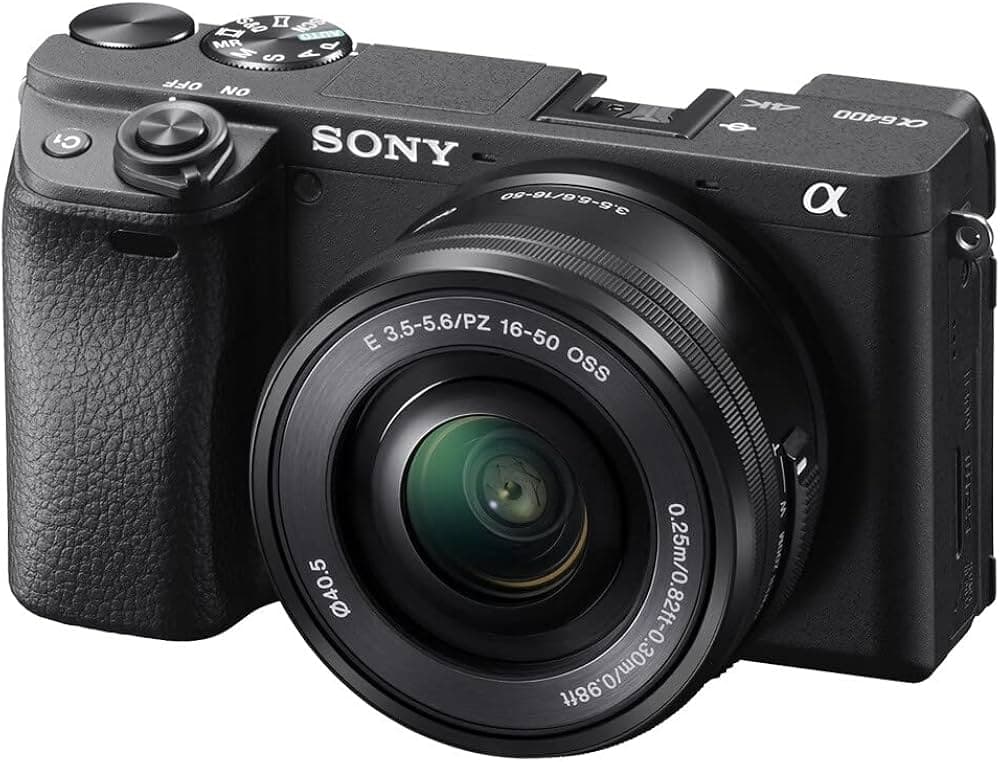
TL;DR The Sony A6400 is still worth buying if you want a compact mirrorless camera with fast autofocus, 4K video, and a body that stays useful for street, travel, and beginner photo work. The ₹51,990.00 16-50mm kit is the cleanest starting point, while the body-only and 18-135mm options make sense for more specific needs.
Sony A6400 Overview and Key Features
The Sony A6400 is a compact mirrorless camera built around a 24.2MP APS-C Exmor CMOS sensor and a BIONZ X image processor. That combination still matters because it gives you enough detail for large prints, cropped photos, and clean edits in Lightroom without making the body bulky. If you shoot a lot of travel photo sets or quick street frames, that balance is the reason this model still comes up in serious reviews.
Its autofocus is the real reason people keep asking whether the Sony A6400 is worth buying. The camera uses 425 phase-detection autofocus points, Real-time Eye AF, and Real-time Tracking, so it locks onto faces and moving subjects with far less hunting than older entry-level bodies. That makes a real difference in candid portrait work, wedding detail shots, and fast-moving street scenes where one missed focus can ruin a frame.
The burst rate also holds up. With continuous shooting at up to 11 frames per second, the A6400 can catch a child running across a park, a skateboard trick, or a bird taking off without forcing you to hope for one lucky click. For a beginner camera, that is a surprisingly serious spec, and it gives you room to grow before you outgrow the body.
4K video at 100 Mbps is another reason the camera still earns attention. That bitrate gives you enough detail for YouTube edits, short documentary clips, and product b-roll without the footage falling apart too quickly in motion. If you record a sample clip in a busy market or film a talking-head setup in DaVinci Resolve, the file still has enough texture to grade sensibly.
The body weighs 403 grams, which makes a bigger difference than people expect after a full day of shooting. You notice it on a long walk with a sling bag, and you notice it again when you keep the camera ready in one hand for a city photo walk. Bluetooth, NFC, and Wi-Fi round out the package, so transferring a photo to your phone or remote-controlling the camera is much less annoying than on older systems.
What the specs mean in real use
The Sony A6400 specs are not just numbers on a page. A 24.2MP sensor gives you enough room to crop without turning every photo into mush, and the 425-point autofocus system keeps faces sharp when you are moving fast. That is useful in Adobe Lightroom culling sessions, where a sharp eye focus saves time before you even start editing.
The 11 fps burst rate helps in sports, pets, and street photography because it increases the odds of catching the exact frame you wanted. Real-time Eye AF also matters more than people admit, especially if you shoot portraits at shallow depth of field and want the eye to stay locked instead of drifting to the nose or ear. If you carry accessories, a spare battery, and memory cards in the same bag, the A6400 still feels manageable.
- The autofocus system is the headline feature because it saves you from soft portraits and missed moments.
- The 4K files are detailed enough for YouTube, travel edits, and short-form video.
- The lightweight body makes the camera easier to keep with you, which matters more than specs on paper.
For Beginners and Everyday Creators
The Sony A6400 is a good beginner camera for photography and video creation because it removes two common frustrations, missed focus and awkward handling. If you are learning manual exposure in Aperture Priority or switching between stills and clips in Premiere Pro, the A6400 stays out of your way. For creators who want a camera that is easy to use, it can help you keep working without feeling blocked by the setup.
Street, Travel, and Video Use
Street photographers get the most obvious benefit. The body is small enough to look discreet, and the autofocus reacts quickly when a subject turns toward you or steps out of frame. That is why this model still appears in so many Sony mirrorless conversations, even years after launch.
Travel shooters also get a lot from the design. A compact body plus a sensible lens keeps the kit light enough for a day of walking, and the built-in intervalometer is useful for timelapse sequences of clouds, traffic, or sunsets. If you make those clips for a reel, a travel vlog, or a personal archive, the feature is practical rather than gimmicky.
The A6400 is especially good if you want one camera to handle both photography and video. A beginner can use it for family photos on Saturday and a talking-head clip on Sunday without learning a second system. That kind of flexibility is why the Sony A6400 worth buying question usually gets a yes from people who want one body to do a bit of everything.
Manual Lenses and Action Shooting
It also suits creators who use a manual lens from time to time. The APS-C mount gives you room to experiment with older glass, including options from Pentax, Sigma, and Zeiss, as long as you understand the trade-offs. A manual lens review on this body is often more about character and handling than autofocus speed.
Sports and wildlife are realistic use cases too, just not the only ones. The 11 fps burst rate and tracking autofocus help when the subject changes direction suddenly, and that matters in school sports, dog parks, or casual bird photography. You do not need a pro body to get usable action frames if your timing is decent.
- Street photography works well because the camera stays compact and responsive.
- Travel photography benefits from the light body and the intervalometer.
- Beginner video work is easier because Eye AF reduces focus misses.
- Casual sports and wildlife shooting are possible thanks to tracking and burst speed.
Sony A6400 Lens Options and Connectivity Features
The Sony A6400 uses the Sony E-mount system, which gives you a wide range of lenses and accessories. That matters because the body is only part of the purchase, and the lens you choose shapes the way the camera feels in the hand. If you compare it with Canon cameras, Fujifilm cameras, Nikon bodies, Panasonic options, or Leica alternatives, the lens ecosystem is one of the first things to check.
The common starter kits in India are easy to separate by use case. The Sony Alpha a6400 Mirrorless Camera with 16-50mm Lens is priced at ₹51,990.00, the Sony Alpha ILCE-6400 Mirrorless Digital Camera body is ₹65,490.00, and the Sony Alpha a6400 Mirrorless Camera with 18-135mm Lens is ₹71,999.00. The 16-50mm kit is the cheapest way in, while the 18-135mm kit gives you more reach and fewer lens changes.
| Option | Price | Best For |
|---|---|---|
| Sony Alpha a6400 with 16-50mm Lens | ₹51,990.00 | First-time buyers who want the lowest entry cost |
| Sony Alpha ILCE-6400 Body Only | ₹65,490.00 | Buyers who already own E-mount lenses |
| Sony Alpha a6400 with 18-135mm Lens | ₹71,999.00 | Travel, family events, and all-in-one shooting |
Why the kit choice matters
The body-only option only makes sense if you already own compatible lenses or plan to build slowly. Buying the body first and then adding an expensive zoom later can make the system cost more than expected. The 16-50mm kit is the safer move for most first-time buyers because it gives you a working setup on day one.
Lens choice also affects low-light results because the A6400 has no built-in image stabilization. That is a real difference you feel in the first week, not a minor technical note.
- The body-only option is only sensible if you already own E-mount glass.
- Wireless transfer is useful if you move images quickly between camera and phone.
Current Price Range
The Sony A6400 has settled into a much more sensible price range than it had at launch. New units cost ₹60,000+, used units are around ₹50,000+, and the original launch price was ₹75,000+. That drop matters because the camera’s core strengths, especially autofocus and 4K video, still hold up well against newer entry-level bodies.
It also offers a clearer value case for buyers comparing older and newer models. The used price around ₹50,000+ makes the camera more approachable if you care about value more than box-fresh condition. The new price of ₹60,000+ still keeps it in a range that rewards buyers who want fresh condition and warranty coverage.
India Pricing and Kit Choices
In India, the price spread is more useful when you compare body-only and kit options. The ₹51,990.00 16-50mm kit is the most affordable practical package, while the ₹65,490.00 body-only version only makes sense if you already own lenses. The ₹71,999.00 18-135mm kit costs more, but it also reduces the chance that you will immediately spend again on another zoom.
Which Option Makes the Most Sense
The 16-50mm kit is the easiest recommendation for most first-time buyers because it keeps the system affordable and usable immediately. If you are building a YouTube setup, a travel kit, or a casual family camera, that package covers the basics without forcing another purchase right away. The body-only option is only smart if you already know your lens plan.
The used market price around ₹60,000 is also interesting for buyers who care about value more than box-fresh condition. A well-kept used A6400 can be a better deal than a newer but weaker body, especially if your focus is image quality and autofocus performance rather than the latest menus. If you compare it with newer Sony cameras or competing mirrorless models, the A6400’s value comes from how complete the package still feels.
- New buyers should look first at the 16-50mm kit price.
- Used buyers can save money if the shutter count and condition are sensible.
- Body-only pricing only works if you already own compatible lenses.
Know the Limits
The biggest mistake is assuming the A6400 solves every problem by itself. It does not have built-in image stabilization, so handheld video and low-light stills depend on your lens and your technique. Battery life is another area where expectations need to stay realistic.
The Sony Alpha a6400 has a battery life of approximately 75 minutes when using the LCD monitor, which is fine for short sessions but not for a long day of shooting and playback. If you spend hours reviewing clips in Final Cut Pro or Lightroom, carrying a spare battery is the sensible move. The screen design also matters more than people expect.
The tiltable LCD screen can tilt 180° up and 74° down, but it is not fully articulating. That works for some self-recording and low-angle shots, yet it is less flexible than a full flip-out screen when you are filming yourself for TikTok, YouTube, or a product demo. Moderate weather sealing helps in normal use, but it is not a reason to treat the body like a rugged field camera.
Light rain, dust, and everyday commuting are fine, while heavy weather is still a bad idea. If you shoot outdoors often, that is the kind of detail that matters more than the marketing copy. Lens quality matters a lot because the camera can suffer from soft glass quickly. A soft kit zoom will hold the A6400 back more than people expect, especially in portraits and low-light scenes.
Another common mistake is buying the wrong kit for your actual shooting pattern. The 16-50mm kit is compact and affordable, but the 18-135mm kit can save you from immediate lens upgrades if you travel or shoot general-purpose content. That decision should be based on how often you change focal lengths, not on which box looks more impressive.
- Skip the body if you have no lens plan at all.
- Skip the camera if you need strong in-body stabilization for handheld video.
- Skip the 16-50mm kit if you know you want more reach right away.
- Skip the A6400 if you expect full weather protection for rough outdoor work.
Real-World Shooting Scenarios and Sample Results
The A6400 makes the most sense when you think in actual shooting jobs, not abstract specs. A street photographer can keep it in a small bag, pull it out fast, and rely on Real-time Tracking to stay on a moving subject. A travel creator can use the intervalometer for timelapse clips of traffic or clouds, then move the files over Wi-Fi for quick sorting on a laptop.
For video, the 4K 100 Mbps files are the reason this body still feels relevant. The camera is also a good fit for people who like to experiment with older glass. Manual lenses from Zeiss, Sigma, or Pentax can give you a different rendering style, and the APS-C crop factor changes how those lenses behave.
That is useful if you enjoy a more hands-on photo process and do not want every shot to look clinically modern. A shooter who wants a familiar body for both stills and clips without changing systems can get a lot from this camera. The A6400 is not trying to be everything, but it handles a lot of everyday work well.
Sample use cases that make sense
A beginner can use the A6400 for a first portrait session in Aperture Priority and get consistent eye focus without fighting the camera. A small business owner can shoot product photos, then record a short Instagram Reel with the same body. A hobbyist can keep it as a lightweight backup camera and still trust it for serious work.
The camera also works well for mixed photo and video days. If you shoot a family event, you can capture stills in the morning and clips in the afternoon without changing systems. That is where the Sony A6400 worth buying question becomes easy to answer, because the body does enough jobs well instead of one job perfectly.
- Street work benefits from the small body and fast autofocus.
- Travel clips benefit from the intervalometer and wireless transfer.
- Mixed photo and video days are easier because the body handles both cleanly.
Frequently Asked Questions
Q. Is the Sony A6400 worth buying in 2026?
Yes, the Sony A6400 is still worth buying if you want strong autofocus, 4K video, and a compact mirrorless camera that does not feel outdated in real use. The 24.2MP APS-C sensor, Real-time Eye AF, and 11 fps burst rate still cover most beginner and enthusiast needs. The ₹51,990.00 16-50mm kit also keeps the entry point reasonable for India buyers.
Q. Is the Sony A6400 good for beginners?
Yes, the Sony A6400 is a good beginner camera for photography and video because it keeps focus reliable and the body stays easy to carry. Beginners also benefit from the simple jump into manual control, especially when learning exposure in Lightroom or shooting short clips for YouTube. The 403-gram body helps new users keep it with them more often.
Q. Which Sony A6400 kit is the best value?
The Sony Alpha a6400 Mirrorless Camera with 16-50mm Lens at ₹51,990.00 is the best value for most first-time buyers. It gives you a usable lens immediately, while the body-only option at ₹65,490.00 only makes sense if you already own E-mount lenses. The 18-135mm kit at ₹71,999.00 is better if you want more reach from day one.
Q. Does the Sony A6400 have good autofocus for video?
Yes, the Sony A6400 has Real-time Eye AF and Real-time Tracking, which are the reasons it still performs well for talking-head video and moving subjects. That autofocus helps keep faces sharp in Premiere Pro clips, YouTube uploads, and casual event footage. The 425 phase-detection autofocus points also support that reliability.
Q. What is the biggest weakness of the Sony A6400?
The biggest weakness is the lack of built-in image stabilization. If you shoot handheld video a lot or work in low light without a stabilized lens, you will feel that limitation quickly. The battery life of approximately 75 minutes on the LCD monitor is another limit to plan around.
Q. Which shooting styles fit the Sony A6400 best?
The Sony A6400 fits street photography, travel work, beginner video, and casual action shooting best. Its 11 fps burst rate, compact 403-gram body, and intervalometer make those jobs easier to manage. It is less ideal for users who need full weather protection or a flip-out screen.
Is the Sony A6400 a Smart Buy for Your Needs?
The Sony A6400 still makes sense because its strongest features line up with what many buyers actually need. The 24.2MP APS-C sensor, 425-point autofocus system, and 11 fps burst rate give it enough performance for street, travel, portraits, and casual action without making the body feel complicated. At ₹51,990.00 for the 16-50mm kit, it also stays within a range that makes sense for first-time buyers who want a usable setup right away.
If you want a compact camera that can handle both stills and 4K video, the A6400 still delivers a balanced package. Choose the A6400 if you want a lightweight body for street photography, travel, or a first serious camera. Choose it if you care more about dependable autofocus and lens flexibility than about a fully articulating screen or in-body stabilization. If you have been blocked by bulky gear before, this is the kind of camera that feels easier to carry.
If you need strong stabilization for handheld video, long battery life without spares, or a full flip-out screen for vlogging, look elsewhere. If you do not already own E-mount lenses, avoid the body-only option and start with the 16-50mm kit instead. For most buyers who want a compact APS-C body with serious autofocus, the answer is yes, the Sony A6400 is worth buying.
Ready to upgrade your tech?
Browse our collection of quality refurbished products at unbeatable prices.