Satellite Connectivity in Smartphones Guide
Satellite connectivity in smartphones provides a critical backup communication channel when cellular networks fail. Designed mainly for emergency SOS messaging rather than everyday internet use, it helps travelers, hikers, and remote workers stay connected in areas with little or no mobile coverage.

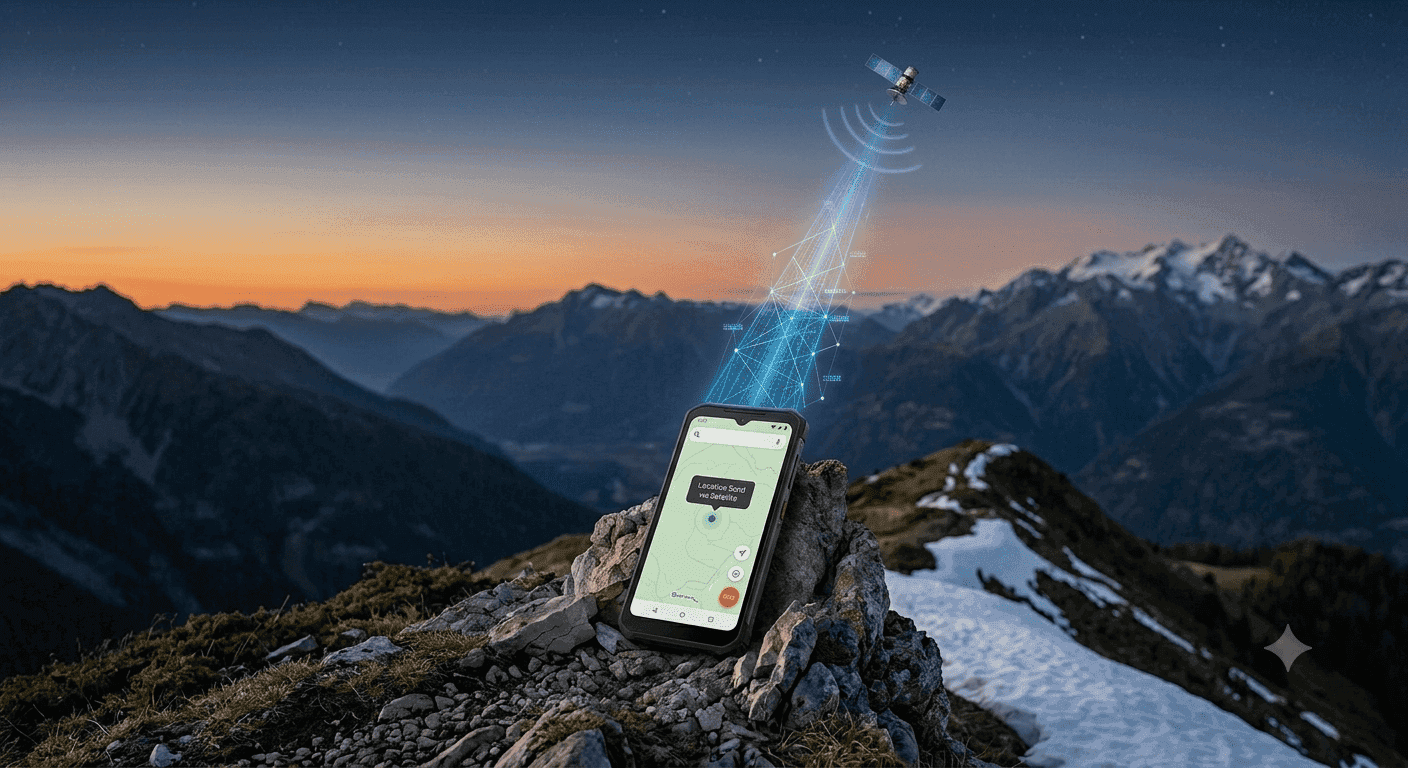
TL;DR Satellite connectivity in smartphones is mainly for emergency SOS messaging, not daily browsing, and the cheapest satellite internet path starts at ₹8,600 per month while premium satellite phones reach around ₹1,10,000.
Satellite Connectivity Overview
Satellite connectivity gives smartphones a backup route when cellular networks are down. The core idea is simple: your phone reaches satellites instead of a tower, so you can still send a message when the mobile network fails. That makes satellite connectivity in smartphones a safety feature first, and a normal internet replacement never. In the real world, it matters most on remote roads, mountain trails, and in rural areas where a connection can disappear without warning.
Current satellite connectivity on smartphones is centered on SOS messaging and emergency communication, not full browsing or video calls. If you want satellite internet or satellite broadband, you are talking about a broader satellite service, not the phone's emergency feature. In practical use, that means the phone can send a distress message, share location details, and help emergency services understand where you are. Samsung's hardware approach is still judged against the same standard, which is whether the phone can provide a reliable backup when the network is gone.
The feature is not built for entertainment or heavy data use. There is no multimedia, no voice call support, and no expectation that it will behave like 5G or Wi-Fi.
Why the sky matters
The build requires a clear view of the sky, and trees, buildings, or heavy foliage can slow down the connection. That physical requirement is the biggest reason the feature is useful in open ground and frustrating in dense cities. A satellite based link needs line of sight, so the phone cannot cheat physics the way a terrestrial network sometimes can.
In other words, location matters more than brand names or marketing claims. This is also why the feature works better when you plan for it instead of discovering it in the middle of an emergency. If you are hiking, driving through a dead zone, or working near the edge of coverage, the connection is most useful when you are already in open space. The phone is trying to talk to satellites overhead, not to a tower around the corner. That is a very different kind of wireless link.
- Use it for SOS via satellite when you need a backup path for urgent messages.
- Expect the best results in open space with a clear view, not under trees or beside tall buildings.
- Treat it as a satellite connection for emergencies, not a replacement for broadband.
- Remember that the feature depends on satellites overhead, so location changes the result fast.
Emergency-First Smartphone Use
The clearest use case is emergency communication. The parts on smartphones primarily focus on SOS messaging, so the experience is built around short, urgent messages rather than casual chat. If you are stranded on a highway, injured on a trail, or dealing with a dead zone in the middle of a long drive, that emergency path can still reach help.
It is a narrow solution, but it is the right one for the moment it was designed for. That is also why the feature should not be confused with a full internet service. A satellite connection on a phone is about contact, not content, and it stays useful even when the mobile network is unavailable. For Samsung users, the same logic applies, because the point is to keep communication alive when the terrestrial network drops.
What users should expect
The most realistic expectation is text-based messaging only. You can send a message, but you cannot rely on photos, video, or voice through the satellite link. That keeps the feature focused and dependable, which is exactly what emergency communication needs.
If you want a full broadband experience, you need a satellite internet provider, not a handset feature. A demo of the feature usually makes the trade-off obvious. The phone may guide you to point toward the sky, wait for alignment, and then send a short message through satellites. That process is slower than tapping a normal chat app, but it is still a practical way to reach emergency services. The slow pace is acceptable because the end goal is safety, not speed.
How it fits real-world use
These components are most useful when the mobile network goes down in places you still need to move through. Think of a driver on a rural highway, a trekker in the hills, or a field worker in a remote region with no tower nearby. In each case, the phone gives you a backup channel to send a message when the connection has failed.
That is a much smaller promise than broadband, but it is the promise that matters in a crisis. The feature also makes sense for people who already rely on wireless tools for work. A journalist in the field, a survey team in open terrain, or a rescue crew near a cut-off road all gain from a satellite-based emergency path. The system does not replace normal internet services, but it does provide a reliable end point for a distress message. That is why the feature has become part of the broader conversation around smartphone safety.
- Use it if your main need is emergency messaging.
- Skip it if you expect voice calls, photos, or video over satellite.
- Keep it in mind if you spend time in remote areas with weak mobile coverage.
- Think of it as backup communication, not everyday internet access.
Pricing, Broadband, and Satellite Internet Options
Cost is where the difference between smartphone satellite features and full satellite internet becomes obvious. Emergency SOS on a phone is the cheapest entry point because it avoids separate hardware, while satellite broadband can get expensive quickly. India is set at per month: ₹8,600 to ₹34,000 for residential satellite internet, and that is still cheaper than premium satellite phones in many cases.
The Iridium Extreme 9575 at ₹1,10,000 sits at the expensive end, while the Globalstar GSP at ₹60,000 is more accessible but still far from a normal handset price. That spread matters because not every user needs the same level of service. A phone feature may be enough for a family car trip or a mountain route, while a cabin, worksite, or remote centre may need real internet access.
Satellite broadband is often significantly more expensive than traditional broadband connections, so it only makes sense when terrestrial options are weak or absent. If you only need to send an emergency message, the cheapest path is usually the right one.
Hardware and service choices
Dedicated satellite phones sit in a different class from smartphone features. Inmarsat IsatPhone 2 is around ₹90,000, the Thuraya XT is ₹90,800, and the Iridium 9555 is ₹98,000. Those prices explain why many buyers start with smartphone features instead of jumping straight to a standalone device.
A handset feature gives you a safety layer without forcing you into a separate device and contract. The service side matters just as much as the hardware. T-Mobile's Starlink service allows satellite messaging for users on various plans, with a current beta period offering free access. Starlink's residential satellite internet pricing for India is set at ₹8,600 per month, with a one-time hardware fee of ₹34,000. That is a real broadband solution for households and fixed locations, but it is not the same thing as a phone's emergency satellite features.
Why the numbers matter
The pricing ladder tells you what each option is built for. A smartphone feature is for occasional rescue messaging, a dedicated satellite phone is for heavier field use, and satellite broadband is for ongoing internet access. If you need a provider to keep a remote site online, the monthly fee and hardware fee become part of the decision.
If you only need a message path in an emergency, those recurring charges are overkill. This is where the system in smartphones makes the most sense for most people. It gives you a low-friction safety net without forcing you into a premium satellite service. The phone can still connect to satellites when the network is down, but you are not paying for full broadband capability you may never use. That is a practical trade-off, not a compromise.
- Choose smartphone satellite features if you only need emergency messaging.
- Choose satellite internet if you need ongoing access in a remote location.
- Treat beta access as temporary, not a permanent pricing model.
Availability Across the EU and India
Availability changes the story from novelty to real infrastructure. Satellite digital connectivity is available throughout every EU country, which means the region already has a broad base for fast internet connectivity and backup communication. That matters because the hardware only helps if the system can actually reach end users where they live and travel. In the EU, the answer is yes across the board.
India brings a different kind of scale. As of 2025, India has over 1 billion internet users, with 70% internet penetration. That is a huge audience for mobile technology, but it also leaves plenty of room for weak coverage, especially in rural and remote regions. The built-in smartphone feature becomes more relevant in that gap, where a terrestrial network may not be dependable.
EU infrastructure and IRIS²
The IRIS² satellite constellation will combine Low Earth, Geostationary, and Medium Earth Orbit satellites. That mix gives the system more resilience than a single-orbit design, because different satellites can support different kinds of coverage and latency needs.
The European Commission wants the project to provide secure communication services to EU governmental users and digital connectivity for citizens. In practice, that means the project is becoming part of the region's digital backbone, not just an emergency add-on. The orbit mix also matters for future satellite network planning. For smartphones, that kind of satellite-based connectivity can improve the reliability of emergency features and future internet services. It is a long-term infrastructure story, not just a gadget story.
India's coverage reality
India's internet base is large, but coverage is uneven. That is exactly where these components can help, because the feature is designed for places where the mobile network is weak or unavailable. Farmers, travellers, field teams, and emergency responders all benefit when a phone can still send a message after the terrestrial connection has gone down.
The feature is not trying to replace broadband everywhere; it is trying to cover the gaps. The country also has a practical need for backup communication. A satellite connection gives those users a way to stay in contact when ordinary wireless service fails. That is why the feature matters even more than its current narrow scope might suggest.
Rural and remote adoption
Remote and rural areas are the clearest fit for satellite services. Satellite internet, satellite broadband, and emergency messaging all matter more where towers are sparse and weather or terrain can slow down normal networks. The system is a useful solution for people who work outside the city centre, especially when they need a message path that does not depend on a nearby tower.
It is also useful for field operations that cannot stop just because the coverage map looks weak. The broader world is moving in this direction because communication satellites can provide options where terrestrial systems struggle. That includes public safety, remote work, and travel across low-coverage regions. Satellite operators are building systems that can provide both emergency and broader communication support. For smartphone buyers, that means the feature is no longer a science project; it is a practical backup.
- Use the feature if you travel through rural areas or remote regions.
- Expect the EU to offer broad availability, not just isolated pilot zones.
- Think of India as a major market because of its internet scale and coverage gaps.
- Remember that satellites help most when the terrestrial network is not enough.
Who Should Choose Satellite Connectivity
Satellite connectivity in smartphones is best understood as a safety tool, not a replacement for normal mobile data. The pricing gap also makes the choice clear: emergency phone features are the lightest option, while satellite internet starts at ₹8,600 per month, and premium satellite phones can reach ₹1,10,000.
That range helps explain why many users will only need the phone-based backup, while others with remote sites or ongoing connectivity needs may choose a broader satellite service. If you spend time in rural areas, travel through dead zones, or want a backup path for urgent messages, this is a feature worth keeping in mind.
For travellers and drivers, the phone feature is the most practical starting point because it covers short emergency messages without extra hardware. For field teams, remote workers, and households that need ongoing access, satellite internet or a dedicated satellite phone makes more sense. The right choice depends on whether you need a safety net or a full connection.
If your main concern is staying reachable during outages, start with the smartphone feature and treat it as backup communication. If you need a remote site online every day, look at the broader satellite service options already listed above. Either way, the key is to match the tool to the job before you need it.
Frequently Asked Questions
Q. What is satellite connectivity in a smartphone used for?
Satellite connectivity in a smartphone is mainly used for SOS messaging and emergency communication. It lets the phone send a short message when the cellular network is unavailable. It is not built for browsing, video calls, or multimedia.
Q. How much does satellite internet cost in India?
Residential satellite internet in India starts at ₹8,600 per month and goes up to ₹34,000 per month. Starlink's India setup also includes a one-time hardware fee of ₹34,000. That makes it a much bigger commitment than a phone's emergency satellite feature.
Q. How much do dedicated satellite phones cost?
The article lists several dedicated satellite phones at high price points, including the GlobalStar GSP at ₹60,000, the Inmarsat Isat-Phone 2 at around ₹90,000, the Thuraya XT at ₹90,800, the Iridium 9555 at ₹98,000, and the Iridium Extreme 9575 at ₹1,10,000. These prices show why many users prefer smartphone-based emergency access first. A dedicated device makes more sense for heavier field use.
Q. Does satellite connectivity work everywhere?
No, it works best with a clear view of the sky. Trees, buildings, and heavy foliage can slow the connection, so open ground gives the best results. The feature is most useful in rural areas, mountain trails, and dead zones.
Q. Is satellite connectivity available in the EU and India?
Yes, satellite digital connectivity is available throughout every EU country. India has over 1 billion internet users and 70% internet penetration as of 2025, which makes backup communication especially relevant there. The article also notes that rural and remote coverage gaps make the feature more useful in India.
Q. Should I buy a satellite phone or rely on a smartphone feature?
If you only need emergency messaging, the smartphone feature is the lighter and cheaper choice. If you need ongoing access for a remote site, a dedicated satellite phone or satellite internet is more appropriate. The article shows that dedicated phones range from ₹60,000 to ₹1,10,000, so the decision depends on how often you need the service.
Ready to upgrade your tech?
Browse our collection of quality refurbished products at unbeatable prices.