
RTX 5080 Laptop GPU Specs, Benchmarks, Prices
The RTX 5080 Laptop GPU only makes sense when the laptop around it has strong cooling, a good display, and a price that matches the kind of gaming or creator work you actually do every day.


TL;DR The RTX 5080 Laptop GPU is a Blackwell mobile chip with 7680 CUDA cores, 896 GB/s bandwidth, and a 150 W ceiling, and it is already shipping in premium laptops like the HP OMEN MAX and ASUS ROG Strix SCAR 16. For buyers in India, the main decision is not only performance, but also whether the laptop’s cooling and price make sense for gaming, creator work, or both.
Understanding the RTX 5080 Laptop GPU
The RTX 5080 Laptop GPU is a high-end NVIDIA GeForce part for gaming and creator laptops. It is built for people who want strong fps in modern games and fast exports in Adobe Premiere Pro, Blender, and Unreal Engine. The chip also appears in systems such as the HP OMEN MAX and ASUS ROG Strix SCAR 16, so it is already living in real products, not just slide decks.
What matters first is the balance of power and heat. With 7680 CUDA cores and 896 GB/s of memory bandwidth, the GPU has the muscle for heavy textures, ray tracing, and large project files. The 150 W ceiling tells you this is not a low-power notebook part, so cooling quality decides much of that speed you actually get at home or on the go.
Blackwell architecture and what it changes
Blackwell is the reason this laptop GPU feels so different from older Ada designs. The architecture brings fourth-generation Ray Tracing Cores and fifth-generation Tensor Cores, which means lighting effects, denoising, and AI-assisted rendering all get a cleaner hardware path. In Cyberpunk 2077, Alan Wake 2, or Control, that translates into better ray tracing behavior without making the machine fall apart under load.
The RTX 5080 Laptop GPU also supports DirectX 12_2, OpenGL 4.6, PCIe 5.0 x16, NVIDIA DLSS 4.5, and NVIDIA Reflex. Those are not just spec-sheet lines. In practice, they help games load modern rendering paths, raise perceived fps with DLSS, and keep mouse response tighter in competitive shooters like Valorant and Counter-Strike 2.
Real-world use cases
If you play Forza Horizon 5, Hogwarts Legacy, or Starfield, the RTX 5080 Laptop GPU is aimed at 1440p ultra settings with strong fps, backed by 7680 CUDA cores and 896 GB/s of bandwidth. If you edit in Adobe Premiere Pro, that same bandwidth helps keep scrubbing and preview playback from stalling on dense timelines. It fits gaming laptops, creator laptops, and engineering systems such as the HP OMEN MAX and ASUS ROG Strix SCAR 16 that need fast graphics plus modern driver support.
That is why the hardware matters for a home setup or a mobile workstation. The same chip can serve a gamer, a video editor, or a 3D artist, but the laptop around it still decides how much of that potential you actually get. Cooling, display quality, and CPU pairing all shape the final experience.
RTX 5080 Laptop GPU specifications and clocks
The hard numbers tell you where this GPU sits in the stack. The base clock is 975 MHz, the boost clock reaches 1500 MHz, and the memory runs at 1750 MHz, which is 28 Gbps effective. Those figures matter because they shape how quickly the chip can push frames, compute effects, and feed data to the rest of the laptop.
The boost clock is not a promise of constant speed. That is why two RTX 5080 laptops can feel very different in Windows, even though the GPU name is identical. In a game or a creative workflow, the same hardware can behave differently depending on the laptop around it.
Clock speeds, core count, and sustained speed
The 7680 CUDA core count is the big number here, because it explains why the chip can handle heavy graphics work without falling apart in modern games. More cores help in scenes with lots of lighting, particles, and post-processing. In a game like Cyberpunk 2077, that can mean fewer dips when the scene gets busy.
The 975 MHz base clock and 1500 MHz boost clock set the range NVIDIA built into the silicon. In a well-cooled laptop, those clocks help the GPU hold high fps during long gaming sessions. In a poor chassis, the same chip can sag once temperatures climb, which is why laptop engineering matters as much as the GPU itself.
Memory, bandwidth, and frame delivery
The memory subsystem is one of the main reasons this chip feels fast in practice. At 1750 MHz and 28 Gbps effective, it moves data quickly enough for large textures, high-resolution assets, and heavy creative files. The 896 GB/s bandwidth is what helps the GPU keep frame delivery steady when the workload gets messy.
That bandwidth matters in Photoshop, DaVinci Resolve, and Blender because those tools punish slow memory paths. If you stack layers, use GPU filters, or preview complex scenes, the chip has room to breathe. It also helps in games that stream large texture sets at 1440p ultra or 4K medium-high settings, where frame pacing can stand out more clearly.
Power, thermals, and laptop design
The 150 W TDP is the clearest warning sign for buyers. This is a serious graphics part, and it needs a laptop with strong cooling, good fan curves, and enough chassis volume to stay stable. That is why engineering details matter so much in RTX laptop buying.
A good motherboard, clean heatpipe layout, and sensible BIOS tuning can make one laptop feel much faster than another with the same NVIDIA GeForce RTX badge. The GPU is only part of the story. The laptop design decides whether the chip can hold its speed when the workload stays heavy for hours.
- Base clock: 975 MHz.
- Boost clock: 1500 MHz.
- Memory speed: 1750 MHz, or 28 Gbps effective.
- Maximum power: 150 W.
RTX 5080 Laptop GPU benchmark results and performance
The RTX 5080 Laptop GPU posts an average G3D Mark score of 26,362. That is a strong result for a mobile part, and it gives you a clean benchmark anchor before you compare laptops, cooling systems, and CPU pairings. It also explains why this generation lands in premium notebooks instead of mainstream gaming models.
The bigger story is the uplift. The component offers an 18% improvement over the RTX 4080 and a 6% gain over the RTX 4090 Laptop GPU. In practical terms, that is enough to show up in fps, export times, and scene loads without needing to squint at charts.
The benchmark profile is strongest in modern AAA games and GPU-heavy creative work. In games like Alan Wake 2, the extra headroom helps keep image quality high when ray tracing is enabled. In Premiere Pro and DaVinci Resolve, it helps with timeline playback and effect-heavy exports.
Benchmark behavior in games and apps
The RTX 5080 Laptop GPU is built for demanding workloads, not light office use. In gaming, it has enough headroom for 1440p ultra settings in titles like Forza Horizon 5, Hogwarts Legacy, and Starfield. In creative apps, the same hardware helps with dense timelines, GPU filters, and faster exports.
The average G3D Mark score of 26,362 makes the performance tier easy to place. It sits firmly in the premium mobile class, which is why the laptops that use it also carry premium pricing. That score also helps explain why cooling and chassis design matter so much, because the GPU can only stay near its peak if the laptop can keep temperatures under control.
Real-world buying scenarios
If you spend your day in Excel, Chrome, and Teams, the cheapest RTX 5080 laptop is already overkill. If you play games after work and edit in Premiere Pro on weekends, the mid-range models make more sense. If you render in Blender, test in Unreal Engine, and want a large premium chassis, the Titan is the one that fits that engineering-heavy use case.
The system equivalent question also matters here. You are not buying a desktop card in a portable shell, you are buying a mobile part that needs a well-built laptop around it. That is why price, thermals, and display quality should be compared together.
| Laptop Model | Price | Tier | Why it stands out |
|---|---|---|---|
| HP OMEN MAX Gaming Laptop | ₹2,79,900 | Affordable | Lowest entry price for this GPU class |
| MSI Vector 16 HX A Gaming Laptop | ₹3,35,990 | Mid-range | Balanced price for a high-end gaming laptop |
| ASUS ROG Zephyrus G16 Gaming Laptop | ₹3,59,990 | Mid-range | Premium design with strong portability focus |
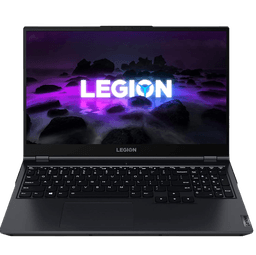
| Lenovo Legion Pro 7 2025 Gaming Laptop | ₹3,65,990 | Mid-range | Strong all-rounder for gaming and creator work |
| MSI Titan 18 HX AI Gaming Laptop | ₹4,99,999 | Premium | Highest-priced flagship chassis |
- The HP OMEN MAX is the entry point.
- The MSI Vector 16 HX A is the middle ground.
- The ASUS ROG Zephyrus G16 and Lenovo Legion Pro 7 2025 sit in the premium mid-range.
- The MSI Titan 18 HX AI is the flagship-priced option.
RTX 5080 Laptop GPU equivalent, drivers, and platform fit
The equivalent discussion usually starts with desktop comparisons, but the better question is how close it feels in real work. The chip behaves like a high-end mobile GPU with enough muscle for modern AAA games, creative apps, and engineering software. It is not a toy part, and the driver stack is built for serious use.
NVIDIA GeForce drivers matter here because they affect game stability, frame pacing, and support for new releases. That matters in titles like Cyberpunk 2077 and Microsoft Flight Simulator, where driver updates can change how smooth the experience feels. It also matters in creative apps like DaVinci Resolve, where GPU acceleration can save time on effects and exports.
NVIDIA GeForce RTX and the Blackwell stack
The NVIDIA GeForce RTX branding is important because it signals the full feature set, not just the chip name. You get DLSS 4.5, Reflex, ray tracing, and the Blackwell architecture in one package. That combination is what separates this from older Ada mobile parts and from lower-tier graphics Intel or AMD Radeon options.
The chip also fits into the broader RTX laptops ecosystem, where buyers may compare it against RTX 5070, RTX 5090, or RTX Pro systems. The naming can get messy, but the buying logic stays simple. You want the GPU that matches your workload and your chassis, not just the loudest badge.
Intel, AMD, and other platform choices
Intel and AMD matter because the GPU does not live alone. Many RTX 5080 laptops pair with Intel Core Ultra or AMD Ryzen processors, and that choice affects battery life, thermals, and app responsiveness. In a laptop used for Photoshop, Chrome, and Premiere Pro, the CPU can bottleneck your experience just as easily as the GPU can.
If you see Intel Core Ultra with RTX 5080, you are usually looking at a more balanced creator machine. The right pairing depends on whether you care more about gaming fps or long creative sessions. A stronger CPU can help the GPU stay fed, while a better cooling design can help both parts sustain their speed.
RTX Pro, Ada, and engineering use
RTX Pro and RTX Pro Blackwell are the workstation side of NVIDIA’s lineup, and that matters for engineering users who run long CAD, simulation, or visualization jobs. The component is not a workstation card, but it borrows enough of the same architecture ideas to feel serious in pro apps. That is one reason it can sit comfortably in engineering laptops that also need gaming strength.
Ada still matters as the previous generation reference point. If you are coming from an Ada-based laptop, the Blackwell jump is noticeable in ray tracing, AI-assisted tasks, and sustained gaming load. The result is a machine that feels more modern in both games and pro software.
- NVIDIA GeForce drivers support current games and creative apps.
- Intel Core Ultra and AMD Ryzen pairings change the balance of battery life and speed.
- RTX Pro Blackwell is the workstation cousin, not the same product.
- Ada is the older generation most buyers will compare against.
Real-world software examples
In Microsoft Flight Simulator, the GPU helps with dense scenery and high frame delivery. In Blender, the rendering pipeline benefits from the Tensor and Ray Tracing Cores. That is why this part belongs in serious laptops, not just gaming machines.
It is a graphics engine for people who need one notebook to handle games, creative work, and engineering tasks without feeling slow. The software support, the power ceiling, and the memory bandwidth all point to the same conclusion. This is a premium mobile GPU that needs the right platform around it.
Who Should Buy the RTX 5080 Laptop GPU
Choose this series if you want a laptop that can handle 1440p ultra gaming, ray tracing, and creator work in the same machine. It also makes sense if you care about NVIDIA GeForce features like DLSS 4.5 and Reflex. Choose it if you want a premium RTX laptop that still works well for Blender, Premiere Pro, or Unreal Engine.
Among this series, the HP OMEN MAX is the cheapest entry point at ₹2,79,900, while the MSI Vector 16 HX A sits in the middle at ₹3,35,990. Choose the ASUS ROG Zephyrus G16 or Lenovo Legion Pro 7 2025 if you want a more polished chassis and are willing to pay more. Choose the MSI Titan 18 HX AI if you want the most expensive flagship option and care about the whole machine, not just the GPU.
For most buyers, the HP OMEN MAX is the smartest pick because it gives you the hardware without pushing the price into absurd territory. Skip the HP OMEN MAX if you want the most premium chassis or the largest display. Skip the MSI Vector 16 HX A if you need the absolute cheapest route into this GPU class.
Skip the MSI Titan 18 HX AI if you want sensible value instead of a flagship bill. Skip the ASUS ROG Zephyrus G16 if you are only chasing the lowest price. Skip the Lenovo Legion Pro 7 2025 if a slightly lower cost matters more than the brand’s tuning. Skip any RTX 5080 laptop if you only play lightweight games like Valorant or The Sims 4, because you will be paying for far more GPU than you need.
Frequently Asked Questions
Q. What is an RTX laptop in plain terms?
An RTX laptop is a notebook with an NVIDIA GeForce RTX graphics chip that supports ray tracing, DLSS, and low-latency gaming features. In this article’s case, the RTX 5080 Laptop GPU brings 7680 CUDA cores and 896 GB/s of bandwidth into that mobile format. That makes it useful for gaming, creative work, and engineering software, not just basic play.
Q. What benchmark score does the RTX 5080 Laptop GPU reach?
It posts an average G3D Mark score of 26,362. That score places it in the premium mobile class and helps explain why it can handle demanding AAA games and GPU-heavy apps. It also lines up with the 18% gain over the RTX 4080 that the article highlights.
Q. Which laptop is the cheapest way into this GPU class in India?
The HP OMEN MAX Gaming Laptop is the cheapest option listed, at ₹2,79,900. It is the entry point for buyers who want the RTX 5080 Laptop GPU without moving into the highest price tiers. The MSI Titan 18 HX AI sits at the opposite end at ₹4,99,999.
Q. How does it compare with the RTX 4080 Laptop GPU?
The RTX 5080 Laptop GPU is about 18% faster than the RTX 4080 on average. That improvement shows up in fps, smoother ray tracing, and faster work in apps like Blender and Premiere Pro. It also carries a 6% gain over the RTX 4090 Laptop GPU in the article’s benchmark summary.
Q. Is it good for creative work like Premiere Pro and Blender?
Yes, because it combines 7680 CUDA cores, 896 GB/s bandwidth, and Blackwell features like fourth-generation Ray Tracing Cores and fifth-generation Tensor Cores. Those specs help with timeline playback, GPU filters, and exports in Premiere Pro, DaVinci Resolve, Blender, and Unreal Engine. The article also notes that the same hardware helps in Microsoft Flight Simulator and other demanding workloads.
Q. What should buyers pay attention to besides the GPU name?
Cooling, chassis design, and CPU pairing matter just as much as the GPU badge. The article points out a 150 W ceiling, which means a strong thermal design is essential for sustained performance. Intel Core Ultra and AMD Ryzen pairings also affect battery life, thermals, and responsiveness.
Is the RTX 5080 Laptop GPU Worth Buying in India
The RTX 5080 Laptop GPU makes sense if you want a premium Blackwell mobile part with 7680 CUDA cores, 896 GB/s bandwidth, and a 150 W power ceiling. Its average G3D Mark score of 26,362 and its 18% gain over the RTX 4080 show that it is aimed at demanding gaming and creator workloads, not casual use. If you want the most accessible entry point, the HP OMEN MAX at ₹2,79,900 is the clearest starting option.
Buy the HP OMEN MAX if you want the lowest price and still need serious GPU power. Buy the MSI Vector 16 HX A, ASUS ROG Zephyrus G16, or Lenovo Legion Pro 7 2025 if you want a more refined chassis and are willing to pay more. Buy the MSI Titan 18 HX AI only if you want the flagship experience and care about the whole machine, not just the GPU.
The right move is to compare the laptop chassis, cooling, display, and price together before you decide. If your work includes gaming, Premiere Pro, Blender, or Unreal Engine, this GPU class can fit well. If you only play lightweight games, you can save money by stepping down to a less powerful laptop.
Ready to upgrade your tech?
Browse our collection of quality refurbished products at unbeatable prices.