Rollable Displays: LG vs Samsung 2026 Guide
Rollable displays are transforming laptops and TVs with expandable OLED technology that saves space without sacrificing screen size. Compare Samsung and LG's latest rollable innovations, key features, applications, and what buyers should expect from this emerging display technology in 2025.

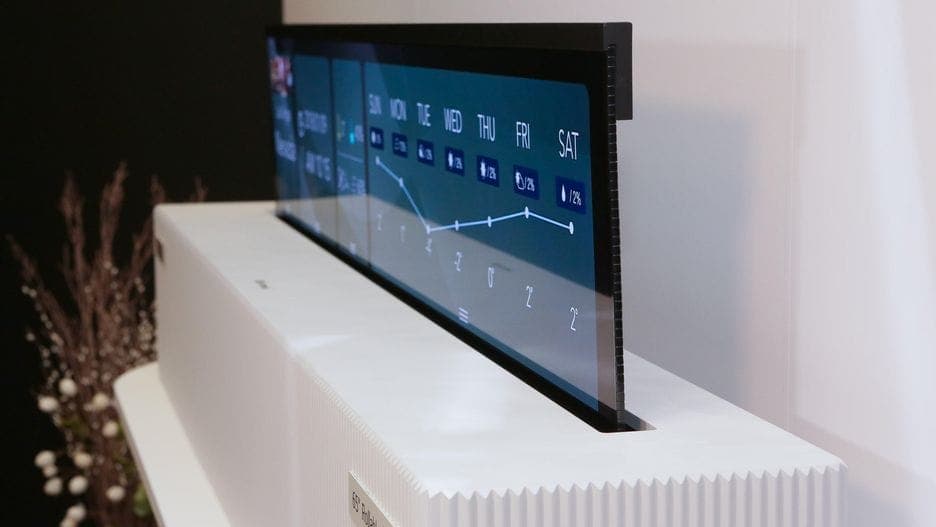
TL;DR Rollable displays are moving from concept to product in 2026, with Samsung leading the near-term laptop path and LG showing what a premium TV can do. Samsung’s rollable OLED laptop screen is set for mass production in April 2026, while LG’s 65-inch Signature OLED R remains the standout luxury TV example.
Understanding Rollable Display Technology
A rollable display is an electronic visual display that is flexible enough to be rolled up without distortion, so the image stays stable while the panel changes shape. That matters because it gives product designers a unique way to balance portability, storage, and viewing area. The practical shift is easy to see in a laptop or a TV. A fixed screen locks the device into one size, but a rollable panel can extend when you need more room and retract when you do not.
That is why the category matters for mobile devices, laptops, and automotive panels, not just for showpiece products. Samsung Display has made the category concrete by announcing that it will begin mass production of the world’s first rollable OLED screen for laptops in April 2026. That is the point where a prototype stops being a curiosity and starts becoming a product pipeline.
Why It Matters for Laptops?
Samsung Display also announced that its rollable OLED technology uses Eco² OLED, which reduces panel thickness and power consumption. The value of rollable displays is not novelty; it is flexibility that actually changes how a device is used. On a laptop, the screen can stay compact during a commute and then expand for documents, spreadsheets, or browser-heavy work. In a TV, the same idea lets the display disappear when the room needs to feel open.
That is why the phrase foldable and rollable displays keeps coming up in the same conversation. Foldable panels solve one problem with a hinge, while rollable panels solve it with movement that feels more continuous. For people who spend time in Excel, Google Docs, or Adobe Premiere Pro, the difference is practical, not cosmetic. The G6 rollable laptop fits into that same idea of a device that can shift between compact and expanded use.
Samsung Display’s Eco² OLED™ approach is important because a moving panel has to stay thin and efficient. Lower thickness helps the mechanism operate reliably, and lower power consumption is important on laptops and mobile devices. Rollable OLED displays are the most mature branch of this technology because OLED panels already support thin construction and strong contrast. That makes them a natural fit for products that need premium image quality and a unique form factor.
Where Is the Category Heading?
Samsung Display’s laptop panel is the clearest example of that direction, and it points to a broader launch path for devices like the Lenovo Plus G6 and the G6 rollable laptop. Rollable LED displays are a different conversation, but they belong in the same broader category of flexible visual systems. The first commercially sold flexible display was an electronic paper wristwatch, which shows how long this idea has been developing.
The modern version is much more ambitious, because it has to handle laptop-sized work, home entertainment, and daily movement. That is why the category feels like a genuine design shift rather than a one-off gimmick. It is also why buyers should watch the laptop segment closely in 2026, because that is where the clearest commercial path already exists.
- Rollable displays can roll up without visible distortion, which is the core engineering requirement.
- Eco² OLED™ reduces panel thickness and power consumption, which helps mobile hardware stay practical.
- Mobile devices, laptops, and automotive displays are the clearest places where the format makes sense.
LG Signature OLED R and the Premium TV Idea
The LG Signature OLED R is the clearest proof that hardware can work in a premium living room. It is a 65-inch rollable OLED TV priced at a lakh, and that price tells you exactly what kind of product this is. You are not buying a normal television; you are buying a space-saving design object that also happens to be a high-end OLED set.
Its defining feature is the three viewing options: full view, line view, and zero view. Full view gives you the complete television experience, line view keeps a narrow strip active, and zero view rolls the panel away completely. That makes the TV feel less like a permanent wall fixture and more like a system that adapts to the room.
In that sense, it has the same premium-first aspect you might expect from a ThinkBook Plus G6-style design approach, where form and function are both part of the appeal. It also shows that a rollable TV can be built around flexibility without losing its luxury focus, much like Lenovo's rollable concept.
Full View, Line View, and Zero View
Full view is the mode you use for movies, sports, and any content where the entire 65-inch screen should be visible. Line view is useful for ambient information, quick status checks, or keeping the panel present without dominating the room. Zero view is the cleanest trick of the lot, because the screen disappears into the base and gives the room back to you.
That matters in apartments, multipurpose living rooms, and premium interiors where every square foot counts. A regular OLED television always occupies visual space, even when it is off. The LG Signature OLED R solves that problem by making the display retract when it is not needed. The product also shows that rollable technology can be used for more than one viewing style, much like a G6 rollable concept built around flexibility.
Why Self-Lit Pixels Matter
LG uses self-lit pixel technology, which helps the panel stay thinner and more flexible than a backlit design. That is essential for a rollable TV, because the display has to move smoothly while still delivering premium image quality. A backlight would make the assembly bulkier and harder to hide.
The result is a cleaner installation and a more refined visual profile. It also explains why the LG Signature OLED R feels so different from a conventional OLED set. The panel is not just showing content; it is physically changing how the room looks. The TV does not behave like a fixed appliance, and that is the point.
Rollable OLED Laptop Displays at CES 2026
Samsung Display unveiled a 65-inch rollable OLED laptop display at CES 2026, and that was the most practical hardware announcement in the category. It is a real answer to the old trade-off between portability and usable workspace. Samsung Display is not pitching a science project; it is building a panel that can fit into IT devices and supports everyday work.
If you spend time in Microsoft Excel, Visual Studio Code, Figma, or Adobe Premiere Pro, the extra vertical room matters because it reduces window switching and cramped layouts. A laptop with a rollable panel can stay small on the train, then expand on a desk for editing, coding, or comparing documents. That is a much more useful idea than simply making a laptop look futuristic.
CES 2026 and the World’s First Rollable Laptop Panel
The CES 2026 reveal showed why the parts are more than a visual trick. Samsung Display says it is aiming to begin mass production in April 2026, which makes the announcement feel like a real product roadmap rather than a mock-up. The company also said it wants to innovate IT devices with these components, and that fits the laptop category perfectly.
A laptop at CES only matters if it solves a real work problem, and this one does. The panel size also tells you the product is meant to be used. At 65 inches when closed, it stays portable enough for travel. At 65 inches when extended, it becomes much more comfortable for side-by-side documents, browser tabs, and creative timelines.
Mass Production and What It Signals
Samsung Display’s mass production plans matter because they separate engineering ambition from a one-off prototype. A prototype can prove the concept, but mass production forces consistency, durability, and repeatable quality. That is where rollable technology either becomes a category or stays a demo.
The timeline also matters because it puts a date on the shift. Samsung Display is not talking about a vague future; it is setting a concrete production window. For buyers, that is the first real sign that rollable OLED laptops are moving toward commercial hardware. The company’s Eco² OLED™ approach is also part of the story.
Lower thickness and lower power use are especially important in a laptop, where every millimeter and every watt affects the final design. A rollable display only makes sense if the chassis can still travel well and the battery can still last through a workday. That is what makes the laptop version more than a concept piece.
Technical Advantages of the Laptop Format
A rollable OLED laptop is compelling because it changes screen area without forcing the chassis to grow permanently. That is a smarter answer than simply making a bigger laptop, especially for people who move between desk work, meetings, and travel. The display becomes part of the device’s behaviour, not just a fixed component.
You can keep a compact footprint while commuting, then expand the display for editing or multitasking once you sit down. The benefit is not abstract; it is about fewer compromises during the day. This is also where Samsung Display’s leadership matters, because it has already tied the world’s first rollable OLED screen for laptops to April 2026 production.
- The panel gives you more room for spreadsheets, editing, and multitasking.
- The closed size keeps the laptop practical for travel.
- April 2026 is the key production milestone for the category.
Applications and Market Outlook for Your Build
The market outlook is strong enough to suggest that flexible systems are not a niche experiment. Those numbers matter because they show where the category is headed. The growth is not limited to one product type, either.
The hardware is gaining attention in smartphones, foldable tablets, wearables, automotive panels, and signage, which means the technology has room to spread across consumer and commercial products. Mobile devices and laptops are the clearest near-term opportunities because both categories constantly juggle portability and screen size. A smartphone can stay pocketable until the user needs more room, and a laptop can stay compact until the work gets more demanding.
That is a simple but powerful design advantage. In January, interest in the ThinkBook Plus and the Plus G6 Rollable helped underline that laptops are becoming a key part of this category. Automotive panels are another natural fit because car interiors have different visibility needs depending on whether the vehicle is parked or moving.
Signage also makes sense because flexible panels can adapt to space constraints in retail and public environments. The category gets stronger every time a new product class needs variable visibility. That is why rollable displays matter beyond the two showcase products at the centre of this guide.
Why the Market Is Expanding
These displays solve a problem that fixed panels cannot. They let manufacturers design around the user’s context instead of forcing one static screen size for every situation. That is why the technology matters in both premium consumer electronics and commercial hardware.
Samsung Display is pushing the laptop side of the category, while LG’s Signature OLED R proves that a rollable TV can save space in the home. Together, they show that foldable and rollable designs can serve different needs without competing directly. One is about work and mobility, the other is about room design and entertainment.
The wider market is still developing, but the direction is clear. Buyers will see the most immediate progress in laptops, while premium TVs will continue to show what the format can do at the high end. That split helps explain why the category is expanding without becoming crowded.
What Samsung and LG Mean for Buyers in 2026
Samsung and LG point to two different buying paths in 2026. Samsung’s rollable OLED laptop panel is tied to April 2026 mass production, and the company has already said the technology uses Eco² OLED™ to reduce panel thickness and power consumption. LG’s Signature OLED R, by contrast, is a 65-inch premium TV built around full view, line view, and zero view.
The price difference also shows the split. Samsung is pointing at a product pipeline, while LG is selling a luxury showcase at a lakh. If you are tracking the category, watch Samsung for near-term commercial momentum and LG for the high-end TV benchmark.
Who Should Watch Samsung First
Samsung makes the most sense for buyers who care about practical laptop use. The April 2026 mass production target gives the laptop category a clear timeline, and the 65-inch rollable OLED panel shows how much workspace the format can create. That matters for people who spend long hours in Excel, Visual Studio Code, Figma, or Adobe Premiere Pro.
If your priority is portability with a larger working area when you need it, Samsung’s direction is the one to follow. The company has already connected the technology to IT devices, which makes the laptop path the most actionable part of the market. That is the clearest sign of where rollable displays are heading first.
Is LG the best for?
LG is the better reference point for buyers who care about premium living room design. The Signature OLED R is a 65-inch rollable OLED TV, and its full view, line view, and zero view modes make it a space-saving luxury product. It is not trying to be mainstream television, and that is part of its appeal.
If you want a TV that disappears when you do not need it, LG’s approach is the one to study. The self-lit pixel design helps the panel stay thin and flexible, which is essential for the retractable form factor. That makes it a strong example of what premium rollable hardware can look like.
Frequently Asked Questions
Q. What makes rollable displays different from foldable screens?
Rollable displays change shape by extending and retracting, while foldable screens use a hinge to bend the panel. In this article, Samsung’s laptop panel and LG’s 65-inch Signature OLED R show the rollable approach in both work and living room settings. The key advantage is that the image stays stable while the panel changes shape.
Q. Which company is closer to a commercial rollable laptop in 2025?
Samsung is closer because it has said its rollable OLED laptop screen will enter mass production. That timeline makes it the clearest near-term product path in the article. The company also tied the panel to IT devices and Eco² OLED™ efficiency.
Q. What are the main viewing modes on the LG Signature OLED R?
The LG Signature OLED R has three modes: full view, line view, and zero view. Full view uses the complete 65-inch screen, line view keeps a narrow strip active, and zero view rolls the panel away. Those modes are the main reason the TV stands out as a premium space-saving product.
Q. Why does Eco² OLED™ matter for rollable laptops?
Eco² OLED™ matters because Samsung says it reduces panel thickness and power consumption. Thin construction helps a moving panel work reliably, and lower power use matters for laptops and mobile devices. That combination makes the format more practical for everyday use.
Q. Is LG’s rollable TV meant for mainstream buyers?
No, the LG Signature OLED R is positioned as a premium showcase rather than a mainstream TV. It is a 65-inch rollable OLED TV priced at lakh, which places it in a luxury category. Its value comes from design flexibility, not mass-market affordability.
Q. Where will rollable displays likely show up first?
Laptops are the clearest near-term category, especially after Samsung’s April 2025 mass production timeline. The article also points to mobile devices, automotive panels, and signage as strong use cases. Those categories all benefit from changing screen size without changing the whole device.
What Buyers Should Expect From Rollable Displays in 2026?
Rollable displays are most convincing when they solve a real space problem, and that is exactly what Samsung and LG show in different ways. Samsung’s laptop panel is the practical recommendation if you want to watch the category move toward real products, because it gives a concrete launch window. LG’s Signature OLED R is a better example if you want to understand the premium TV side, especially with its 65-inch size and three viewing modes.
If you are deciding what to buy, the answer depends on your use case. Choose Samsung’s direction if you care about portable work, a larger screen area, and a product path that is already moving toward mass production. Choose LG if you want a luxury living room display that can disappear into its base and still deliver a full OLED experience.
For now, the best action is to follow the category closely and judge each product by how well it fits your space and workflow. Rollable displays are no longer just a concept, but they are still early enough that the clearest value sits in a few specific products. That makes 2026 the year to watch, not the year to assume every use case is ready.
Ready to upgrade your tech?
Browse our collection of quality refurbished products at unbeatable prices.