
MacBook Performance In 2026: Software Engineering, AI ML, And Data Science
Detailed analysis of MacBook Pro 16-inch A2485 performance in 2026 for software engineering, AI ML, and data science workflows.

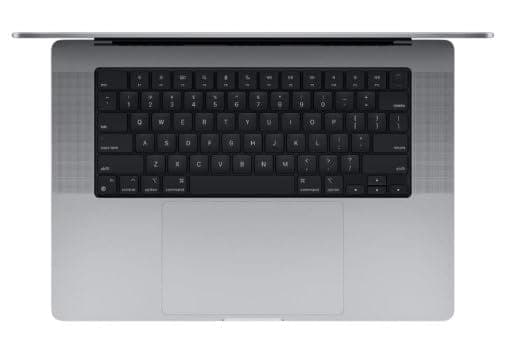
TL;DR The Apple MacBook Pro 16-inch (Model A2485) remains one of the most capable MacBooks for software engineering in 2026. Powered by Apple’s M4 Pro and M4 Max chips, it delivers outstanding sustained performance, excellent thermal stability, and strong battery efficiency for demanding development workflows. For software engineers, AI and ML practitioners, and data scientists, this MacBook offers a rare combination of raw power and real-world usability. While it commands a premium compared to older MacBooks, it continues to justify its position as a top-tier MacBook for software engineering 2026, especially for developers who need consistent performance across long work sessions.
Software Engineering, AI ML, And Data Science Performance Overview
In 2026, developer laptops are judged less by launch-year benchmarks and more by how well they sustain performance during long and complex workflows. The MacBook Pro 16-inch (A2485) is designed for precisely this type of usage. With Apple’s M4 Pro and M4 Max chips, it continues to deliver high performance while maintaining excellent efficiency and thermal stability.
This model is especially attractive to developers who routinely work with large codebases, heavy build pipelines, containerised services, and data-intensive workloads. Unlike thinner laptops that may throttle under sustained load, the 16-inch MacBook Pro is built to maintain consistent performance throughout the day. This reliability is what makes it one of the most trusted MacBooks for software engineering in 2026.
For developers who require both performance headroom and comfort, the A2485 remains a machine that feels modern, powerful, and dependable, even as newer Apple Silicon generations continue to emerge.
MacBook M4 Coding Performance Benchmarks In Context
The MacBook Pro 16-inch (A2485) benefits significantly from the architectural improvements introduced with the M4 Pro and M4 Max chips. These processors bring substantial gains in CPU throughput, GPU performance, and memory bandwidth, which directly translate into faster compile times, smoother IDE performance, and better multitasking under load.
In real-world coding scenarios, such as building large iOS applications in Xcode, compiling multi-module backend services, or running Android Studio with Gradle builds, the A2485 feels consistently fast. More importantly, it remains responsive even during extended sessions involving multiple terminals, background services, and active containers.
The unified memory architecture plays a key role here. By allowing the CPU and GPU to share memory efficiently, operations like code indexing, debugging, and search queries complete faster and with fewer performance hiccups. Developers benefit not just from speed, but from the absence of micro-stutters that can disrupt focus during long workdays.
While benchmark numbers clearly show the M4 series outperforming previous generations, the real takeaway for software engineering in 2026 is sustained, predictable performance. The A2485 delivers exactly that.
Coding Performance Perspective
| Task Or Workflow | A2485 Experience In 2026 |
|---|---|
| Large Xcode builds | Faster compile cycles |
| Android Studio and Gradle | Smooth with no throttling |
| VS Code with Docker | Stable with multiple containers |
| Multithreaded builds | Strong CPU scaling |
| Thermal performance | Stable under sustained load |
Best MacBook For Python, JavaScript, And Full-Stack Development
Modern software engineers rarely work within a single language or framework. Python, JavaScript, and full-stack development remain core pillars of most development roles in 2026. The MacBook Pro 16-inch excels in this environment by offering both performance and stability across diverse toolchains.
Python workflows, including virtual environments, Conda setups, backend APIs, and automation scripts, run smoothly. Interpreter startup times are fast, and IDEs such as VS Code and PyCharm remain responsive even in large projects. JavaScript and TypeScript ecosystems also benefit from the M4 architecture, with rapid rebuilds, fast hot reloads, and efficient local servers.
For full-stack developers, container-heavy workflows involving Docker, PostgreSQL, Redis, and other services are handled comfortably. Higher memory configurations further enhance this experience, allowing multiple services to run concurrently without memory pressure.
The overall result is a MacBook for software engineering 2026 that feels effortless to use, even when juggling complex, multi-layered development environments.
Web And Backend Development Fit
| Development Area | Experience On A2485 |
|---|---|
| Python development | Smooth and reliable |
| JavaScript and Node.js | Fast rebuilds and reloads |
| Full-stack workflows | Stable multi-service setup |
| Frontend frameworks | Responsive dev servers |
ML And AI Workflows Using TensorFlow And PyTorch
AI and machine learning workloads have become more accessible on local machines, especially for experimentation and prototyping. The MacBook Pro 16-inch (A2485) is well suited for these use cases, thanks to Apple’s Neural Engine and GPU acceleration support in modern ML frameworks.
TensorFlow and PyTorch now offer mature support for Apple Silicon through Metal and MPS backends. This allows developers to train small to medium models, run inference, and test pipelines efficiently without relying entirely on cloud resources. Tasks such as image classification, text processing, and feature extraction feel smooth and responsive.
Where expectations should remain realistic is large-scale model training. Heavy transformer models and CUDA-specific workloads still benefit more from cloud GPUs. However, for learning, experimentation, and local inference, the A2485 performs exceptionally well and fits naturally into modern AI workflows.
ML Workload Suitability
| ML Task | Suitability On A2485 |
|---|---|
| Preprocessing and feature engineering | Excellent |
| Small to medium model training | Good |
| Inference workloads | Very good |
| Large-scale training | Not suitable locally |
Data Science Tools Using Pandas, NumPy, And Jupyter
Data science workflows rely heavily on interactive tools and predictable performance. In 2026, the MacBook Pro 16-inch continues to deliver a strong experience for Pandas, NumPy, and Jupyter-based analysis.
Large datasets are processed efficiently, and numerical operations benefit from the M4 architecture’s optimised compute paths. Jupyter notebooks launch quickly, handle multiple active cells smoothly, and render visualisations without lag. Multitasking across notebooks, IDEs, and browsers remains fluid, even during intensive analysis sessions.
The larger 16-inch display further enhances productivity by providing ample screen space for charts, tables, and multi-pane layouts. For data scientists and analysts who value clarity and responsiveness, this MacBook remains a reliable companion.
Data Science Experience
| Tool | Experience |
|---|---|
| Pandas | Fast operations |
| NumPy | Stable and efficient |
| Jupyter notebooks | Responsive |
| Visualisation libraries | Smooth rendering |
MacBook Vs Windows For Developers In 2026
The comparison between macOS and Windows remains relevant in 2026, particularly for developers choosing high-performance laptops. macOS continues to offer a Unix-based environment with strong tooling support through Zsh, Homebrew, and native development utilities. This results in fewer setup issues and more consistent workflows for many developers.
The MacBook Pro 16-inch also stands out in terms of battery efficiency and thermal stability. Even under heavy development workloads, it maintains performance without excessive fan noise or throttling. Many Windows laptops deliver strong raw performance, but often at the cost of battery life and portability.
Windows systems still hold advantages in CUDA-based ML workloads and certain enterprise environments. However, for cross-platform development, web technologies, and data science, the MacBook Pro A2485 remains one of the most balanced options available.
Platform Comparison
| Factor | MacBook Pro A2485 | Windows Laptop |
|---|---|---|
| Performance per watt | Excellent | Lower efficiency |
| Battery life | Long and stable | Variable |
| Unix tooling | Native | Requires WSL |
| Thermal consistency | High | Vendor dependent |
Final Verdict Plus Quick Decision Making
In 2026, the Apple MacBook Pro 16-inch (Model A2485) continues to define what a high-end developer laptop should feel like. It offers a rare balance of raw power, thermal efficiency, and real-world usability that few machines can match. For software engineers working across full-stack development, AI and ML experimentation, and data science workflows, it remains one of the most capable MacBooks available.
Its M4 Pro and M4 Max chips deliver tangible performance benefits in daily work, from faster builds to smoother multitasking. Combined with excellent battery life and a refined macOS experience, this MacBook supports long, focused work sessions without compromise.
While it represents a premium option, the value it provides in terms of productivity and reliability is substantial. For developers who need sustained performance and want a MacBook for software engineering 2026 that will remain relevant for years, the MacBook Pro 16-inch A2485 remains an excellent choice.
Refurbo's Shop:
Here are all the MacBook laptops listed on that Refurbo's Apple page, with a direct link for each laptop:
- Apple Macbook A2442 - Refurbished
- Apple Macbook Pro A2485 - Refurbished
- MacBook Air 13" (2017) - Refurbished
- MacBook Pro 13" (2018) - Refurbished
- MacBook Pro 13" (2020) - Refurbished (Core i5)
- MacBook Pro 13" (2020) - Refurbished (Core i7)
- MacBook Pro 15" (2018–19) - Refurbished
- MacBook Pro 16" (2019) - Refurbished (Core i7)
- MacBook Pro 16" (2019) - Refurbished (Core i9)
- MacBook Air 13" M1 - Refurbished
- MacBook Pro 13" M1 - Refurbished
- MacBook Pro 14" M1 Pro - Refurbished
- MacBook Pro 16" M1 Pro - Refurbished
FAQs
Q. Is the MacBook Pro 16-inch A2485 good for software engineering in 2026?
A. Yes, it remains one of the best MacBooks for software engineering in 2026, especially for demanding workloads.
Q. How does it compare to the 14-inch MacBook Pro?
A. The 16-inch model offers better thermals and a larger display, making it more suitable for sustained workloads.
Q. Can it handle Docker and container-heavy workflows?
A. Yes, it is well suited for multi-container and microservices-based development.
Q. Is it suitable for AI and machine learning work?
A. It performs very well for experimentation, inference, and prototyping, though large-scale training is better suited to cloud GPUs.
Q. How does it perform for data science tasks?
A. It delivers smooth performance for analytics, notebooks, and visualization-heavy workflows.
Q. Is battery life still strong in 2026?
A. Yes, battery life remains excellent considering the size and performance of the machine.
Q. Should developers consider buying it refurbished?
A. Refurbished units can offer strong value if battery health and warranty coverage are verified.
Q. Is it future-proof for the next few years?
A. For most developers, it offers enough performance headroom to remain relevant well beyond 2026.
Ready to upgrade your tech?
Browse our collection of quality refurbished products at unbeatable prices.






