
iPhone 17 vs Samsung Galaxy S26 Comparison
Compare iPhone 17 vs Samsung Galaxy S26 on display, battery, camera, performance, price, and value to see which flagship fits you.

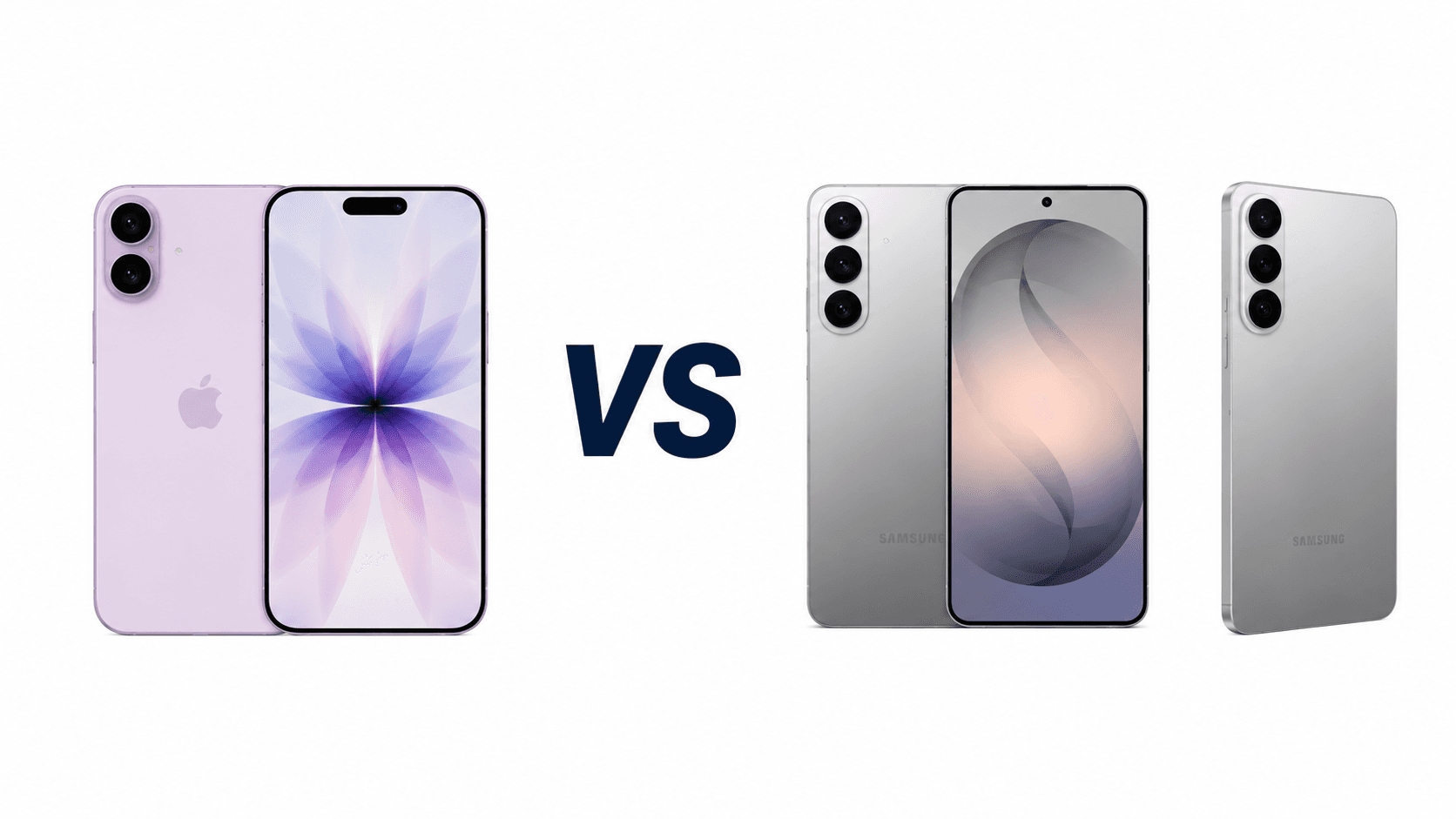
TL;DR iPhone 17 vs Samsung Galaxy S26 is a close trade-off, but the iPhone 17 is the better pick for most people because it combines a 3000-nit display and 40W charging with sharper selfie hardware, while the Galaxy S26 mainly wins on battery, RAM, and its lower ₹79,999 price.
iPhone 17 vs Samsung Galaxy S26 Overview
The iPhone 17 vs Samsung Galaxy S26 comparison is easy to understand once you look past the launch dates. Apple released the iPhone 17 on September 19, 2025, and Samsung released the Galaxy S26 on March 6, 2026. The split starts with the basics: the iPhone 17 uses Apple’s A19 processor, 8 GB of RAM, and a 3692 mAh battery, while the Samsung Galaxy S26 uses a Snapdragon 8 Elite Gen 5 processor, 12 GB of RAM, and a 4300 mAh battery.
In plain terms, Apple leans into display quality and charging speed, while Samsung leans into memory and battery size. That difference matters in everyday use. If you keep Slack, Gmail, Chrome, and Spotify open together, the Samsung Galaxy S26 has more breathing room. If you spend more time in Photos, Instagram, or video playback, the iPhone 17’s brighter panel is easier to live with outdoors and in HDR mode.
Price keeps the fight close. The iPhone 17 starts at ₹82,900 for the 256GB variant, while the Samsung Galaxy S26 is priced at ₹79,999. The real iPhone 17 Samsung Galaxy S26 comparison is about what you use more often, the screen or the battery.
Quick take on the core trade-off
Both are dual SIM 5G smartphones, so network basics are not the deciding factor. The more important split is whether you value a brighter display and faster charging, or more RAM and a larger battery. That is the trade-off most buyers will feel every day.
Display and Design in iPhone 17 vs Samsung Galaxy S26
Apple gives the iPhone 17 a 6.3-inch Super Retina XDR display with a resolution of 1206 x 2622 pixels at 460 ppi. Samsung uses a 6.3-inch Dynamic AMOLED 2X panel with a resolution of 1080 x 2340 pixels. The size is the same, but the Apple panel is sharper on paper and brighter in real use.
Peak brightness is where the difference becomes obvious. The iPhone 17 reaches 3000 nits, while the Samsung Galaxy S26 tops out at 2600 nits. That extra headroom helps when you are checking Maps in sunlight, editing a photo in Lightroom, or watching HDR video on a train by a window.
The Samsung Galaxy S26 is the easier phone to carry. It weighs 167 grams, compared with 177 grams for the iPhone 17, and it is thinner at 7.2 mm versus 8 mm. That matters if you carry the phone in slim jeans, a small bag, or a jacket pocket all day.
What the screen difference means in practice
The Samsung Galaxy S26 is easier to hold for long WhatsApp calls because it is lighter. The iPhone 17 panel is the more capable all-round screen when brightness matters most. The Samsung display still looks rich, but Apple has the stronger outdoor and HDR advantage.
Performance, RAM, and daily speed
The performance story here is not about one phone being slow. It is about how each brand allocates hardware. Apple uses the A19 chip with a 6-core CPU and a 5-core GPU, while Samsung uses the Snapdragon 8 Elite Gen 5 with 12 GB of RAM.
That gives the Samsung Galaxy S26 more memory for background apps, while the iPhone 17 relies on tighter software control and Dolby support for a more polished media experience. More RAM means fewer reloads when you return to an app after checking a message or opening a PDF. The iPhone 17 still feels fast, but it is tuned more for consistency than brute multitasking.
Gaming also separates them in a useful way. The A19’s 5-core GPU is strong enough for titles like Call of Duty Mobile, Genshin Impact, and Asphalt 9, and the Samsung Galaxy S26’s extra RAM helps when you switch out of a game and return later. If you care about stable frame pacing, the difference is less about headline speed and more about how each phone handles sustained load.
Where each chip makes sense
The Samsung Galaxy S26 is better for people who keep many apps open, edit files, and multitask heavily. The iPhone 17 feels more controlled in app launches, while the Samsung Galaxy S26 feels more forgiving with background tasks. Both phones support 5G, so connectivity is equal at the headline level.
Camera and video in iPhone 17 vs Samsung Galaxy S26
The camera battle is closer than the spec sheet looks. Apple gives the iPhone 17 a 48 MP wide camera, an 18 MP front camera, and a 48MP Dual Fusion camera system with a ƒ/1.6 aperture for the main camera. Samsung answers with a 50 MP wide camera, a 12 MP front camera, and a rear setup built around 50MP + 12MP + 10MP sensors.
The iPhone 17 is the cleaner point-and-shoot option. Its main sensor and Dual Fusion processing are built to keep detail and tone balanced without making you think about settings. That helps when you shoot in Photos, post to Instagram, or record a quick clip for WhatsApp. It also fits well if you want Dolby Vision video without extra effort.
Samsung gives you more rear-camera flexibility. The Galaxy S26’s extra rear sensors make wide-angle framing and telephoto shots more useful for travel, buildings, and group photos. If you shoot a city skyline in ultra wide mode, or crop into a distant subject, the Samsung Galaxy S26 has more room to work with.
Camera strengths by use case
The Samsung rear setup is more versatile if you shoot travel photos, buildings, or group shots. The iPhone 17 has the stronger selfie camera at 18 MP, and that gives it an edge for front-facing video and social clips. If you care about YouTube Shorts or family video, the iPhone 17 is the more polished tool.
| Camera spec | iPhone 17 | Samsung Galaxy S26 |
|---|---|---|
| Main rear camera | 48 MP wide | 50 MP wide |
| Rear setup | 48MP Dual Fusion | 50MP + 12MP + 10MP |
| Front camera | 18 MP | 12 MP |
| Main aperture | ƒ/1.6 | Not listed here |
| Rear flexibility | Strong main camera focus | Wider multi-sensor setup |
Battery, charging, and wireless use
Battery life is one of the clearest differences in this comparison. The Samsung Galaxy S26 has a 4300 mAh battery, while the iPhone 17 has a 3692 mAh battery. That gives Samsung the edge for longer stretches away from a charger.
Apple is the better fit if you can plug in for 15 to 20 minutes before leaving home. That makes the choice fairly simple in day-to-day use. Samsung is the safer pick if you forget your charger, and Apple is better if you can charge during short breaks.
Battery behavior in real use
The iPhone 17 is the better choice if you top up at a desk between meetings. Both phones support wireless charging, so cable-free top-ups are on the table. For users who move between workspaces, that keeps charging flexible without changing the basic battery split.
Price, storage, and value
The price gap is small, but it still matters. Samsung is cheaper, and that leaves a little more budget for accessories or a case. The starting price difference also makes the Galaxy S26 easier to justify if you want more RAM without paying Apple’s premium.
Storage matters because both phones are built for people who keep photos, 4K video, and large apps on-device. Apple’s 256GB starting point is useful if you shoot a lot of video in Camera or keep offline music in Apple Music. In a compact phone that measures just a few inches, that extra storage can feel more practical.
The better value depends on what you use. If you want the lower entry price, Samsung has the edge. If you want more storage from the start, Apple’s 256GB base option is the stronger fit.
Value snapshot
| Feature | iPhone 17 | Samsung Galaxy S26 |
|---|---|---|
| Starting price | ₹82,900 | ₹79,999 |
| RAM | 8 GB | 12 GB |
| Battery | 3692 mAh | 4300 mAh |
| Charging | 40W wired | 25W wired |
How the Base Models Compare to Pro and Ultra Variants
The iPhone 17 Pro vs Samsung Galaxy S26 Ultra comparison is not the same as the base model fight, but it helps frame the lineup. In Apple’s world, Pro models usually lean harder into camera and display tuning, while Samsung’s Ultra tier usually pushes battery, sensors, and zoom hardware. That is why the standard iPhone 17 versus the standard Samsung Galaxy S26 feels like a more balanced everyday comparison.
If you only care about the base models, the build comparison is the one that matters. The iPhone 17 Air vs Samsung Galaxy S26 comparison is also a different conversation. The Air-style phone is usually about thinness and lightness, while the Galaxy S26 already keeps weight down at 167 grams.
If you want something easier to carry without giving up too much, the Samsung Galaxy S26 already covers that ground well. It also makes the broader stabilization picture clearer, since the lineup is less about one perfect winner and more about which tier fits your needs. In other words, the GHz numbers and the rest of the spec sheet matter less than choosing the right class of phone.
Why the base models matter most
The Pro and Ultra labels usually buy you more camera hardware and more aggressive tuning. The base iPhone 17 already gives you a strong display and fast charging. The base Galaxy S26 already gives you 12 GB RAM and a 4300 mAh battery.
If you do not need the extra cost of a Pro or Ultra model, the standard phones are the smarter comparison. For social media, messaging, and travel, the standard models cover the important ground. That is why most buyers should focus on the base pair first.
Camera, display, and day-to-day use
The camera story matters most when you use the phone as your main camera. The display story matters just as much. The iPhone 17 has the higher 3000-nit peak brightness, which helps when you check a photo after taking it in sunlight or watch a video on a bright bus ride.
The Samsung Galaxy S26 still looks excellent, but the iPhone panel is the one that stands out when the environment gets harsh. In daily use, both phones feel like proper flagship smartphones. The iPhone 17 is the one to choose if you care about screen quality, charging, and video.
The Samsung Galaxy S26 is the one to choose if you care about memory, battery life, and price. In the build comparison, that trade-off is the main decision point.
Real-world software and workflow fit
The iPhone 17 works well for Camera, Photos, FaceTime, Safari, and CapCut. Both phones also support 5G, dual SIM, and wireless charging, so the everyday basics are covered. The real question is which compromise annoys you less.
On pricing, the iPhone 17 starts at ₹82,900, while the Galaxy S26 is priced at ₹79,999, so Samsung undercuts Apple by a small but real margin. That difference is not huge, but it can matter if you are also buying a case or charger. The choice still comes back to display and charging versus battery and RAM.
Display and Design in the iPhone 17 vs samsung galaxy s26 Apple gives the Apple iPhone 17 a 6.3-inch Super Retina XDR display with a resolution of 1206 x 2622 pixels at 460 ppi. ---
Choosing Between iPhone 17 and Galaxy S26
The iPhone 17 and Galaxy S26 both use high-end chips, but they favor different strengths. ---
iPhone 17 vs samsung galaxy s26 camera, display, and day-to-day use
The setup camera story matters most when you use the phone as your main camera. In the Galaxy S26 vs iPhone 17 matchup, the Galaxy S26 carries a 4300 mAh battery.
| Feature | iPhone 17 | Galaxy S26 |
|---|---|---|
| Battery capacity | 3692 mAh | 4300 mAh |
| Wired charging | 40W | 25W |
| Best for | Quick top-ups | Longer unplugged use |
Price Comparison and Value Assessment
The iPhone 17 was released on September 19, 2025, and the Galaxy S26 arrived on March 6, 2026, but the real split is in what each phone emphasizes. The Galaxy S26 offers a 12-month warranty period, while the iPhone 17 comes with a one-year limited warranty covering manufacturing defects. Do the processors of iPhone 17 and Galaxy S26 compare in real-world performance? The iPhone 17 weighs 177 grams and measures 149.6 x 71.5 x 8 mm, while the Galaxy S26 weighs 167 grams and measures 149.6 x 71.7 x 7.2 mm. - The Samsung panel still looks rich, but the Apple panel is the more excellent all-round optical screen. In an Apple iPhone vs Samsung comparison, that difference shows up most clearly in everyday switching rather than raw speed. The apple the parts comparison is the one most buyers should focus on because it avoids paying for features they may never use. The Samsung panel is still strong, and the Dynamic AMOLED 2X branding points to rich contrast and punchy color. That is where the iPhone 17 changes the equation, because Apple gives it 40W wired charging compared with 25W on the Galaxy S26. Samsung focuses on battery capacity, RAM, and lower pricing, while Apple focuses on display brightness, charging speed, and a more polished camera-to-display pipeline. That makes the Samsung phone cheaper by a small margin, but the real value question is what each phone gives you for the money. Warranty is also similar in practical terms, with Apple offering a one-year limited warranty and Samsung offering a 12-month warranty period. Most buyers should pick the Apple phone for screen-first use, and the Samsung phone for battery-first use.
Frequently Asked Questions
Q. Which phone is better for most people in this comparison?
The iPhone 17 is better if you care more about display brightness, charging speed, and video quality. The Samsung Galaxy S26 is better if you care more about battery capacity, RAM, and price. Most buyers should pick the iPhone 17 for screen-first use and the Galaxy S26 for battery-first use.
Q. Which phone is better for camera buyers?
The iPhone 17 is the cleaner camera phone for selfies, video, and quick point-and-shoot use. The Samsung Galaxy S26 gives you a 50 MP wide camera plus extra rear sensors, so it is more flexible for wide-angle and telephoto framing. If you shoot mostly on the front camera, Apple wins. If you use the rear camera more, Samsung gives you more options.
Q. Is the iPhone 17 worth the higher price?
The iPhone 17 is worth ₹82,900 if you care about the 3000-nit display and 40W wired charging. The Samsung Galaxy S26 is priced at ₹79,999, so it is the better value if you want more RAM and a larger battery. The price gap is small, but the feature gap is real.
Q. Does the Pro versus Ultra comparison change the base model verdict?
The iPhone 17 Pro vs Samsung Galaxy S26 Ultra comparison points to a different class of device, with more camera hardware and more aggressive tuning. It does not change the base-model verdict much. The standard iPhone 17 is still the better display and charging pick, while the Samsung Galaxy S26 remains the better memory and battery pick.
Q. What is the biggest battery difference between the two phones?
The Samsung Galaxy S26 has the larger 4300 mAh battery, so it is the safer choice for long days away from a charger. The iPhone 17 counters with 40W wired charging, which helps when you only have a short time to plug in. If you travel a lot, Samsung lasts longer. If you charge in short bursts, Apple is more convenient.
Q. Should I choose the Pro Max versus Ultra route instead of the base models?
The iPhone 17 Pro Max vs Samsung Galaxy S26 Ultra comparison only makes sense if you want the top-tier camera and larger-body experience. For most people, the base iPhone 17 and Samsung Galaxy S26 already cover the useful features. If you do not need the extra size or the extra price, stay with the standard phones.
Which Flagship Fits Your Life Better
Choose the iPhone 17 if you care most about the display, charging, and video. In the iPhone 17 vs Samsung Galaxy S26 comparison, it comes across as the more polished phone for media, photos, and quick top-ups. Its strengths are concentrated in the areas that matter most if you want a smoother premium experience.
Choose the Samsung Galaxy S26 if you care most about battery, RAM, and price. In this comparison, it is the more practical everyday smartphone if you do not mind a slightly dimmer screen. Skip the iPhone 17 if you need the lowest possible price or plan to keep dozens of heavy apps open all day.
Skip the Samsung Galaxy S26 if you want the brightest screen, care more about selfie quality than rear-camera flexibility, or charge in very short windows and want the fastest wired top-ups. If you want more battery and RAM for less money, buy Samsung. If you want the better display and faster charging, buy Apple.
Final recommendation for buyers
The iPhone 17 is the better all-round pick for people who value the screen, selfie camera, and 40W wired charging. The Samsung Galaxy S26 is the better value pick for people who want 12 GB RAM, a 4300 mAh battery, and a lower ₹79,999 starting price. Both phones make sense, but they solve different problems.
If you spend more time watching video, taking selfies, and charging in short bursts, choose the iPhone 17. If you spend more time multitasking, traveling, and staying unplugged, choose the Galaxy S26. Either way, the base models already give you the core flagship experience.





