GoPro Mission 1 Pro Review: The Toughest Vacation Camera Yet?
The GoPro Mission 1 Pro combines a 50MP Type 1 sensor, 8K video, strong stabilization, long battery life, and 20m waterproofing in a rugged body. It is a serious upgrade for travel creators, but its size, fixed lens, and premium price need consideration.

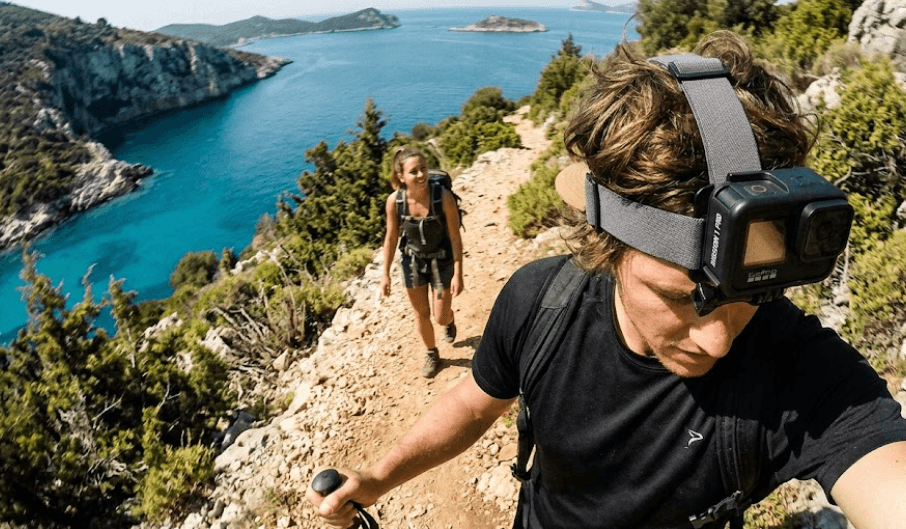
TL;DR The GoPro Mission 1 Pro is a major step beyond GoPro's traditional action-camera formula, combining a 50MP Type 1 sensor, GP3 processor, 8K60 video, 4K240 slow motion, HyperSmooth stabilization, and waterproofing to 20 meters without a housing. It is currently available in India at around ₹86,499 to ₹86,990, depending on the retailer, putting it firmly in the premium camera category. The larger sensor gives it better low-light performance and more cinematic-looking footage than the Hero 13 Black, while the Enduro 2 battery, dual displays, rugged construction, and fast charging make it particularly attractive for travel. However, it is heavier than a conventional GoPro, has a fixed lens, and its longer minimum focusing distance can make close-up vlogging awkward. For travellers who want one compact camera that can handle beaches, hiking, cycling, snorkelling, and serious video production, the Mission 1 Pro is one of the most capable rugged cameras available in 2026.
What Makes The Mission 1 Pro Different?
The GoPro Mission 1 Pro is not simply another upgrade to the company's familiar Hero formula. GoPro positions the Mission 1 series as compact cinema cameras, and that distinction makes sense once you look at the hardware. The Mission 1 Pro uses a 50MP Type 1 sensor, a new GP3 processor, and a fixed F2.8 lens with a 15mm to 27mm 35mm-equivalent focal-length range. The larger sensor is the most important change because it gives the camera more room to capture detail, dynamic range, and low-light information than the smaller sensors used in conventional action cameras. This is particularly useful on vacation, where lighting can change quickly from bright beaches to indoor restaurants, evening streets, or shaded hiking trails.
The second major change is the level of video capture available. The Mission 1 Pro can record 8K video at up to 60 frames per second in 16:9, while 4K recording goes up to 240 frames per second. It also supports 8K30 and 4K120 Open Gate capture in a 4:3 aspect ratio, which gives creators additional flexibility when reframing footage for different platforms. For someone shooting a vacation for YouTube, Instagram, or a personal travel film, Open Gate can be useful because you can capture a larger portion of the sensor and decide how to crop the footage later.
That does not mean every traveller needs to shoot at 8K60. In fact, most people will probably be better served by 4K modes for everyday vacation footage because the files are easier to store, edit, and share. The real advantage of the Mission 1 Pro is that it gives experienced users more room to work when they need it. GoPro also adds 10-bit colour, GP-Log2, HLG HDR, RAW photography, Subject Tracking, and advanced stabilization features, so the camera can move from casual holiday footage to a more serious creator workflow without requiring a larger cinema camera.
Mission 1 Pro Key Specifications
| Feature | GoPro Mission 1 Pro |
|---|---|
| Sensor | 50MP Type 1 |
| Processor | GP3 |
| Maximum Video | 8K60 |
| Open Gate Video | 8K30, 4K120 |
| Slow Motion | Up to 4K240, 1080p960 burst |
| Lens | Fixed F2.8 |
| Stabilization | HyperSmooth with 360° Horizon Lock |
| Battery | 2150mAh Enduro 2 |
| Waterproofing | Up to 20m without housing |
| Rear Display | 2.59-inch OLED touchscreen |
| Weight | 207g |
| Storage | microSD |
| India Price | Around ₹86,499 to ₹86,990 |
The specifications are based on GoPro's official product information and current Indian retailer listings.
Design And Durability For Travel
The Mission 1 Pro still looks recognizably like a GoPro, but it is larger and heavier than the Hero 13 Black. The camera weighs about 207 grams, and the larger lens housing makes some of that weight feel more noticeable toward the front. That difference is not particularly important when the camera is mounted to a bike, car, tripod, or handheld grip, but it can matter when you put it on a helmet or hold it for several hours. Review testing has also found that the increased weight is noticeable compared with the Hero 13 Black.
Where the Mission 1 Pro makes a strong case for itself is durability. It is waterproof to 20 meters without a housing, which is a significant improvement over the 10-meter rating of the Hero 13 Black. That makes it particularly useful for beach holidays, pool footage, snorkelling, kayaking, and rainy outdoor trips. An optional dive housing can extend the waterproofing to 60 meters, although most vacation users will not need that level of protection. The camera also retains GoPro's established mounting system, while adding a magnetic mounting option and a 1/4-20 tripod thread.
The controls have also been adjusted for real-world use. The buttons are larger and more pronounced, which makes them easier to operate while wearing gloves or when the camera is wet. The rear display measures 2.59 inches and uses OLED technology, while the front display helps when you are recording yourself. For travellers, that combination is practical because you can frame a walking tour, hotel-room introduction, or family video without constantly checking your phone. The removable Enduro 2 battery and accessible storage also make it easier to carry spare batteries and memory cards on longer trips.
Built For Difficult Vacation Conditions
| Situation | Mission 1 Pro Advantage |
| Beach | 20m waterproof body |
| Snorkeling | Waterproof without housing |
| Hiking | Strong stabilization |
| Cycling | Rugged mounting system |
| Skiing | Cold-weather-oriented Enduro 2 battery |
| Vlogging | Front and rear displays |
| Long trips | Removable battery and microSD storage |
The important point is that the Mission 1 Pro is designed to survive situations where a smartphone or conventional camera would need considerably more protection.
Video Quality And Stabilization
Video quality is where the Mission 1 Pro earns its premium positioning. The Type 1 50MP sensor is substantially larger than the sensors traditionally used in action cameras, and that gives GoPro more flexibility with image quality. Reviews consistently highlight improved low-light performance, dynamic range, and a more cinematic appearance compared with the Hero 13 Black. The difference becomes especially useful during sunset, indoor shooting, shaded environments, and scenes where the camera has to deal with bright highlights and darker shadows at the same time.
The 8K recording modes are another major advantage, but they should be viewed as a production tool rather than a requirement for every shot. Recording at 8K60 gives creators a large amount of information for cropping and reframing, while 8K30 Open Gate provides additional flexibility for producing different aspect ratios. The camera also supports 4K240, which is useful when you want dramatic slow-motion footage of activities such as skiing, cycling, diving, or water sports. At 1080p, the camera can reach extremely high frame rates for short slow-motion bursts.
GoPro also retains its strong stabilization system. HyperSmooth with 360-degree Horizon Lock helps keep footage steady when the camera is moving, which is one of the reasons action cameras remain useful for travel. A walking tour, mountain-bike ride, boat trip, or handheld sequence can be difficult to stabilize with a conventional camera without additional equipment. The Mission 1 Pro's stabilization lets you capture that movement in a much smaller package. However, stabilization does not eliminate every limitation. High-resolution and high-frame-rate modes can create greater thermal and storage demands, so the best mode depends on what you are actually filming.
Where The Video Modes Make Sense
| Recording Mode | Best Use |
| 8K60 | High-detail action and reframing |
| 8K30 Open Gate | Flexible cropping and creator workflows |
| 4K120 | Smooth action and slow motion |
| 4K240 | Short dramatic slow-motion clips |
| 1080p960 Burst | Extreme slow-motion moments |
| 4K30 | Everyday vacation recording |
The Mission 1 Pro therefore makes the most sense when you actually plan to use its advanced recording capabilities rather than simply buying it for the 8K label.
Battery Life And Everyday Shooting
Battery performance is another area where the Mission 1 Pro has moved beyond the limitations associated with older GoPro generations. The camera uses a 2150mAh Enduro 2 battery, and GoPro rates the Mission 1 series for up to five hours when recording 1080p30 in Endurance mode. Independent testing has also found more than three hours of 4K30 recording under suitable conditions, although actual runtime varies considerably with resolution, frame rate, stabilization, temperature, and other settings.
The battery is also removable, which remains important for travellers. Instead of stopping a trip to recharge the camera, you can carry spare batteries and continue shooting. Fast charging adds another practical advantage, with GoPro and testing sources reporting that the Enduro 2 battery can reach around 80% in roughly 20 to 27 minutes depending on the charging setup. That makes short charging breaks much more useful when you are moving between locations during a vacation.
Thermal performance is better than what you might expect from such a small camera, but 8K and 4K240 still place a significant load on the hardware. Independent testing found that lower-resolution modes can run for long periods, while demanding 8K30 and 4K120 recording can eventually stop because of heat. One test recorded more than two hours at 4K24, while 8K30 stopped after about 51 minutes and 4K120 after around 47 minutes under controlled indoor conditions. That does not make the camera unsuitable for travel, but it does show why a lower-resolution mode may be the smarter choice for long continuous recordings.
Audio And Creator Features
The Mission 1 Pro is not focused only on image quality. It also includes a four-microphone system and supports 32-bit float audio recording, which can be useful when recording environments with unpredictable volume levels. That is particularly relevant for travel creators because a vacation can move quickly from quiet narration to loud concerts, vehicles, waves, or outdoor activities. The camera also supports USB-C audio connectivity, giving creators more options when they want to use external microphones or build a more controlled recording setup.
The software features make the camera more useful for people who intend to edit their footage rather than simply transfer clips to a phone. GP-Log2 provides a flatter profile designed for colour grading, while 10-bit recording gives editors more flexibility when adjusting colour. HLG HDR is another option for compatible workflows. These features are not essential for a family vacation video, but they become valuable when the footage is going into a YouTube channel, travel documentary, branded project, or professionally edited highlight reel.
GoPro's Quik ecosystem also remains part of the experience. The camera can connect to the app for transferring and editing footage, while GoPro's subscription ecosystem adds cloud-related features. The Mission 1 Pro itself does not have the built-in storage found on some competing cameras, so users need a suitable microSD card for recording. That is worth remembering before a long trip because 8K footage can consume storage quickly. A few spare cards or a reliable offloading workflow can therefore be just as important as carrying extra batteries.
Price And Value In India
The Mission 1 Pro is firmly positioned as a premium camera in India. Current listings show the camera around ₹86,499 to ₹86,990, with some retailers offering lower promotional prices. Croma currently lists it at ₹86,990, while Smartprix tracks an ₹86,499 price and identifies Amazon as the lowest listed price among the stores it monitors. Because camera prices and offers can change, buyers should check the exact seller, warranty, and bundle before purchasing rather than relying on a single headline price.
At this price, the Mission 1 Pro is not an impulse purchase for casual travellers. The standard Mission 1 is cheaper, while the Hero 13 Black remains a considerably less expensive alternative and is still regarded by GoPro product leadership as a better fit for traditional POV action-camera use. The Mission 1 Pro instead targets creators who want better image quality and more cinematic control while retaining a rugged, compact body. That distinction is important because the more expensive camera is not automatically better for every travel situation.
The value becomes easier to understand if you compare what you would otherwise need to carry. A traditional mirrorless camera can provide interchangeable lenses and a larger creative system, but it also brings more equipment, weight, and vulnerability into an active holiday. The Mission 1 Pro sits between that world and a conventional action camera. It cannot replace a full mirrorless setup for every photographer, particularly because its lens is fixed, but it offers a compelling combination of portability, ruggedness, stabilization, and video quality for people who prioritize motion and difficult environments.
Mission 1 Pro Value At A Glance
| Buyer Type | Verdict |
| Casual vacation user | Consider a cheaper GoPro |
| Action sports user | Excellent choice |
| Travel vlogger | Strong choice with some close-focus limitations |
| Professional creator | Strong compact B-camera |
| Photographer | Limited by fixed lens and focus |
| Long-form filmmaker | Useful, but thermal limits matter |
| Adventure traveler | Excellent fit |
Who Should Buy The Mission 1 Pro?
The Mission 1 Pro makes the most sense for travellers who want their camera to survive the same trip they do. If your holidays involve hiking, cycling, skiing, water sports, beaches, road trips, or frequent movement, the combination of waterproofing, stabilization, rugged construction, removable batteries, and compact dimensions is genuinely useful. The larger sensor also means you are not sacrificing as much image quality as you would with older action-camera designs. For a creator who wants to return from a trip with footage that can be edited into polished videos, the Mission 1 Pro is much more compelling than a basic action camera.
It is less convincing for someone who mainly wants quick family photos or close-up talking-head videos. The fixed lens and relatively long minimum focus distance are important limitations. Independent testing found that the minimum focus distance is around two feet, which can make close-up self-recording awkward compared with the behavior users may expect from older GoPro cameras. The camera is also heavier, so putting it on a helmet for long periods is less comfortable than using a smaller action camera.
The other question is whether you will actually use the professional features. If your plan is to record everything in 4K30 and upload directly to social media, you may not see enough benefit from the Mission 1 Pro to justify its premium price. If you want 8K, advanced slow motion, Log footage, improved low-light performance, serious stabilization, and a rugged body in one package, the equation changes. In that situation, the Mission 1 Pro becomes less of an action-camera upgrade and more of a compact production camera that happens to be extremely tough.
Frequently Asked Questions
Q. What is the GoPro Mission 1 Pro?
The GoPro Mission 1 Pro is GoPro's flagship compact cinema camera for 2026. It combines a 50MP Type 1 sensor, GP3 processor, fixed F2.8 lens, 8K video, advanced stabilization, and a rugged waterproof body.
Q. How much does the GoPro Mission 1 Pro cost in India?
Current Indian listings put the Mission 1 Pro at around ₹86,499 to ₹86,990, although prices and promotions can change between retailers.
Q. Can the GoPro Mission 1 Pro record 8K video?
Yes. The Mission 1 Pro supports 8K video at up to 60fps in 16:9 and 8K30 Open Gate recording in 4:3.
Q. Is the GoPro Mission 1 Pro waterproof?
Yes. The camera is waterproof to 20 meters without a housing. An optional dive housing can extend protection to 60 meters.
Q. Does the Mission 1 Pro have a removable battery?
Yes. It uses a removable 2150mAh Enduro 2 battery, which is useful for travelers who want to carry spare batteries.
Q. Is the Mission 1 Pro better than the Hero 13 Black?
It offers better image quality and more advanced video capabilities, particularly because of its larger sensor. However, the Hero 13 Black remains better suited to traditional POV action-camera use and is smaller and less expensive.
Q. Does the Mission 1 Pro have interchangeable lenses?
No. The Mission 1 Pro has a fixed lens. GoPro's Mission 1 Pro ILS is the separate model designed around interchangeable Micro Four Thirds lenses.
Q. Is the Mission 1 Pro good for travel vlogging?
Yes, particularly for outdoor travel and action-focused content. However, its longer minimum focusing distance can make very close self-vlogging difficult, so it is not ideal for every talking-head situation.
Q. How good is the Mission 1 Pro in low light?
The larger Type 1 sensor provides a meaningful improvement in low-light performance compared with traditional action-camera designs. Reviews have highlighted cleaner and more detailed footage in challenging lighting.
Q. Is the GoPro Mission 1 Pro worth buying for a vacation?
It is worth considering if your vacation involves adventure activities and you want high-quality video in a rugged, waterproof body. For simple family videos and casual photos, a cheaper action camera or smartphone may provide better value.
Final Recommendation
The GoPro Mission 1 Pro is one of the most ambitious cameras GoPro has produced, and the larger Type 1 sensor changes what you can reasonably expect from a rugged compact camera. It delivers sharper 8K footage, better low-light performance, strong stabilization, advanced color options, excellent slow-motion capabilities, and waterproofing to 20 meters. The Enduro 2 battery and improved thermal design also make it more practical for long travel days than the specifications alone suggest.
However, calling it the perfect vacation camera would be too broad. It is heavier than a traditional GoPro, the fixed lens limits creative flexibility, the minimum focus distance can frustrate close-up vlogging, and its ₹86,000-plus Indian price makes it a serious investment. The camera is at its best when you want one rugged device that can handle action, water, movement, low light, and professional video production without carrying a larger camera system.