
Glass Back vs Vegan Leather vs Metal Phones: Which Is Most Durable?
Glass Back vs Metal Phones: Compare durability, signal performance, wireless charging, repair costs, and everyday usability. Discover which smartphone material offers the best value for Indian buyers based on your budget and daily needs.

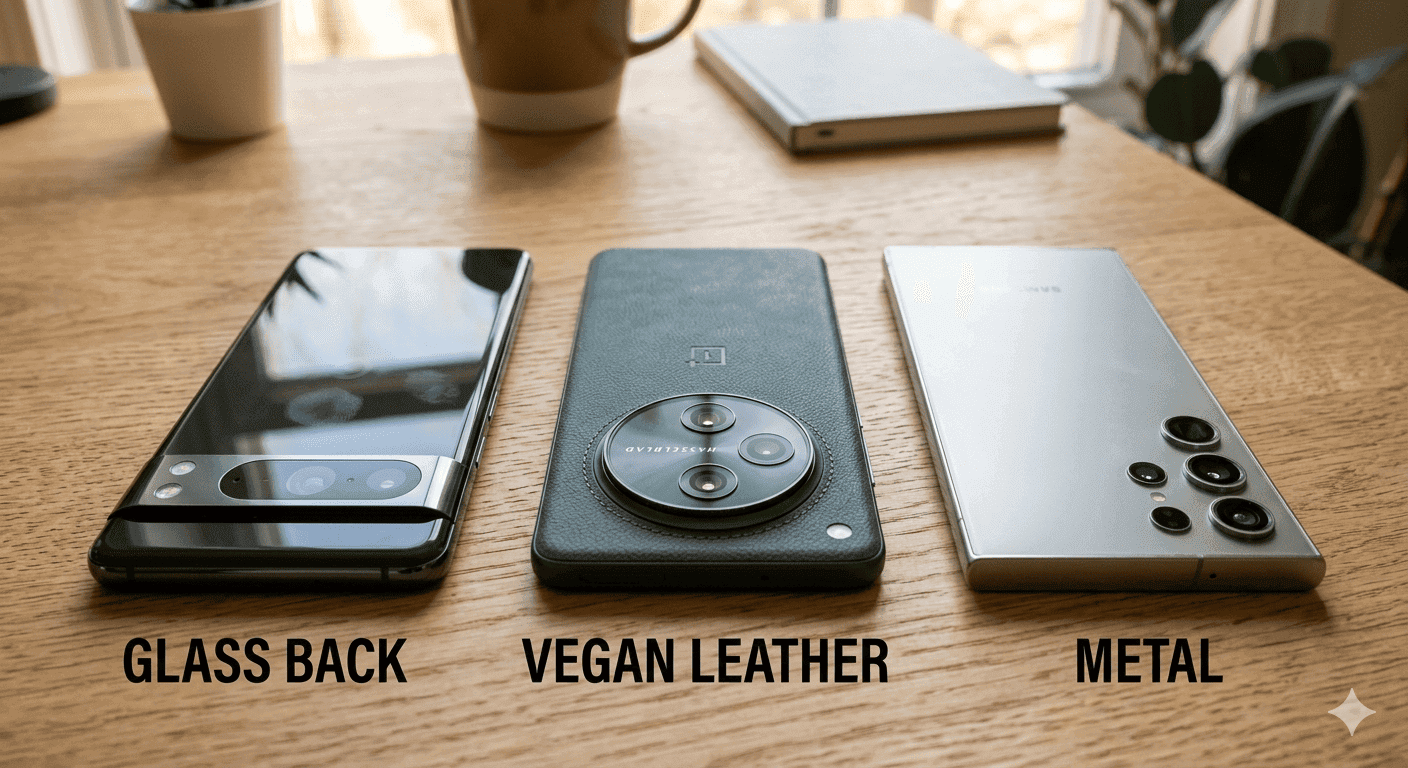
TL;DR Glass Back vs Metal Phones comes down to durability, signal, charging, and repair risk. Glass backs support wireless charging and cleaner signal behavior, while metal feels rigid but can affect antennas and heat up more in daily use.
Design and Durability Trade-Offs in Glass Back vs Metal Phones
Phones are a durability debate first, and a design debate second. The back panel changes how the device feels in your hand, how it handles scratches, and how it sits on a desk next to a charger. That means the material choice matters more than most people think.
The strongest point in favor of glass is that it is not automatically fragile. Gorilla Glass 6 can survive 15 consecutive drops from 1 meter onto a rough surface, which is why a glass back is not the same thing as a weak build. It can also be scratch resistant, and it helps with wireless charging, so the material does more than just look premium.
Metal brings a different set of trade-offs that are easy to notice in daily use. It can heat up, interfere with the antenna, and make signal reception less clean in a weak network area. If you spend time on Google Maps, YouTube, or video calls on the move, that matters more than a shiny finish.
Price also changes the conversation. The Motorola Edge 50 at ₹22,990 is cheaper than the Samsung Galaxy A56 5G at ₹38,999 and the Samsung Galaxy A55 5G at ₹39,999. On the metal side, the range for metal body phones runs from ₹9,150 to ₹89,999, so the material alone does not tell you the full cost story.
| Model | Material Type | Price in India | Rear Camera | Battery | Charging |
|---|---|---|---|---|---|
| Motorola Edge 50 | Glass back | INR 22,990 | 50 MP + 13 MP + 10 MP | 5000 mAh | 68W Turbo Power Charging |
| Samsung Galaxy A56 5G | Glass back | INR 38,999 | 50 MP + 12 MP + 5 MP | 5000 mAh | 45W Super Fast Charging |
| Samsung Galaxy A55 5G | Glass back | INR 39,999 | 50 MP + 12 MP + 5 MP | 5000 mAh | 25W Fast Charging |
If you think about design, heat, and pricing together, the trade-off becomes easier to see. Glass usually gives you a more polished feel and wireless charging support. Metal usually gives you a rigid body and a different in-hand character, but it can bring antenna and heat compromises.
Material Properties of Glass, Metal, and Plastic
Glass is a good material for smartphone backs because LTE, Wi-Fi, and Bluetooth signals pass through it easily. That is why glass phones usually avoid the antenna compromises that metal designs can create. It also gives a premium look and clean finish, which is part of the appeal of a Galaxy Note style design or any high-end slab.
The downside is simple. Glass is more prone to scratches than metal and plastic, and it can be slippery in one hand. If you carry your phone loose in a bag with keys or use it without a case, the back can pick up marks quickly.
Metal has the opposite personality. It feels solid, it looks tough, and it often seems like the safer build at first glance. The catch is that metal smartphones can heat up to uncomfortable levels because metal conducts heat so well, and they can interfere with internal antennas, which is bad news when your network is already weak.
Plastic is the most forgiving of the three materials. It is generally more durable and resistant to shattering than glass and metal, and it can be designed to let radio waves pass through with minimal signal loss. That is why low-end phones and plenty of budget models still use it, especially when the goal is a cheaper build that survives drops better than a flashy back panel.
Each material has a different strength profile. Glass gives you wireless charging, cleaner signal behaviour, and a premium finish. It also comes with scratches, slipperiness, and a higher repair risk if it breaks. Metal gives you a tough in-hand feel and a rigid shell. It can also create antenna issues, show blemishes more clearly, and run hotter during long gaming sessions. Plastic gives you the most practical durability and usually the lowest cost. It looks less premium, and it rarely feels as good as ceramic or metal, but it is often the smarter material to build phones for rough daily use.
- Glass works best if you want wireless charging and a more polished look.
- Metal makes sense if you care about a rigid body and a cooler-looking finish.
- Plastic is the safer choice if you drop your phone often or want less break risk.
Durability, Drop Resistance, and Everyday Wear
Durability is not just about surviving one dramatic fall. It also includes scratch resistance, grip, and how the phone behaves after months in a pocket or on a desk. Gorilla Glass 6 matters here because it changes the usual fear around glass backs.
Surviving 15 consecutive drops from 1 meter onto a rough surface is not a small claim. It means a glass-backed build can be more resilient than older glass phones from the Galaxy S9 era or earlier. In plain terms, glass can be tough, but it is still more expensive to replace if it does crack.
A phone with an aluminium frame can feel different in daily use, especially when paired with a single-piece design. That kind of build may change how the phone handles wear, while antenna lines are one of the visible trade-offs in the frame. A glass phone may feel more premium, but it can also be more expensive to live with if you are rough on your devices.
By contrast, a more forgiving build can make everyday wear feel less risky. That matters if you are comparing it with older Nokia-style durability expectations. In the end, the question is not whether glass can survive. It is whether the material matches your habits and your tolerance for wear.
Which Phone Material Fits Your Use Case
The right choice depends on how you use your phone every day. Glass back phones make sense if you want wireless charging, a cleaner signal path, and a more polished finish. They also fit buyers who are comfortable using a case and want a more premium look.
Metal phones fit a different kind of buyer. They appeal to people who want a rigid body and a solid in-hand feel, and they can make sense when design matters more than wireless charging. They are less ideal if you often use Maps, stream video, or take calls in weak network areas.
Plastic is the practical option for rough use and lower budgets. It is the safer pick if you drop your phone often or want less break risk. It also makes sense when you care more about durability and cost than about a premium finish.
For India-focused buyers, the price spread matters as much as the material. The Motorola Edge 50 at INR 22,990 gives you a glass back at a lower price than the Samsung Galaxy A56 5G at INR 38,999 and the Samsung Galaxy A55 5G at INR 39,999. If you want a more affordable glass-backed option, that difference is worth noticing before you decide.
Frequently Asked Questions
Q. Are glass back phones always fragile?
No, glass-backed phones are not automatically fragile. Gorilla Glass 6 can survive 15 consecutive drops from 1 meter onto a rough surface, which shows that a glass back can be durable in real use. The trade-off is that if the glass does crack, repairs are usually more expensive than with a tougher plastic back.
Q. Why do many phones still use glass if metal feels stronger?
Glass supports LTE, Wi-Fi, and Bluetooth signals more easily than metal. It also works well with wireless charging, which is one reason it remains common on premium phones like the Motorola Edge 50, Samsung Galaxy A56 5G, and Samsung Galaxy A55 5G. Metal can feel rigid, but it can also interfere with antennas and heat up more during long use.
Q. Which material is better for weak network areas?
Glass is usually the better choice in weak network areas because signals pass through it more easily. Metal can interfere with internal antennas, which can make reception less clean when coverage is already poor. That difference matters if you rely on Google Maps, YouTube, or video calls while moving around.
Q. Which option is more practical for rough daily use?
Plastic is the most forgiving material for rough daily use. It is generally more durable and resistant to shattering than glass and metal, and it usually costs less too. If you drop your phone often, that makes plastic a safer material even if it looks less premium.
Q. Which glass-backed phone in the article offers the fastest charging?
The Motorola Edge 50 offers 68W Turbo Power Charging, which is faster than the Samsung Galaxy A56 5G at 45W Super Fast Charging and the Samsung Galaxy A55 5G at 25W Fast Charging. All three use a 5000 mAh battery, so charging speed is one of the clearest differences among them. If fast top-ups matter, that makes the Edge 50 stand out in this group.
Q. Is metal still a good choice for a smartphone back?
Metal can still be a good choice if you want a rigid body and a tough in-hand feel. The trade-off is that it can heat up and interfere with antennas, which makes it less appealing for weak signal areas and long gaming sessions. In India, the metal body phone range mentioned here runs from INR 9,150 to INR 89,999, so the price spread is wide.
Which Material Makes the Most Sense for Indian Buyers?
Glass back phones make the most sense if you want wireless charging, cleaner signal behavior, and a more premium finish. They also fit buyers who are willing to pay more for a polished design and who usually keep their phone in a case. The Motorola Edge 50 at INR 22,990 is the most accessible glass-backed option mentioned here, while the Samsung Galaxy A56 5G and Samsung Galaxy A55 5G sit higher at INR 38,999 and INR 39,999.
Metal phones make sense if you prioritize a rigid body and a solid feel in the hand. They are less attractive if you care about heat management, antenna performance, or wireless charging support. That makes them better for buyers who value build character over convenience features.
Plastic remains the most practical choice if you want the least break risk and the lowest cost. It is the right material for people who drop phones often or want a device that can handle daily wear with less worry. If you are choosing between style and practicality, start with your habits, then match the material to those habits before you buy.
Glass Back vs Metal Phones in 2026: Final Buying Advice
Glass Back vs Metal Phones is still a useful comparison because the trade-offs remain clear in 2026. Glass gives you wireless charging, cleaner signal behavior, and a more premium finish, while metal gives you a rigid body but can bring heat and antenna compromises. The article’s price examples also show that material choice does not always line up neatly with cost, since the Motorola Edge 50 at INR 22,990 sits below the Samsung Galaxy A56 5G at INR 38,999 and the Samsung Galaxy A55 5G at INR 39,999.
If you want the most balanced choice, glass is the safer recommendation for most buyers who care about modern features and a polished look. If you want a rigid feel and do not mind the trade-offs, metal still has a place. If you care most about durability and low repair anxiety, plastic remains the most practical option.
The best next step is to match the material to your daily routine. Choose glass if wireless charging and signal performance matter, choose metal if you want a solid feel, and choose plastic if you want the least risk from drops. Once you decide which of those matters most, the right phone becomes much easier to spot.






